Orlando Hudson, judge in Michael Peterson trial, steps down after 4 decades on bench
Judge Orlando Hudson sat at his desk on the ninth floor of the Durham County courthouse, glancing out the window at the evolving downtown landscape.
The historic Chesterfield and Mutual Life Insurance buildings still stood tall, but rows and rows of high-rise apartments stretched into the county’s wooded hills.
Over the last quarter century, much has changed in Durham County and in its legal world.
There’s the new courthouse and the many district attorneys who have passed through, including two who were disbarred. The license for Durham’s first public defender was also suspended.
Over that time, one thing has remained constant: Hudson as the county’s senior resident superior court judge.
He has set the tone for a judicial district known for progressive bail bond policies and its openness to granting second chances and vacating flawed convictions.
But Hudson, 69, retired in December, stepping down from being a judge and the leadership role he has played since 1995.
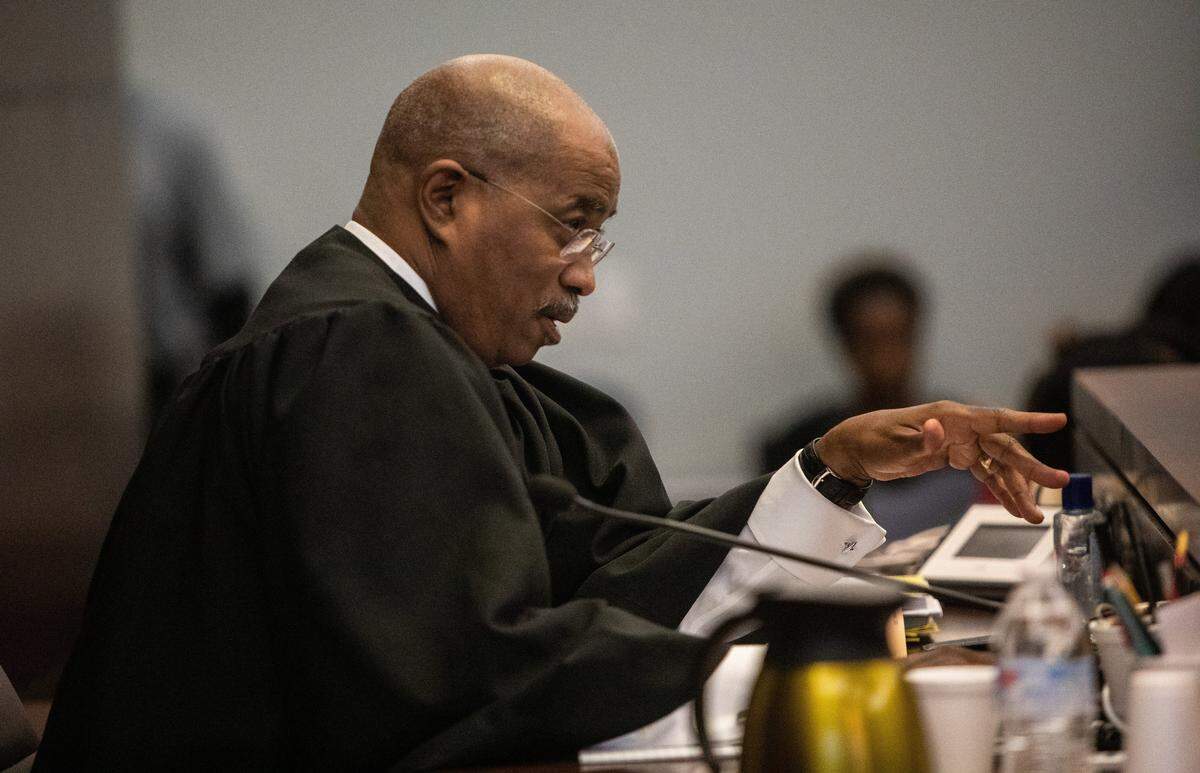
Michael Peterson trial judge
Many know Hudson as the judge who oversaw the Michael Peterson trial and then vacated his first-degree murder conviction.
But Hudson leaves behind a storied career of a judge unafraid of the spotlight and controversial decisions.
There was the time he set five people charged with murder free after prosecutors ran short on evidence and the defendants had sat in jail for months and years.
The time he admonished an officer investigating a 17-year-old for murder for misleading information in the search warrant applications. And the time he nudged a tobacco industry titan into a multi-million dollar settlement.
“I’m sorry,” said an astonished Juul attorney Andrew McGann after Hudson made a significant ruling in the civil case accusing the e-cigarette maker of marketing to teens.
“I want to get clarity on what is happening here,” the attorney said. “Is it your ruling that every single sanction that the state asked for you are awarding?”
“Yes,” Hudson said.
N.C. State Attorney General Josh Stein would announce a $40 million settlement within two months.
.JPG "RAL_petersonhearing (1).JPG")
Hudson appointed as judge in 1984
Hudson grew up in High Point, the son of a high school principal turned administrator and an elementary school teacher. He attended UNC-Chapel Hill and went on to work in High Point for the law firm of Sammie Chess, who became the first African American superior court judge in North Carolina.
Hudson went on to work for the public defender’s office in Fayetteville, then moved to Durham to work as an assistant district attorney in 1983 and 1984 while his wife Marilyn Foote-Hudson pursued a joint degree in law and public policy at Duke University.
“I thought I would like Durham, which I do like it very much,” Hudson said.
Hudson was appointed district court judge in 1984 and elected superior court judge four years later. That wasn’t a move he’d imagined when he launched his law career. At the time, superior court judges were decided in statewide elections.
“There was no protocol or really an example of a way for Black judges to be elected,” Hudson said sitting in his office surrounded by pictures of wife, two children and a snapshot with Michael Jordan.
Hudson’s district
Mickey Michaux, who retired as a state representative in 2018 after 43 years in politics, said Hudson told him many years ago that he wanted to be a judge.
“Let’s see what we can do,” Michaux recalled telling him, during a recent interview with The News & Observer.
At the time, there were very few Black superior court judges in the state. Michaux said he worked with others to create judicial districts, including 14A in Durham, that led to Hudson and about a dozen other Black judges being elected.
“Those who served have gone and have done admirable work and jobs and showed that, we too, can operate in the system like everybody else,” said Michaux. “Judge Hudson was the prime example.”
The thing about Hudson, he said, is that once he was a judge in Durham, he turned down opportunities to run for the appeals or supreme court.
“He wanted to stay where he was and do exactly what he was doing,” Michaux said.
“He excelled at it.”
‘Playing chess’
Hudson’s experience as a prosecutor and a defense attorney gave him unique insight and power, which he often minimized in the courtroom, said Lisa Williams, a longtime Durham defense attorney.
Hudson is deceptively bright, extremely strategic and he exercises his power very carefully, she said.
“He is playing chess while you are playing checkers,” Williams said.
Defense attorney Daniel Meier said Hudson’s leadership and guidance helped shape Durham’s progressive judicial system. Hudson also helped set up Durham’s case management system and bond schedule, which sets bail lower than some surrounding counties.
When Hudson made a decision, he didn’t care if it might be overturned by the appellate courts.
“He would make the call that he thought was right,” Meier said.
It’s hard to fully understand how the change in leadership will affect the court system, Meier said.
“It is going to change in ways that we can’t even figure out yet just because of how long he has been there and how ingrained he has been in Durham,“ he said.
People in the jail are unhappy with the change, saying Hudson was open to considering a break with a sentence or a lower bond, Meier said.
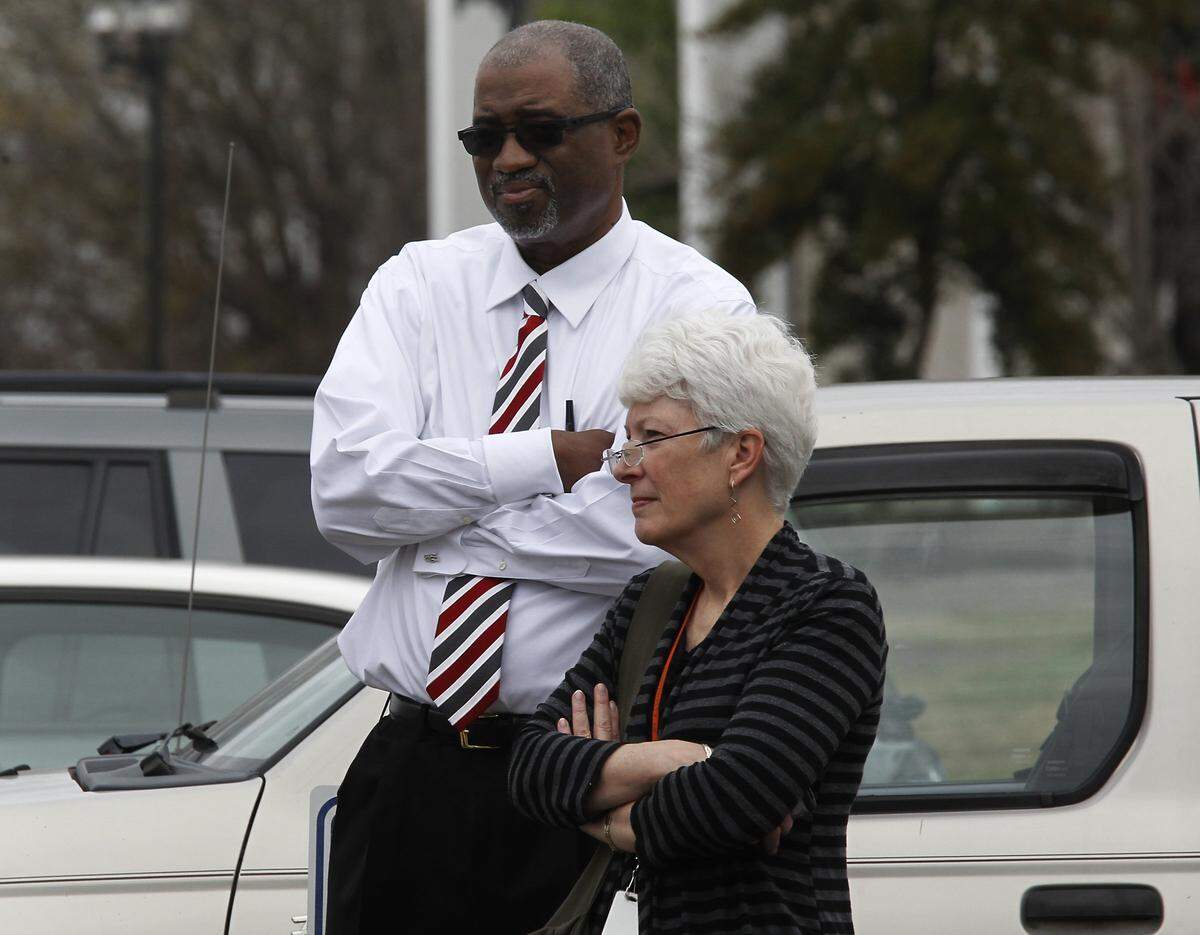
‘The People’s Court’
David Rudolf knew Hudson as a public defender, a DA and a district court judge, way before the defense attorney represented Peterson in his three-month murder trial.
“I think he has been fearless in his opinions,” Rudolf said, noting how some of Hudson’s rulings were reversed by the appellate courts. “I think that he has always done what he thought was right.”
The Peterson trial exemplified his judicial style, attorneys said in interviews.
During the Durham novelist’s trial, Hudson opened the courtroom to journalists, Court TV and a documentary crew, who built a box to film from in the corner of the courtroom.
“That was ridiculous,” Hudson said in an interview.
The case has been covered by numerous books, documentaries and televisions series, most recently HBO Max’s limited series, “The Staircase,” staring Colin Firth as Michael Peterson and Toni Collette as his wife, Kathleen.
In general, Superior Court judges decide whether journalists can take photos, videos or record in a courtroom, and Hudson almost always said yes.
Somebody else took the name “The People’s Court” but that is what superior court is, the judge said.
“People are entitled to every enhancement that will make it a learning experience,” Hudson explained.
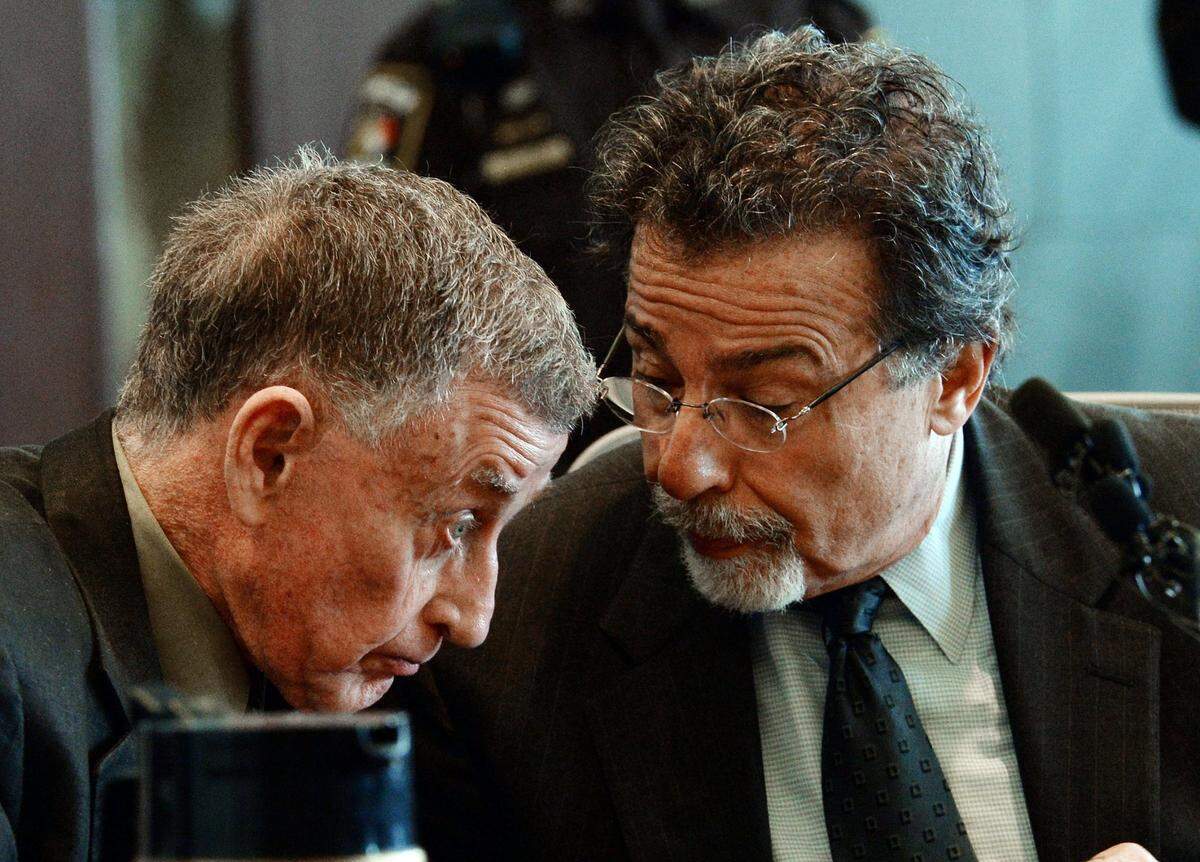
‘Let the jury sort it out’
Another Hudson characteristic is that he leaned toward letting evidence in, according to attorneys.
Rudolf’s impression was that at some point in the Peterson case, Hudson decided to allow the lawyers to put in any relevant evidence “and let the jury sort it out.”
In 2006 a North Carolina Court of Appeals order affirmed Peterson’s guilty verdict but found Hudson had erred in allowing Peterson’s computer to be introduced as evidence. The court, however, ruled the error was harmless, which the N.C. Supreme Court affirmed in 2007.
‘Willing to call it like it was’
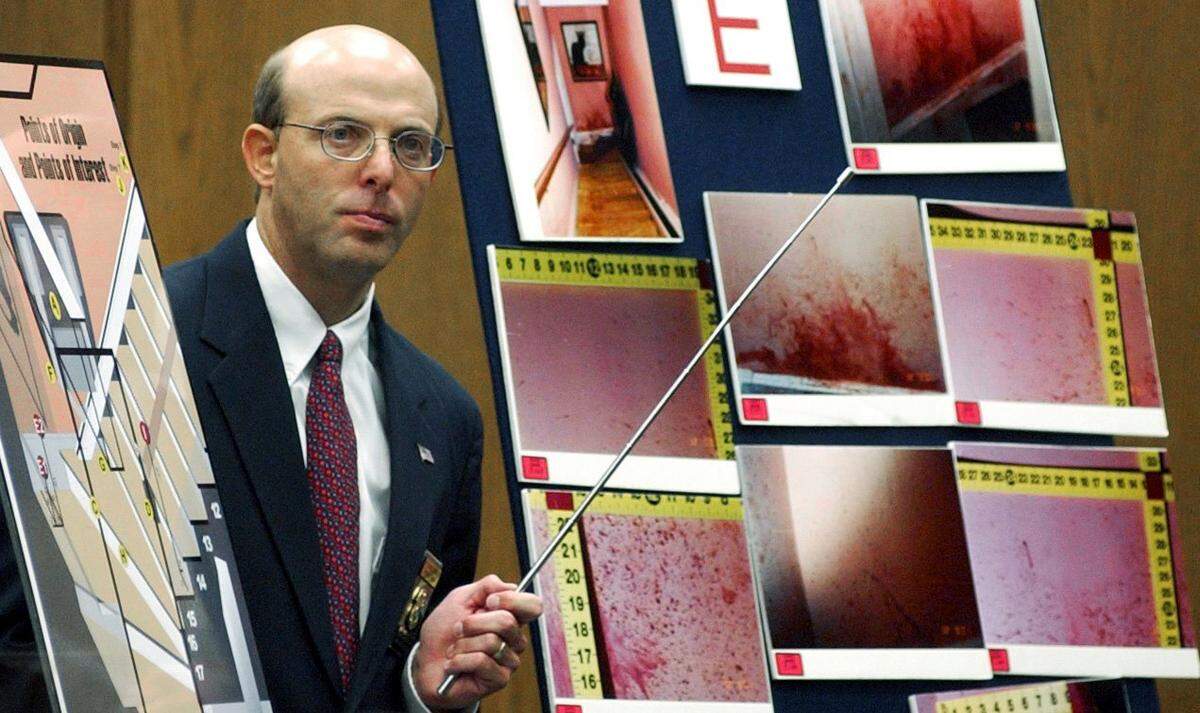
A final Hudson quality on display in the Peterson case surfaced when evidence showed State Bureau of Investigation analyst Duane Deaver had lied about his qualifications.
Deaver was an expert witness during Peterson’s 2003 murder trial. He analyzed the blood splatter on the staircase where Kathleen Peterson was found and on Michael Peterson’s clothes, testifying that the evidence indicated Peterson had beaten his wife to death.
In 2011, Hudson vacated Peterson’s murder conviction, finding Deaver had conducted unscientific experiments and misled the jury about his experience and credentials.
“Is a new trial required because of due process violations and the perjured testimony?” Hudson said. “The answer is yes.”
Rudulf said you have to give Hudson credit.
“When presented with the evidence that Deaver, in fact, lied, he was willing to call it like it was and found he committed perjury and gave Mr. Peterson a new trial,” Rudolf said.
Hudson’s most memorable case
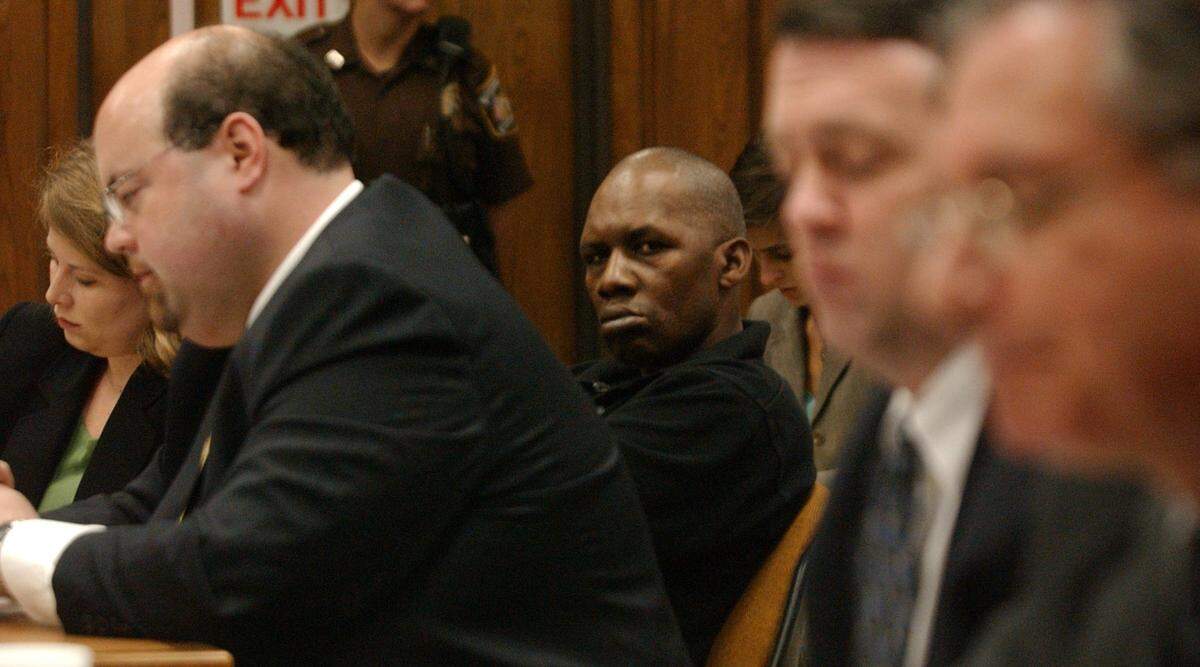
While the Peterson trial may be the most notable, the case that Hudson says he will remember most involved Floyd Lee Brown in Anson County.
Brown was charged with beating to death an 80-year-old retired school teacher in her home in July 1993. An SBI agent contended Brown confessed to the crime, outlining a detailed timeline that ran six handwritten pages.
Hudson dropped the murder charge in 2007 after hearings demonstrated that Floyd was a 46-year-old man with the mind of a 7-year-old, who couldn’t get past the letter K in the alphabet.
His confession included specific times that Brown used to outline his actions the day of the killing. Court testimony indicated that Brown couldn’t tell time.
Brown spent 14 years locked away at a psychiatric hospital until Hudson set him free in 2007.
In 2013, the state agreed to pay $7.28 million to settle the lawsuit filed by Brown, who was then represented by Rudolf.
“It was a grave injustice and the system did all it could to really provide for Floyd Brown for the rest of his life,” Hudson said. “And that rarely happens.”
And then there was Darryl Howard.
In 2014, Hudson ordered a new trial for Howard, who had been convicted of killing Doris Washington, 29, and her 13-year-old daughter, Nishonda. The two were found naked, dead and strangled in a Durham apartment set ablaze in November 1991.
Howard was sentenced to 80 years in prison.
In 2016, Hudson vacated his conviction after Howard had spent 23 years behind bars for murders he always denied participating in. Gov. Roy Cooper pardoned Howard in 2021.
At the end of 2021, a federal jury awarded Howard $6 million after finding a Durham police detective fabricated evidence. It’s not clear how much money Howard will get after city officials decided not to pay the claim on the detective’s behalf.
One challenger
In the many years Hudson has been on the superior court bench, he has faced only one election challenger. Prosecutor Jim Dornfried ran against him in 2012.
Dornfried, an assistant district attorney, was the top assistant to former District Attorney Tracey Cline.
In March of 2012, a judge removed Cline from office after she attacked Hudson in a series of court filings, She alleged Hudson was corrupt, disregarded the facts and the law and had led a conspiracy against her that included unfavorable coverage in The N&O.
Hudson won re-election that year with 70% of the vote.
In 2015, the State Bar suspended Cline’s law license.
In 2008, Cline had become the first DA elected after Mike Nifong was disbarred and removed from office in 2007 for improper statements and activity in a case accusing Duke lacrosse players of rape.
Motions for appropriate relief
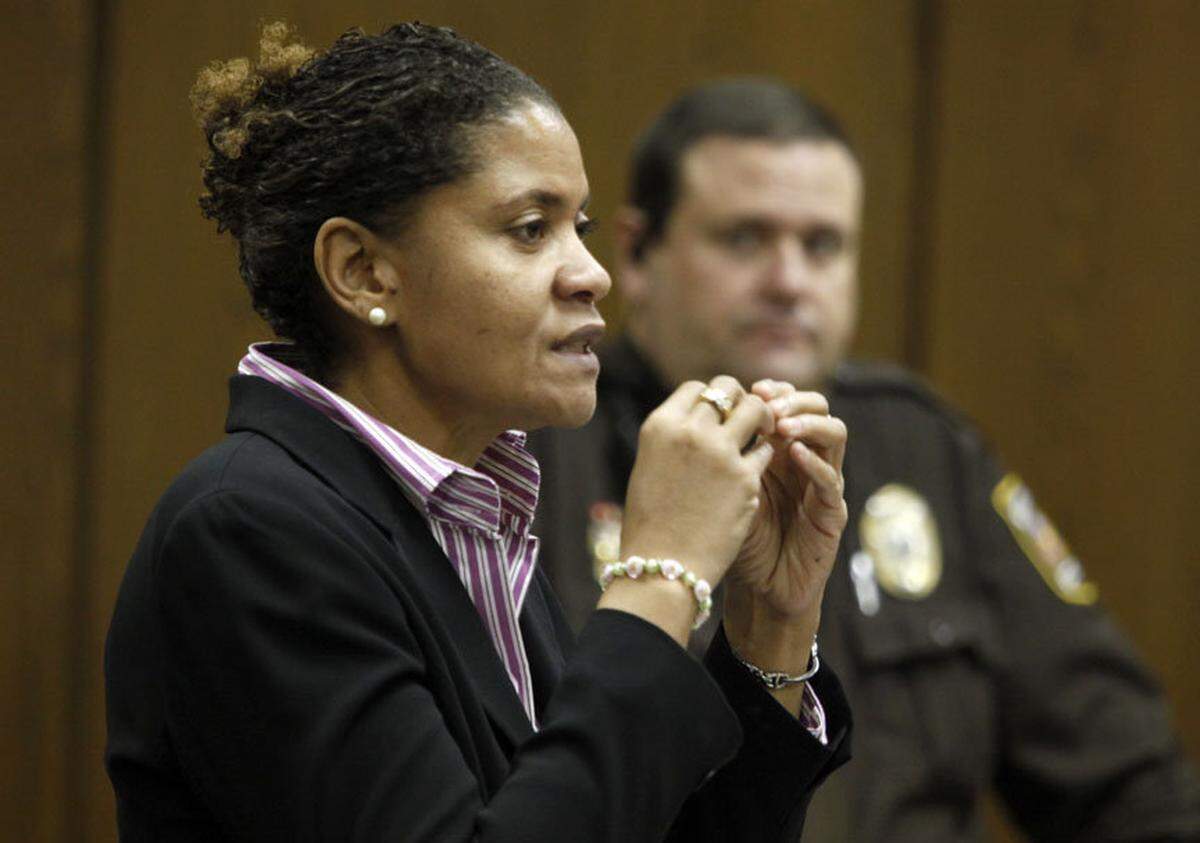
Hudson’s commitment to rectifying what he sees as mistakes in the judicial process has continued under current District Attorney Satana Deberry, who took office in 2019.
State law lets a judge grant motions for appropriate relief if the prosecutor and defendant agree in what some call a consent motion.
Those motions have increased since 2019. They include one for Gregory Lee, a man who was set free after being convicted of killing his neighbor Lois Cannady and sentenced to life in prison for a crime he committed at age 18.
After Hudson’s signature finalized the sentence reduction in 2020, Cannady’s grandson David said he was outraged, as Lee had played a significant part in the killing.
“I don’t even know what to say,” David Cannady said. “They all have my grandmother’s blood on their hands. They will have to answer to God on why they made this decision.”
In granting this and other motions, Hudson said he gave great weight to Deberry saying she wanted to correct something she felt was wrong in the case, and that state law gives her the authority to do so.
It is up to the judge, however, to make the ultimate decision, Hudson said.
“Horrible mistakes are made sometimes when people get sentences,” he said.
It can be before, during or after the trial, but there are people in prison who never should have been convicted, he said.
It already appears Judge Michael O’Foghludha , who will be Durham County’s next senior resident superior court judge, will handle consent motions differently, according to statements he made recently in court.
‘33 years of travels is enough’
As he steps down, Hudson worries other judges may be less likely to consider motions for appropriate relief that seek to correct injustices.
“I will feel bad about that, and I guess I am still working my way through how I might some kind of way be able to affect those kind of cases,” he said.
But it is time to step down, he said.
“I believe that 33 years of travels is enough,” he said.
This story was originally published December 29, 2022 at 5:30 AM.