
Civil rights, LGBTQ+ activist Pauli Murray posthumously granted high state award
AI-generated summary reviewed by our newsroom.
- Pauli Murray posthumously received the Order of the Long Leaf Pine in 2025.
- Gov. Josh Stein honored Murray for advocacy in civil rights and LGBTQ+ justice.
- The Pauli Murray Center seeks $50,000 after federal grant loss hurt operations.
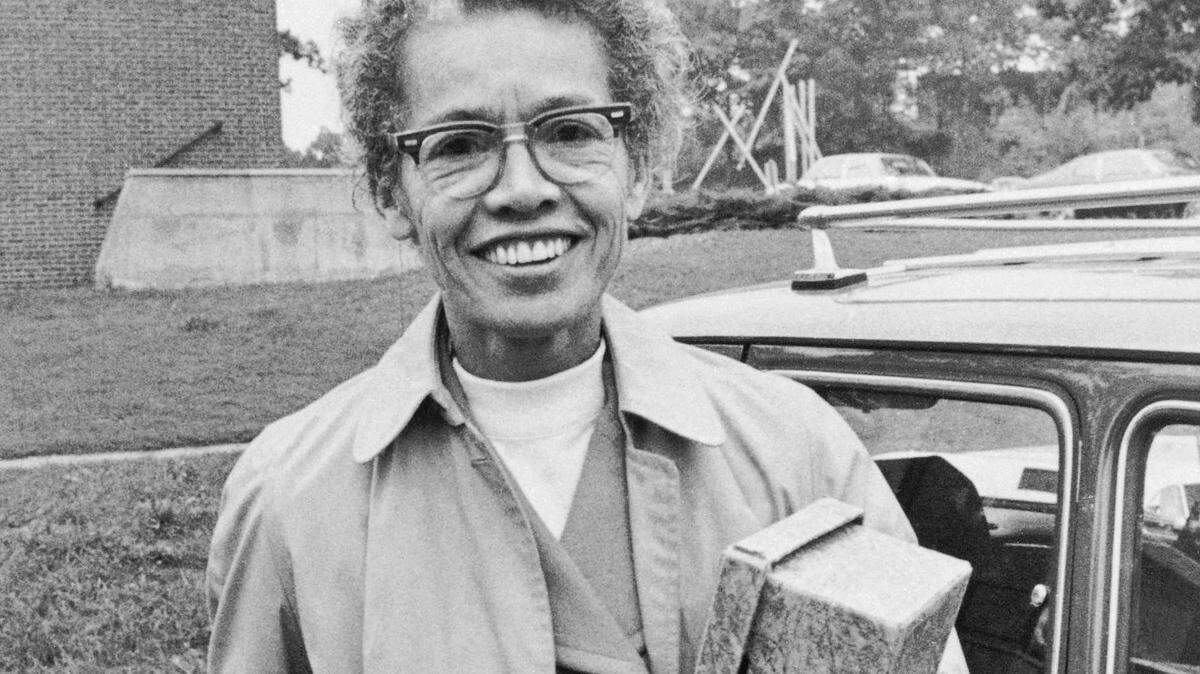
Forty years after Pauli Murray’s death, the civil rights activist who grew up in Durham has been granted the highest recognition in the state by the Office of the Governor.
Murray, an LGBTQ+ civil rights activist, Episcopal priest, and author, was posthumously awarded the Order of the Long Leaf Pine on Wednesday morning. Gov. Josh Stein presented the award during the last week of Pride Month to Murray’s descendants in a ceremony at the Governor’s Mansion.
Murray advocated for gender equality and the expansion of legal protections for LGBTQ+ people. She graduated from Hillside High School in 1926 before becoming an Episcopal priest and the first Black person to earn a doctorate from Yale Law School.
Murray was inducted into the Order of the Long Leaf Pine alongside other honorees like Otis Smallwood, the superintendent of Bertie County Schools; Phil Ford, Jr., former UNC basketball and NBA player; and Maggie Kane, the founder of Raleigh nonprofit A Place at the Table.
The award is named after the state tree and is typically granted to state employees upon retirement after 30 or more years. However, all North Carolinians are eligible for the award and undergo a lengthy vetting process.
In a statement, Stein said he was proud to “honor this group of outstanding North Carolinians who have made important contributions to our state and its people.”
“They exemplify the best of North Carolina through their storied careers in government, education, and advocacy,” the statement read.
According to her biography, Murray graduated top of her law school class at Howard University in 1944. She authored books such as “States’ Laws on Race and Color,” “Proud Shoes: The Story of an American Family,” and “Song in a Weary Throat: An American Pilgrimage,” that told stories of her personal life experiences with race, identity, sexuality, social justice and segregation.
She died in 1985 in Pennsylvania of pancreatic cancer.
Locally, Murray is remembered as a pioneer for civil rights in Durham, and last year, a new school, Murray-Massenburg Elementary, was named for the activist and the first Black female principal in the city, Betty Doretha Massenburg.
US Park Service web page pulled
Murray’s legacy reached more audiences earlier this year after the National Park Service pulled a web page about Murray as federal agencies deleted references to transgender people. The removal came after President Donald Trump’s executive order that only recognized male and female genders. Murray is referred to using they/them and she/her pronouns by the Pauli Murray Center for History and Social Justice, a historic site preserving the activist’s work and life.
The Center, established in 2012, is operated out of Murray’s childhood home at 906 Carroll St. in Durham and was built in 1898 by her grandparents. In April, the Center sought public support after losing a $330,800 grant from the Institute of Museum of Library Services because its work no longer “serves the interest of the United States,” according to a letter sent to director Angela Thorpe. The grant loss affected the Center’s operations and resulted in the loss of a staff position.
This summer, the center is continuing fundraising efforts to reach a $50,000 goal to help support its work.
“We’re proud to see Pauli’s memory honored here in North Carolina,” the center stated in a social media post.
This story was originally published June 26, 2025 at 9:19 AM.