
Repeat of urban renewal feared as Hayti rezoning heads to Durham council for vote
AI-generated summary reviewed by our newsroom.
- Sterling Bay proposes rezoning Hayti’s Heritage Square for life sciences campus.
- Residents raise concerns about displacement and echoes of past urban renewal.
- Durham City Council schedules rezoning vote for August 4, 2025, at City Hall.
Skeptical residents filled rows of pews in the sanctuary of St. Mark AME Zion Church in Durham last week.
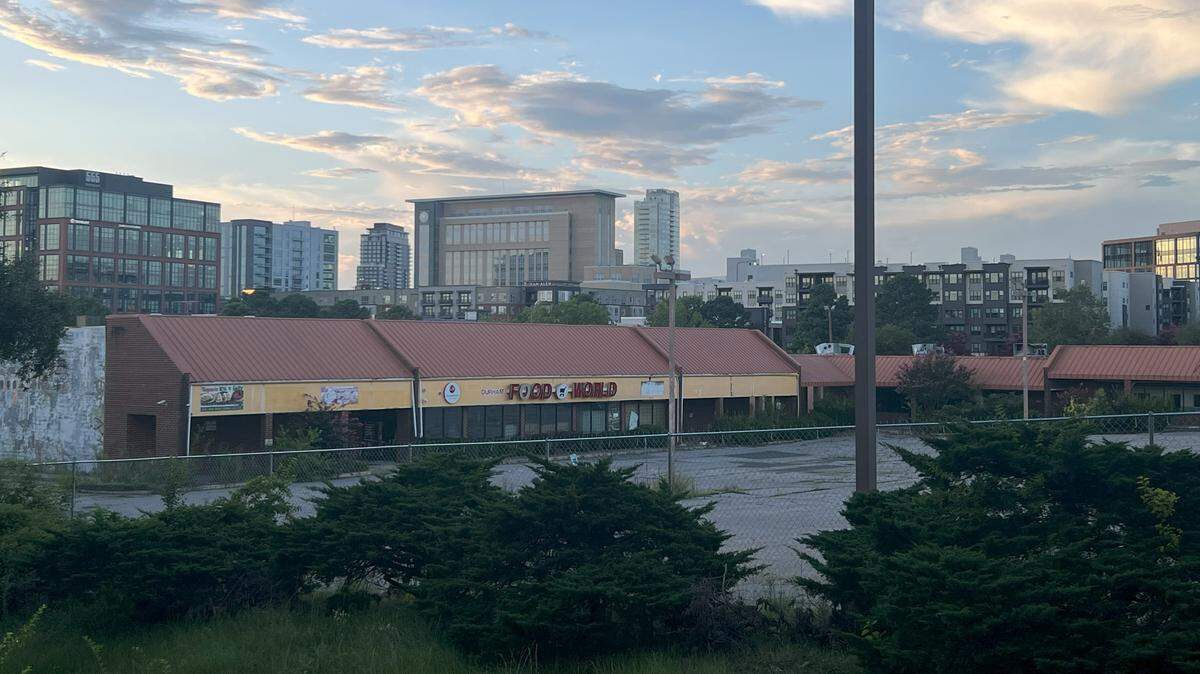
For the second time in July, dozens gathered at the church, located in the historically Black Hayti neighborhood, to hear from Sterling Bay. The Chicago-based developer wants to build a project next door in Heritage Square, a nearly 10-acre lot along Fayetteville Street enclosed by a metal fence.
“What we’re trying to do is deliver something that will create a pathway to jobs, that will create a pathway to education, that will contribute and do a part of that work that the [Hayti Promise Community Development Corp.] is trying to accomplish,” said Jamie Schwedler, an attorney for Sterling Bay.
Sterling Bay bought the shopping center at 606 Fayetteville St. for $62 million three years ago and wants to redevelop it into a life sciences campus with a 325-unit, high-rise apartment building. Originally, the proposal featured an underground parking garage, but bedrock discovered beneath the property last year prompted Sterling Bay to seek a zoning change.
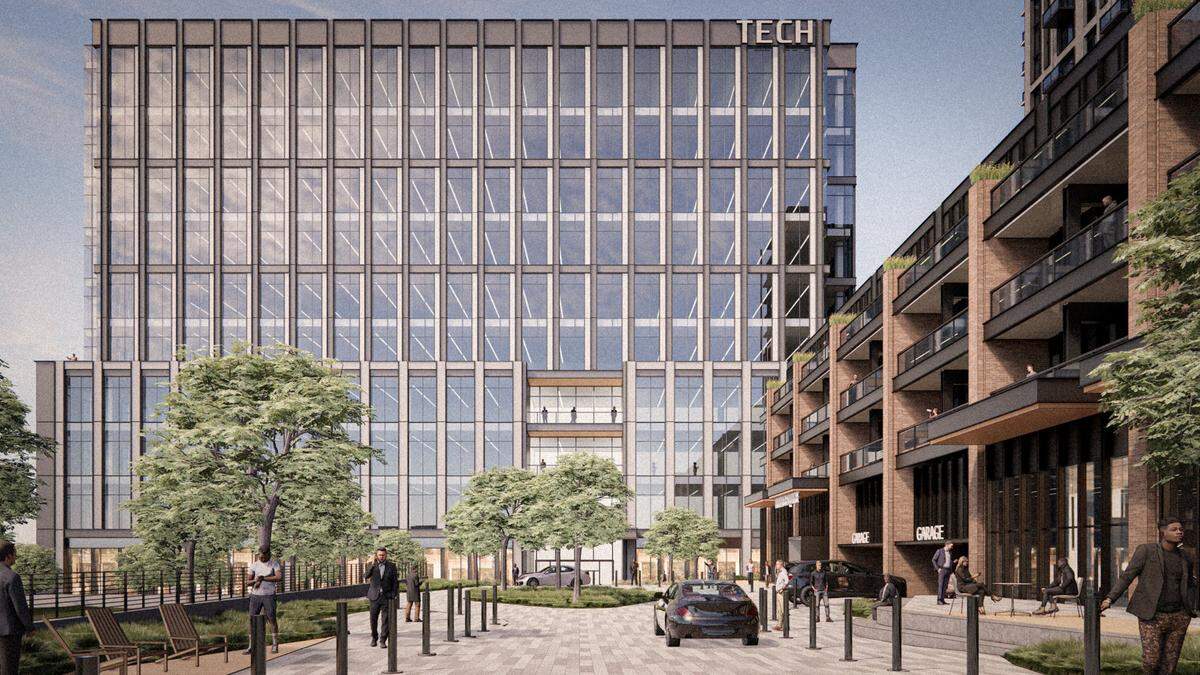
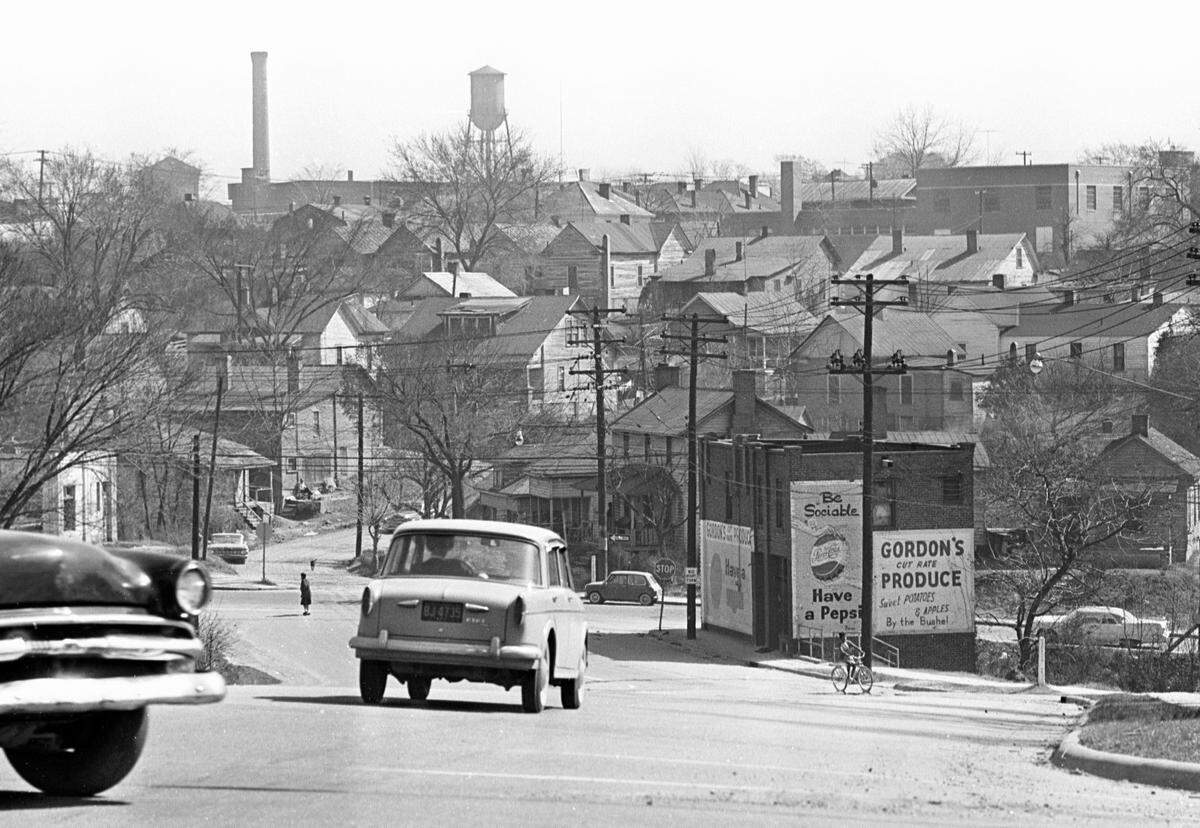
If approved, the rezoning would allow buildings 300 to 500 feet tall, though Schwedler said Sterling Bay has agreed to cap the tallest building at 250 feet. The company also promises that the project will bring 1,500 jobs with average salaries of $80,000, and investment to both the city and the Hayti neighborhood, which was devastated by the construction of the Durham Freeway, or N.C. 147, in the late 1960s.
The Durham City Council is set to vote on the rezoning at 7 p.m. Monday, Aug. 4, in City Hall after holding a public hearing. The council will also discuss the rezoning during its 10 a.m. work session earlier that day, according to the meeting’s agenda.
The July 24 community meeting continued a conversation from a July 16 meeting, where more than 100 residents gathered to ask questions about the rezoning.
Two major points of contention were how Sterling Bay planned to protect the neighboring church from potential damage during construction, and the adequacy of a $55,000 scholarship the company proposed to offer to students at N.C. Central University and Durham Technical Community College.
“Let’s just look at the grand scheme of things: how much money the developer, Sterling Bay, will make versus what we’re asking for in return,” said Christian Edwards, an attendee. “What I’m hearing is you’re not being fair and not being honest.”

What Sterling Bay proposes
Sterling Bay said the redevelopment will honor Hayti and build “toward its future” with the life sciences campus.
Since purchasing the property, Sterling Bay said, it has spent three years in talks with community members like former state Sen. Floyd McKissick, Hayti Reborn leaders Henry McKoy and Anita Scott Neville, and others about the concerns raised by a large project in the middle of the neighborhood.
The company says it will deliver on six commitments to the Hayti community if the project moves forward.
- A one-time $55,000 scholarship each for Durham Tech and N.C. Central to distribute however they want
- A $55,000 donation to the Hayti Promise Community Development Corp., which was established in 2024 with an investment of $10 million from the American Rescue Plan Act, to help grow the Fayetteville Street Corridor
- About 5,000 square feet of retail space offered at 50% of the market rent for small business owners in Hayti
- Improvements at the Fayetteville and Lakewood intersection, including a bus stop and sidewalks
- A 2,500 square foot conference space available on a first-come, first-served basis for community groups and N.C. Central and Durham Tech
- A nearly 1-acre outdoor gathering space
Additionally, to honor Hayti, Sterling Bay will install a commemorative marker on the grounds, as there are plans to change the name of Heritage Square to Carolina Research Park.
“We have taken the health of the community into account by pursuing an environmentally friendly site layout and green building certification,” Schwedler said. The buildings will also have UV-resistant roofs to help mitigate the “urban heat island effect.”
According to researchers at UNC-Chapel Hill, the temperature in Hayti is up to 7 degrees hotter than anywhere else in the city, a result of development and the construction of the Durham Freeway.
Broken promises
“If we want to get out of the emotions or the feelings about [redevelopment], there’s no need for further negative impacts on the [neighborhood] and the folks who are trying to thrive in that community,” said Scott Neville, who grew up in Hayti.
During urban renewal, her father, Joseph Scott, owned Turner’s Beauty and Barber Supply, one of the many Black owned businesses on Pettigrew Street that was later torn down. Scott Neville has been fighting to ensure the voices of Hayti are included in the conversations about development, and why Sterling Bay’s project poses a threat.
During urban renewal, many Black families left Hayti, and the ones who stayed struggled to maintain older houses or ended up selling family homes to developers.
Scott Neville said “state government made so many promises to businesses and homeowners about replacing and restoring what was lost.”
“That never happened,” she said, and many fear new development in Hayti will not benefit the community’s long-term residents and other Black families who are already burdened by rising property taxes and other costs.
“The complexion of the Fayetteville Street corridor has changed already,” she said. “If this rezoning is approved, if you look at the physical location, you can come off N.C. 147 and go to Heritage Square, conduct business and then get right back on 147, leave the community and never spend a dollar in Hayti or do anything positive.”
.png "Screenshot (23).png")
Southside revitalization
Angel Iset Dozier challenged Sterling Bay at the second July meeting and called its promises to the community “bribes.”
For many, the Heritage Square rezoning recalls that of the Southside Revitalization Project, which began in 2009.
Eighty of 132 apartments in the Lofts at Southside, which was completed in 2016, were designated for residents making 60% or below the city’s area median income, with the remaining 52 apartments offered at market rates.
Sterling Bay has not committed to any affordable housing, and Dozier said there is concern there won’t be any.
One of the first tenants at the Lofts at Southside, Dozier said she had probems with her water and dishwasher after she moved there in 2018, paying $1,200 split with a roommate.
Next door, she said, her neighbors were Duke University students — “and it was clear they had money.”
“When they started to experience the same things that we were and given the runaround, they actually got an attorney and got out of their lease,” she said. “Whereas, that wasn’t necessarily available to me or my working-class neighbors.”
Dozier said while the city was praising the Lofts and the Southside redevelopment, residents were struggling to keep up with the rent, bug infestations, and poor maintenance. There were also more white people moving in around the Lofts and buying dilapidated homes from people who couldn’t get equity loans and renovating them.
“One of my friends’ family sold their home for somewhere between $75,000 to $100,000; they thought they were getting a really good deal,” she said. “That same house was torn down and rebuilt and is now worth $600,000.”
In a statement from Nicole Robinson, a spokesperson for McCormack Baron, the developer of the Lofts, the company said it values “community voices and understand[s] concerns about potential rezoning nearby.”
“We trust City Council will continue to reflect resident feedback in their decisions,” Robinson said. She added that McCormack Baron understood the challenges residents face and works ro “make every effort to connect households with rental assistance and support services.”
Still, evictions happen in accordance with local and state laws when residents don’t pay their rent. Robinson said that past pest concerns and health and safety concerns have also been addressed at the Lofts.
“We remain vigilant in ensuring these concerns are handled in a timely manner,” she said.
‘Not the right thing to do’
Julian Pridgen, the pastor of St. Mark AME Zion Church, said the church is not prepared for what might happen if the rezoning and redevelopment are approved.
The original structure was built in the late 1890s and rebuilt in 1955. Sterling Bay promised to work around the old pipes under the church property to avoid any damage and find a way to prevent issues with stormwater drainage, but Pridgen is unconvinced.
The underground pipes are connected to the ones in Heritage Square and in Phoenix Square, along Fayetteville Street.
“The concern is that if they blast or bring in heavy equipment that shakes the earth, those pipes can be fractured,” he said. “Sterling Bay is looking at perhaps they would bypass our parking lots, but if the pipes break, it still doesn’t help.”
Pridgen said whatever damage happens to the church, they would be responsible for paying for it, which could be tens of thousands of dollars in repairs.
For now, Hayti residents and community members opposed to the redevelopment project hope to persuade the City Council to vote against it.
Dozens of Hayti residents and their supporters plan to speak during the public comments portion of Monday’s meeting.
“Nobody is opposed to redevelopment, but on the backs of a community that has already been disinvested in and is vulnerable, it’s just not the right thing to do,” Scott Neville said.
This story was originally published July 29, 2025 at 1:12 PM.