
Durham developer settles pollution lawsuit, protecting Raleigh’s drinking water
AI-generated summary reviewed by our newsroom.
- Developer settles pollution lawsuit, funds land conservation in Lick Creek.
- Settlement includes $270K to conserve 62 acres and install erosion controls.
- Environmental groups cite case as warning against unchecked local development.
A developer in Durham has agreed to pay for land protection and pollution controls to settle a lawsuit over the safety of Falls Lake, Raleigh’s primary drinking-water source.
The settlement resolves a 2023 lawsuit filed by the Southern Environmental Law Center on behalf of Sound Rivers against Clayton Properties Group, which operates as Mungo Homes. It alleged the developer’s Sweetbrier subdivision site in southeast Durham was violating the Clean Water Act. The development has 616 lots on 216 acres on Olive Branch Road.
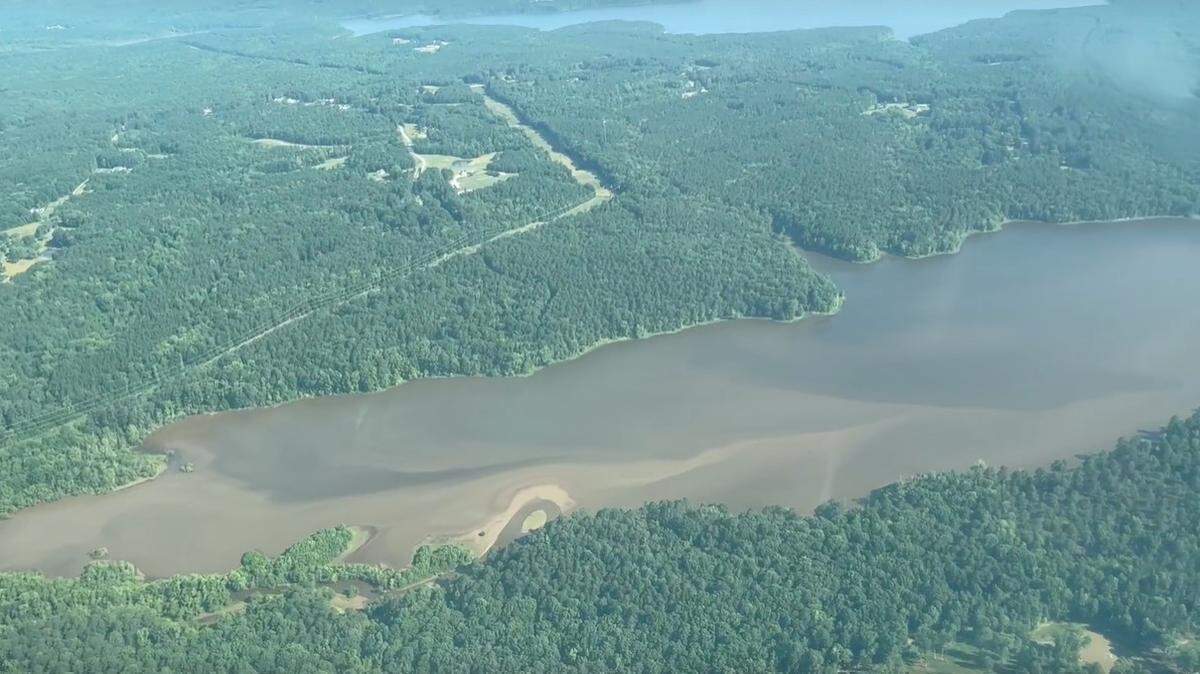
Sound Rivers, an environmental advocacy group, said that for two years before the lawsuit, water samples taken from the north and south ends of Sweetbrier showed sediment pollution levels 10 to 20 times higher than the state’s standard for healthy waterways. The group also documented over 300 instances of permit violations at the site, including the failure to properly install erosion controls.
“Without clean water, we don’t have life,” said Pam Andrews, the CEO of Preserve Rural Durham, a grassroots group concerned that rapid development in southeast Durham is damaging water quality.
As part of the settlement, Mungo Homes will
- Pay $270,000 to the Triangle Land Conservancy so it can buy and permanently protect 62 acres in the Lick Creek watershed, which feeds into Falls Lake
- Pay $30,000 in civil penalties to the federal government
- Pay $50,000 in attorney fees
- Install and maintain additional erosion and sedimentation controls at the Sweetbrier site to prevent further pollution.
In a statement, Mungo Homes said it is reaffirming its commitment to the environment in communities it builds in by “taking significant steps to continue protecting the Falls Lake watershed through on-site sedimentation and erosion control that go above and beyond regulatory requirements.”
The payment to the conservancy will help ensure the 62 acres “will never be developed and will continue to support local ecosystems for years to come,” Mungo Homes said.
The settlement is a victory for environmental groups after years of litigation. The land conservation will preserve trees needed to protect waterways, said Samantha Krop, a Neuse Riverkeeper and director of advocacy at Sound River
“We recognize that Clayton Properties is not the only bad actor in southeast Durham,” Krop said. “We hope this settlement agreement can be a message to others who seek to build hastily and not follow environmental laws that there will be financial consequences and consequences for community members who see, who care, and who are impacted.”
The dangers of sediment
Sediment, or dirt, is the leading type of water pollution in the state, Krop said, caused when material like clay, gravel or boulders gets broken down by weather and erosion and enters streams and rivers. In large amounts, it can harm aquatic life and damage water quality, impacting everything from fishing and swimming to drinking water supplies.
“In order to remediate sediment pollution, you have to remove the dirt and sometimes that process can look even more damaging,” Krop said.
“It’s important to highlight that this is a reality that Durham is going to have to address,” she added. “How do they undo the damage that is being regularly approved and permitted by the city?”
‘One battle in the big war’
Development has become a major concern in southeast Durham. As of 2025, approximately 4,000 acres in this area have been slated for development.
Developers and many city and county leaders argue these projects will provide more affordable and diverse housing in a rapidly growing area. Just two weeks ago, the Durham City Council approved annexing over 300 acres in southeast Durham, paving the way for a new residential and mixed-use development.
“One thing about Sweetbrier, it was the only development that was close to Martin Creek, Lick Creek, Doc Nichols [Road], so we could truly isolate that particular development as damaging in that area,” said Pam Ricks Williams, a retired civil engineer and Preserve Rural Durham member. Since then, multiple new developments have been planned along Doc Nichols Road and Olive Branch Road.
While the recent settlement is a victory, Andrews, a retired science teacher, said the work to raise awareness about the risks posed by these developments is far from over.
“This is like one battle in the big war,” she said.
Andrews believes it’s possible to balance development and environmental protection.
“We should not be pitting affordable housing against the environmental concerns, we should have both,” she said. “We can have affordable housing and we can have trees. We can do a better job for citizens that are going to be living in these communities.”
This story was originally published September 18, 2025 at 5:52 PM.