
Durham approves townhome development in another divided City Council vote
AI-generated summary reviewed by our newsroom.
- Council approves annexation and rezoning for 117 townhomes in southeast Durham
- Vote splits 4−3 after debate over housing supply, environment and infrastructure
- Developer pledges 7% affordable units, stormwater measures and shared path
A controversial plan for 117 new townhomes in southeast Durham was approved Monday night, but not without intense pushback from neighbors and a 4−3 division among City Council members.
The council approved the annexation and rezoning for the Heartland Park subdivision after nearly two hours of debate. The close vote again revealed a deep rift over balancing the city’s need for more housing against fears of environmental damage in the rural area.
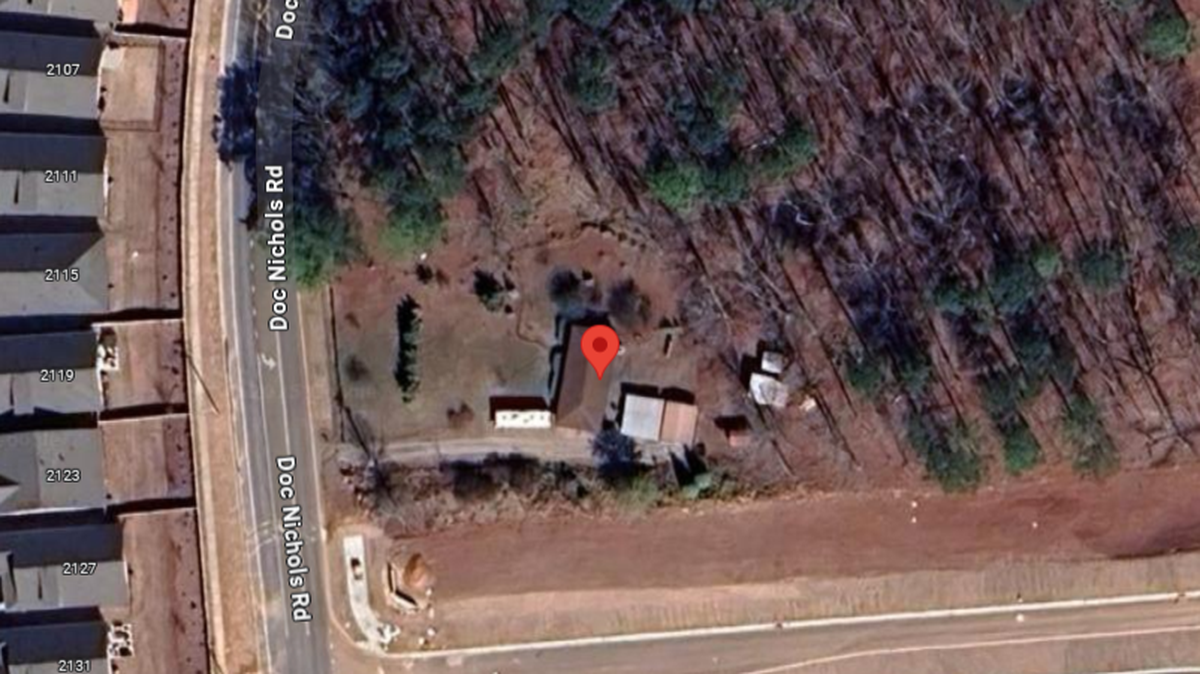
The action lets developer Paul C. Schmidt of Ardent Building build on nearly 13 acres along Doc Nichols Road.
Monday’s vote came after rounds of neighborhood meetings and the Durham Planning Commission’s 7−4 vote recommending the project be denied.
Mayor Leo Williams and council members Javiera Caballero, Mark-Anthony Middleton and Carl Rist voted for the project, while council members Nate Baker, Chelsea Cook and DeDreana Freeman voted against it.
The Heartland Park proposal
The project consists of three parcels along Doc Nichols Road. The rezoning changes the area to Planned Development Residential, which allows for greater design flexibility, including a variety of housing types and open spaces. The project will require extending water and sewer lines to the newly annexed property.
Patrick Byker, an attorney representing Ardent Building, stressed the site’s suitability and the concessions being made to address density and environmental concerns.
“This piece of property does not have any environmentally sensitive areas,” such as wetlands or steep slopes, he said. “This allows us to build more accordingly. … We will be using native plant species, and we will have a 10-foot wide shared path along Doc Nichols.”
Shared paths are off-road designed for bicyclists, pedestrians and joggers.
Byker said Ardent Building will price 7% of the for-sale townhomes as affordable to households at 80% of the area median income. At market rate, the town homes would be about $300,000, compared to a median home price of $425,000 in Durham, he said.
The environmental trade-off
Despite what Byker said, the project faced heavy criticism regarding its environmental impact. Mainly, opponents were concerned about stormwater in an area prone to erosion and sensitive waterways. Runoff from Heartland could flow into Hurricane Creek, which also flows into Lick Creek and Falls Lake, a source of drinking water for Wake County.
Councilwoman Chelsea Cook expressed concern about clear-cutting on the project site.
Byker said density and tree coverage are at odds.
“It’s a trade-off; do you want more housing or do you want trees?” he said. “We have both on this site that’s this small. If we increase the tree coverage by 1% we would lose at least three, probably four or five townhouses.”
The project proposes a 70% impervious surface limit (rooftops, streets, and patios where rain water runs off). To address the pollution concerns, Ardent Building will have temporary and permanent stormwater control measures meet a 100-year storm event, a commitment made after the Planning Commission’s rejection.
Sarah Thelen, a resident in the area, supported the project, saying more housing is needed for first responders.
“The affordable town home options offered by the folks here today would allow the very people that we need to live close to where they work.”
Still, environmental advocates from Preserve Rural Durham and other residents asked for stricter limitations.
Pamela Andrews with Preserve Rural Durham told the council the project should adhere to the requirements to limit pollution and protect trees, similar to the rules laid out in a lawsuit settlement for Mungo Homes, a nearby project.
“Don’t let history repeat itself,” Andrews said. “The effects of sediment pollution can persist in stream beds long after construction.”
Wanda Allen, another resident, said impervious surfaces should cover less than 50% of the project site
“Failing to stabilize the exposed soil violates the Clean Water Act and leaves the taxpayers footing the bill [for] cleaning up the pollution, the streams, and the creeks and the lakes,” Allen said.
Additionally, Ardent Building has not committed to not blasting to break up rock. Resident Tina Motley Pearson said the practice has damaged wells and homes in other areas, “and there’s nothing anyone can do about it.”
The division on the City Council
The debate between City Council members exposed their disagreement over how the city should grow, with opponents characterizing the high-density project as “sprawl,” or expansion into rural areas with a heavy reliance on cars.
“Since 2017, we have annexed half the area of Manhattan in sprawl, in annexations, and rezoning cases that have resulted in primarily low-density, single-family sprawl,” Councilman Nate Baker said. “We’re a growing city, we grow outward. … It’s about how we do it.”
Councilman Mark-Anthony Middleton pushed back on Baker’s Manhattan comparison, saying it is the smallest of the New York City boroughs.
“The impact of that example, I think, does not serve the discussion well, because it relies on us filling in the blanks for ourselves, filling in the blanks based upon what we think we know, what we see on television and movies,” Middleton said. “I think when you look at what’s around this piece of land, what else is going there? What else would we put there?”
Councilwoman DeDreana Freeman challenged new housing developments being built without amenities.
“What will actually be the non-extractive part that comes to this part of town that creates the kind of 15-minute city?” Freeman said. “We’re trying to create community, not just housing. … Where are the daycare centers? Where are the grocery stores?”
Councilwoman Javiera Caballero said while she appreciated Freeman’s comments about projects like Heartland feeling extractive, that was “unfortunately part of being in the system, and it’s a hard thing to reconcile as a human.”
“There is nothing that we do in any day in the center of the Empire — we are the Empire, people — that is not extractive,” she said. “There is no way to exist and be in the United States and be a U.S. citizen without being extractive. I understand the angst. It makes me angry.”
Caballero said she saw project as an incremental improvement toward meeting some of Durham’s needs.
“Are we moving it forward? Is it better than what we saw? Is it responding to some community demand or response? Is it moving the needle on housing?” she said.
This story was originally published October 8, 2025 at 2:54 PM.