‘This has captured my imagination.’ Watch NC chimney swifts roost ahead of migration
Update: The story was updated at 8:18 a.m. Thursday, Sept. 17, with a new date for the virtual swift watch.
Bird watchers are gathering at dusk this month to watch screaming frenzies of chimney swifts swirl in the sky before dropping by the hundreds and thousands into old smokestacks and chimneys.
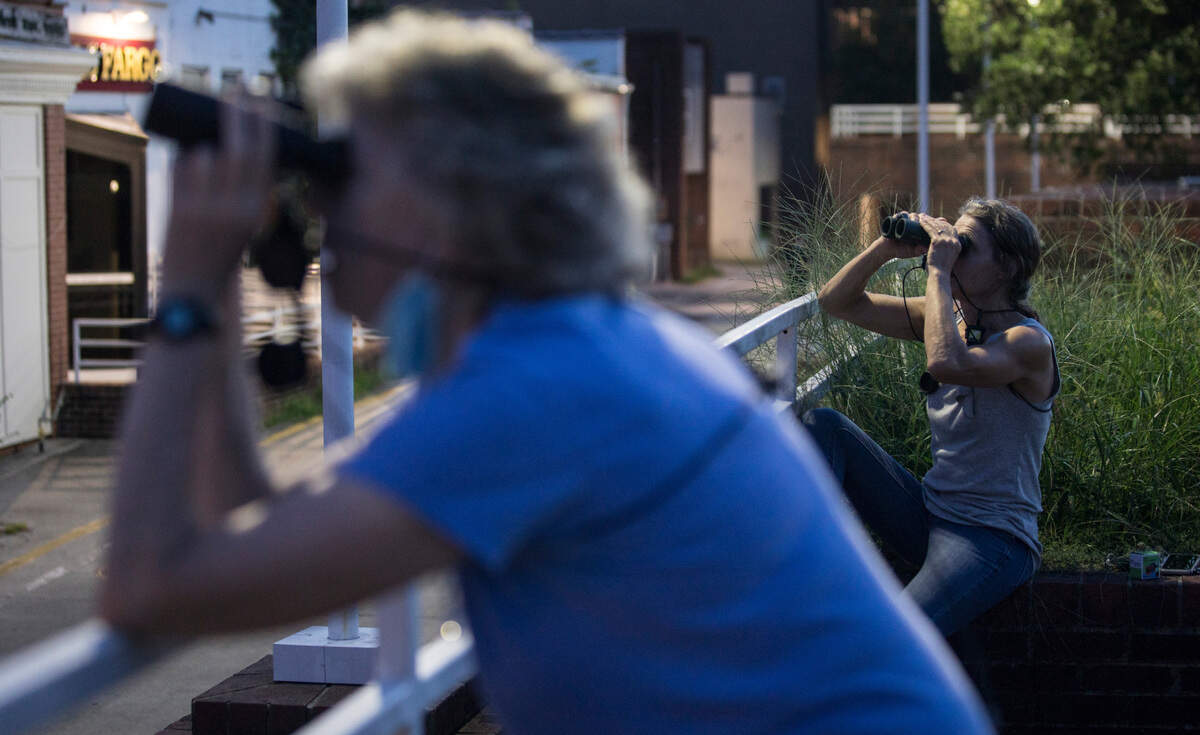
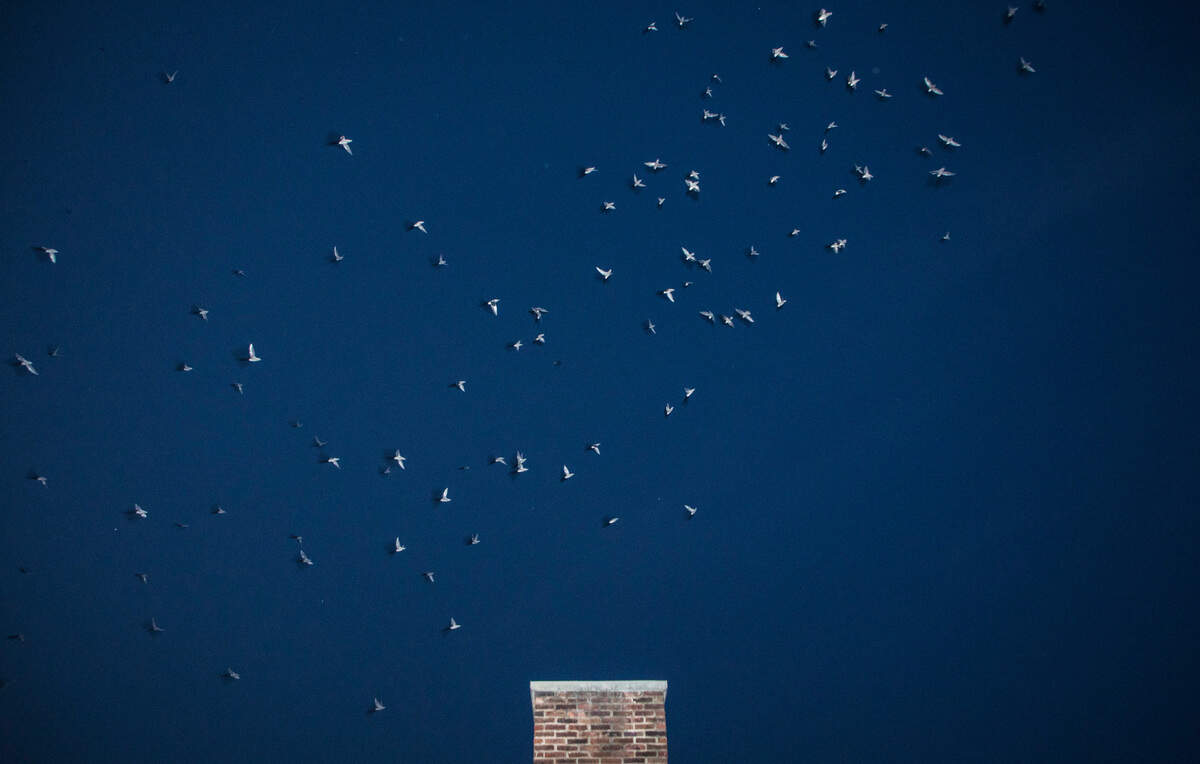
The ritual started slowly Saturday in Chapel Hill, as first one, then another appeared, like fluttering, chirping dots above the people and cars on East Franklin Street. With each pass, they swooped and dove like a carousel.
A few pulled away from the group, heading at breakneck speed for the chimney atop the Chapel Hill Post Office, only to change course in a split-second. The watchers drew their breath when the first swift slipped below the chimney’s ridge, tail first, followed by another.
They counted out loud, first one by one, then by the tens and twenties until, finally, the birds were gone. The cacophonous chittering that had drowned out late-summer cicadas subsided.
“This has captured my imagination,” said Fran Whaley, after watching Saturday’s flock roost. “To come out and see them doing this is just incredible.”
Bird watching, virtual event
Similar scenes happen across the Triangle every night from September to mid-October when the chimney swifts return to South America. There, they will winter in the Amazon river basin until spring brings them north to lay eggs, soar and eat.
COVID-19 canceled the Audubon Society’s annual Swift Night Out on Franklin Street this year. Because of rain, the event has been delayed from Thursday to Monday, Sept. 21. It will be livestreamed beginning at 7 p.m. on Facebook and Zoom, and feature a brief presentation from Curtis Smalling, Audubon North Carolina conservation director.
The N.C. Museum of Natural Sciences in Raleigh also will hold a virtual swift watch this month. The event — Swirling Swifts: Live! — will be led by John Gerwin, research curator of ornithology, and starts at 6:45 p.m. Sept. 23 on Facebook Live.
New Hope Audubon Society President Barbara Driscoll started looking after the swifts at the Chapel Hill Post Office several years ago when she learned that the town had capped the chimney.
Driscoll worked with the town to remove the cap and played recordings of swift calls nightly to lure the birds back to their roost. She and others have returned every autumn for three years to count birds, and this year, they are seeing 1,200 to 1,500 a night, she said.
“It took a little while to get them over there, but once they find a site, they’ll continue to return to that site,” Driscoll said.
Another 965 swifts on average roost in other chimneys at 128 E. Franklin St. That building is owned by UNC’s real estate arm, Foundation Real Estate Holdings Inc., and is part of a future redevelopment proposal that could threaten the roost.
The plans are still being drafted, UNC officials said by email Tuesday, and “environmental impacts, including those to chimney swifts, will be taken under consideration.”
The town also is looking at a plan to replace the Wallace deck with a six-story, modern office building. That project is at least two years into the future, which gives the town time to “better understand the situation and develop any needed response to protect the chimney swifts,” spokesman Ran Northam said in an email Tuesday.
“We are aware of their existence and our understanding is that they reside in the chimneys of the Post Office and other older buildings in downtown and not at the parking deck,” Northam said. “At this point it is not anticipated that the demolition and construction would harm their domains.”
There could be more swift roosting sites across Orange and Durham counties that just haven’t been reported, Driscoll said. Volunteers in Durham are watching a large site this year near Duke and Trinity streets, where roughly 5,000 swifts have been seen, she said.
In Raleigh, Wake Audubon has compiled a map of known swift roosting spots.
Swift habits, lifestyle
Chimney swifts are members of the family Apodidae, meaning “without feet.” Unlike songbirds, they cannot perch on twigs and wires, and they can’t get up if they land on the ground.
What makes their feet special, however, are the two opposable toes that turn from back to front, allowing them to cling to buildings and chimneys. Their spine extends beyond their tail feathers, helping them to remain stable.
Swifts live and breed in the air, eating up to a third of their body weight in flying insects daily and snatching small twigs in mid-flight to build nests. They weave the twigs together, using their saliva to glue them inside chimneys.
While thousands can roost in one chimney in the fall, only one pair builds a nest in a chimney in the spring.

A 2019 study that analyzed the gathering of swifts found that they use visual cues to maintain a safe distance while flying at speeds between 30 mph and 40 mph. Their strong vision also helps them slow their descent just in time to enter a chimney.
The habit of entering chimneys in pairs or groups once a lead bird has landed may be an attempt to avoid predators, such as owls, hawks and crows, or adjust their speed and trajectory, the study’s authors said.
“It’s one of the last easily accessible wildlife spectacles,” Smalling said. “It’s great to still have a spectacle like that that happens in the city. You don’t have to go out to Pocosin Lakes to watch 80,000 snow geese. You can watch 10,000 swifts come down your school chimney. It’s pretty cool.”
Pesticides, chimneys, climate change
Between 70 and 80 types of swifts live worldwide, but only the chimney swift is native east of the Rocky Mountains. However, their numbers are falling by roughly 2.5% a year. Roughly 72% of the chimney swift population was lost between 1966 and 2015, according to the North American Breeding Bird Survey.
Torrential rains and warmer spring nights have emerged as potential new threats from climate change, but more significant damage was done when the pesticide DDT became a common insecticide in the 1940s and 1950s, Smalling said.
DDT was banned in 1972, but not before it nearly wiped out small flying beetle species on which the swifts fed, he said, leaving them to dine on leaf hoppers, flies and mosquitoes. The new, unfamiliar food source may have reduced their reproduction ability, while DDT and air pollution reduced the available calcium, leading to thin eggs, he said.
Forgoing pesticides in favor of native plants and leaving detritus, such as leaves, to rot on the ground can encourage more diverse insect populations, Driscoll said. Homeowners also can preserve old chimneys or uncap them from March to October, she said.
Swifts also are facing a loss of habitat as the chimneys they adopted in the 1600s are being removed or replaced with slick metal sleeves. Swifts still rely on large, hollow trees and caves as they move south to warmer climates, Driscoll said.
One study showed the Triangle is losing more than 10% of the suitable chimneys each year, Smalling said.
“These bigger roost chimneys are becoming scarcer on the landscape, so we would expect to see bigger concentrations in fewer places, which is usually not good,” he said. “Conservation is something where you don’t want all your eggs in one basket as it were.”
Bright lights cause crashes
Bright lights and tall, glass buildings are another significant threat in cities, where the reflections can confuse the birds, causing them to fly around until they exhaust themselves or crash, especially when low clouds or fog impair their vision.
Up to 2 billion birds each year die from collisions, mostly between mid-September and early November, Smalling said. One high-profile incident last year killed over 100 swifts and left about 200 seriously injured or stunned after they flew into the NASCAR Hall of Fame building in Charlotte. In Wake County, volunteers conducting early-morning canvasses have found as many as 70 dead birds a year.
NASCAR has since joined cities in lighting changes that reduce the potential for bird deaths. Charlotte, Raleigh and Winston-Salem also have Lights Out programs that encourage building owners to turn out the lights between 11 p.m. and dawn. Other changes include uplighting, landscaping and less-reflective or fractured, multi-paned glass, Smalling said.
The Durham skyline is an emerging concern because of tall development downtown, Driscoll said. Earlier this year, Audubon has planned to talk with the city about what it could do to head off a problem, but that was delayed because of COVID-19, she said.
Crashes into homes and smaller buildings also can be a significant problem.
“A lot of them may die, but they may not die right there. They may fly off and then die somewhere else,” Driscoll said.
Swift towers, how to help
A growing alternative is the chimney swift tower, which mimics the swift’s preferred habitat. Prominent towers are located in the Triangle at Sandy Creek Park in Durham and at the Prairie Ridge Ecostation at the N.C. Museum of Natural Sciences in Raleigh.
The Prairie Ridge tower is 30 feet tall and can hold thousands of swifts, according to Wake Audubon member John Connors. It has portholes for viewing and for installing cameras and other equipment used to study the birds.
Other ways to help include:
▪ Keeping older chimneys open, at least from late March to October when the birds are nesting.
▪ Encouraging your school, business or government to preserve old chimneys
▪ Reporting nesting and roost sites to the N.C. Audubon Society or eBird.org
▪ Getting your property evaluated and certified by the Audubon Society for native and invasive plants, and ways to improve bird habitat. The cost is $50.
This story was originally published September 16, 2020 at 1:54 PM.