NC school board will rename school honoring segregation-era leader despite concerns
The Orange County school board voted Monday night to change the name of a middle school, despite its namesake’s family saying the public did not have all the facts.
The 5-2 vote to change the name of C.W. Stanford Middle School is not an indictment of former school board leader C.W. Stanford, board members said, but an acknowledgment that his board upheld separate but unequal education for Black students.
“My vote reflects a belief that we must stop memorializing a time when this board, as a whole, was treating families and students of color as second-class of citizens,” Chair Hillary MacKenzie said. “This vote is not a personal indictment of the heart of C.W. Stanford, but rather a recognition that it is time for OCS to own the generations of harm that have faced our students and families of color here, to speak these truths openly, and to move forward into a time of healing.”
The board also voted unanimously Feb. 8, to rename Cameron Park Elementary School, named for a noted slaveowner. The board has not chosen new names for either school but could rename both by the end of summer.
Dena Keeling, the district’s chief equity officer, reported in December that most county schools are named for Black educators, Native American history or historic, local places. Stanford Middle is named for Charles Whitson Stanford Sr., who served on the Orange County school board from 1941 to 1967, including 16 years as chairman.
The district’s school names report, written with help from its Equity Task Force, concluded that little was done during Stanford’s time to integrate Orange County’s schools or improve its Black schools.
It’s not necessary to delve into how Stanford may have upheld segregation, board member Sarah Smylie said, and it’s not her intent to judge his legacy. But the board is in a position to acknowledge some of the harm of the past, she said.
“I think it is enough to say that he has had this honor of a school named after him for 50 years, and that where we are right now to me is a place of saying that period of segregation was incredibly harmful to the Black members of our community and that he is associated with a board that oversaw that time,” Smylie said.
Board members Bonnie Hauser and Will Atherton voted against the change, after urging the board to get accurate information about Stanford’s history.
Several Black residents interviewed about the board’s decision on Tuesday said their priority is not the name of a school, but how the students inside are being served.
Efland resident Leo Allison said he doesn’t support putting the names of segregationists on schools, but he’s “also not in the business of rewriting history.” The district should prioritize putting more money into the schools for resource officers, music and other programs, he said.
“I’m more concerned that we actually can get in the history book, rather than taking people out of the history book,” Allison said.
Hillsborough resident Danielle Price, who attended Stanford Middle, said she doesn’t understand why the name is an issue now.
“My feeling on the situation is, in the midst of crisis planning, this is what we choose to focus our time and energy on?” she said. “We have real issues in our district that are plaguing our district that have to do with equity and equality and we choose to focus time, money and energy on that.”
Rural issues, progressive politics
The Stanford family spent the last two weeks researching their ancestor’s history through news stories and district records.
Grandson Don Stanford, who outlined his findings in a letter to the board, said his grandfather worked within the existing political system to make life better for all people.
Stanford “treated everyone with dignity and respect,” he said, but “his prodigious efforts on the Board of Education were complicated by a century-old system of laws that enforced discrimination by segregation against persons of color — a system that was slowly but surely being dismantled.”
Charles Stanford Sr. was 27 when his father died of a heart attack in 1922 and left him to run the family’s 1,000-acre dairy farm in western Orange County, said Don Stanford, an attorney and UNC law professor who lives in Chapel Hill.
The 1917 graduate of State College (now N.C. State University) also was director of Central Carolina Farmers Exchange for 31 years and a former director of the N.C. Dairy Foundation, the N.C. Milk Producers Association and the Bank of Chapel Hill (later NCNB).
Both Charles Stanford and his wife, Mary Willcox McIver, a school teacher, worked for “enlightened progressive” policies and politicians, he said.
In 1948, they campaigned for Stanford’s college roommate and Alamance County farmer Kerr Scott as governor. In 1950, they supported former UNC President and U.S. Sen. Frank Porter Graham in his unsuccessful run in one of the state’s most bitter and racist political contests.
Graham, who Scott appointed to fill a vacant Senate seat, lost the election. Both were considered moderate on race relations.
The Stanford family also was active in Terry Sanford’s 1960 N.C. gubernatorial campaign and in Dan K. Moore’s 1964 gubernatorial campaign, both against the segregationist I. Beverly Lake, Don Stanford said. They also supported U.S. President Lyndon B. Johnson, who pushed for both the Civil Rights Act of 1964 and the Voting Rights Act of 1965, he said.
Stanford’s daughter Jean Stanford Mann, who lives in the family home, remembered him in a 2006 account as the man who “made things happen” in a quiet way.
“Mr. Charlie has the genius of being able to stay young and keep abreast of the time,” Stanford Mann said, quoting former Orange County Superintendent G.P. Carr. ”Another outstanding quality of Mr. Charlie’s is that he seems always to know the right solutions to a problem; and in the end he winds up on the right side. He has been a steadying influence and a source of strength to the board throughout his term of office. We look to him continually for leadership.”
Orange County slow to integration
Stanford’s tenure on the school board marked a pivotal time for Hillsborough’s Black school, which opened in 1936 as the Hillsboro Negro High School. In 1942, the district hired A.L. Stanback as principal but did not act on requests from the Black community for new buildings, equipment and additions, research showed.
The Stanfords noted that Orange County, like other local governments, was still recovering in 1941 from the Great Depression and was facing a world war. Jim Crow was the law of the land in many places, and racial terror and lynchings were common.
What the district’s research did not note, is that very little non-essential construction was allowed during World War II and building materials were in short supply, said James Stanford, another grandson of Charles Stanford Sr. and Don Stanford’s brother.
The district also did not have a way to raise more money for building schools, Don Stanford said. The state paid for teachers and textbooks, he said.
After the war, in 1946, the three-member school board bought land for the new all-Black Cedar Grove Elementary School and approved building 12 classrooms and a gym for the newly named, all-Black Central High School. In 1948, the board and the county commissioners appointed a 12-member panel that included two Black residents to consider other capital needs, such as schools.
His grandfather didn’t make the laws that kept schools segregated, but under his leadership, the board did move toward integration, said Don Stanford, who was a high school sophomore when Chapel Hill High School desegregated in 1966.
History compiled by the Orange County Historical Museum showed integration was a gradual process over several years in the Orange County Schools, with only one of two Black families who applied to attend the county’s white high school in 1963 being admitted.
The board approved three more Black student transfers the next year, and in 1965, the district got federal approval for its “freedom of choice” transfer plan.
Only 7% of the district’s Black students attended an integrated school that year, the research said, and district officials told the federal agency that “our board has gone as far in the desegregation of its school and staff as it is willing to go.”
In 1967, federal officials ordered the district to come up with a more racially balanced program. Orange High School was integrated in 1968, followed by several years of overcrowding, tensions and fights.
Orange County and Chapel Hill schools “were in the forefront of North Carolina’s desegregation,” Don Stanford said, noting most of the state didn’t integrate until after the Swann v. Charlotte-Mecklenburg Board of Education ruling in 1971.
“It was a difficult and bumpy road, and there is still progress to be made,” Don Stanford said. “But no George Wallace stood ranting in the school house door. No National Guard was needed to enforce the law, and to assure student and public safety.”
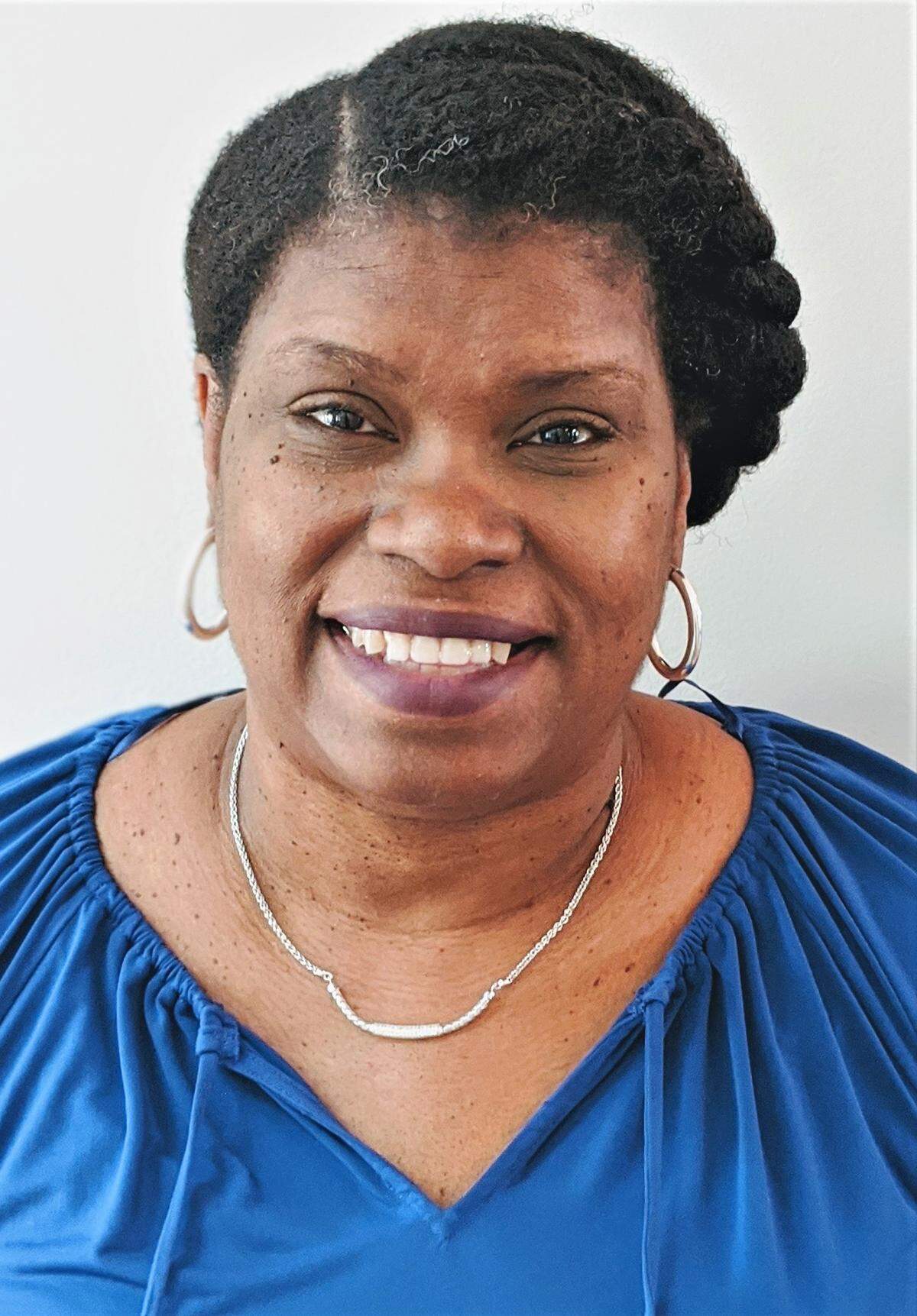
But it did cause harm when Stanford and other board members delayed integration after 1954’s Brown vs. Board of Education, said LaTarndra Strong, founder of the Hate-Free Schools Coalition in Orange County and a member of the district’s Equity Task Force. She asked the Stanford family to consider the change a “small gesture” toward undoing that harm.
“I would ask you to consider the members of our board, the people in our school district, the students that were alive during that time that were denied an education,” Strong said Monday. “That’s the part of the conversation that doesn’t get talked about enough. It doesn’t get talked about so much that we have to have Black History Month to bring up those conversations.”
Questions about public input, priorities
Over 400 people attended the naming of Stanford Junior High School in 1970, including the widow of former Gov. Kerr Scott, who spoke. Stanford, who died about a month later, was too sick to be there, according to news reports.
Grandson James Stanford said the school was named based on his grandfather’s actions, not the school board’s.
“They named that school after him, because they knew around that time in ‘69-’70 what kind of individual he was and what he stood for and what he had done for Orange County,” James Stanford said. “Moving along in the context of the restrictions that were placed upon him at the time, I think he did a pretty good job, and I think the school board back in ‘70 thought the same thing.”
At the Feb. 8 board meeting, the family invited board members to talk with them, but no one reached out, James Stanford said. He called the move to rename the school “a slap in the face by what appears to be a very narrow group of people.”
“It gives you the distinct impression they don’t really want input. They have their own agenda,” James Stanford said. “They know what they want to do, and come hell or high water, that’s what they’re going to do.”
The News & Observer’s efforts to reach board members Brenda Stephens and Jennifer Moore were unsuccessful Tuesday.
This story was originally published February 22, 2021 at 6:21 PM.