Chapel Hill seeks to control the future of iconic Franklin Street. Here’s the plan.
The town has a chance to make long-desired improvements to downtown Franklin Street and keep in place expanded sidewalks that have supported struggling local businesses, Chapel Hill’s mayor and chief official booster say.
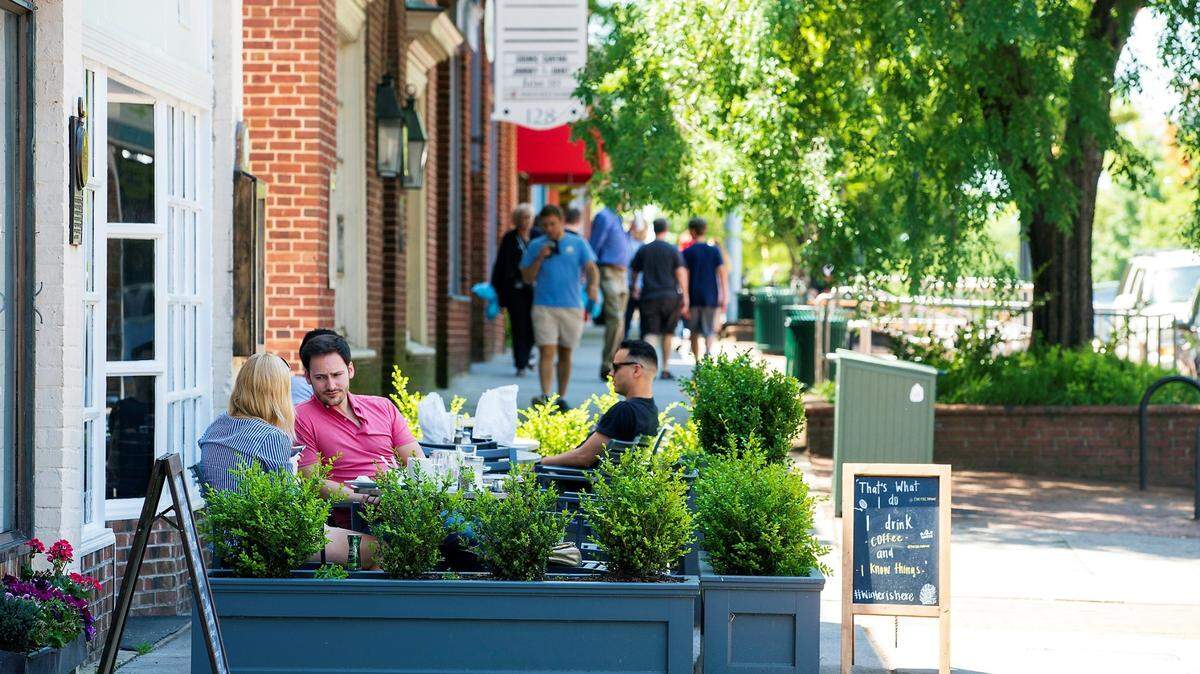
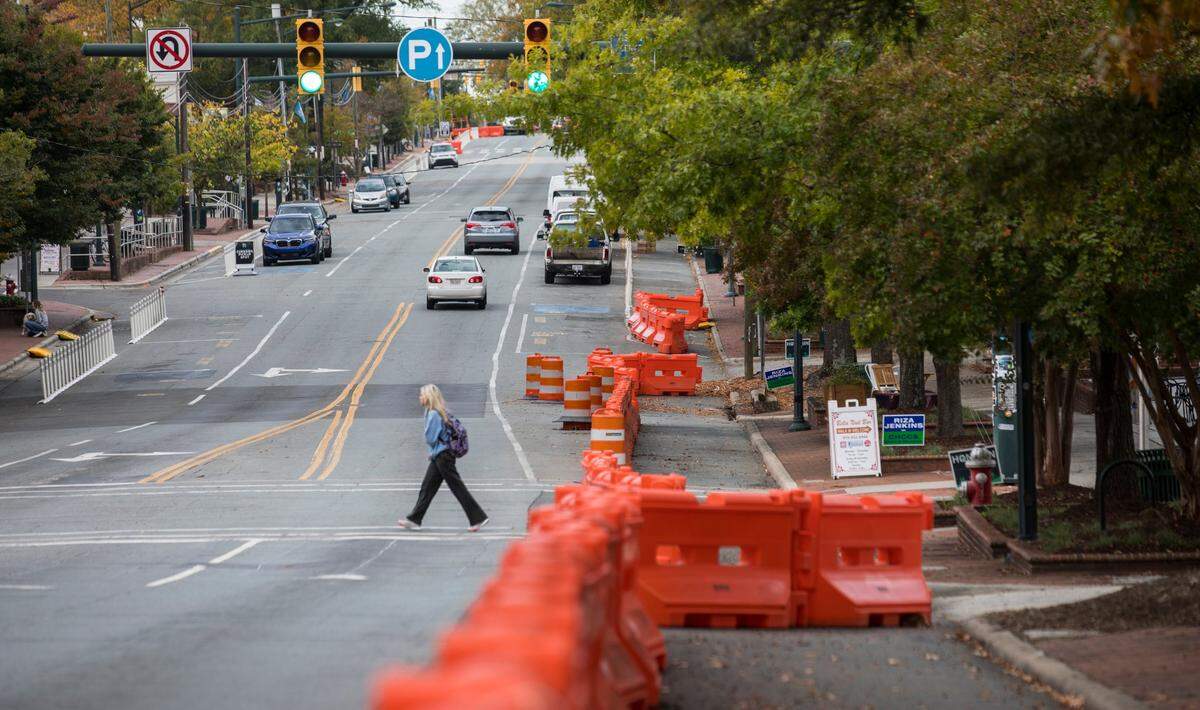
Matt Gladdek, executive director of the Chapel Hill Downtown Partnership, and town staff worked with state officials last year to reduce Franklin Street traffic to one lane in each direction through roughly a mile downtown. The parking spaces were used to expand the sidewalks, while the right lanes were used for parking.
The expansion gave restaurants more room for outdoor dining despite COVID-19 indoor occupancy limits. Still, longtime favorites like Ye Olde Waffle Shoppe and Crook’s Corner were forced to close. Others lost 30% or more of their business.
“What we’ve learned during this (more than) year-long experiment is just how valuable these expanded sidewalks are,” Gladdek said.
“Many businesses would not still be here were it not for those expanded sidewalks, and a number of businesses had a record summer where normally we have doldrums when students leave, in part because our residents have come out to eat and dine in beautiful spaces,” he said.
That could come to an end in May if the town does not act, Gladdek said Wednesday night in petitioning the council. Mayor Pam Hemminger said the proposed change would give the town control of the iconic street from Henderson Street to Merritt Mill Road.
The town also could look into addressing longtime stormwater issues, she said in a separate letter to the council.
The N.C. Department of Transportation, which maintains the state-funded street, would still control Franklin Street from Henderson Street to Interstate 40. Hemminger noted that DOT is open to the idea, which would allow the town to try new ideas, such as putting planters in the crosswalks to building larger corners at intersections to slow down turning cars.
The council forwarded the request to town staff to study the issues and potential costs. The council will discuss it at a future meeting.
Downtown design district
Susana Dancy, chair of the town’s Community Design Commission, backed the change Wednesday and reminded the council that the CDC has asked for a downtown design district.
“We really think that this is a great initiative, and we want to offer our full support for this exploration,” Dancy said. “We hope that it is successful so that downtown and Franklin Street are able to build on the vibrancy that we saw with the sidewalk dining this summer.”
On Tuesday, Dancy shared photos with other CDC members that she took of the sidewalks in Georgetown, D.C., where the city installed Jersey barriers designed to separate lanes of traffic and decking boards over the pavement to create a more ample sidewalk for dining and pedestrians last year.
The Chapel Hill Downtown Partnership’s goals are “converging in a nice way” with its work with the town and UNC to start a business innovation district, she said. Commissioner Susan Lyons suggested a role for the CDC in how that unfolds, as Commissioner John Weis cautioned that it could take years for the town to achieve “the bigger picture.”
“I have long felt that downtown is an underappreciated and underperforming business district and in particular, recently, it has been hard hit,” Weis said, noting, the “town has got to assert itself in terms of what it wants to accomplish.”
The town has made several improvements to downtown’s streetscape over the last few years, including new and updated sidewalks, colorful and signalized crosswalks, utility box art projects, and renovations to the Post Office and Varsity Theater alleys. Traffic lanes were reduced and bike lanes were added to West Rosemary Street from the town limits to North Columbia Street.
Next summer, DOT is scheduled to repave and restripe West Franklin Street from Columbia Street to Merritt Mill Road.
This story was originally published October 28, 2021 at 8:06 AM.