Weigh in this week on UNC’s plans to redevelop downtown Franklin Street property
UNC will restart a public conversation this week about plans to redevelop a key section of East Franklin Street bridging downtown and campus.
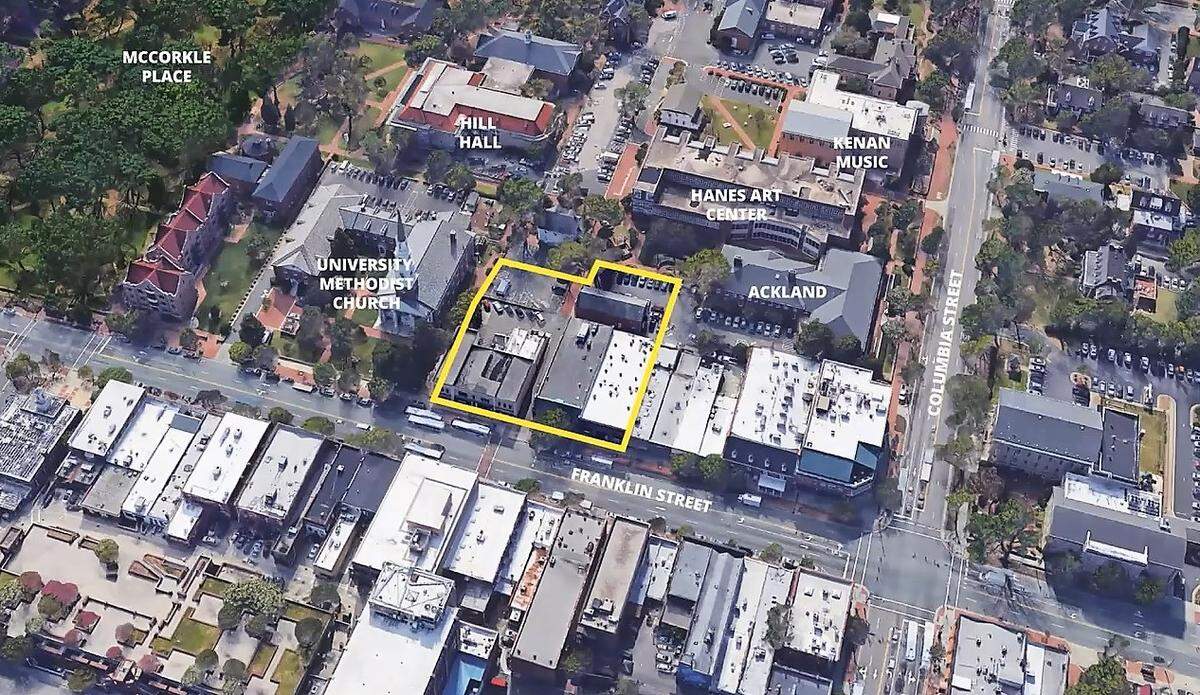
For many years, Porthole Alley has been a busy gateway to UNC’s campus, flanked on one side by the Hill Building, home to Carolina Coffee Shop and other small businesses.
On the other side is 134 E. Franklin St., home to the UNC Visitors Center and other university programs, and 128 E. Franklin St., which houses Johnny T-Shirt and other small businesses.
The buildings are owned by the university, the state and Chapel Hill Foundation Real Estate Holdings Inc., a not-for-profit corporation founded by the UNC-Chapel Hill Foundation. REH, which also owns Carolina Square at 123 W. Franklin St., pays property taxes on its buildings and could continue to pay those taxes if the buildings are redeveloped.
They are not part of the town’s Franklin-Rosemary Historic District or the Chapel Hill National Register Historic District.
In 2019, news about UNC’s Porthole Alley Redevelopment Project ignited an outcry among Chapel Hill residents, students and alumni who feared the loss of longtime tenants, including Carolina Coffee Shop, which will celebrate 100 years on Franklin Street next year.
Others worried about losing the classic, two-story Franklin Street character of the buildings.
Public meetings this week
The public’s last opportunity to weigh in was in January 2020 before the COVID-19 pandemic hit. This week, UNC officials will update the public and take comments about the pending concept plan in a series of meetings:
▪ 9-10:30 a.m. Thursday, Ackland Art Museum, Art& Gallery
▪ 2-3:30 p.m. Thursday, Ackland Art Museum, Art& Gallery
▪ 5-6:30 p.m. Thursday, online meeting via Zoom. Register at bit.ly/3F0bU4P
▪ 8-9:30 a.m. Friday, online meeting via Zoom. Register at bit.ly/30biDJW
Town Council member Michael Parker urged UNC officials to think about ways to expand their public outreach beyond the campus and downtown.
“This is not just a university project. This is a downtown project, and I think we really need to get as broad a cross-section of public engagement as we can,” Parker said.
The updated plan would demolish both 128 and 134 E. Franklin St., along with the Porthole Building located behind them. A new building could be constructed with three stories on East Franklin Street and additional stories in the back.
The project would add ground-floor retail that doesn’t exist now and also provide space for the UNC Visitors Center, Undergraduate Admissions and other university programs. It also would amplify the alley’s role as a pedestrian corridor flanked by green courtyards where students and the public could gather.
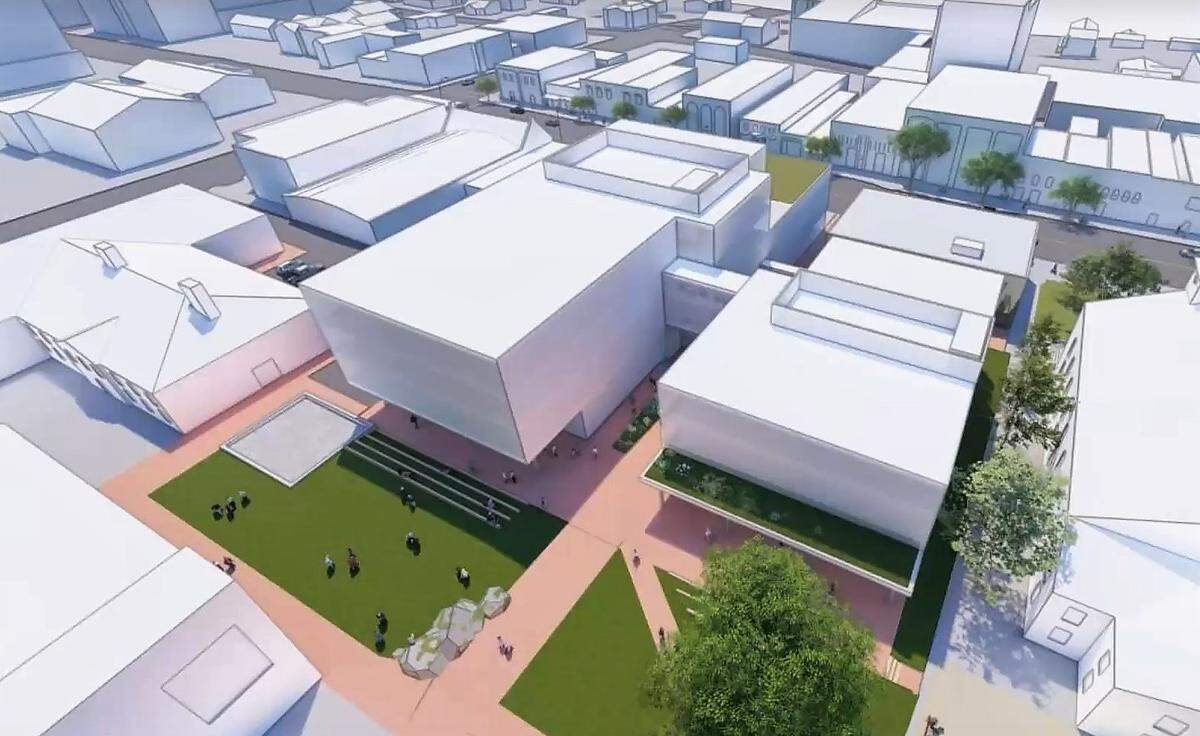
The building’s height remains in flux, UNC Architect Evan Yassky said. Most buildings on the northern side of Franklin Street are two stories, although The Central (formerly the CVS building) is three stories.
“We do believe that increasing the density of the development here is important to both meet programmatic needs but also to really contribute to the vibrancy and renewal of this block that we’re talking about and that sense of economic development and renewal,” Yassky said.
Gordon Merklein, UNC’s associate vice chancellor of University Real Estate Operations, has said the public process, which would include Town Council hearings, could delve into urban density, pedestrian access, building scale, design and other issues.
The university understands the desire to preserve the historic Hill Building, Merklein told council members at Friday’s meeting of the Council Committee on Economic Sustainability.
Revitalization, economic investment
But UNC also sees an opportunity to bring over 50,000 campus visitors to downtown, add more retail spaces and create a reason for students living on South Campus to again patronize downtown shops and restaurants, Merklein said.
Downtown business owners have expressed concern in the past that dining options available on UNC’s South Campus dramatically reduced their student customer base, he said.
“Right now, where the admissions office is located on campus, it’s a long walk from downtown, and so we’re hoping to bring those people downtown and really engage with the students coming here, so they get to experience both the town and university simultaneously,” Merklein said. “We hope that they will stay here obviously afterwards to shop, dine, etc., really get to have the whole experience.”
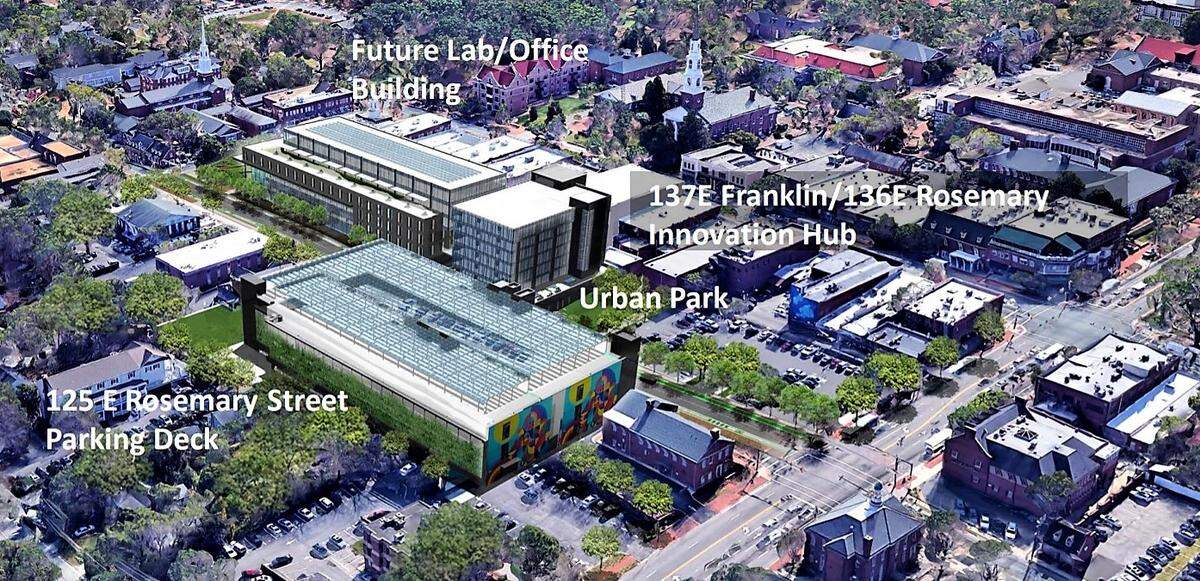
The project also is key to the university’s work with the town and Grubb Properties to reinvigorate the downtown district with a business and research hub and add economic sustainability.
The town, after swapping land with Grubb Properties, started construction this summer on a new, 1,100-space parking deck at 125 E. Rosemary St. The Town Council also is reviewing Grubb’s plans to replace the existing Wallace Parking Deck with a 238,000-square-foot office and wet lab building.
The new office building would complement Grubb’s renovation of The Central, which stretches from East Franklin to East Rosemary, into an Innovation Hub. Grubb also has proposed a seven-story apartment building at the northeastern corner of East Rosemary and North Columbia streets. Two pocket parks also will be added to East Rosemary Street.
“We’re excited for this partnership for the benefit of downtown and for the benefit of supporting our new parking deck, having them lease some spaces in there,” said Dwight Bassett, the town’s economic development director.
“We think it’s a really nice merging of the front door of Chapel Hill into what you’re getting to when you get beyond that front door — our downtown into the university — and having the university bring part of that university to touch Franklin Street is pretty important for our future,” Bassett said.
This story was originally published November 10, 2021 at 7:30 AM.