Orange County forest faces competing demands for affordable housing and preservation
A neighborhood’s plans for affordable housing will compete with others’ desire for recreation and environmental preservation this week when local governments talk about the 164-acre Greene Tract in Orange County.
The Carrboro Town Council and the Orange County Commissioners will meet virtually at 7 p.m. Tuesday. The Chapel Hill Town Council will meet virtually at 7 p.m. Wednesday.
There is no official development plan yet for the land, just north of the Chapel Hill town limits in the historically African-American community on and around Rogers and Eubanks roads.
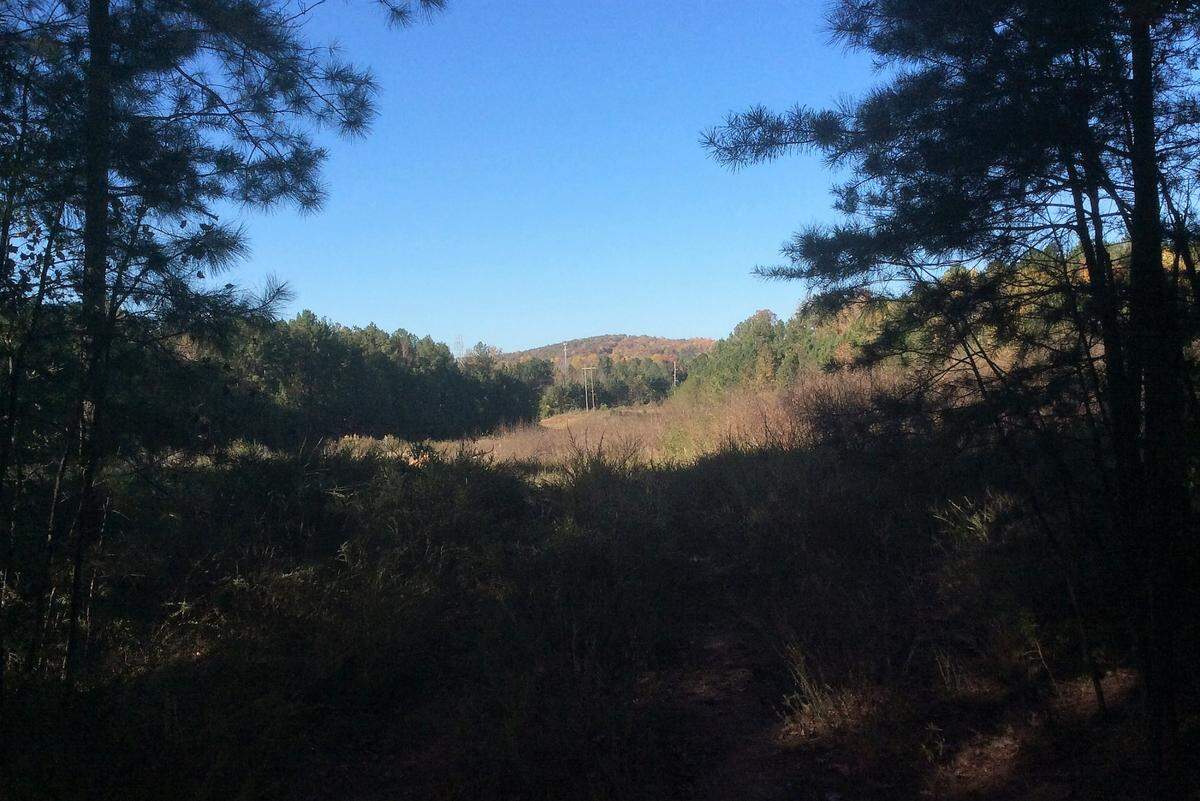
The forest holds the tributary headwaters that feed Old Field, Bolin and Booker creeks and has been seen for years as a potential place for affordable housing. Older residents remember Black-owned family farms and sawmills, playing under the trees as children, and the day that the Orange County Landfill opened on Eubanks Road in 1972.
The governments promised paved streets, a community center and other services in return, but residents lived instead with 40 years of trash, traffic, buzzards, septic issues, odors and failing wells. When the landfill closed in 2013, as it neared capacity, the governments were left with the Greene Tract, which was purchased in 1984 for a landfill expansion that never happened.
It has two parts: a 60-acre, county-owned Headwaters Preserve and another 104 acres jointly owned by the county, Carrboro and Chapel Hill. The governments will consider re-mapping those areas this week to create a new Headwaters Preserve, leaving the rest for a community conversation and months, if not years, of planning for its future.
.jpg "Greene Tract 11-16-2021 maps (1).jpg")
Visions of affordable living, a park
The Greene Tract was an election issue this year for at least one incoming Chapel Hill council member and brought out over 200 people, including elected officials, for virtual information sessions last week.
Many residents, like Alex Hardee of Chapel Hill, said affordable housing is important, but so is preserving the environment.
“As a lifelong North Carolinian, it’s really disheartening to see such a change in the character of the county and the character of the state, and a loss of green space for all of us to access,” Hardee said. The Greene Tract is “a really, Incredibly beautiful place, and I feel like there’s this sense that nothing is ever as valuable as what theoretically might replace it.”
Abel Hastings, founder of Friends of the Greene Tract, and want a smaller amount of affordable housing and the rest left as “the greatest park in our community.”
Others urged elected officials to prioritize the wishes of Rogers Road neighbors and the county’s affordable housing need, especially for those earning up to 60% of the area median income, or $86,400 for a family of four. That would serve single residents earning up to $36,300 a year or a family of four earning up to $51,840, including teachers, firefighters, nurses and service workers.
The governments would leverage their developable land by working with a nonprofit or private developer to build affordable housing and potentially secure tax credits to help pay for construction.
The Rev. Robert Campbell, a lifelong Rogers Road resident and community organizer, noted many past conversations about the Greene Tract’s future and urged people to talk to residents like him about it.
“We are in a position now to override the voices of the NIMBYs and do the right thing for those that clean your streets, empty your garbage, take out your recycling,” he said. “All of the people who do the domestic work at the university and all these different businesses in downtown Chapel Hill, but they cannot afford to live in Chapel Hill.”
Evolving community, concept plan
While the Greene Tract hasn’t changed much in 40 years, the surrounding area has, adding single-family neighborhoods, apartment complexes and shopping centers.
The Rogers-Eubanks neighborhood now has a community center, water and sewer access, and a diverse mix of residents. Roughly 20 acres was approved for the planned St. Paul’s AME Church mixed-use development, St. Paul Village, and other land was rezoned for home-based business and modest housing.
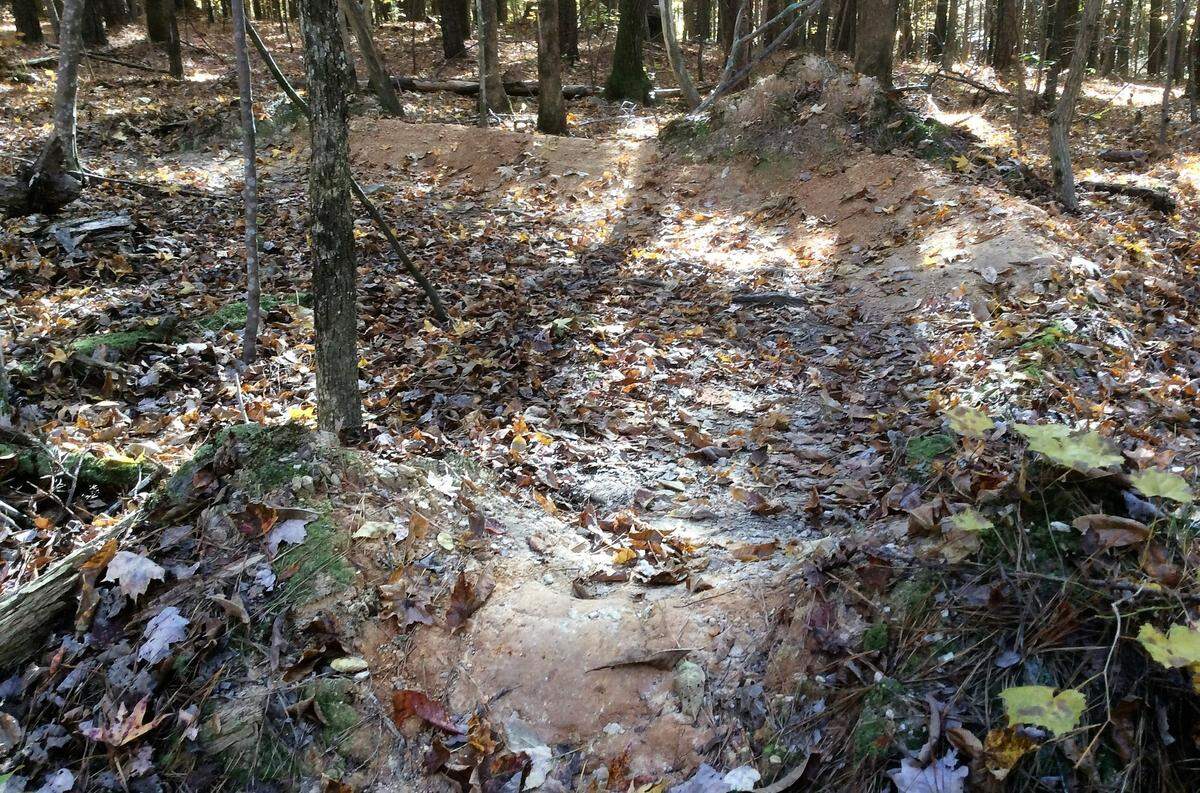
Hikers and mountain bikes have joined neighborhood children, forging a maze of unofficial, undulating trails through the forest. Fears of gentrification have grown because of developers attracted to the landscape and its available utilities.
A 2002 resolution approved by the county and towns set aside 18 acres of the 104-acre tract for affordable housing. The rest, including the Headwaters Preserve, was designated for preservation. In 2007, Chapel Hill held community conversations and drafted the Rogers Road small-area plan, which was shelved for the next decade.
In 2016, the neighbors, supported by the Marian Cheek Jackson Center, participated in another conversation, resulting in the “Rogers Road: Mapping Our Community” report. It recommended mixed-income housing, a limited amount of small-scale businesses and services, parks and a school.
The report also talks about preserving 80% of the Greene Tract, but Hudson Vaughan, the Jackson Center’s former executive director, said that percentage has been taken out of context. The 2016 report was not meant to be a land-use plan, he said.
In 2016, Rogers Road neighbors thought more of the land surrounding the tract could be densely developed, leaving more of the Greene Tract itself for conservation, he told The News & Observer in an interview Tuesday. That included 15 acres on the Neville Tract to the north and 15 acres of Duke Forest land at the Rogers-Eubanks intersection.
Both tracts turned out to be unavailable for development, but that didn’t change the neighborhood’s desires or limit how the Greene Tract could meet them, Vaughan said.
“I think it was trying to get at the point that many of the Rogers Road neighbors were supportive of conserving critical environmental areas, which were assumed to be larger than they actually are, while still accomplishing development priorities,” Vaughan said. “The number was not meant to be used as a hard and fast number against collective planning processes and community development goals — and given the changing context, the percentage listed in the report is inaccurate.”
The conversation intensified in 2017 when development threatened one of the town’s few remaining mobile home parks, and the Greene Tract concept plan was reconfigured to include even more affordable housing. In July 2019, the governments agreed to use 82 acres for affordable housing, commercial use, a school and a park, leaving 22 acres, plus the Headwaters tract, for conservation.
They also commissioned an environmental study to identify critical natural areas and areas for potential development.
The current map designates 45 acres on the western side of the tract, adjacent to the Rogers-Eubanks neighborhood, for affordable housing and limited commercial development. Another 21 acres on the eastern side of the forest, along the railroad tracks, could stay undeveloped for at least 20 to 30 years, and 16 acres on the southern side could provide a future school site and recreation.
Chapel Hill-Carrboro City Schools officials have said a new school might not be needed for 10 to 20 years.
The rest would create a 22-acre Greene Tract Preserve at the end of a newly reconfigured Headwaters Preserve. Both would be put under a permanent conservation easement.
That would conserve only 21% of the jointly owned land, instead of 80% as called for in the 2002 resolution. The amount of land that would be conserved rises to 50% if the Headwaters Preserve is included.
Planning process, public dialogue
While nothing about the Greene Tract’s future is set in stone, the governments adopted an interlocal agreement in April that:
▪ Requires joint action in choosing professional services, making development agreements, and conducting public outreach
▪ Creates a process for resolving disputes, including through mediation
▪ Can be ended if the parties agree to that or if one party gives 60 days written notice.
▪ Allows 18 months for deciding how the property should be used
In September, there were plans to restart the public dialogue — delayed by the COVID-19 pandemic — but it was again delayed, this time by the delta variant. It’s unclear if time will be added because of the delay, but the agreement does extend the deadline by six months if there’s still no agreement within 18 months.
Once they approve the new maps, county and towns officials will hold more public talks, with the goal of drafting a development agreement and master plan. Chapel Hill has approval authority over any plans submitted, because the Greene Tract is in its planning jurisdiction.
The mayors, commissioners chair, and town and county managers would negotiate the details and bring proposals to their respective boards for final approval.
This story was originally published November 16, 2021 at 8:29 AM.
CORRECTION: The story was updated to clarify how Rogers Road neighbors viewed the 80% conservation figure in the 2016 Mapping Our Community Report.