How Chapel Hill is changing rules to streamline development, build more housing
AI-generated summary reviewed by our newsroom.
- Council streamlined LUMO, eliminated concept plans and cut public hearings.
- Zoning now allows larger duplexes, ADUs and cottages on smaller lots.
- Town removed parking minima, eased subdivision reviews and allowed flag lots.
Homeowners and developers could find it easier to build bigger duplexes, homes on smaller lots, and other projects in Chapel Hill under rule changes approved Wednesday.
The Town Council voted unanimously, after months of wrangling and a tie vote in November, to make it easier to add infill housing in existing neighborhoods and to streamline the development review process.
One of the biggest changes? The end of concept plans, which have provided an early look at plans, so the council and the public can give the developer feedback before an official application.
The council is also now able to vote on conditional zoning plans after just one public hearing, instead of two hearings.
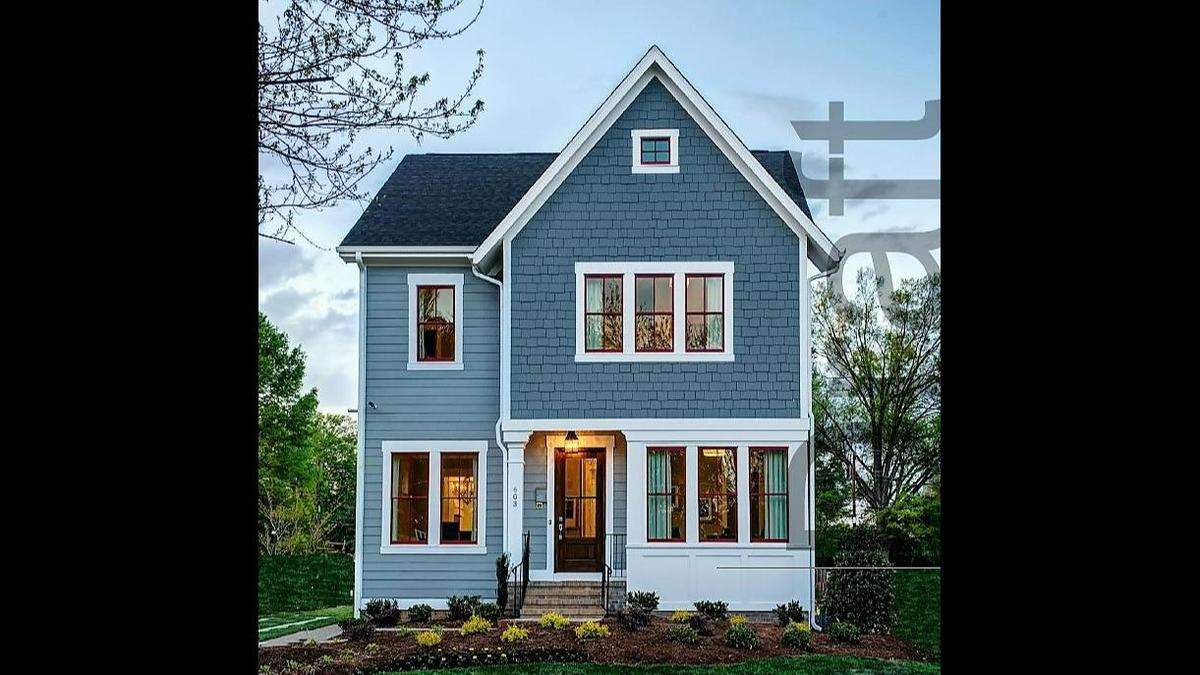
Another change increased the size of duplexes and accessory dwelling units, and also reduced the size of residential lots. The new maximum sizes are 5,000 square feet for duplexes, 1,000 square feet for accessory apartments and 1,500 square feet for cottages. Smaller lots can now be between 7,500 and 10,000 square feet.
Town staff have acknowledged potential tradeoffs in allowing smaller in-fill lots and larger residences, including less tree canopy and more stormwater runoff.
But Chapel Hill’s controversial Housing Choices strategy, which rezoned single-family neighborhoods in 2023 to allow duplexes and a second, smaller home on existing lots, isn’t working, staff said.
More changes to land use rules
Other changes approved Wednesday:
- Eliminated minimum parking requirements and a maximum parking rule for duplexes. It also made it easier to park more cars in the front yard of single-family homes and two-home lots.
- Eliminated the Planning Commission’s site plan review for most projects, and streamlined site plan reviews in Northside and Pine Knolls, two historically African-American neighborhoods where construction meets special Neighborhood Conservation District rules.
- Streamlined conditional zoning application requirements and the approval process.
- Let developers add new uses or buildings that meet current zoning without having to modify a special-use permit.
- Gave town staff the authority to approve land and condo subdivisions and streamlined the subdivision process.
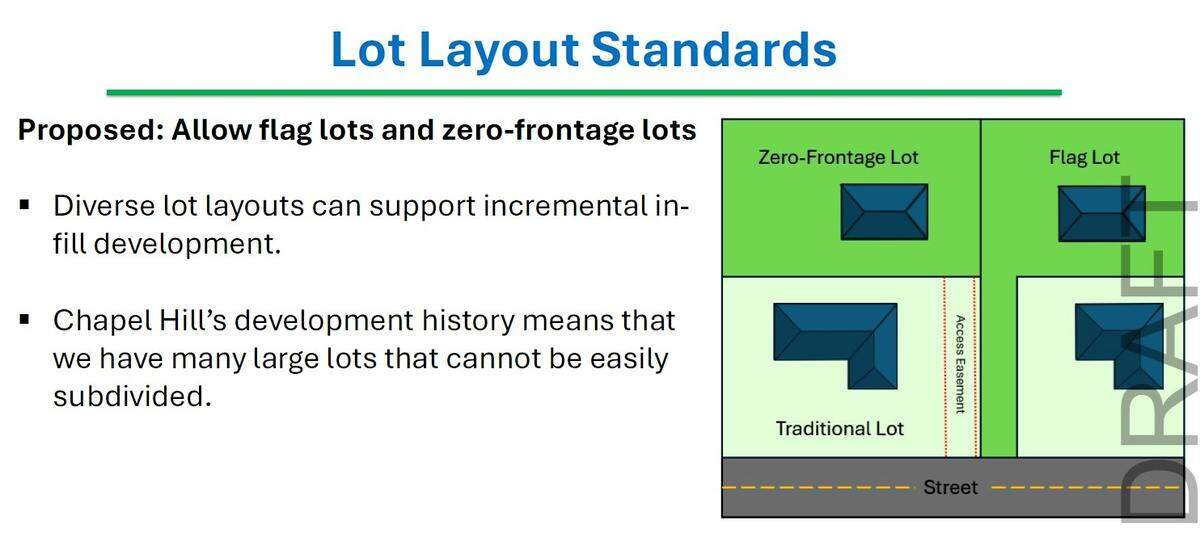
- Allow lots with limited (flag lots) or no road frontage, and eased the requirements to provide sidewalks and other infrastructure to new lots on town-maintained streets.
- Made manufactured home communities an official town use. The existing communities were established before town rules.
- Updated sign rules and types in residential areas.
- Allowed multiple land uses on the same lot.
- Updated the town rules to allow multiple homes to share a driveway.
None of the changes would apply to neighborhoods with homeowners associations, under state law, or to university-owned property, which covers about 40% of Chapel Hill’s land.
Giving developers flexibility to get more housing
The town and the council have been working for years to update the town’s Land-Use Management Ordinance, or LUMO, which regulates how residential and commercial construction is approved and built.
The goal is making it easier to add different types of housing, including duplexes, triplexes and cottages, and to build more housing on vacant, small or oddly shaped lots in existing neighborhoods.
A 2021 town-gown study showed 485 more homes a year are needed for the next 20 years just to keep up with current demand, including 45 student housing units each year. Affordable housing is also a critical need.
In 2022, the council voted to allow projects with 25% or more affordable housing units to be approved within months, rather than the 12 to 18 months that it takes for other development projects to be approved in Chapel Hill.
The long approval process adds time and expense to projects, which is passed to homebuyers and renters, town staff has said. It also increases the amount of money and time that the town was spending to have staff handle advisory board meetings and extra requirements.
The updates will also give developers more flexibility to respond to economic and development market changes, they said.
While no residents spoke before Wednesday’s vote, some have previously questioned the changes and how they could affect Chapel Hill’s robust public-input process.
In 2023 and 2024, the council voted to disband multiple citizen advisory boards and limit the role of others, including the Community Design Commission, which reviews building exteriors and landscaping. Last year, the council asked staff to fast-track some changes, which were approved Wednesday.
The final LUMO revisions are in progress and could come to the council for approval this year.
The council has asked town staff to bring ideas to a future meeting for keeping the public better informed and reaching out to neighbors about pending projects to hear their concerns.
This story was originally published January 22, 2026 at 8:19 AM.