Orange County pauses data centers to weigh potential impact on people, resources
AI-generated summary reviewed by our newsroom.
- Orange County commissioners voted 6-0 to support a moratorium on large data centers.
- Planning staff to study potential changes to local land-use and development rules.
- Officials weigh water, electricity, noise, air pollution, and heat- island effects.
Orange County leaders approved a one-year moratorium Tuesday night on large-scale data centers that support artificial intelligence and other emerging technologies.
The Orange County commissioners voted 6-0 after a public hearing to support the moratorium, giving staff time to research the issues, evaluate where data centers might go, and draft recommended changes to local land-use plans and development rules.
The moratorium applies to a range of uses, from artificial intelligence to cryptocurrency mining and data processing facilities.
“This moratorium allows us to protect our natural resources, consider infrastructure demands, and engage residents as we determine the most appropriate path forward for Orange County,” board Chair Jean Hamilton said in a news release.
Other cities and counties, including Chatham County and the town of Apex, have also passed moratoriums. But some, including Vance County, have approved projects and rezoned land to support future data centers.
“A quick glance at AI data centers that have been built in the United States shows the contentious nature of these sites,” resident Jessica Lobdell said during the hearing. “Job creation and tax revenue are often cited as benefits, [but] for those benefits to be felt by the local community, several issues need to be addressed.”
While Orange County doesn’t have any large-scale data centers yet, there are very few places in the county with the water and electricity required to power them. The 35,000-acre Rural Buffer around Chapel Hill and Carrboro limits urban water and sewer service outside the towns.
State law could limit the county’s options, largely due to requiring every affected landowner to agree in writing to changes in land use and development density, Planning Director Cy Stober has said. But he also noted that staff could substitute one use for another, such as allowing smaller data centers that use less electricity and water.
Data centers big drain on resources
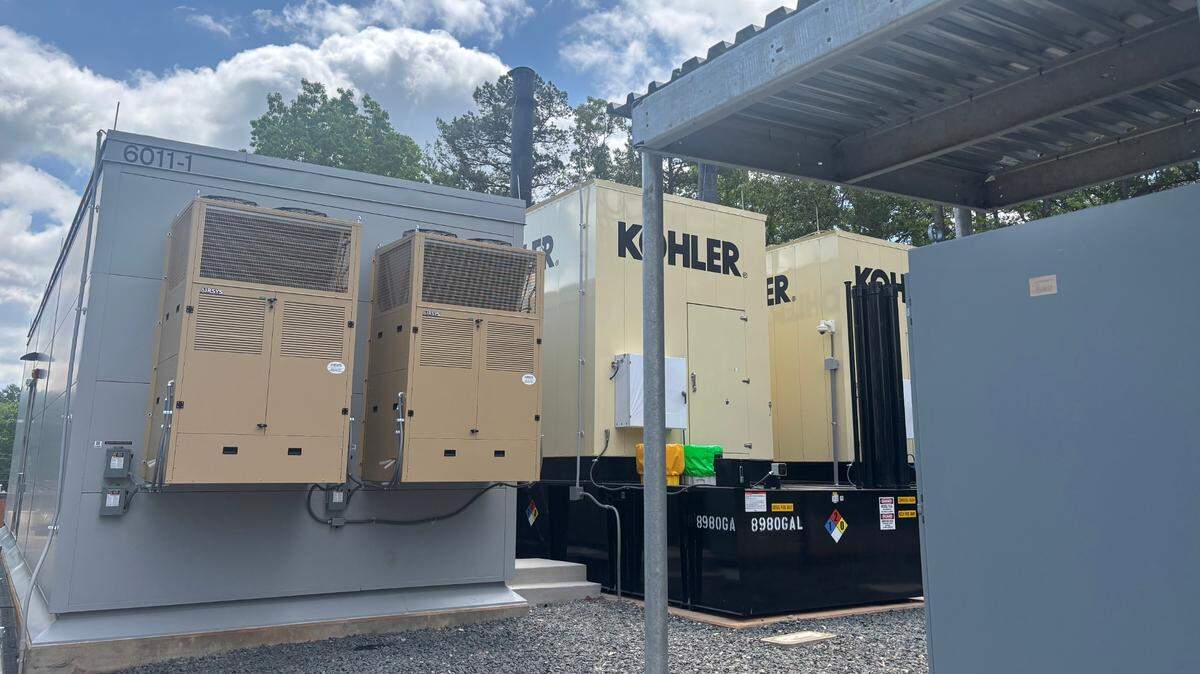
Data centers house networked computer servers that store, process and distribute large amounts of data and average around 100,000 square feet, County Attorney John Roberts said.
They can cover hundreds of acres with large cooling systems that use millions of gallons of water each day. They generate a steady hum that can disturb nearby neighbors, using enough electricity to power a medium-size city. The technologies supported by them threaten to replace millions of workers in the future, some experts say.
Research is also showing potential harm to nearby residents, including increased air pollution and “heat islands” that create higher than normal air and surface temperatures, Roberts said.
Those effects are prompting grassroots groups and individuals to press local and state governments for careful regulation.
“We must resist the false urgency being created by billionaire tech companies and reject claims that these data centers and the technology they support are inevitable,” Chapel Hill resident Abby Parcell said. “Our government and other public institutions can, in fact, make choices and set constraints on how this technology is used.”
Data centers also pose a threat to agricultural lands and the county’s work to reduce greenhouse gas emissions, Orange County farmer Ashley Parker said. Once farm land is converted for data centers, it will never go back, she added.
“If the technology ever catches up, and they could function without gobbling up all of our natural resources, reduced noise and smaller overall footprints, I may not be against them,” Parker said.
But “if I were to run my farm like a data center, neighbors would complain, soil and water would cite me for a water usage infraction, I would violate the rural noise ordinance, and my guess is, I would be a bad neighbor,” she said. “We don’t want to subsidize data centers with our natural resources.”
This story was originally published April 22, 2026 at 8:06 AM.