
Raleigh’s oldest synagogue has been a hub for Jewish life for 150 years. How it thrived
In the early 1860s, a handful of Jewish merchants settled in Raleigh and set up shop along Fayetteville Street, scratching out lives as tailors or hat-makers in a city torn by the Civil War.
For them, Judaism did not dominate life in North Carolina’s capital, it often came second to keeping afloat. One of these merchants, Michael Grausman, had trained as a rabbi in Bavaria. But in Raleigh, he sewed uniforms for Confederate officers.
But in 1875, the Grausman family converted their nursery into a small synagogue, where they also taught Hebrew and history. Before long, they attracted enough Jews to relocate, this time setting up inside Rosenbaum’s Millinery down the street.
A true synagogue with its own roof and walls did not appear until 1919, built for $15,000 on the corner of East Street and New Bern Avenue. Sadie Glass won the right to name it “House of Jacob” after winning a Hanukkah auction with an $80 bid.
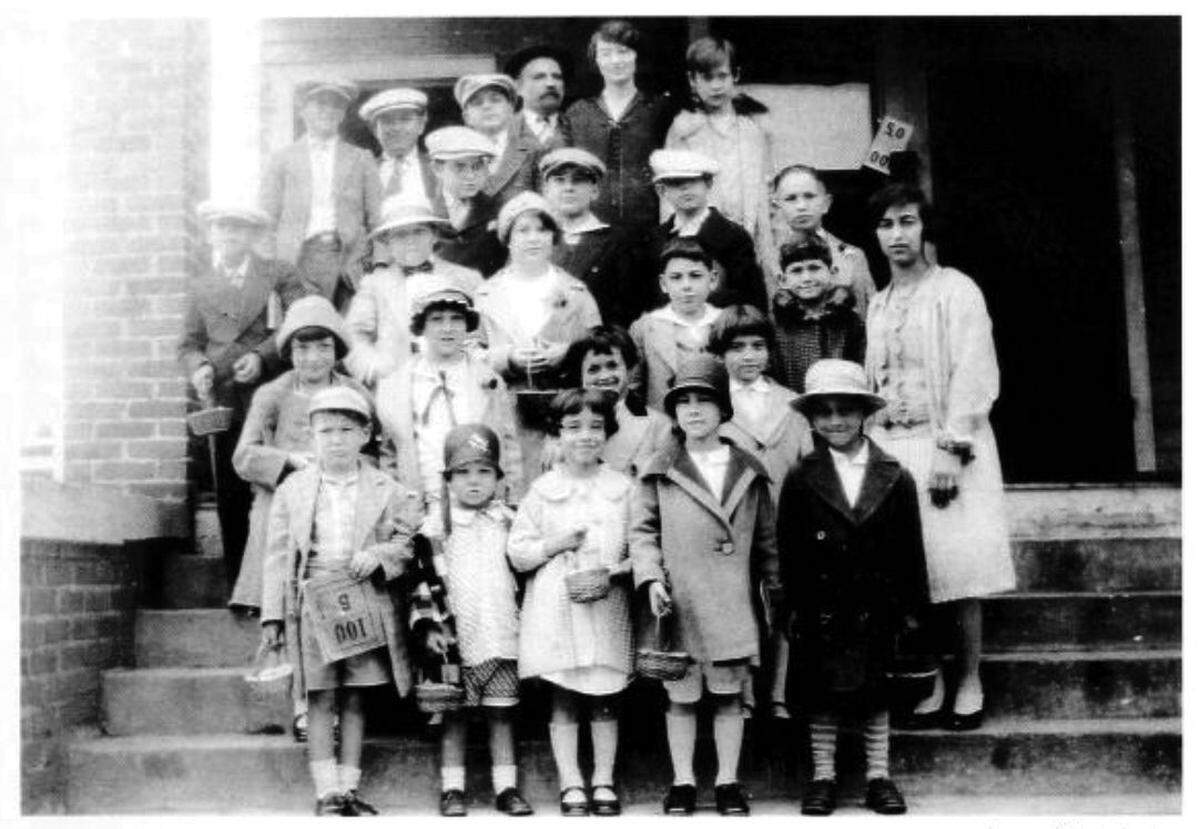
Even in those headier days of Raleigh Judaism, a rabbi would live upstairs and maybe sell pickles on the side.
But from these scattered beginnings, Raleigh’s oldest synagogue will celebrate 150 years on March 8. Known as Beth Meyer since 1949, the North Raleigh congregation has grown to 500 families and will pause to celebrate its strength after a century and a half.
“We want to take this time to say, ‘Hey, we’re not strangers here, and we’re proud,’” said Rabbi Eric Solomon, who shares spiritual leadership with his wife, Rabbi Dr. Jennifer Solomon. “It’s a sense of reminding ourselves of the joy we have, but also a way to say thank you to North Carolina.”
Neither the oldest nor largest synagogue in NC
On its birthday, Beth Meyer can’t boast of being the oldest synagogue in North Carolina: Temple of Israel in Wilmington organized with 40 families in 1872, and its Moorish-style building dates to 1876.
Neither is Beth Meyer the largest: Temple Israel in Charlotte counts 650 families.
And for much of its long history, Beth Meyer has shared Raleigh with both Orthodox and Reform and Renewal congregations — sitting in the middle as Conservative. In 1912, some of Raleigh’s earliest Jewish families split off to form Temple Beth Or, the city’s first Reform congregation.
But for 150 years, it has served as a hub for Jewish life in Eastern North Carolina that continues to expand even as it has dwindled elsewhere.
Lumberton lost its synagogue in the 1980s to dwindling membership. Goldsboro had the second-oldest synagogue building in North Carolina, but the building is now a food pantry. Rocky Mount’s synagogue went up for sale in 2022, and longtime Beth Meyer member Amanda Hunter commutes to Raleigh from there.
“So many Jewish communities didn’t make it,” said Jonathan Wertheim, Beth Meyer’s executive director. “Across the South, you’ll find empty synagogues that have been turned into museums.”
Lifelong members of Beth Meyer congregation in Raleigh
As a lifelong member of Beth Meyer congregation, Burton Horwitz’s earliest experiences date to the East Street synagogue he attended from birth in 1937 — predating even its name, and before the rabbi faced the congregation.
“I am sitting here the third generation,” said Horwitz, a longtime pediatric dentist, “and we have five generations of family here. We go back to the turn of the 1900s.”
His grandfather’s family rode to services in a horse and buggy from Zebulon, where he kept a small business. “Our grandmother had a cow out back, and after she milked it, they’d go click-clack, click-click all the way to Raleigh,” said Howard Satisky, Horwitz’s cousin and a longtime Raleigh attorney.
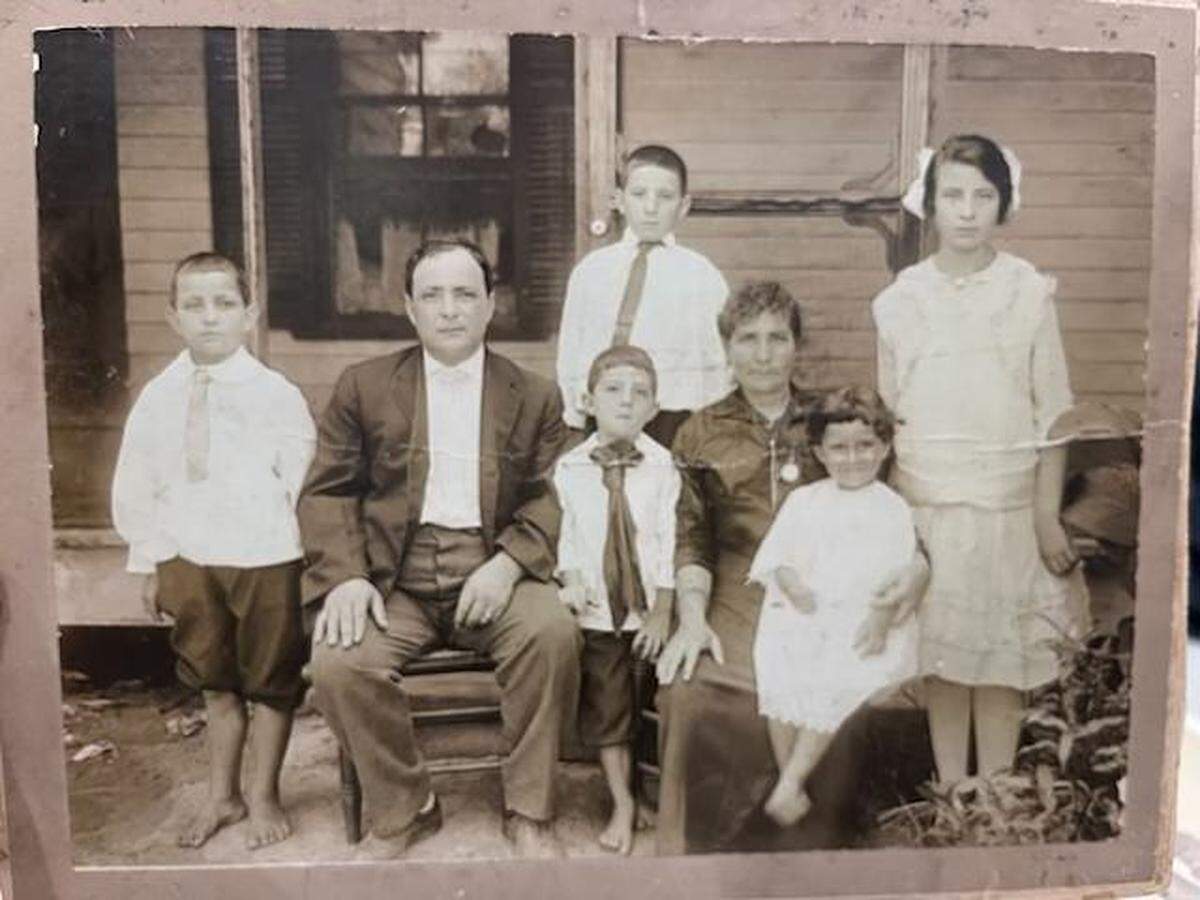
In the early decades of the 20th century, Jews from Eastern Europe began flooding into North Carolina, especially from Russia, Poland and Germany. But they frequently found as hostile an environment in the American South as the ones they had fled. Housing covenants, university quotas, Nazi sympathizers and violent anti-Semitic attacks all occurred in North Carolina.
Though a longtime Raleigh resident such as Horwitz can say he never experienced antisemitism personally, “I’m not foolish enough to think it wasn’t there. But it wasn’t in my face.”
Throughout Beth Meyer’s history, Southern Jews had to be careful. “It wasn’t a big sign out front,” said Solomon. “It wasn’t sure if this was a place they would feel comfortable.”
A gifted Torah, a march up Six Forks Road
The growth years followed World War II, especially when Raleigh’s Westinghouse plant opened in 1954, drawing hordes of northerners even before Research Triangle Park.
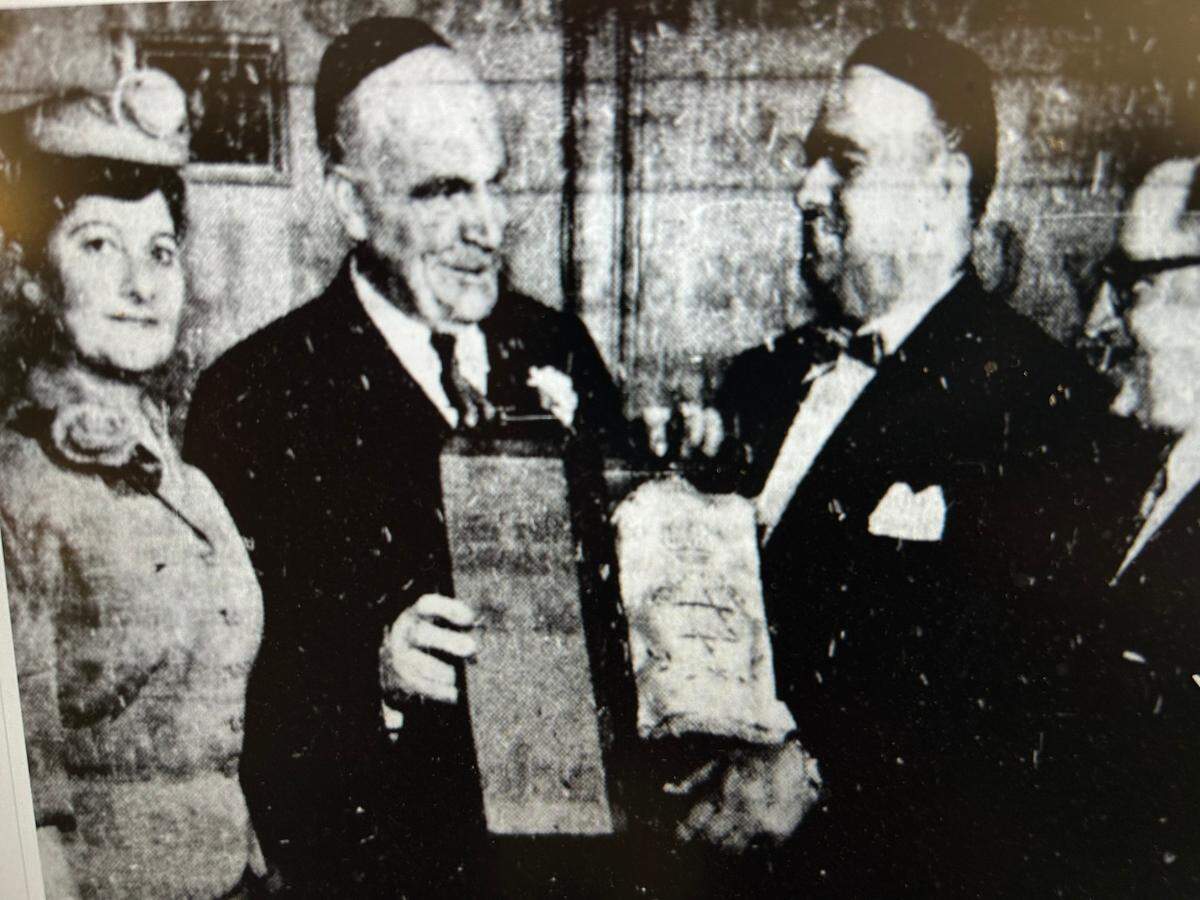
Beth Meyer had moved to West Johnson Street by then, and its congregation was front-and-center enough to present Gov. Luther Hodges with a Torah as a gift in observance of Brotherhood Month.
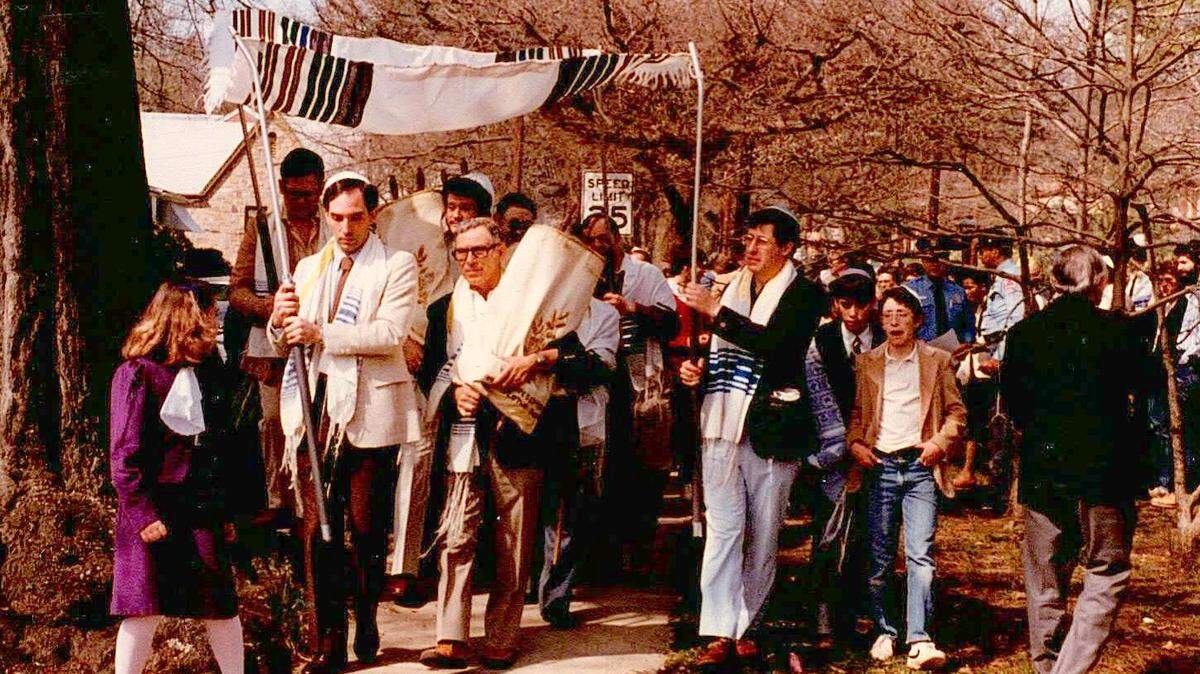
But the real “coming out,” as Solomon describes it, came in 1983, when the congregation of 200 Jewish families marched up Six Forks Road carrying the scrolls of the Torah, bound for its new home on Newton Road. They took turns carrying each of the 3-foot scrolls, weighing 35 pounds apiece, as cars whizzed past along the 7-mile route.
“The consecration of the new synagogue will be a beginning for the Raleigh Jewish community,” said Dr. Robert Bruck, who organized the march, “hopefully a renewal of spirit.”
The new synagogue marked a significant point for Beth Meyer because it increased capacity from 220 to 900 people, and because it added a new piece of symbolism and history to the sanctuary: a replica of the Western Wall in Jerusalem, complete with one actual stone from the old city.
So many Jewish families lived around the nearby North Ridge neighborhood, Solomon explained, that parts of it still carry the nickname “Bagel Boulevard.”
Witnessing a missile attack in Tel Aviv
Solomon arrived in 2005, the third rabbi for Beth Meyer in 10 years. He came from a life spent mostly in New York, and one of his first official acts once he arrived was to visit a cemetery in Wilson. There, he took in the Hebrew inscriptions on the graves from what had been a sizable Jewish community — now gone.
In his time, he has seen Beth Meyer’s congregation grow by more than 100 families.
In 2014, he described being on a family vacation in Tel Aviv and witnessing a missile attack, then later jumping in fear from the sonic boom created by Israeli planes, wondering what it must sound like to Palestinians every day.
“Having traveled during the war to towns near the Gaza Strip,” he wrote in The N&O, “I saw Israeli suffering with my own eyes. Whole families were living in bomb shelters and, due to the constant rocket fire over the years, children suffered from anxiety attacks and PTSD. To protect them from life-threatening chaos, Israel had no choice.
“And yet I agonized over the innocent children killed by Israeli fire. Though their deaths were unintentional, each life lost was a cataclysm.”
Swastikas, anti-Semitic flyers and bomb threats
In 2022, he found swastikas and pro-Trump slogans painted on a pedestrian bridge where he takes morning runs. Later that year, he and his teenage daughter found antisemitic flyers strewn around his neighborhood in plastic bags.
He calls the years since the October 2023 attacks on Israel the hardest of his career, citing bomb threats at Beth Meyer. In a piece written for WRAL shortly afterward, he described the Jewish community being “tied in knots.”
“We worry sick,” he wrote, “as young Israeli soldiers go to war, and our hearts are broken by the deaths of so many innocent Palestinians, many of them children, caught in the crossfire.”
After 150 years, the question that former Beth Meyer Rabbi Abe Schoen wrote in 1966 can still ring true:
“What is a Jew?” he asked in an N&O editorial. “How has he survived thousands of years of persecution? What is the secret or mystery of that amazing survival?”
And the answer lies inside Beth Meyer’s doors.
This story was originally published February 27, 2025 at 5:00 AM.