
Livable Raleigh calls for $200M affordable housing bond, doubling city’s figure
AI-generated summary reviewed by our newsroom.
- Livable Raleigh urges a $200M bond, nearly double the $101.5M staff ask.
- Group cites 51,831 low/moderate-income households cost-burdened by housing.
- Proposal wants rezoning public benefits, 20% at 30–60% AMI on transit, $50K/unit opt-payments.
The citizens group Livable Raleigh has called for a housing bond of at least $200 million on the ballot this fall, doubling what the city has proposed and condemning its affordability crisis as “especially bad.”
By setting the bar at $200 million, Livable Raleigh asks for nearly twice the $101.5 million bond city staff recommended in February, calling that amount even more “inadequate” than the $80 million bond that voters approved in 2020. Mayor Janet Cowell announced in an email Monday that voters will see a $100 million bond this fall.
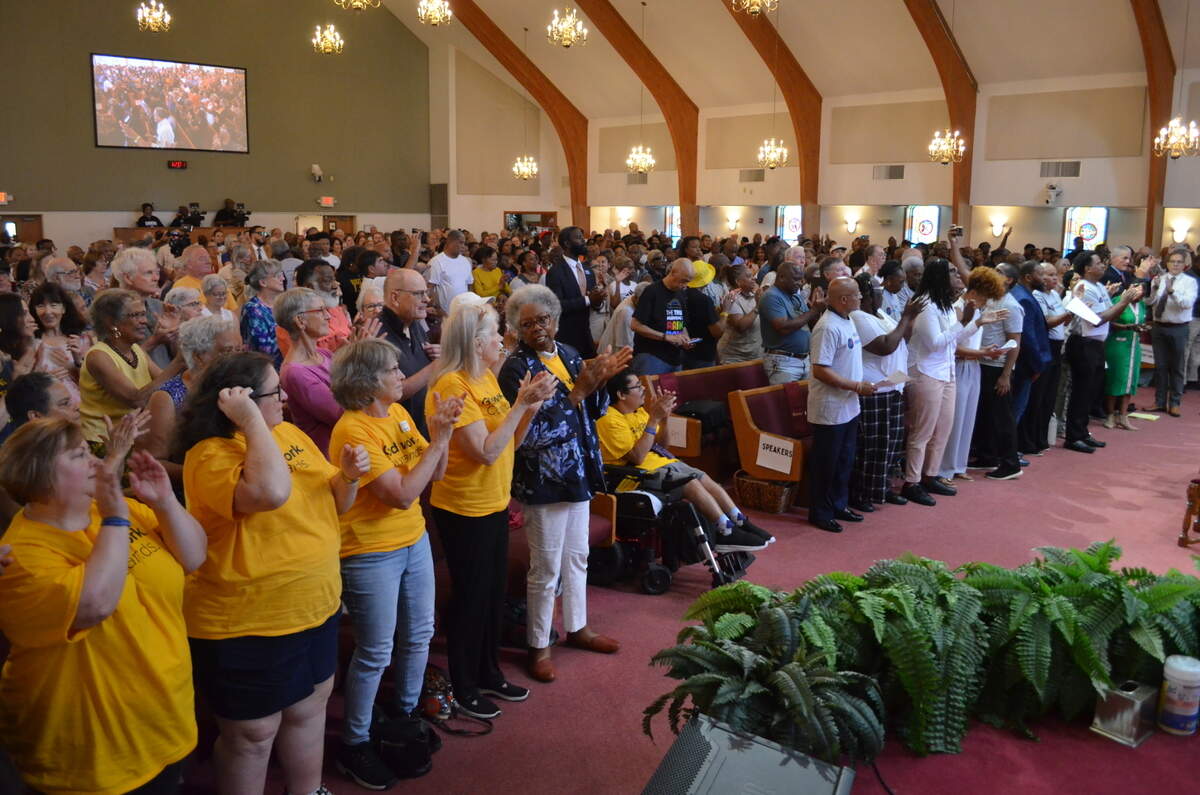
Livable Raleigh now joins with One Wake, a nonpartisan group of congregations and other community groups, which has also suggested $200 million to boost the city’s affordable housing stock. At a meeting in July, not all Raleigh City Council members would back a bond calling for that much taxpayer money.
In a Monday news release, Livable Raleigh counted 51,831 low and moderate-income households as “cost-burdened” by housing, citing the city’s own data. All pay more than a third of their income on housing, and almost half spend greater than 50% of their income on housing.
“A shocking number,” the group said. “Raleigh is bad, and it is getting worse, not better. The ‘market’ here is not working to supply housing at affordable price levels for any but the wealthy.”
At the One Wake meeting last year, council members noted that bonds set too high are vulnerable to voters’ rejection.
Bond failures are rare, but three of five failures in North Carolina during the 2024 election came in Wake County, including a $30 million affordable housing bond in Cary. That bond was on the same ballot as a $560 million parks and recreation bond, which also failed.
“I think when you see some of these failures, you just want to be careful that you’re not going out and setting yourself up for failure,” the mayor said at the time.
Also, Wake County will likely place a school construction bond costing hundreds of millions of dollars on the fall ballot , making a larger bite for taxpayers to swallow.
Asking developers to help pay
In its February report, Raleigh staff said the $101.5 million would break down into $57.6 million for housing development and preservation, $10.4 million for homebuyer assistance, $12 million for homelessness response and $21.5 million for mixed income development.
But staff also cited data showing cities nationwide that built more housing in general saw their rents decrease. In Raleigh’s case, by boosting new units by 5.5%, rents also declined by 7.9%.
Livable Raleigh rejected this idea, calling it “trickle down.”
“More housing is needed, yes,” the group said Monday. “But we need more housing at every price level, not just more McMansions, million-dollar townhouses and $4,000-a-month apartments. We need much more housing that people can afford.”
Along with the $200 million bond minimum, Livable Raleigh wants:
- developers to provide a public benefit in all projects that require a rezoning;
- all major projects along transit corridors to include at least 20% affordable units, designed for families at the 30% to 60% median income level;
- developers who do not build affordable units in non-transit corridors to make voluntary contributions of $50,000 per unit to an affordable housing fund.
Livable Raleigh noted that taxpayers finance affordable housing through bonds and an extra 1 cent on their property tax rate.
“Developers, however, who profit greatly from a booming market for luxury homes, have never pitched in,” the group said. “They’ve never been asked, nor have they offered, to share the wealth with others. It’s time they were asked.”
This story was originally published March 9, 2026 at 12:41 PM.