NCDOT will remove another homeless camp near a Raleigh highway interchange
AI-generated summary reviewed by our newsroom.
- NCDOT plans to clear the camp next week once officials confirm everyone has left.
- Eviction notices posted June 8 ordered people to vacate by 6 a.m. June 12, or face arrest.
- City and social services groups, led by Raleigh ACORNS team, offered relocation help.
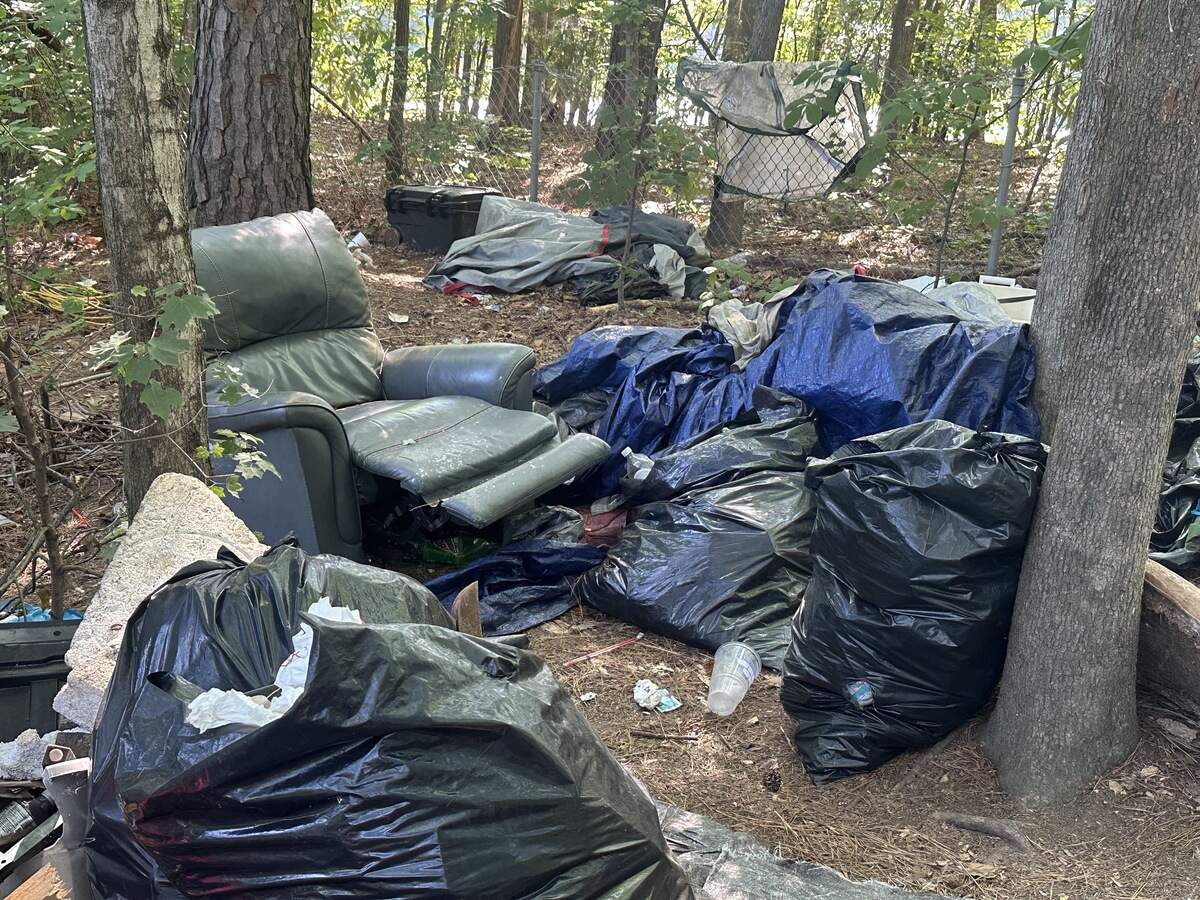
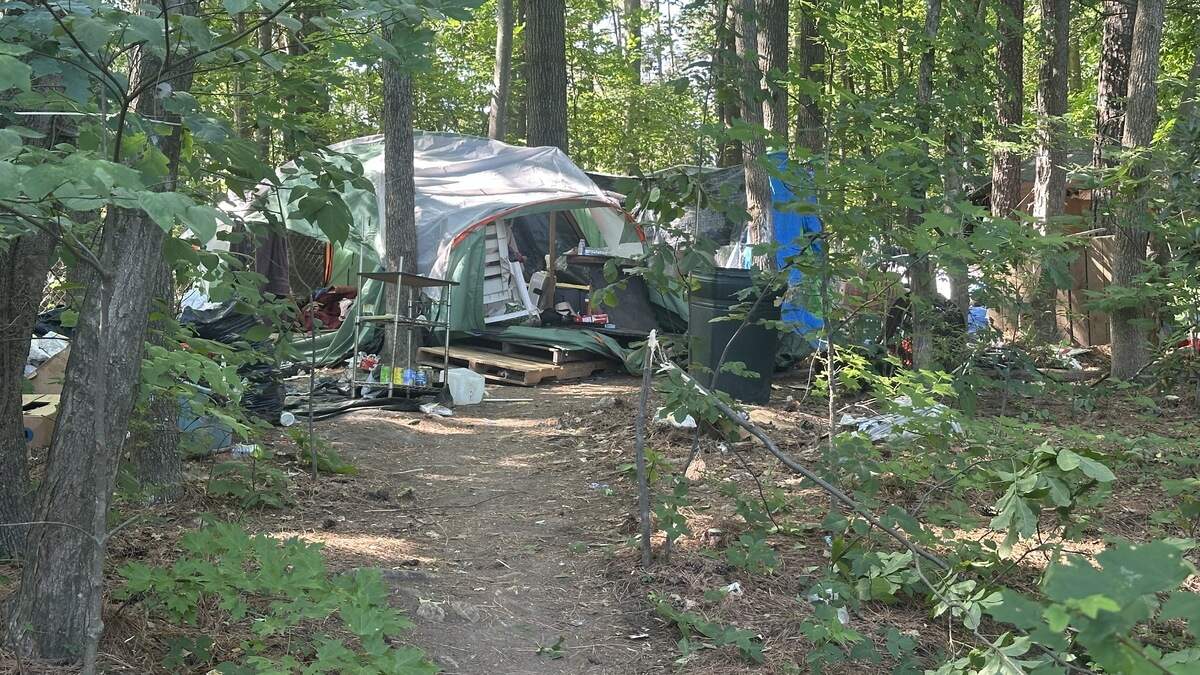
The camp in the woods near Exit 290 from Interstate 40 is crowded with cans of food, broken furniture, bulging trash bags and tents where people sleep or seek shelter from the rain.
But there are also unexpected comforts, including gas-powered generators, a microwave oven and a window air conditioner protruding from the side of a make-shift cabin.
All of it will disappear soon. The N.C. Department of Transportation plans to clear the camp next week, once state officials are satisfied that everyone has left.
Raleigh police posted laminated eviction notices along paths leading to the camp on June 8, ordering people to vacate by 6 a.m. Friday, June 12, or be “subject to arrest.” The last two residents were given through the weekend to pack their things before an NCDOT cleaning crew arrives Monday morning, said city spokeswoman Julia Milstead.
One of those residents is an Army veteran who goes by Boots and has lived in this patch of woods for about 12 years, says Paul Geigel, founder of the Eliza Park Homeless Initiative. Geigel has worked with Boots since April and says he was one of about a dozen people living in the camp as of earlier this week.
Geigel expects to help Boots leave his home of 12 years on Saturday, but as of early Friday afternoon it wasn’t clear where he would go.
“The details are still a little sketchy as to where we’re taking him,” he said.
A priority for Boots is his motorcycle, which is not in running condition.
“It’s his pride and joy,” Geigel said. “That’s the only thing he really cares about is that Harley. We’ll try to figure out what to do with that.”
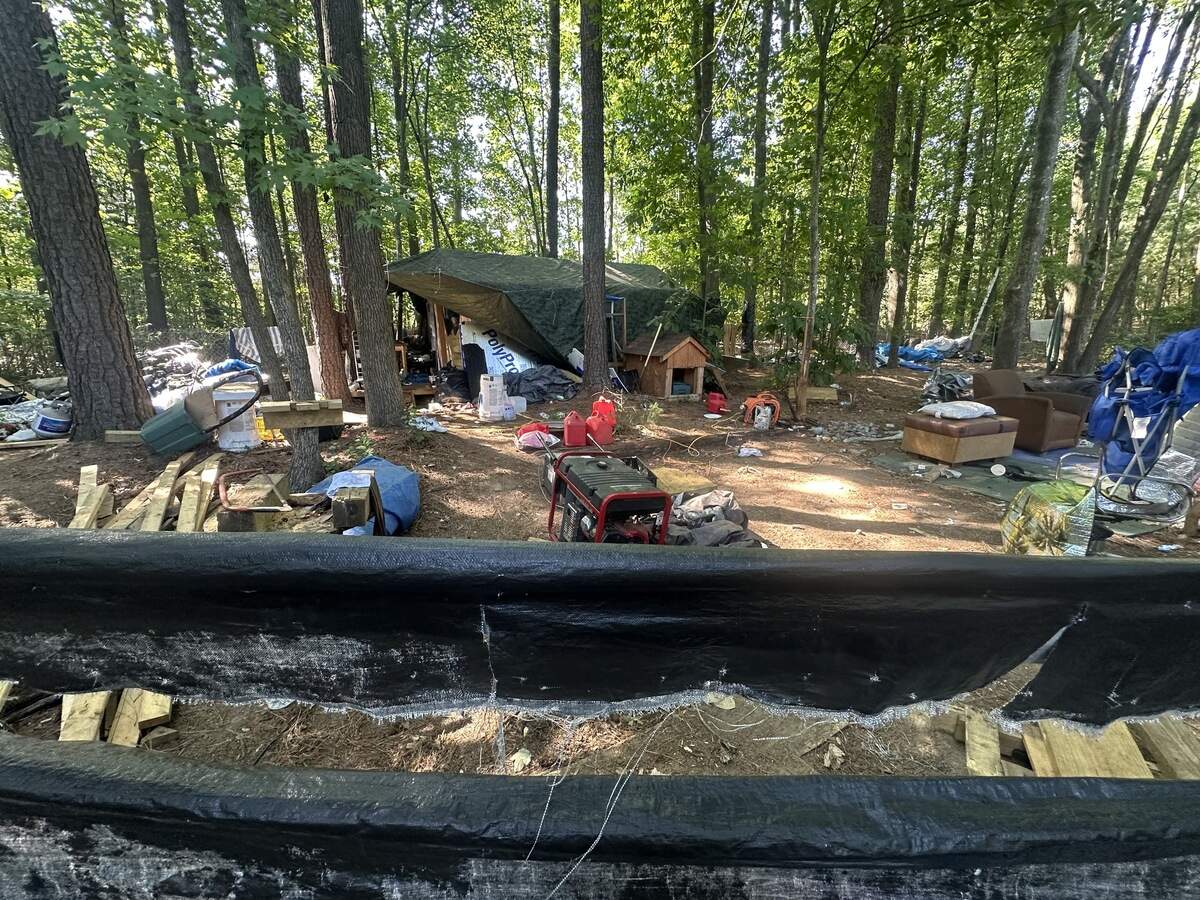
The camp at Exit 290 is one of several tucked into wooded areas in the Triangle, where people without the ability or means to rent an apartment or own a house find sanctuary. Some camps remain concealed for years, while others grow to attract public attention and calls for their removal.
Many, like the one at Exit 290, are at highway interchanges, on property owned by NCDOT, where people stand with signs seeking handouts from drivers. Before it clears a camp, NCDOT works with police and social service agencies to ensure that people have been offered help with housing and other needs and that no one is still living there.
The camp at Chapel Hill Road, which is also NC 54, has drawn complaints for years. The owners of two hotels that back up on the wooded area have long complained about trash and breaches in the fence between their property and the camp.
The situation recently became worse, said NCDOT spokeswoman Kim Deaner.
“We received a complaint that the encampment had grown significantly and was causing issues with littering, disturbing local businesses and graffiti on the nearby underpass,” Deaner wrote in an email. “We reported these issues to Raleigh police, and it was determined the individuals would be offered relocation resources and notified they needed to vacate the property.”
That process began April 6 with a visit from members of the city’s ACORNS program, a team of social workers and police officers who connect people experiencing homelessness, substance abuse or mental health problems with organizations that can help them. NCDOT put up “No Trespassing” signs on May 6, a precursor to the eviction notices posted a month later.