With shorter waits, ridership on GoRaleigh’s busiest bus route tops 1 million
AI-generated summary reviewed by our newsroom.
- GoRaleigh Route 1 carried more than 1 million riders in the year ending June 30.
- Last October, Route 1 weekday frequency increased from 15 minutes to 10.
- Overall GoRaleigh ridership exceeded 7.8 million, up about 2.9% year over year.
GoRaleigh’s busiest bus route carried more than 1 million passengers in the fiscal year that just ended, the first time that’s ever happened in the transit system’s history.
GoRaleigh Route 1 follows Capital Boulevard from downtown north nine miles to Triangle Town Center and back again. It’s a busy corridor, lined with shopping centers, businesses, apartment complexes and residential neighborhoods.
But GoRaleigh officials say what made a big difference in the fiscal year that ended June 30 is how often the bus runs.
Since last October, a Route 1 bus leaves GoRaleigh station every 10 minutes on weekdays. That’s down from every 15 minutes previously and is frequent enough that people never have to wait long for a bus.
GoRaleigh hasn’t done any recent surveys, but the shorter wait times seem to have enticed more people to ride, said David Walker, the city’s transportation manager. Monthly ridership on Route 1 jumped 15.5% in October, to 87,581, and continued to climb, topping 94,000 in May and June.
“When we reduced it to 10 [minutes], it just really took off,” Walker said.
Walker said he checked with transit agencies in Chapel Hill, Durham and Charlotte and is confident that GoRaleigh’s Route 1 has the highest ridership of any bus route in North Carolina.
GoRaleigh has seen similar improvements in business when it increases frequencies on other routes. After Route 2, Falls of Neuse, went from 30 minutes between buses to 15 this spring, ridership jumped 30%. And the number of people riding Route 17, Rock Quarry Road, spiked 44% when the bus began coming every 30 minutes instead of every hour.
“This all syncs up with what we have seen in all of our high-frequency services, showing that with improved frequencies, ridership will come,” Walker said.
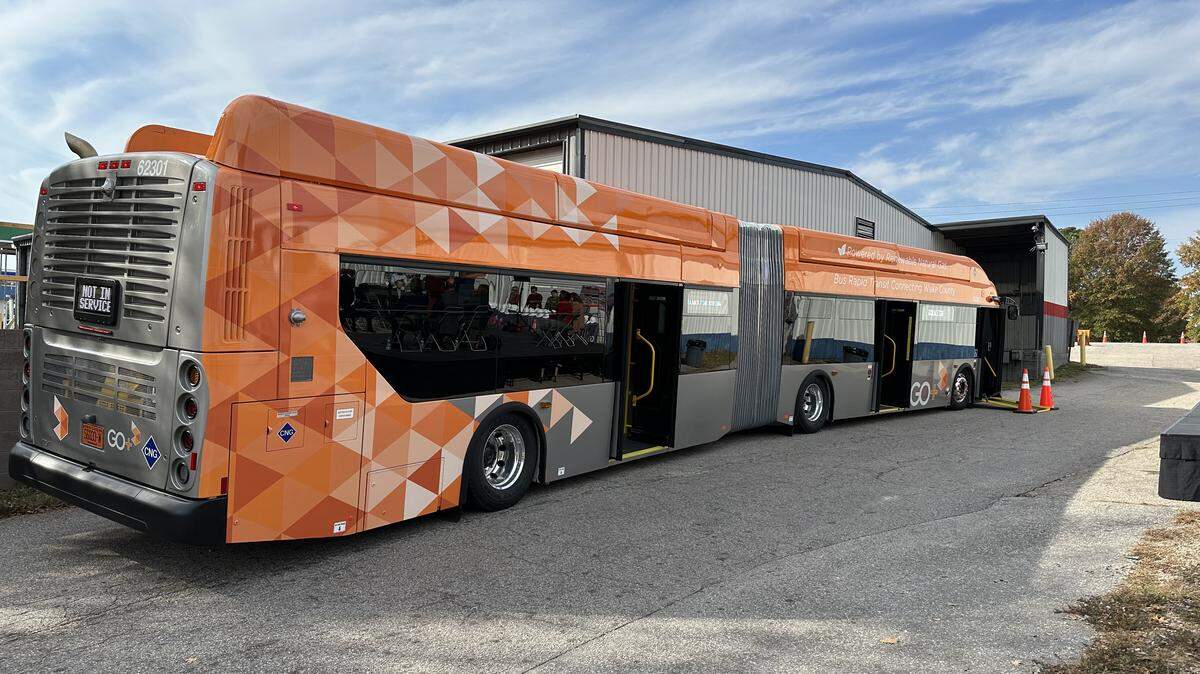
The Capital Boulevard route operates 19 hours a day on weekdays and 18 hours on weekends, when buses come every 15 minutes. When it reduced wait times to 10 minutes, the city also began using its first 60-foot articulated buses on Route 1. They seat about the same number of people as a typical 40-foot bus but hold more because of additional standing room.
Overall, more than 7.8 million riders took GoRaleigh in the year ending June 30, up about 2.9% from a year earlier. Ridership is up 45% since 2019, the last full year before the COVID-19 pandemic when GoRaleigh and transit agencies nationwide saw a big drop in business.