Plugging in to the town’s EV chargers will no longer be free in Cary
AI-generated summary reviewed by our newsroom.
- Cary will charge 20¢ per kWh at its 65 town EV ports beginning Aug. 1.
- Vehicles parked over three hours will incur a $10 hourly idle fee to encourage turnover.
- Town officials say the fees aim to recover costs for electricity and maintenance.
For years, Cary has allowed electric vehicle owners to refuel at town-owned charging stations for free.
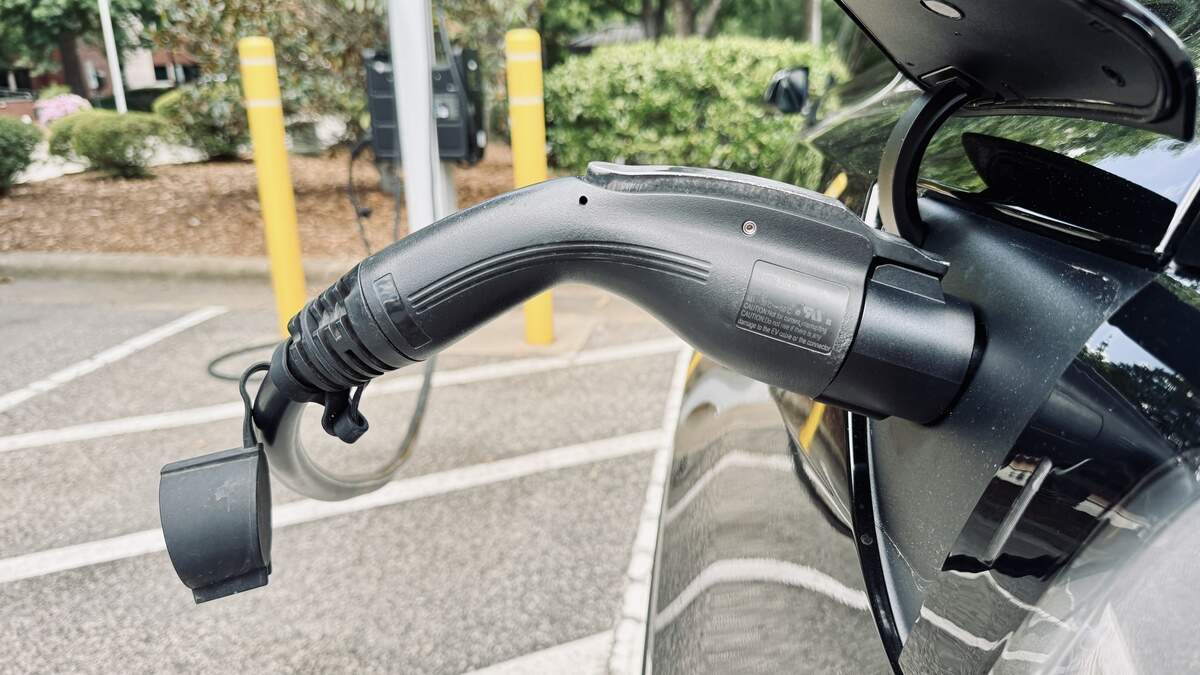
That ends Aug. 1, when Cary will begin charging drivers to plug in to any one of its 65 charging ports at parking decks and other town properties.
The town will charge 20 cents per kilowatt-hour for up to three hours, a competitive rate for Level 2 chargers. Vehicles parked longer than that will be charged a $10 an hour “idle fee” meant to encourage turnover.
The goal, said Sara Caliendo, the town’s energy manager, is to help pay not only for the electricity but also for software, repairs and other costs of maintaining the chargers.
“Our goal is not revenue,” Caliendo said in an interview. “Our goal is cost recovery.”
Like a lot of local governments nationwide, Cary began offering EV charging to make it easier for people to own an electric vehicle. When Cary installed its first EV charger in the town hall parking lot in 2012, it served two purposes: to charge the town’s first EV, a Nissan Leaf, and to give residents who owned an electric vehicle a place to refuel when they were out and about.
Cary still wants to encourage residents to switch to electric vehicles. The Sustainability and Climate Action Strategy the town adopted in 2025 sets a goal of increasing the number of fully electric and plug-in hybrid cars in town. The number of those vehicles registered in Cary has ballooned in recent years, to more than 6,200.
“More EVs on the road means fewer gasoline-burning cars, which can significantly lower our transportation emissions and improve local air quality,” the strategy says. “As more people choose to call Cary home in the future, we must ensure our growth is sustainable and reduce our dependence on traditional gas-powered vehicles.”
Cary will continue to maintain and expand its network of public chargers. While residents do most of their charging at home or at work, Caliendo says, a public network helps with “top-off” fueling when it’s needed. The fees will help maintain them.
“We just felt that now is the time for us to be more fiscally responsible about this,” she said.
Cary expects use of its chargers may drop about 25% when drivers have to pay. But the chargers may ultimately serve more people if the $10 idle charge discourages drivers from leaving their cars in the EV spots for hours on end.
Cary move part of a broader trend
Cary joins a growing number of local governments nationwide that are shifting away from free EV charging. Many of those chargers were installed with the help of federal grants, and now local governments must decide how to maintain them, says Jacob Bolin of Plug-in NC, a statewide organization that promotes electric vehicles.
“The ecosystem is kind of maturing a little bit, where the grants are no longer available, the stations are still in the ground and somebody’s got to pay for them,” Bolin said in an interview.
As more businesses install fee-based chargers, towns like Cary no longer provide an exclusive service. But Bolin notes that many commercial charging stations offer more expensive fast-chargers, appealing to drivers who want to fuel up and go. The slower Level 2 in public parking decks and parks help fill a niche the market doesn’t serve well, Bolin said.
“In many ways, I think the local governments are still doing something very valuable with their level 2 stations,” he said.
From the beginning, some have opposed free government-owned EV charging stations as an unfair perk for owners of Teslas and other pricey cars.
In 2012, the General Assembly passed a law requiring the N.C. Department of Transportation to make drivers pay to use EV chargers at highway rest stops, after the state installed several in Johnston and Alamance counties. Because that requirement conflicted with a federal law that allows only vending machine sales at interstate rest stops, NCDOT ended up taking the chargers out.
A decade later, several Republican lawmakers introduced a bill that would have prohibited state and local governments from offering free charging unless they also provided “gasoline or diesel fuel for motor vehicles through a pump to the public at no charge.” That bill went nowhere.