NC set big goals for EV sales a few years ago. A lot has changed since then.
AI-generated summary reviewed by our newsroom.
- NC set goal of 1.25M EVs by 2030; state reached fewer than 140,000 by Oct 2025.
- Federal tax credit removal triggered 50% sales plunge in Oct 2025 and recalibrated demand
- Automakers scale back EV plans but expand charging networks and affordable models.
In January 2022, fewer than 36,000 of North Carolina’s 8.6 million registered cars and trucks were electric vehicles — either battery electric or plug-in hybrids.
That was the month that then-Gov. Roy Cooper issued an executive order setting a goal of growing that number to 1.25 million by 2030. Executive Order 246 also said the state would strive to have EVs represent half of all new vehicle sales by 2030.
They were ambitious goals, part of a broader strategy to reduce emissions that contribute to climate change. But they reflected a growing expectation at the time that drivers would eagerly trade gas-powered cars and trucks for cleaner electric models, with backing from government policies and incentives.
Car companies such as Ford, Kia and Volkswagen were spending tens of billions retooling factories and developing new models of electric cars, SUVs and pickups, including an electric version of the best-selling Ford F-150. General Motors had announced a year earlier that it would stop making petroleum-powered vehicles altogether by 2035.
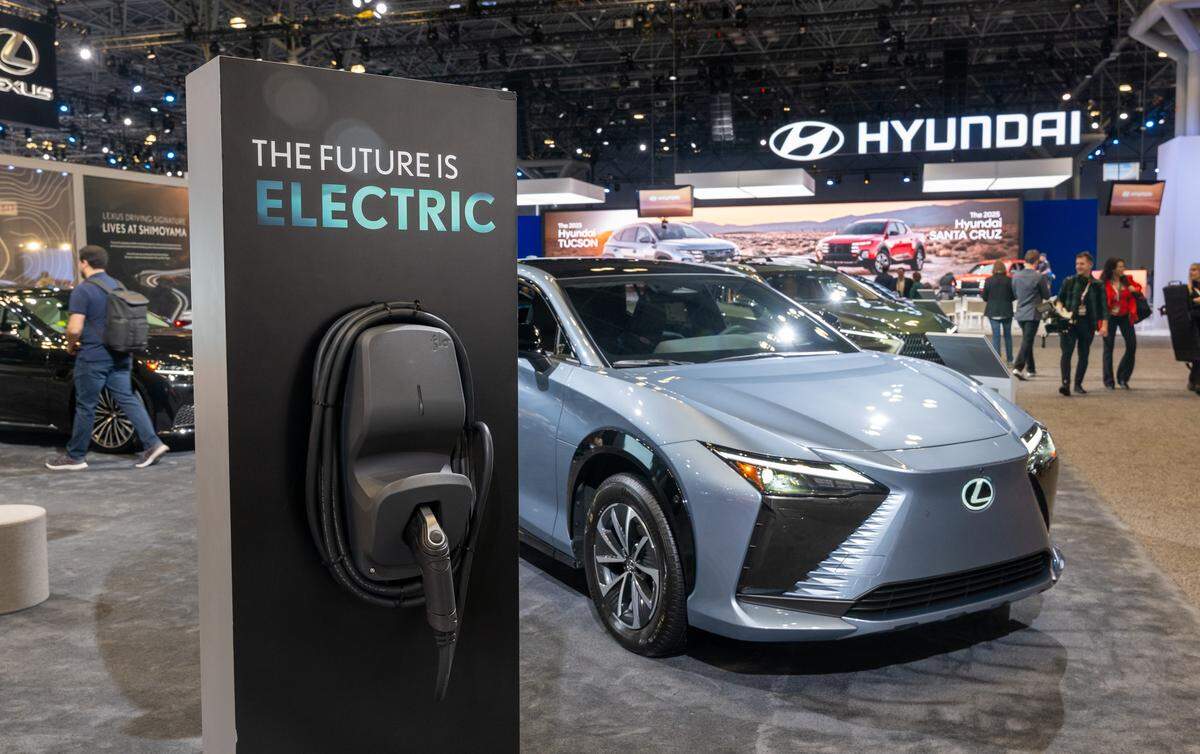
The outlook for EVs has changed a lot since then.
Lower-than-expected sales and financial losses have prompted automakers to scale back their plans for electric vehicles. GM no longer has a firm date for phasing out the internal combustion engine, and last month Ford said it had stopped making the all-electric F-150 Lightning and will replace it with a hybrid model that includes a gas-powered motor.
Meanwhile, the Trump administration and Congress have removed regulations and incentives meant to prod the country toward an electric future. Most notable for consumers was the elimination on Sept. 30 of a $7,500 tax credit toward the purchase or lease of a new EV.
EV sales hit new records in September, as buyers pounced before the end of the tax credit. Sales then plunged 50% in October, according to Cox Automotive, and were about 30% lower than the same month a year earlier.
It’s too soon to tell what the true market is for EVs in the U.S., says David Christ, who heads sales and marketing for Toyota in North America. Speaking at Toyota’s new battery plant near Greensboro this fall, Christ noted that tens of thousands of people still bought EVs in the weeks after the tax incentive went away.
“There’s no doubt there’s a market,” he said. “It will definitely be down, because $7,500 is a lot of money.”
The sharp decline in October sales marks the beginning of an adjustment period as the EV industry learns to live without government incentives, wrote Stephanie Valdez Streaty, director of industry insights for Cox Automotive.
“This correction will separate manufacturers with genuine cost advantages from those dependent on subsidies,” Streaty wrote. “Success will hinge on production discipline, pricing realism, and focus on the fundamentals: cost, confidence and convenience. The market isn’t retreating; it’s recalibrating to its natural pace.”
That pace may be considerably slower than anticipated in 2022. The number of zero-emission vehicles registered in North Carolina has grown steadily since Cooper set his goal but still represented only about 7.5% of new car sales in the second quarter of 2025, according to Atlas Public Policy.
And at 137,156 by the end of October 2025, North Carolina is nowhere near on track to top 1 million registered zero-emission vehicles by the end of the decade.
Car companies still bullish on EVs long term
It was hard to detect much pessimism about electric vehicles at a media event last month at the Durham headquarters of IONNA, a company that’s building a nationwide network of EV charging stations.
IONNA was founded in 2023 by eight of the world’s largest auto manufacturers: BMW, General Motors, Honda, Hyundai, Kia, Mercedes-Benz, Stellantis and Toyota. The goal is to help reduce the anxiety among car buyers about finding places to charge an electric vehicle, said Yuval Steiman, director of eco-mobility and market research for Hyundai USA.
“It will just be like going to a gas station now,” Steiman said. “It will just be there, and we won’t have to worry about it. It won’t be a reason not to buy an EV.”
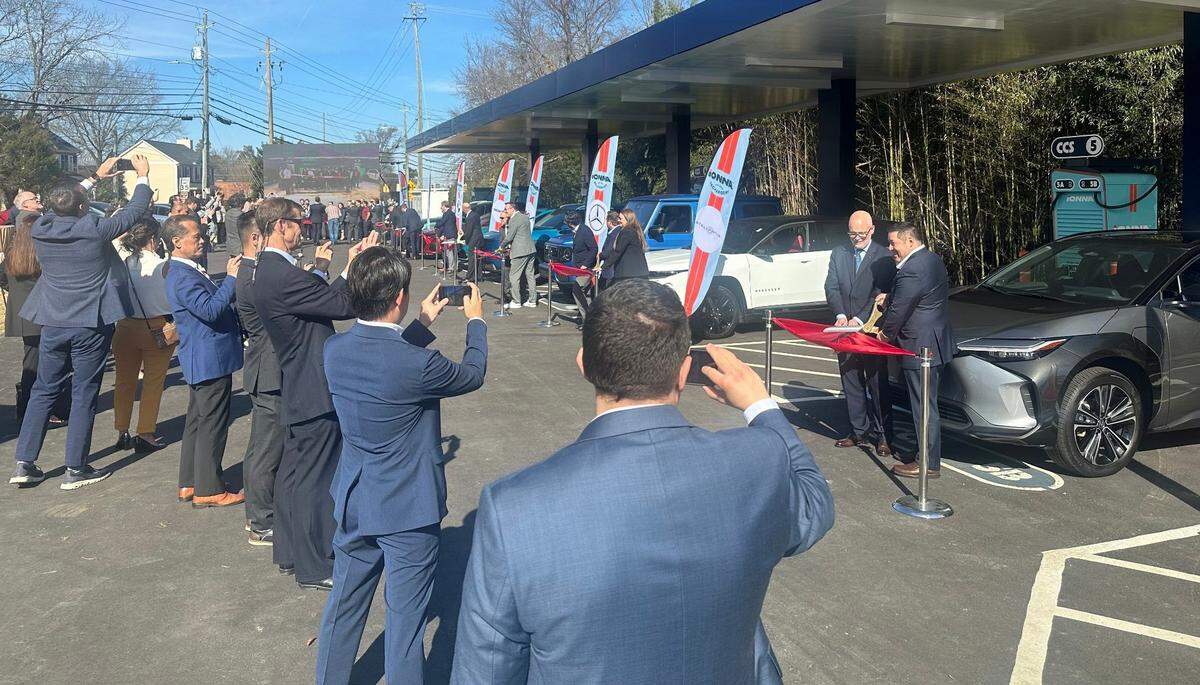
Steinman and representatives of six of the seven other manufacturers took part in the IONNA event (only Honda was missing). They acknowledged that changes in government policy would hurt EV sales in the near-term.
But modest sales growth over the next couple of years will allow IONNA and the rest of the industry to build out the charging system the country will need, said Will Hotchkiss, chief operating officer for GM Energy, a subsidiary that integrates the electrification of home and auto.
“This gives us an opportunity to mend the nets when the fish are out,” Hotchkiss said. “So that ultimately when EV volumes do pick back up — because they will — we’ll be ready.”
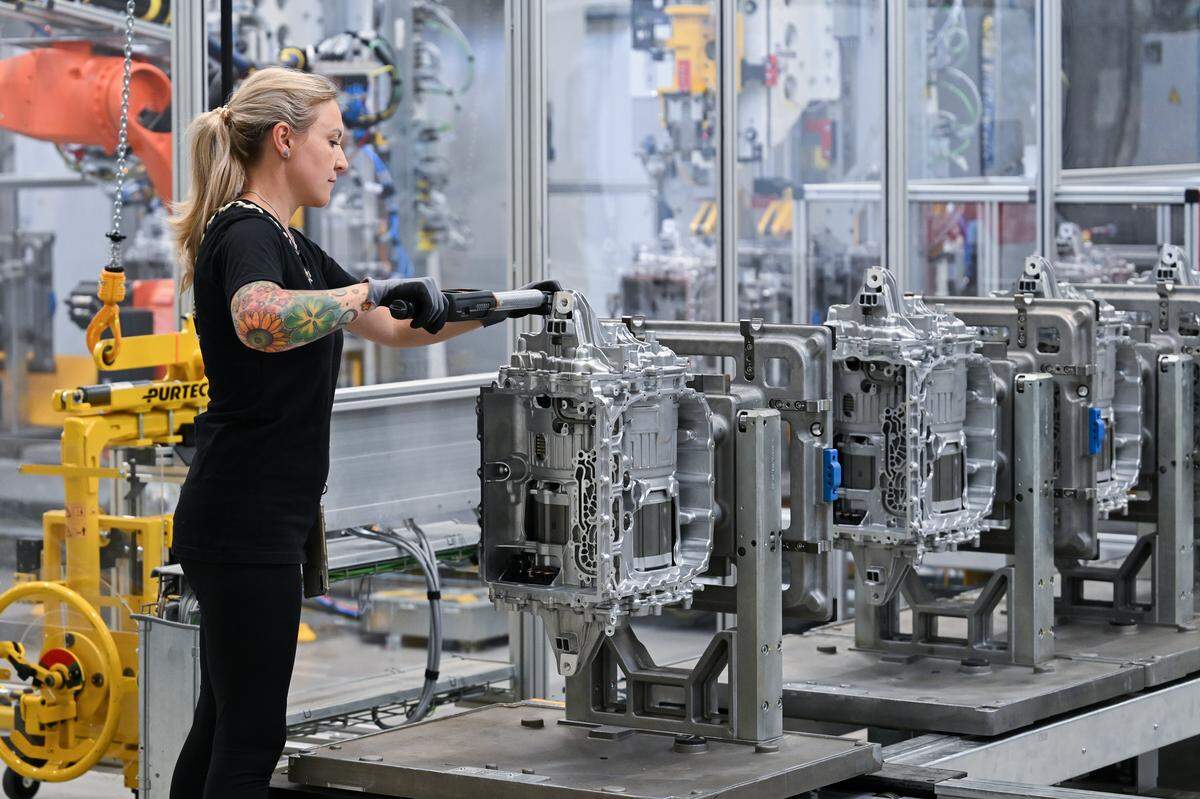
Manufacturers say consumer sentiment gives them reason for optimism. A J.D. Power survey in October found that nearly 60% of people shopping for a new car or truck said they were likely to consider an EV. A separate J.D. Power survey of current EV owners earlier in the year found that 94% would stick with an electric vehicle the next time.
Those EV owners will bring others along, said Orth Hedrick, executive director of product management for Kia America.
“What we find from most of our consumers, the Kia owners that go from a gas to an electric car, they become advocates. They tell neighbors and their friends,” Hedrick said. “And once they get in one, they don’t want to come back.”
Can EVs win buyers without government tax credits?
In other words, the industry expects to benefit from converts like Paul Knudson, who teaches sociology at Methodist University in Fayetteville. Knudson was attracted to EVs because they’re efficient and better for the environment. The $7,500 tax credit helped him buy a more expensive Cadillac Lyriq last spring.
But it’s the feeling behind the wheel that will keep Knudson an EV driver.
“I just really like how smooth the drive is, how quiet it is,” he said. “And then the surge of torque, the surge of power, especially on hills. Driving in the mountains, it’s just so much better. Hopefully I’ll never have to go back to an internal-combustion car.”
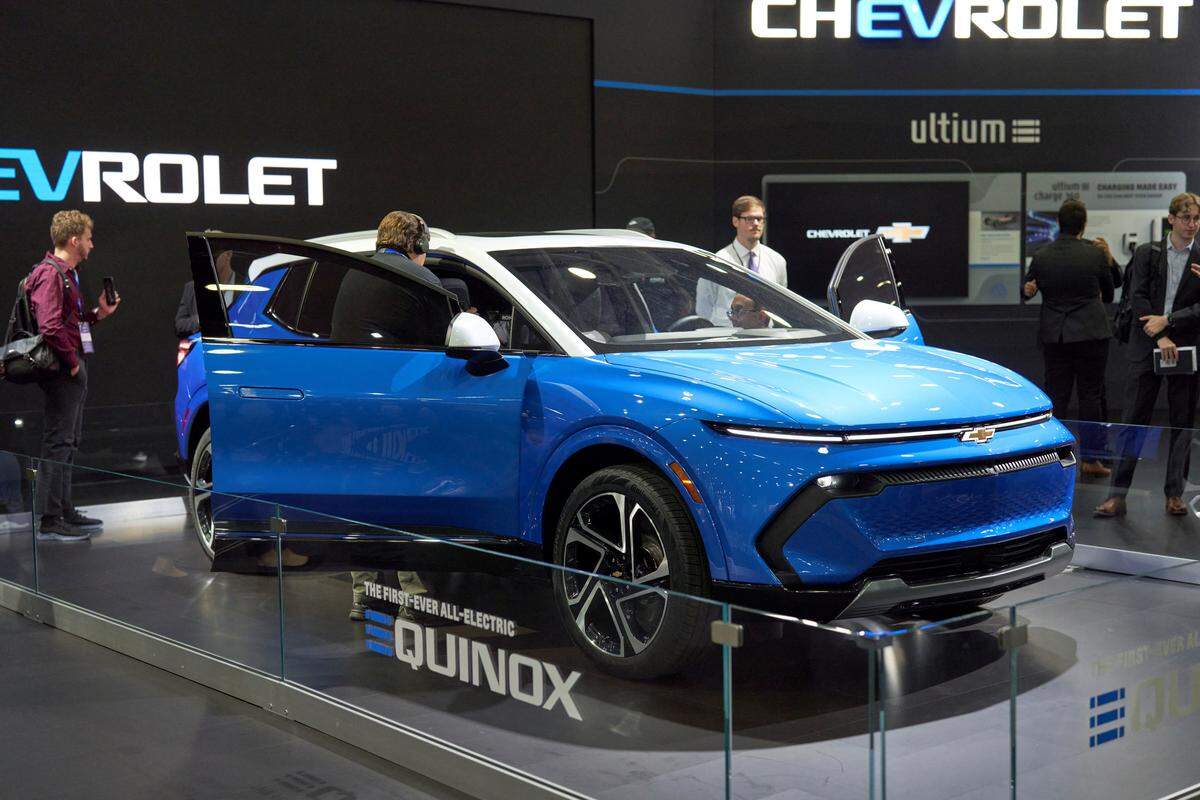
The federal tax credit helped Jacob Bolin buy a base-trim Chevy Equinox EV for less than $30,000. Bolin works for Plug-in NC, a statewide organization that works to promote electric vehicles, and says he thinks the EV industry has matured enough and offers a wide enough range of cars and trucks that it will weather the loss of the tax credit.
One key, Bolin said, will be offering more affordable EVs, something automakers are starting to do. As it discontinues its pricey and money-losing all-electric F-150 Lightning, for example, Ford is investing about $2 billion in a Louisville, Kentucky, plant where it will make a new line of affordable EVs, starting with a $30,000 midsize pickup in 2027.
But even Bolin is skeptical that there will be 1.25 million registered EVs in North Carolina by 2030.
“Right now, if you made me bet my paycheck on it, I would say probably not,” he said.
Cooper’s EV goal was actually his second; in 2018, he issued an executive order that set a goal of 80,000 registered zero-emission vehicles by 2025, along with efforts to install more public EV chargers. The state met that goal more than a year early.
“We knew the private markets were shifting to electric vehicles so we set bold goals that would help North Carolina communities be ready,” Cooper said in the spring of 2024. “Now it’s happening even faster than we anticipated.”
Cooper finished his second term as governor later that year and is now considered the leading Democrat in the race to replace U.S. Sen. Thom Tillis. Through his campaign, he did not respond to requests for comment about EV sales in North Carolina.
One final note about the market for electric vehicles: It may get a boost from another transportation technology that’s on the horizon — self-driving vehicles. Autonomous taxis from companies such as Waymo, Tesla and Zoox are spreading in cities across the South and West, and so far, all of them are electric.
This story was originally published January 8, 2026 at 5:30 AM.