
3 boys fatally shot in 3 summers. Can Durham stop the violence?
It’s become a pattern when children die from gun violence in Durham.
City leaders are appalled, the police department vows to take action and a family mourns.
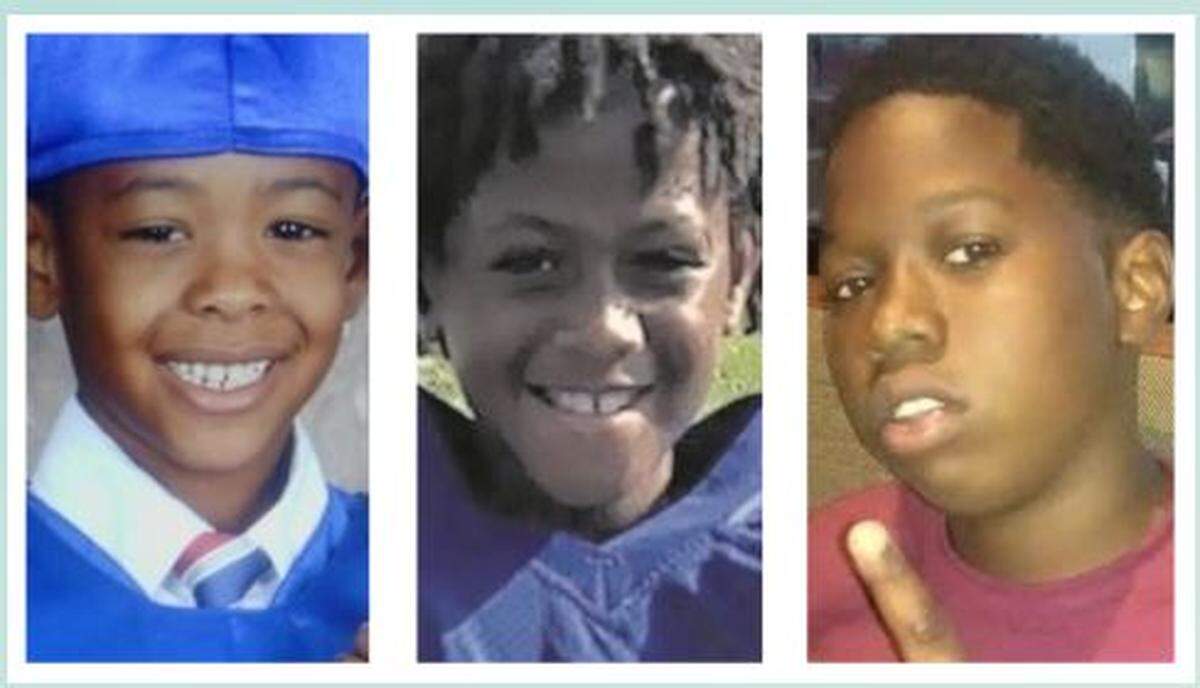
In June 2017, 7-year-old Kamari Munerlyn died after someone fired shots into an SUV, after the boy went swimming.
Last August, 9-year-old Z’Yon Person died after someone fired shots into an SUV his aunt was driving on the way to get snow cones for a group of children.
This time, 12-year-old Tyvien McLean died after a bullet pierced the window of an apartment complex where his family was attending a children’s birthday party.
Mayor Steve Schewel and Police Chief C.J. Davis held a news conference that day, July 15, in which Davis again asked the community to help police get guns off the street. McLean’s family held a vigil for the sixth-grader after he died a few days later.
“I am broken, I am hurt, I am livid,” McLean’s godmother, Coretta Saunders, said at the July 22 vigil. “You can’t even be in your own home and be safe anymore.”
After Tyvien’s death, a 17-year-old boy was one of seven people shot over three days at the end of July.
Durham is reckoning with a yearslong rise in shootings and aggravated assaults that has worsened during the coronavirus pandemic. City leaders are trying to find short- and long-term local solutions to the problem.
Over 400 shootings incidents this year
There were 418 shooting incidents reported to police this year through June, up from 315 over the same time period last year.
Not every incident includes someone being injured or fatally shot. In 2019, there were 652 shooting incidents reported to police; 190 people were injured, including 32 who died, The News & Observer reported.
Aggravated assaults with firearms have jumped 42% from last year at this time, according to the Police Department. Aggravated assaults involve a deadly weapon.
The local increase comes as reported aggravated assaults in the United States are also on the rise, from over 800,000 in 2015 to 1.05 million in 2018, according to the U.S. Bureau of Justice Statistics.
After Tyvien was shot, City Council member Mark-Anthony Middleton asked the city to adopt gunshot-detection technology, investigate repeat shooters and expand violence-interruption services, in which trusted community neighbors, including former gang members, try to reduce neighborhood tensions.
Violence interruption key, experts say
Gun violence is a deeply rooted problem that policing alone can’t eradicate, said Michael Sierra-Arévalo, a sociology professor at the University of Texas at Austin. Some of its root causes — including poverty, segregation and racism — are entrenched in the foundations of this country.
“You can affect the concentrated problem of gun violence without swamping entire communities with police and enforcement,” Sierra-Arévalo said.
One short-term solution to reducing gun violence, experts said, is implementing focused deterrence in cities. Through this method, police, community members and social-service providers discourage people from being violent.
“The idea is you make this clear in meetings ... saying there are resources to help, but the violence must stop,” Sierra-Arévalo said.
Boston, Oakland, New Haven and other cities that have used this approach have seen fewer homicides with guns.
Bull City United, Durham County’s team of violence interrupters, has been taken off the streets because of the coronavirus pandemic, Schewel said last month. The team was working in two parts of the city to de-escalate conflicts and prevent shootings.
“Although Bull City United has temporarily suspended some of its in-person operations in order to protect the health and safety of staff and community members during the COVID-19 pandemic, BCU has not stopped working,” Alecia Smith, a spokesperson for the Durham County Department of Public Health, told The N&O last month. “BCU continues to engage virtually with participants and affected community members.”
Sierra-Arévalo, when The N&O described to him the situation in Durham, said violence interrupters need even more support now.
“We should give them more money, fund them, get them more people and give them PPE and the resources they need to shoulder the tremendous responsibility of ending gun violence one interaction at the time,” he said. “It’s a radical reimagining of where we concentrate resources in a time of crisis.”
Where does policing go from here?
The Durham City Council renewed its police-budget debate this year following the police killings of George Floyd, Breonna Taylor and others. Activists locally and nationwide have called on cities to reroute law-enforcement spending to housing, education and other services that reduce the need for police intervention.
The council, which twice rejected hiring more police officers last year, in June approved six new officer positions and a $70.3 million for the Police Department for the 2020-21 fiscal year, a slight increase from last year.
The council approved more officers this time because it had no alternatives, said Middleton, who had supported hiring more police last year. “We didn’t put the structures and programs in place to allow us to move (away) from our default response, which is police,” he said.
Robert Spitzer, an author and a political science professor at the State University of New York College at Cortland, said police departments, especially those the community trusts, can be “fairly effective in pushing guns off the streets.”
“With all of the criticisms of police, and many are legitimate criticisms, some police forces do the job effectively well,” Spitzer said. “There is certainly a relation between effective policing and reducing gun violence.”
Rodney Williams, the CEO of Walk for Life, a Durham organization that works to reduce violence and help gang members find jobs, said the city needs more Black officers.
“Black people are going to talk more to Black than they will talk to white,” he said. “So you need to put more Black officers that are in the community getting out of their police cars, walking their beats, not just riding through and getting out to lock somebody up.”
Reimagining policing is daunting, experts say, but possible and cost-effective.
“It’s much more costly to send law enforcement to investigate a homicide after it’s happened than to send violence interrupters before it’s happened,” said Ari Freilich, a state policy director at Giffords Law Center, an anti-gun violence organization.
Two cities that took a new approach to policing are Camden, New Jersey, and Sunnyvale, California.
Camden disbanded and rebuilt its police department in 2012 and, prompted by activists, adopted more progressive policies. The city saw its crime rate drop, but it hired more officers to help make the change.
Sunnyvale doesn’t have a police department, but instead has a public safety department with employees trained for three positions: policing, firefighting and emergency medical response.
What’s next for Durham?
Police have not made any arrests since Tyvien McLean, 12, was shot and killed in Durham last month.
Next month, the City Council will discuss adopting Shotspotter. Middleton repeated his call for the gunshot surveillance technology at Thursday’s council meeting, announcing that the company has offered the city a free six-month trial.
The city and county also are forming a 15-person community safety and wellness task force. The group will include local experts in different fields, as well as people convicted of crimes, who will explore and recommend alternatives to policing.
Staff writer Virginia Bridges contributed to this report.
This story was originally published August 7, 2020 at 1:31 PM.