
Is your DNA safe? NC police turn to lab’s public databases to catch killers
READ MORE
Is your DNA safe?
A private company was thanked by cops for helping identify a suspect in the Faith Hedgepeth case. But is law enforcement’s use of public DNA databases ethical? This is the N&O’s special report.
Expand All
Is your DNA safe? NC police turn to lab’s public databases to catch killers
Genetic testing might be fun, but what is NC law enforcement doing with your results?
How does genetic genealogy and phenotyping work? DNA agencies weigh in on NC crimes

Here are the 115 US cases Parabon Labs’ DNA analysis services has assisted in solving
When Faith Hedgepeth was killed in a Chapel Hill apartment in 2012, an important clue was left behind.
For the past nine years, Chapel Hill police didn’t know who beat the college sophomore to death, but they said they had DNA from the scene.
And they hoped that would bring Hedgepeth’s killer to justice.
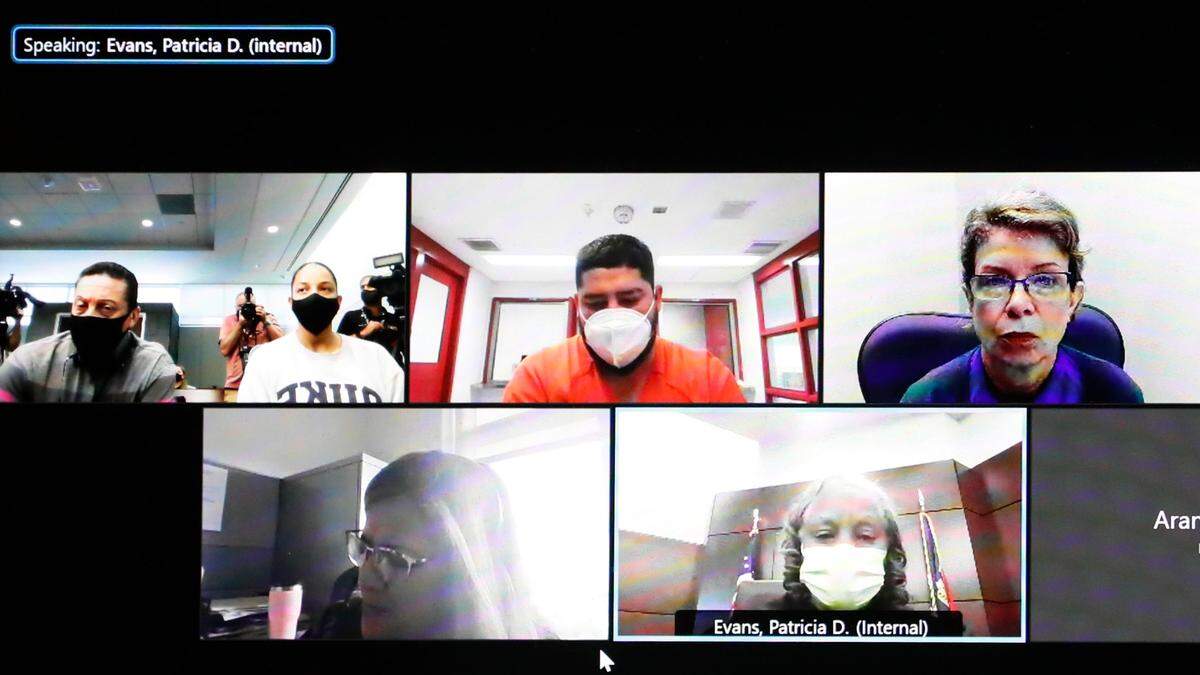
In September 2021, police announced they had arrested a suspect in the case: Miguel Salguero-Olivares, 28. Officers thanked a private company, Parabon NanoLabs, for its work with DNA in the case.
Police haven’t given details about how the Virginia-based company’s findings led to a suspect.

But privacy activists have raised concerns about the type of work Parabon does.
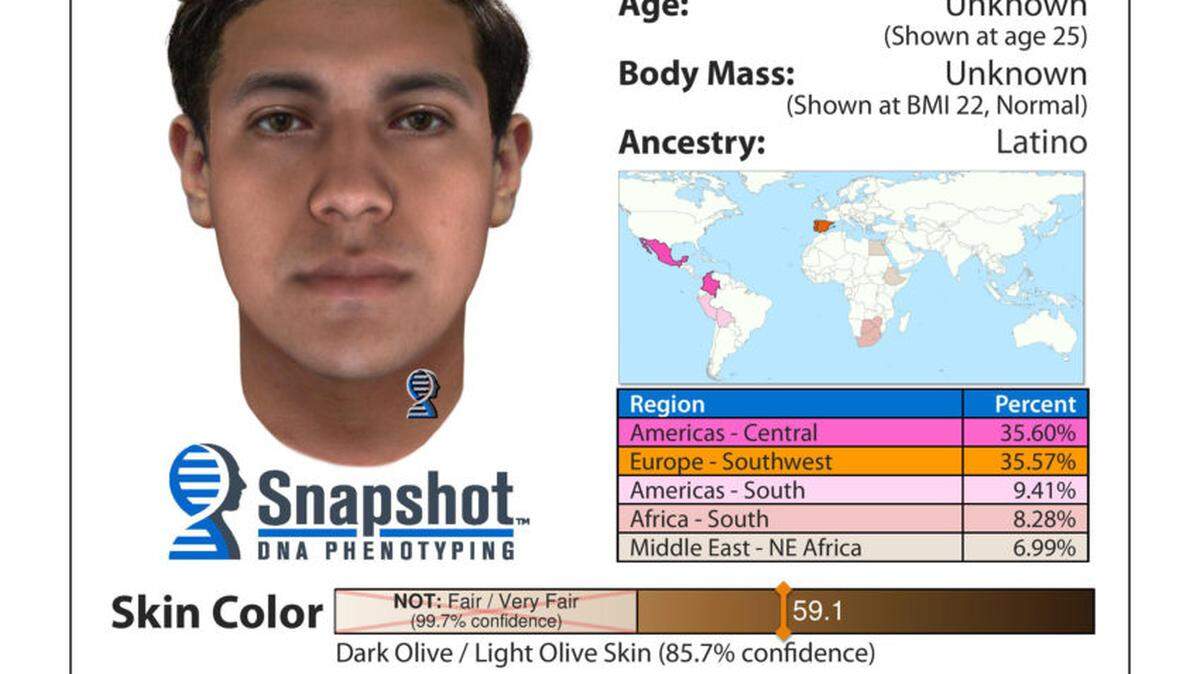
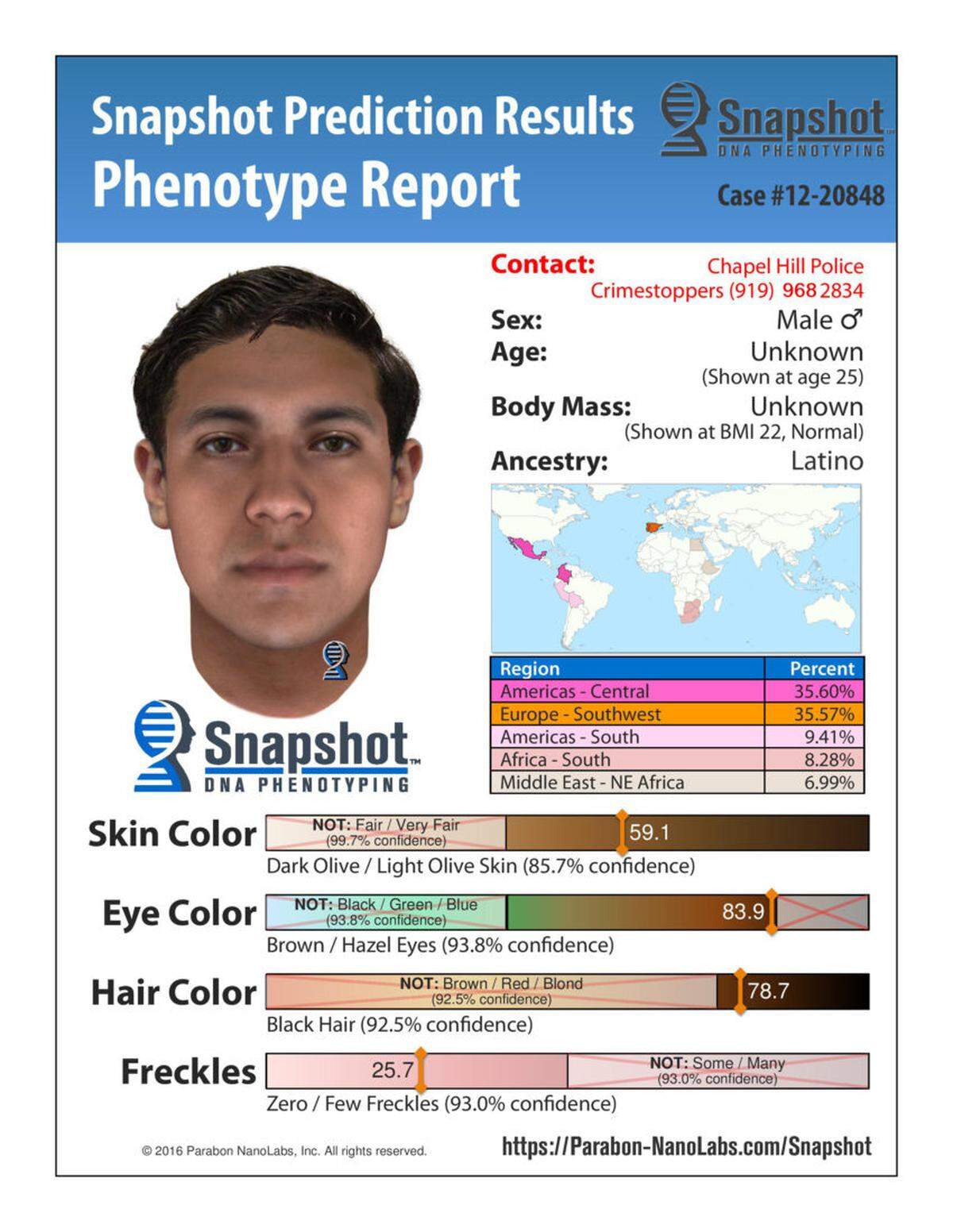
In 2016, Parabon NanoLabs confirmed on ABC’s “20/20” that it had received the DNA sample from the Hedgepeth case and used a type of analysis known as phenotyping to figure out for police what the killer might look like.
Their analysis suggested the killer had black hair, olive skin, hazel eyes and few freckles.
Parabon included a composite sketch, not to be taken as an exact image of the killer, but similar.
Five years later, police made an arrest.
It’s unclear how police arrived at Salguero-Olivares, who faces a first-degree murder charge, as the alleged killer. But his features seemingly match what Parabon predicted.
Parabon NanoLabs also has another tool police can use, called genetic genealogy. This analysis uses public DNA databases, like GEDmatch, to find relatives of people whose DNA samples were collected at crime scenes.
Neither Parabon NanoLabs nor the police department has confirmed if this tool was used in Hedgepeth’s case, and neither will say whether phenotyping helped lead police to Salguero-Olivares.
The company credits itself for helping to identify 181 persons of interest since May 2018, when it launched its genetic genealogy division. The work that Parabon NanoLabs does has helped bring many people to justice and provide answers to family members needing closure, including in North Carolina-based cases.
But those accomplishments haven’t silenced concerns about possible racial targeting, invasions of privacy and lack of oversight.
Using Parabon
What we do know from Hedgepeth’s case is that police contracted with the company to do phenotyping around 2016.
The town of Chapel Hill provided The News & Observer with redacted invoices that showed it used the company nine times between 2018 and 2020 with a cost of $850 each.
In 2020, Parabon charged Chapel Hill $2,250 for a single service. This year, it charged the town $3,500 for another single service.
The town did not answer questions in an email asking the nature of what was redacted and whether there were any invoices prior to 2018.
Ellen Greytak, director of Bioinformatics and the technical lead for the Snapshot Advanced DNA Analysis division of Parabon NanoLabs, spoke with The News & Observer about the company’s work. She said that traditionally, forensic DNA allowed investigators to match a suspect or missing person to a federal database. If that didn’t return any matches there wasn’t much more the DNA could do.
But Parabon NanoLabs changed that.
Greytak said the lab analyzed thousands of known people to learn what DNA sequences are typically seen in what characteristics. That allows them to make educated guesses as to what a person might look like from unknown DNA. They can guess eye color, face shape, skin tones, hair color and whether a person has freckles.
What it doesn’t do is tell the lab the age or build of a person.
“We don’t have access to anything that’s not in the DNA, and there is a lot about your appearance that is not in your DNA,” Greytak said. “So you know, we have to guess about the hairstyle, for example. ... Your DNA sequence is the same when you’re born as when you turn 80, and so we only have that DNA sequence that doesn’t tell us what the age of that person is. And so we always, by default, produce a prediction at age 25.”
She added that face tattoos, dyed or shaved hair and aging can make a person look different than their DNA sequence suggests. So they always emphasize that their work is a prediction and not a guarantee.
In 2016, Jay Stanley, senior policy analyst for the ACLU’s Speech, Privacy and Technology project, wrote about his concerns on phenotyping. He called the prediction “baseless” and said that it could ensnare innocent people with webs of suspicion or investigations.
A person of color could face further societal prejudices, Stanley said. And a suspect may look nothing like the “speculative image,” he said, which could deter the investigation.
Stanley also worried that some police officers might use the sketch to establish probable cause or pressure people to provide DNA samples or agree to other intrusive investigatory techniques.
Though Stanley said he wasn’t completely against phenotyping if done right, he said law enforcement shouldn’t use it to create suspects.
DNA at the state crime lab
Law enforcement doesn’t start or end an investigation by providing DNA to Parabon.
N.C. Attorney General Josh Stein told The N&O that DNA always comes to the state crime lab first, and the crime lab confirms DNA matches before an arrest is made.
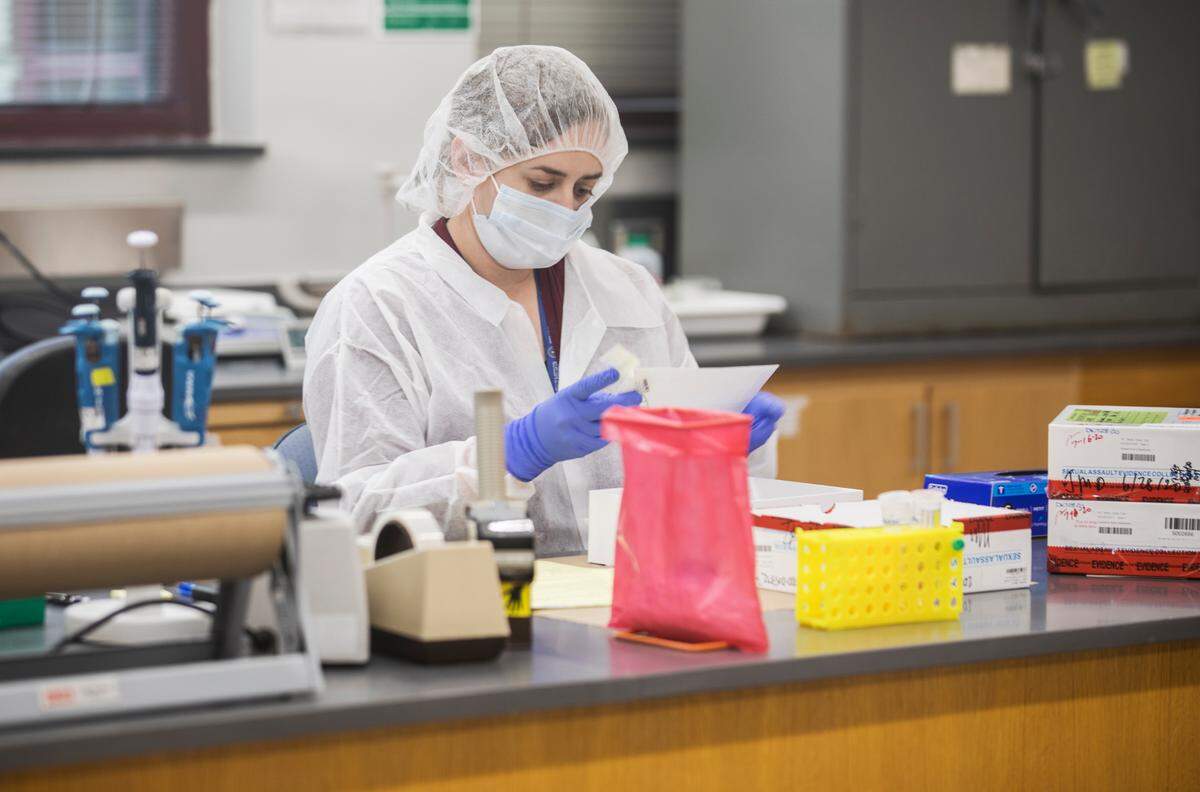
Whenever a DNA profile is collected at a crime scene or from a sexual assault evidence kit it is loaded into the Combined DNA Index System, better known to law enforcement and court officials as CODIS.
CODIS can be used to identify suspects through their DNA. But to be in that database, they would have had to have already had a run-in with law enforcement.
Stein said that two years ago the North Carolina lab began using CODIS to also look for family members of suspects based on DNA they’ve left.
“We will sometimes do a run of that DNA, if we don’t get a hit, and say, ‘Is there someone on the paternal brother’s side in the database?’” Stein said, referring to CODIS.
Stein said it has yet to yield any results.
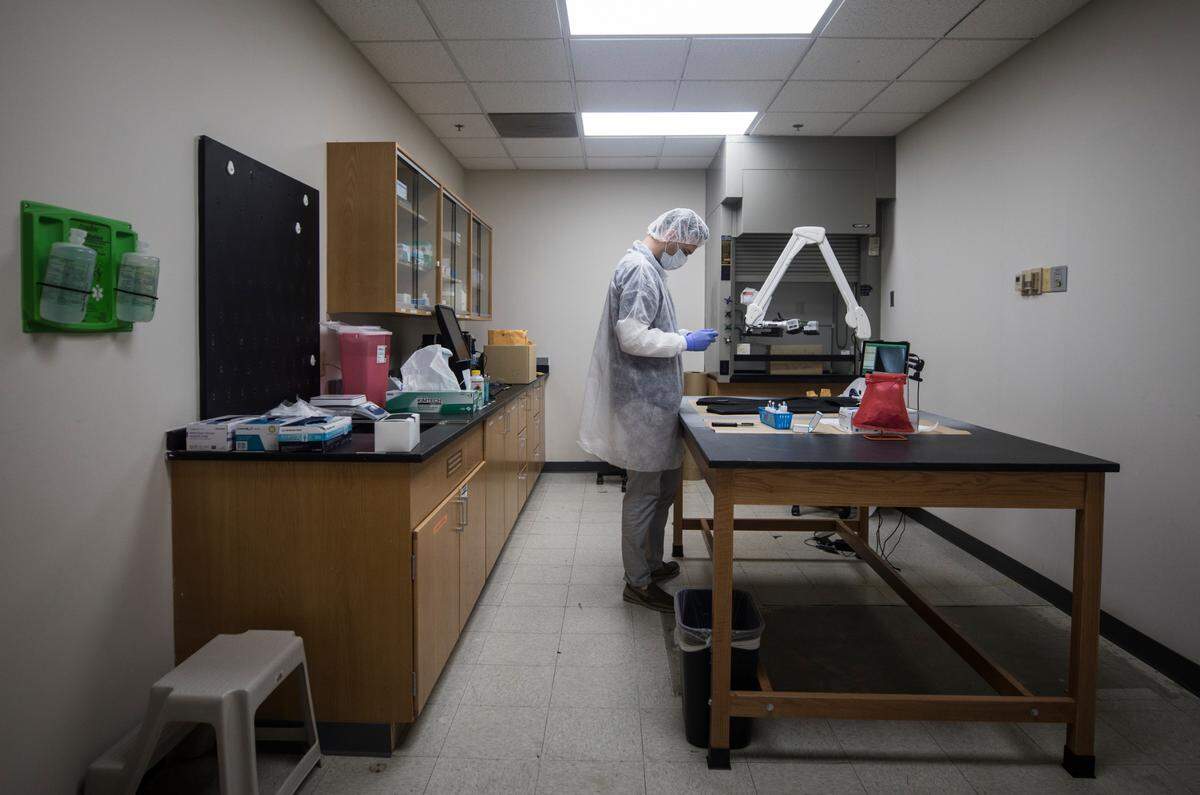
The North Carolina state lab does not have the capability to run genetic genealogy testing through public databases like GEDmatch and Family Tree DNA.
“Individual police departments can contract with vendors to do that kind of search, and it is happening in North Carolina,” Stein said. “We know of a few cases that were fairly dramatic and through the forensic genetic genealogy we were able to identify a suspect.”
Stein said when that happens, the DNA sample is sent back to the state crime lab and tested against the DNA of the suspected person.
The Ramsey Street rapist
Former Fayetteville Police Lt. John Somerindyke is one of those police officers who turned to Parabon NanoLabs to search public databases for a serial rapist.
Fayetteville Police investigated six rapes that happened around Ramsey Street between 2006 and 2008.
Somerindyke told The N&O that all of the rapes were home invasions into apartments, except for one woman who was jogging. Ramsey Street, in north Fayetteville, has many apartment complexes because of its proximity to Fort Bragg and Fayetteville State University.
Law enforcement, including the State Bureau of Investigation, spent thousands of hours trying to solve the cases but eventually the trail went cold, Somerindyke said.
But in 2016, a news report on Parabon NanoLabs’ work with phenotyping caught Fayetteville officers’ attention, and they applied for a grant to have the lab do a composite sketch of their rapist.
Parabon NanoLabs came back with these suggestions:
Northern or western European ancestry
Fair to light skin
Hazel or brown eyes
Brown or black hair
Few freckles if any.
Police would realize later: “That was all spot on,” Somerindyke said.
But at the time, their case remained unsolved.
That is, until law enforcement made a major arrest on the other side of the country.
The Golden State Killer
In 2018, Joseph James DeAngelo Jr. was charged with 13 murders, 50 rapes and 120 burglaries across California in the mid- to late-70s and early to mid-80s. DeAngelo is known as the Golden State Killer.
Law enforcement announced that they used genetic genealogy to learn who was responsible for the 183 crimes, and have since connected him to many others. Genetic genealogy allowed law enforcement to compare his DNA to those in public databases.
Once they found a relative in a database, they were able to follow the family tree to DeAngelo and then confirm that he matched the DNA left at crime scenes.
That caught Somerindyke’s attention.
A genetic genealogy expert
It also caught the attention of CeCe Moore, who became interested in genealogy while making a family tree as a wedding present for her niece. It would became a hobby for her.
Then in 2010, she said, the company 23andMe published a series of studies it had done researching how DNA could make key health and healthcare predictions and offer more insight into people’s heritage. Moore said she believed what 23andMe was doing had incredible potential.
“I dropped everything I was doing and spent a couple of years, full-time, learning about genetic genealogy,” Moore said.
Moore began doing speaking engagements about her research, which led to a TV series on PBS.
“I just kind of fell into it, Moore said. “There was no such thing as an expert in this field because it was brand new, so I became an expert through blogging and speaking and teaching.”
Moore initially began her work helping adoptees find their birth parents through genetic genealogy. That led to more stories and more TV interviews.
Eventually, she began receiving notes from law enforcement asking if she would consider helping. She said she hesitated and wondered whether people would stop uploading their DNA profiles to public databases if they learned that law enforcement was also using them.
“It was something I was debating for a number of years,” Moore said. “I wanted to help law enforcement. I wanted to help solve their cases. But I didn’t want to destroy the industry that we worked so hard to build. In the meantime a colleague of mine went and helped solve the Golden State Killer case using techniques I developed for adoptees, and that changed everything,” she said.
Parabon NanoLabs reached out to Moore and asked if she would come do that work for them.
She agreed.
To catch a rapist
Meanwhile in Fayetteville, Somerindyke was researching how he could use that technology to catch the Ramsey Street rapist.
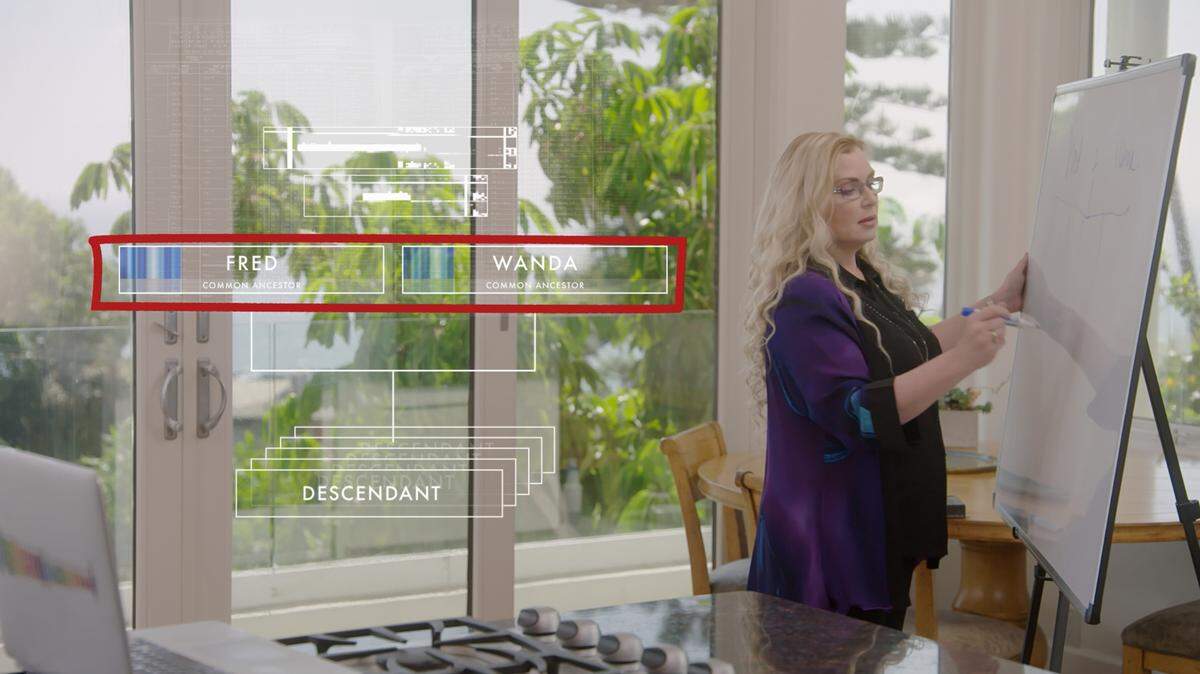
Parabon got involved, and Moore got to work scanning public DNA sites for matches to the Ramsey Street rapist’s DNA. Somerindyke said Moore first got a few rough matches from distant relatives. From there, he said, Moore began building the suspect’s family tree, worked through their common ancestors until finding a match.
“It worked out good,” Somerindyke said. “She had access to a lot of good public information and then what was not public, that we could pull for her locally ... she used it to expand on the family tree.
“The rest is history.”
Police arrested Darold Bowden for the rapes. He is awaiting trial.
Personal DNA information
Public databases, like GEDmatch, allow people who buy genetic testing and ancestry kits to upload their DNA profiles and create even more matches than those from just the company they used.
Vera Eidelman, staff attorney for the ACLU’s Speech, Privacy and Technology project, spoke to The N&O about concerns about this type of access to a person’s DNA. Eidelman said Parabon uses a part of a person’s DNA that includes their propensity for certain medical conditions, their ancestry and their family relationships.
Eidelman thinks about DNA testing a lot around the holidays as people gift one another test kits meant to help learn more about their ancestry.
“I think that it is important for people to be aware of the potential implications of what it means to ... get their DNA tested by private companies, and I also think that people should be able to make that decision, but they shouldn’t ultimately end up making that decision for their family members,” Eidelman said.
She said a person providing DNA to one of these groups also provides portions of a family member’s DNA. She said that even with permission from immediate family members it could reveal private information about third cousins that person may have never even met.
23andMe comes with a host of warnings including many of Eidelman’s concerns, assuming a person took the time to read the fine print.
It warns that using their technology could unravel family secrets and reveal life-altering medical information not just for the user but for their children.
The company says that it will never share information with employers or insurance companies. But the company also warns to be careful who users share their results with because it could trickle back to those entities.
It also warns that while there are laws on the books attempting to protect people from fallout from using these types of services, that doesn’t affect whether at a later date insurance companies might be allowed to ask if they have used these services and what the results were. And if someone speaks to their doctor about the results it could become part of their medical records.
Consent to police use of databases
One of the largest concerns about what Moore does is that it allows police to use DNA to trace an innocent person to a suspect, without a warrant.
The Golden State Killer case revealed just how far public databases could be used. Moore said those databases now include opt-in and opt-out features in regard to law enforcement.
One database, Family Tree DNA, automatically enrolls all DNA subjects in a database used by law enforcement but gives users the ability to deny access to their DNA. GEDmatch automatically opts a person out until they say otherwise.
“That’s the only reason I was comfortable using those two databases,” Moore said.
Eidelman said that hasn’t always been clearly communicated to consumers. And worse, she said, it allows family members to choose to opt you in without your consent because of the nature of DNA.
“If for example, my parents got their DNA analyzed, and agreed to upload it to a particular website, I didn’t consent, and that still means in effect, that my DNA exists on those services,” Eidelman said.
Moore said that only around 500,000 of GEDmatch’s 1.5 million users have agreed to allow law enforcement to use their DNA. But she said if there is a body found that needs to be identified she does have access to all 1.5 million people.
When she gets a hit from one of the databases, Moore said, it gives her whatever the person used as their name, their gender, their email address and how much of their DNA is shared with the suspect.
She said all of her work is done using publicly available information.
Some states protect databases
Maryland and Montana have policies limiting an officer’s ability to use databases to find family members from their unknown DNA samples.
Maryland lawmakers worked with Moore on creating their law, which she said didn’t prevent the work from being done but added safeguards. Maryland requires a judge’s order to use genetic genealogy, limits its use to serious crimes and limits officers to only use databases that tell users that their DNA could be used in police work.
Montana’s law requires a warrant to use a database for this purpose, unless a user waived their privacy rights.
“Montana did this somehow totally under the radar,” Moore said. “We had no idea it was coming.”
Greytak said there are few regulations on the technology. Because of that, New York required certification both for Parabon NanoLabs and companies like 23andMe.
“We went through an extensive certification process,” Greytak said.
Police
Somerindyke said that after using Parabon NanoLabs to solve two rape cases he would use its services again and recommend it to other police agencies.
“Well, I would recommend wherever CeCe Moore is,” Somerindyke added. “If she’s still with them then, yeah, that’s what I would recommend.”
Stein also vouches for the technology, though he’s more hesitant when it comes to phenotyping than genetic genealogy.
“It’s less precise and therefore less helpful,” Stein said.
Stein said it helps narrow the field of suspects, but it doesn’t help solve crime or identify suspects.
But genetic genealogy is appropriate, Stein said.
“I think, if it can bring a resolution to a long-standing crime where the family doesn’t have answers,” he said. “And sometimes the perpetrator is still on the streets, as was the case with the Ramsey Street rapist, if it leads to that person’s arrest, so that they cannot terrorize others, than I’m comfortable with it.”
This story was originally published October 17, 2021 at 6:00 AM.
