Man takes plea in fatal NC bar assault after prosecutors’ murder case stumbles
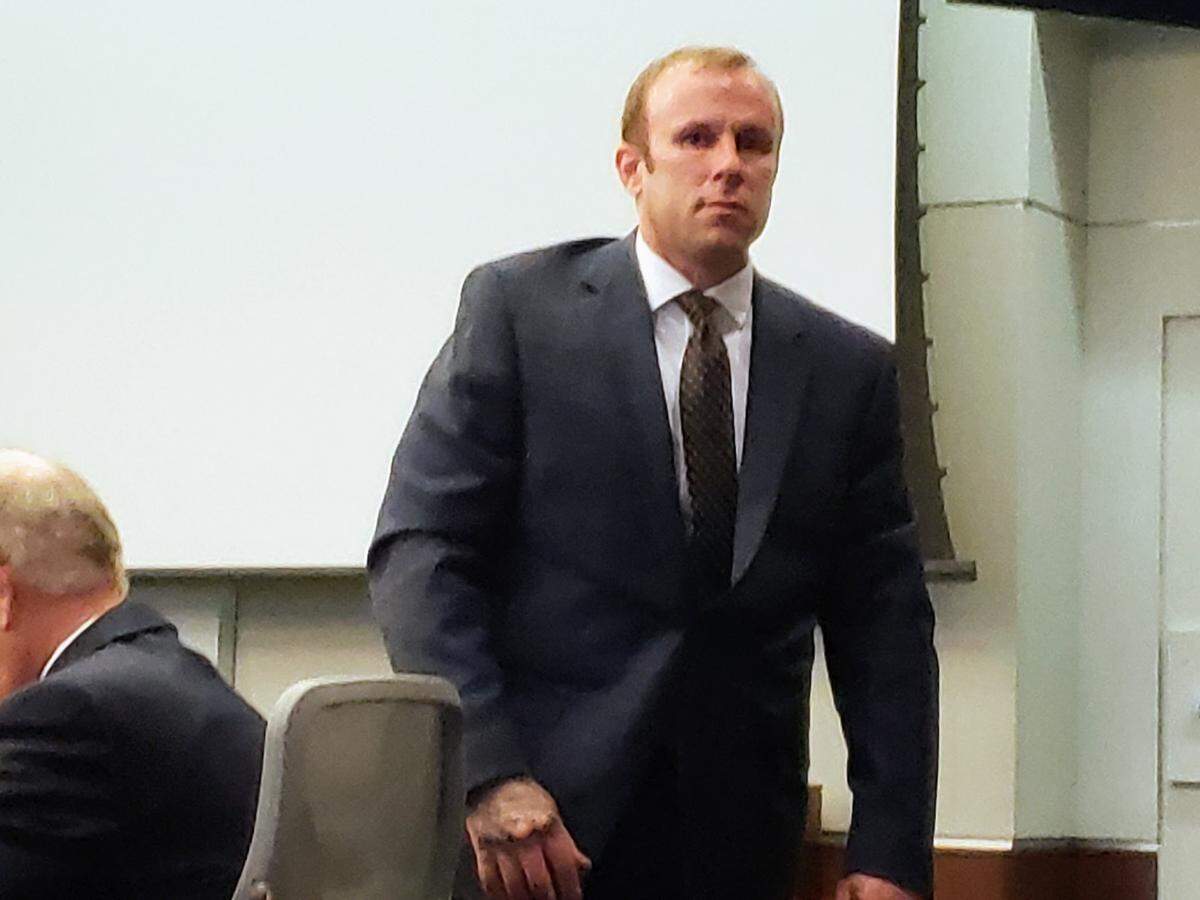
Daniel Mohar, accused in a man’s death after a fatal 2019 Durham bar encounter, pleaded guilty to involuntary manslaughter Monday after a judge ruled the jury could not consider a second-degree murder conviction.
Mohar was facing a second-degree murder charge tied to the June 5, 2019, incident at the now-closed Social Games and Brews on West Main Street between Duke University’s East Campus and downtown Durham.
Video and court testimony indicated Mohar headbutted and then hit Teddy Tivnan in front of the bar. Tivnan then fell to the ground, hit his head and was unconscious when emergency officials responded.
Tivnan, who was 49 years old, died two days later.
Mohar was charged with first-degree murder about a month later, but the charge was downgraded to second-degree murder by the time the trial started last week.
After four days of testimony, prosecutors rested their case against Mohar on Monday morning.
.jpeg "Resized_IMG_5876 (2).jpeg")
No malice
Mohar’s attorney Emilia Beskind then argued that all the charges should be dismissed, but she focused on the second-degree murder charge.
Prosecutors failed to prove Mohar killed Tivnan with malice, she said, which is required for a second-degree murder conviction.
Beskind argued that it was inappropriate for Mohar to headbutt Tivnan after Tivnan had an exchange with a woman, walked away and said “What a tramp” to his friend.
Mohar then came around a corner and headbutted Tivnan, as shown on the bar’s outdoor surveillance video.
After the headbutt, Tivnan fell outside the camera’s view. Beskind argued that a witness who testified indicated Tivnan started to leave after that, but then walked back up the ramp to the bar as Mohar told him to leave.
Mohar then hit Tivnan in self-defense, Beskind argued, and Tivnan fell and hit his head, which caused his brain to bleed.
On Monday morning, Beskind argued that a single punch doesn’t equal malice under North Carolina law, which requires proof that an action was so reckless and cruel that the person didn’t value a human life.
“We do not foresee that when we punch someone one time, they are going to die,” she said.
Beskind also argued that the no other courts have defined a single punch as malice.
Assistant District Attorney Michael Wallace disagreed. The headbutt and subsequent hit were a one-sided attack, he argued.
“This case rises to a level of a vicious attack on an individual without cause, without justification,” Wallace said.
The judge agreed with Beskind and dismissed the second-degree murder charge, a class B felony in which Mohar could have faced more than 28 years in prison.
Voluntary or involuntary manslaughter
After the ruling, attorneys continued to make arguments on whether the jury could consider voluntary or involuntary manslaughter.
Beskind argued that voluntary manslaughter also had a malice component and that involuntary manslaughter should be the only charge the jury could consider. Wallace argued that voluntary manslaughter, a class D felony, was the best charge for the case.
In addition, the judge on Monday started to outline jury instructions, which included a draft statement saying that a police interview of a witness was missing and that the jury could infer that the statement had information that was detrimental to the prosecution.
The judge had already ruled that the statement could be included in the jury instructions as a sanction after a witness said police interviewed him days after Tivnan died. Prosecutors said they didn’t know about it and couldn’t find interview notes or a recording.
The jury instructions also indicated that jurors didn’t hear from a key witness due to the actions of prosecutors. That issue was discussed in a closed session of court.
During a break Monday afternoon, it became clear through the prosecutors’ conversations with the family and statements made in court that Mohar was considering a plea.
At around 4:30 p.m., Mohar pleaded guilty to involuntary manslaughter, a class F felony. Sentencing will be held Tuesday. Sentences are based on defendant’s prior convictions and factors of the crime.
Under those rules, Mohar could face a maximum sentence of nearly two years, but that could include active time and/or probation, according to state sentencing guidelines.
Tivnan’s family members, who have appeared frustrated and heartbroken by the prosecutors’ struggles, left the courtroom before the plea.
BEHIND THE STORY
MOREThis is a breaking news story
In a breaking news situation, facts may be unclear and details may change as the story develops. Our reporters are working to get information as quickly and accurately as possible. This story may be updated as more information becomes available. Refresh this page for the most up-to-date report.
This story was originally published March 28, 2022 at 5:31 PM.