NC marks milestone in use of gun database that links crimes nationwide
AI-generated summary reviewed by our newsroom.
- North Carolina reached 10,000 ballistic leads in the federal NIBIN database.
- State crime lab generates roughly 1,300–1,500 NIBIN leads annually for investigations.
- Leads link shootings across jurisdictions but do not equate to arrests or convictions.
A federal database that helps link shootings and solve gun crimes has been used 10,000 times in North Carolina to help law enforcement try to find suspects.
That database is the National Integrated Ballistic Information Network, operated by the U.S. Bureau of Alcohol, Tobacco, Firearms and Explosives, which helps connect cases using ballistic evidence input into its system across jurisdictions.
Just over five years ago, the state celebrated about 5,000 leads generated for law enforcement officers via NIBIN, said Special Agent in Charge Alicia Jones of the ATF Charlotte Field Division.
“I’m super happy to be back here today as we celebrate 10,000 leads,” Jones said during a press conference Tuesday at the North Carolina State Crime Lab, which handles evidence in many of those cases. “10,000 leads in NIBIN means there were 10,000 leads for homicides, violent crimes committed with firearms, assaults.”
Amanda Thompson, the director of the lab, said that the agency averages about 1,300 to 1,500 leads generated annually. Leads do not equal arrests or convictions.
North Carolina began entering data into the system in 1994. That made it the eighth state in the country to adopt the system. About 500 agencies nationwide now use it, said Attorney General Jeff Jackson.
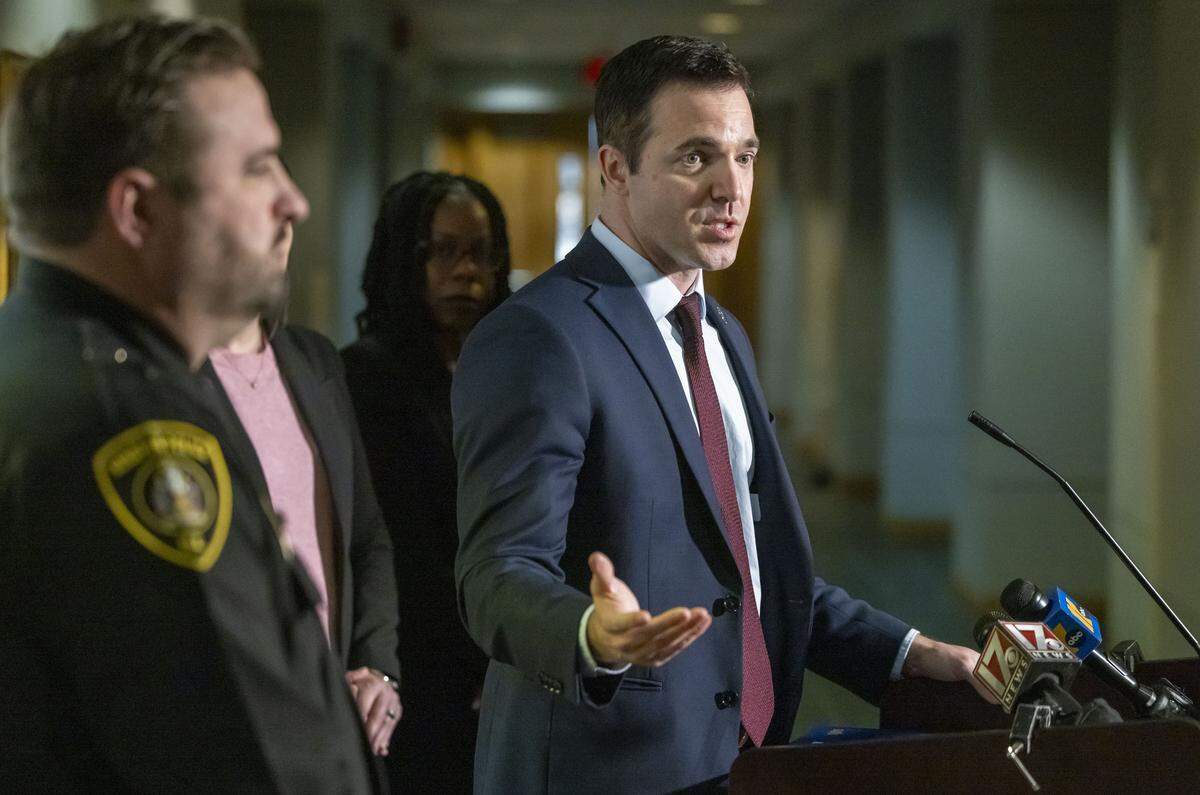
The lab, which provides services that support criminal investigations, is under the North Carolina Department of Justice, which is led by Jackson, a first-term Democrat.
“This NIBIN milestone is a big deal for public safety in North Carolina. It means that we are way out in front when it comes to connecting the dots between different crimes in different locations,” said Jackson.
These leads are “10,000 assists that we gave law enforcement to go catch the shooter somewhere,” he said, highlighting a case in New Hanover County in which shell casings from a homicide scene were linked to ammunition found in a suspect’s bedside drawer.
When a gun is made, equipment etches microscopic markings — similar to fingerprints — onto its metal parts. These markings, known as tool marks, are transferred to a bullet or cartridge case when the gun is fired, according to The National Institute of Justice.
NIBIN stores digital two- or three-dimensional images of spent bullets and cartridges recovered from crime scenes or test-fired by law enforcement.
Jackson on Tuesday demonstrated how law enforcement conducts test firing by shooting a bullet into a large tank several feet deep and filled with water. The process allows analysts to safely recover and preserve the bullet and casing for examination.
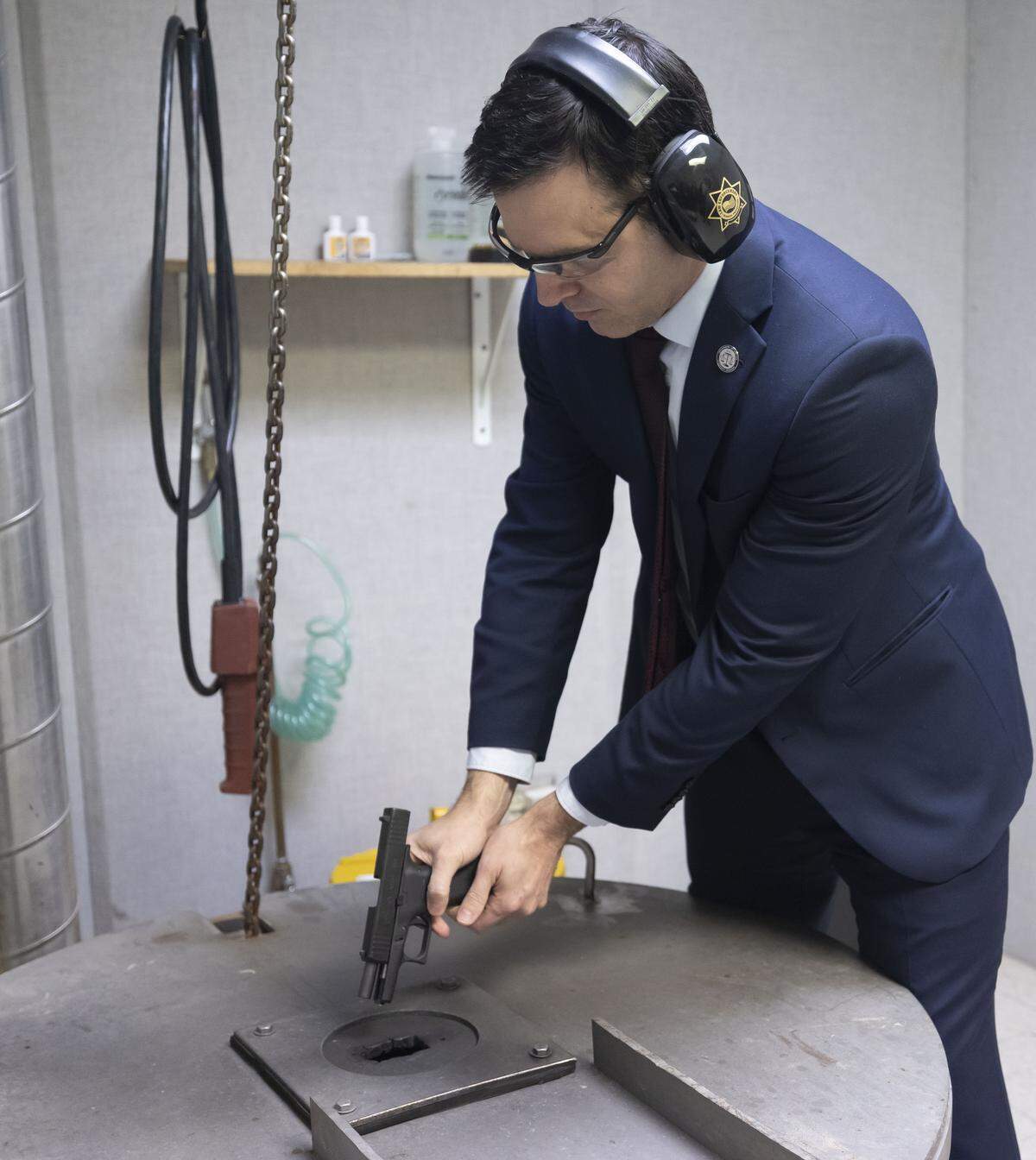
Investigators can search the database for other rounds with similar markings. If a potential match is identified, crime lab analysts then compare the actual spent rounds, according to the NIJ. NIBIN is the only such database in the country, said Jones.
Jennifer Slish, forensic scientist manager at the lab, said that even if someone uses a different kind of ammunition, the weapon can still be linked — sometimes years later.
Chief Keith Goyette of the Kinston Police Department said that years ago, “we had several incidents where we had shootings in different parts of our community, and we were able to utilize the resource here to link those cases together.”
For Jackson, the milestone reflects both progress and concern.
“Gun violence is still an epidemic,” he said. “It’s not just an epidemic in North Carolina, but across the country. On the one hand, it’s a good thing that we’re getting all these leads. On the other hand, it does mean that we continue to have a lot of shootings.”
This story was originally published February 10, 2026 at 2:02 PM.