Wake parents must sign form promising not to let sick children ride school buses
Wake County students will need to follow new COVID-19 safety rules for riding school buses this fall, including promising not to get on if they’re feeling sick.
The North Carolina Department of Health and Human Services is requiring rules such as face masks for bus riders and social distancing guidelines to keep students separated on school buses. Wake County school bus riders will need to follow these rules when elementary schools begin reopening Monday for in-person instruction.
Wake is facing a lot of uncertainty this year, including how many of the 70,000 students who normally ride the bus will do so.
“We encourage our families to plan ahead,” Stephen Sposato, Wake’s director of transportation operations, said at a news conference Thursday at Southeast Raleigh Elementary School. “Make sure they know where their bus stop is.
“Make sure that they understand the requirements to screen their student before they come to the bus stop, to have that face covering before they arrive at the bus stop.”
On Monday, PreK-3 students and K-12 special-education students in regional programs return for in-person instruction. They will be on a cycle of one week of in-person classes and two weeks of remote classes, before switching to daily in-person classes on Nov. 16.
Middle school students will return to school Nov. 9 for a three-week rotation of in-person and online courses. Fourth- and fifth-grade students will begin on that rotation on Nov. 16.
High school students will continue to only receive online classes for the rest of the fall semester, which ends in January.
Attestation form required
Before students can board for the first time, their parents must fill out a one-time attestation form stating that they and their child will follow all health and safety protocols for bus ridership.
“By signing the form, the parent agrees that they will screen their student for COVID-19 symptoms each morning for the current school year,” Sposato said.
Among the items on the form is parents promising that their children won’t board if:
▪ They have been diagnosed with COVID-19.
▪ They have had close contact — within six feet for at least 15 minutes — in the last 14 days with a person diagnosed with COVID-19.
▪ They have any of the following symptoms: fever (100.4 degrees or higher) or chills, new cough, shortness of breath or difficulty breathing or new loss of taste or smell.
Parents can submit the form online or print out a copy to give to their child’s school. Online and printable forms can be found at wcpss.net/busform.
Initially, Wake had looked at making parents fill out the form weekly or even daily.
Masks required on buses
One of the changes is that students must wear face coverings while waiting at the bus stop, riding on the bus and also at school.
Drivers will have extra face coverings to give to students who don’t have one when they board.
“We can’t stress it enough that face masks must be worn at all times every day,” said Elana Christmas, a team leader in the Knightdale transportation district.
Sposato said that drivers will be focused on safely operating the bus. But he said drivers will contact the school about students who aren’t following safety rules.
Students who repeatedly or willfully refuse to wear face coverings, unless they qualify for a medical exemption, could be required to take virtual classes instead of being allowed to attend in-person classes.
Fewer students on buses
Wake County school buses will operate at 33% capacity, typically no more than 23 riders at a time. Sposato said that a handful of buses may have more than 23 students when the number of elementary students increases in November.
The reduced capacity will lead to changes in how students board and leave the bus and how they are seated.
“The procedures that we have in place for boarding and disembarking are for the protection of the drivers as well as all the students,” Christmas said.
Students, who are being asked to wait six feet apart at the bus stop, will now board the bus one at a time. Unless told otherwise, they’re to sit in the rearmost seat available.
Students are to sit one person to a seat, although siblings can share a seat. Wake says it may not be possible for elementary students to sit one to a seat when PreK-3 students return for daily classes.
When the bus arrives at school, students are to exit one side at a time starting with those closest to the front door. After exiting, students are to stand six feet apart while school health screeners ask them questions about how they’re feeling and check their temperature.
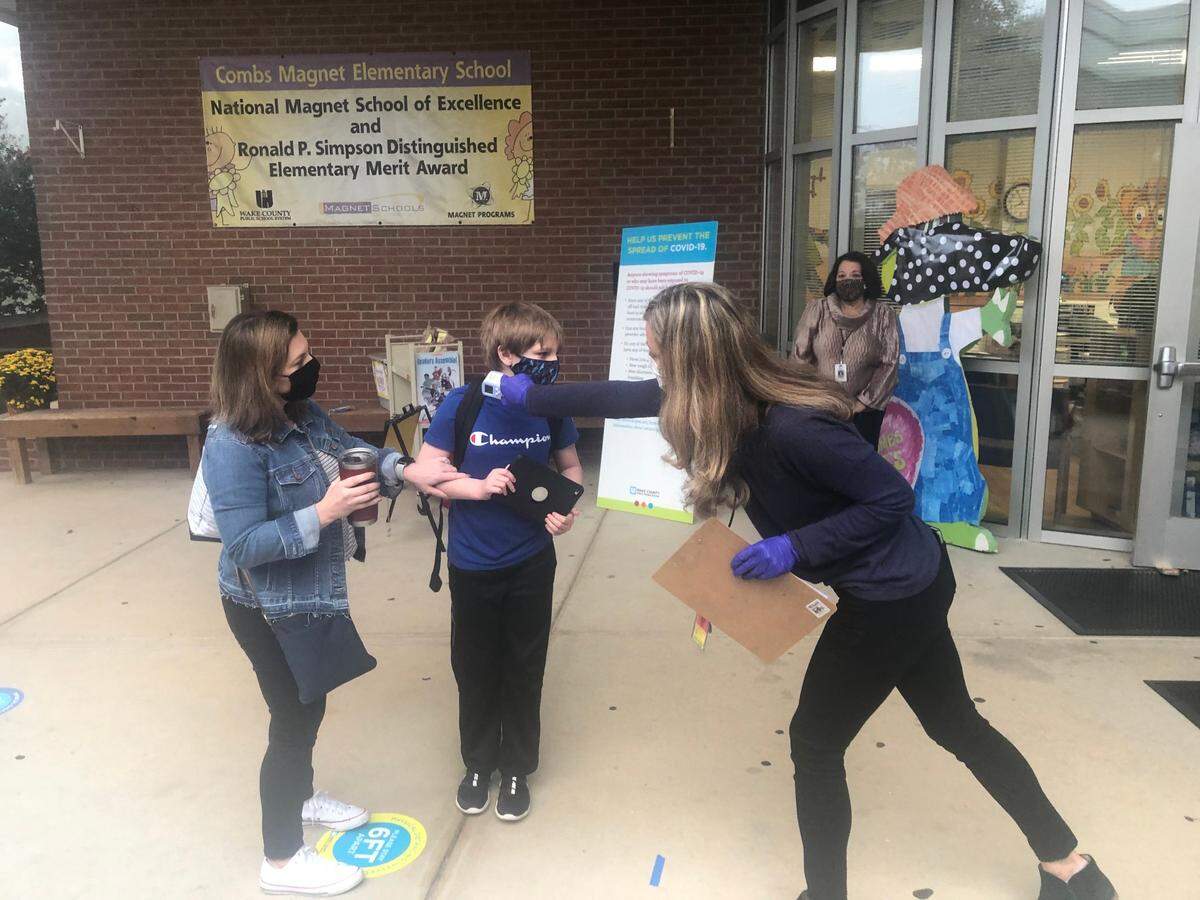
Students who pass the checks will be allowed inside the school. Students who fail will be taken to the Care Center, where they’ll wait until their parent can come to take them home.
Extra cleaning of buses
Drivers will clean and disinfect their buses between routes and at the end of their workday. They’ll particularly focus on high-touch areas such as seats, hand rails, door handles, windows and grab handles.
In addition, hand sanitizer will be available on buses for use of the drivers and students.
“We want our parents and our students to know that we’ll make sure our buses are clean and safe at all times, said Cesar Rivera, a Wake bus driver.
Changes for special-ed transportation
There will also be extra cleaning and disinfecting of the vehicles that are used to transport special-education students who can’t ride regular yellow school buses.
But Sposato said there will be some differences from what’s used for yellow buses.
Instead of the attestation form, Sposato said drivers will do daily symptom screenings and temperature checks of the special-education students before they’re allowed in their vehicles. The drivers will ask the questions typically to the parents.
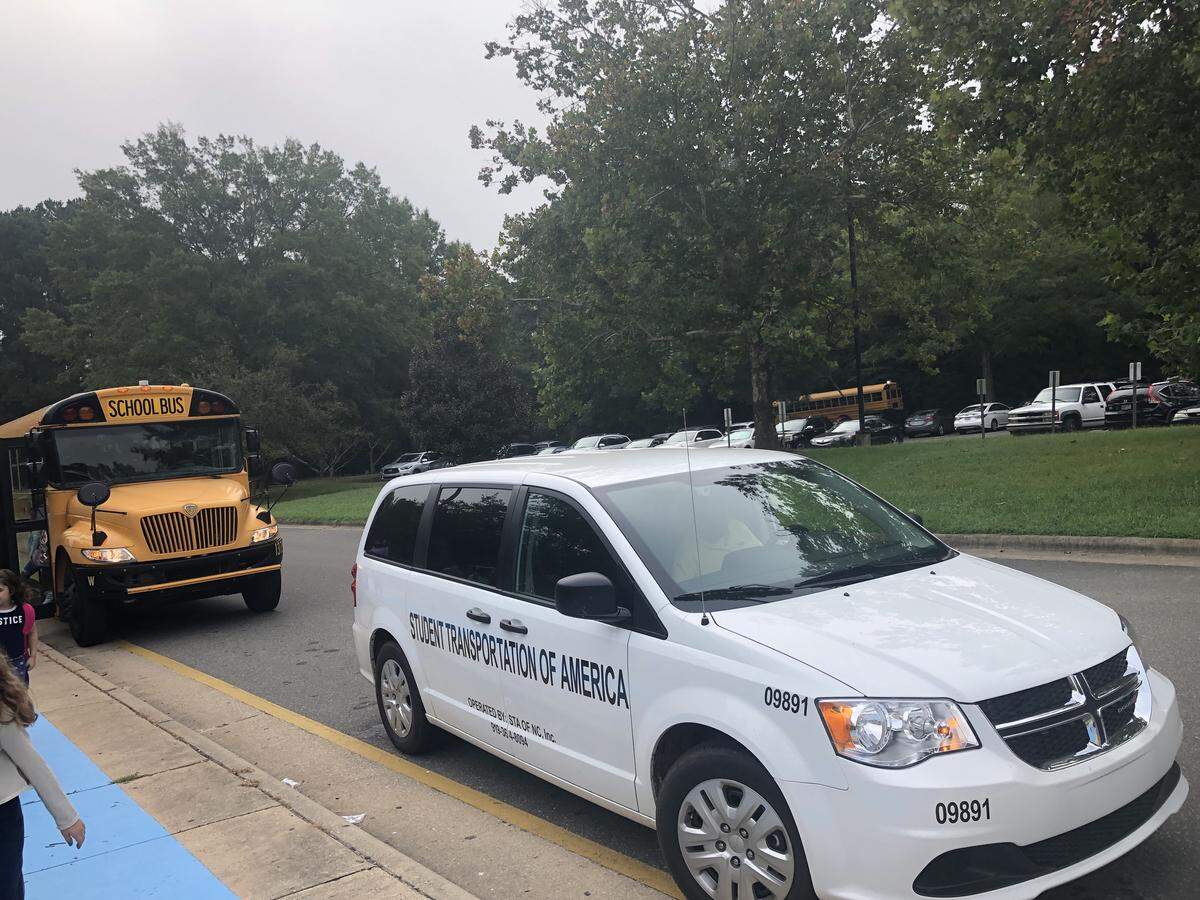
Special-ed students in these contracted vehicles should also wear face coverings unless they can’t tolerate them. Those students are more likely to qualify for exemptions from the face mask requirement.
No more than two students at a time will be seated in a vendor transportation vehicle, except for elementary students.
Sposato urged families to show patience Monday.
“There may be some slowdowns as we begin to pick up students and deliver them to school, so we’re asking for everyone to be patient,” Sposato said. “This is really a community and a team effort so we really appreciate the cooperation of the community.”
This story was originally published October 22, 2020 at 1:35 PM.