With momentum from protest movement, young people turned out to vote this year
Like many others across the United States, young people in North Carolina voted in huge numbers in the 2020 election.
Simon Rosenberg, who is working on young voter research with the group Clean and Prosperous America, said national attention on voting and big issues — including COVID-19, social justice protests, climate change and gun violence — influenced a youth surge in early voting.
“The significance of all this is you have the two youngest generations, who are now making up an increasingly large percentage of voters, are moving toward the Democratic party at historic levels,” said Rosenberg, who also runs NDN, a liberal think tank and advocacy organization in Washington that studies demography.
Almost half of college-age registered voters across the state cast their ballots early in the 2020 election through mail-in or in-person voting, The News & Observer found. In NC, 47% of 18- to 25-year-olds voted early, which is a big jump from about 28% in the 2016 election.
Those early voting numbers could rise once all of North Carolina’s mail-in ballots are received. That age group now represents 13.2% of total registered NC voters. North Carolina voters also cast more absentee ballots through mail-in and in-person early voting than in all of 2016.
“In all likelihood there will be a record number of registered young people who will vote in the election,” Rosenberg said.
Exit polls on Election Day also showed more Democratic affiliation and support for Joe Biden among young voters.
North Carolina’s election results won’t be final for another week as the state finishes counting votes from mail-in and provisional ballots for the presidential and state races.
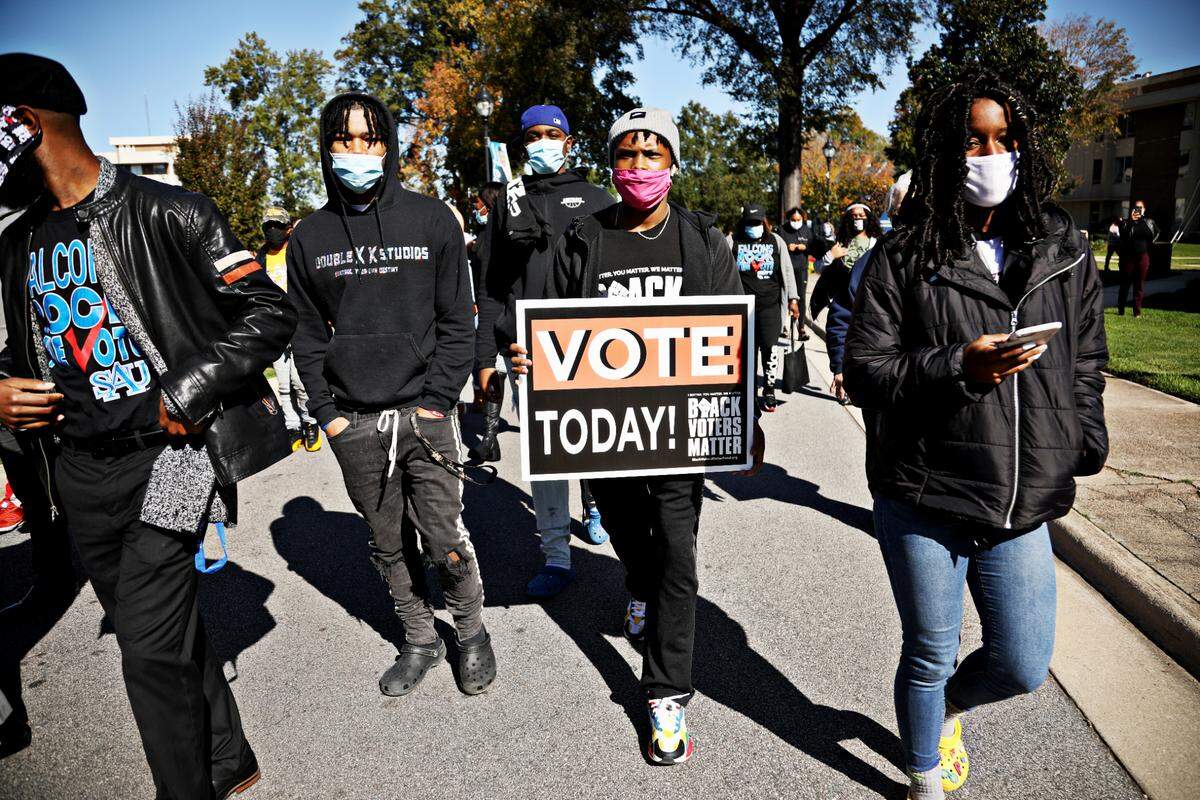
Momentum from protests
Greear Webb, a 19-year-old sophomore at UNC-Chapel Hill, said he’s been encouraged to see the rise in youth voter turnout. Webb is the co-chair of UNC’s Black Student Movement’s Political Action Committee, a voting ambassador with Harvard University’s Graduate School of Education and was active in the Biden-Harris campaign this fall.
“Leading these social movements through the summer and by voting in these record numbers, I think young people are speaking out,” Webb said.
He said youth have been at the forefront of every social movement in the country, including the racial justice protests in Raleigh this summer. And that turned into voting this fall.
“We’re recognizing the power that we have when we take the power in leading protests and convert that to power in votes,” Webb said.
Some UNC students voted at polling sites in Chapel Hill or Orange County, while others went home and voted in person or mailed back a ballot because they cared about their home communities, Webb said. Some also thought their vote would make more of a difference in their home state or county, he said.
Webb and Zainab Baloch, a former Raleigh mayoral candidate, co-founded Young Americans Protest, which helped plan the first peaceful protest in Raleigh after George Floyd was killed by police.
Baloch said that’s when some people started making the connection that the protests are why they have to vote.
“People paid attention and learned more about local politics and continued to take that momentum into voting,” Baloch said.
Candidates focus on young voters
Young people are also beginning to see themselves represented in the plans and policies that leaders are laying out at the national, state and local level, which is also driving voter turnout. Groups put money into campaigning for and educating young voters.
Webb said students recognized that shift and the enthusiasm spread among friends, particularly people of color, who hadn’t been interested in politics before. More of his classmates were getting involved around the primaries, he said.
“We’re saying we might not be perfectly on board with whatever candidates’ plan … but we know that’s going to take us in a direction that we can get behind,” Webb said. “We want to make sure we’re engaging in one of the most primary functions of the democratic process.”
Juan Pleitez, the state chair for the North Carolina Federation of College Republicans, said it’s an encouraging sign to see so many young people and college students involved in the political process, whether that’s volunteering at a polling place, doing phone banking or going out to vote.
“It goes against this stigma that has plagued college students that we don’t care about politics and the general apathy that’s the trademark of this generation,” Pleitez said.
As senior at William Peace University in Raleigh, Pleitez said college students are becoming more aware of what the economy, health care system and job prospects will look like for them after graduation.
“It’s coming down to being heard and to having the issues that young people care about put front and center and not being neglected anymore,” Pleitez said.
Coronavirus impact on college get-out-the-vote effort
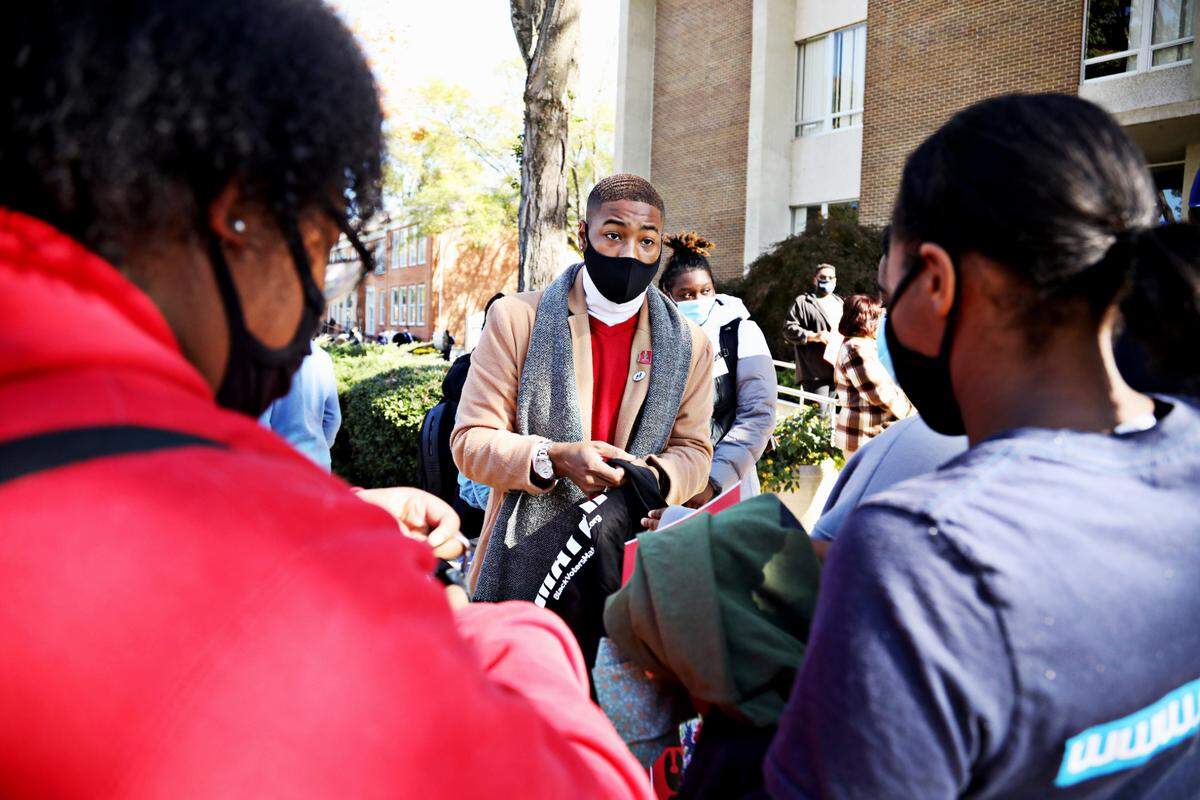
Organizing efforts looked different this year for college students because of COVID-19 restrictions and campuses shifting to online learning.
Students weren’t going to campaign rallies and fundraisers or having meetings in classrooms and setting up tables at N.C. State’s The Brickyard or UNC’s The Pit. Instead, they held Zoom meetings and webinars and launched bigger social media campaigns to target young voters.
Imani Johnson, a senior student leader at N.C. Central University in Durham, organized events on campus to get students registered and voting during the primary election before the pandemic hit North Carolina.
This fall, her work on political outreach projects with other HBCU students has been mostly online. One event they hosted was essentially a virtual reality game and educational program about voting.
“This experience is showing us what we really are capable of, showing us how we can rely on other people to create connectivity,” Johnson said.
Once things started reopening, College Republicans also went on a tour across the state to get students involved on different campuses and host socially distant meetings, canvas in neighborhoods and get involved with local political campaigns.
“We found it as a way to really invigorate and embolden our students to say ‘hey, I helped that state senator get elected or I gave an idea to a state house rep that eventually became a bill,’ Pletiez said.
The turnout could’ve been even larger if COVID-19 hadn’t stunted the in-person connections at events or conversations with students on campus, according to Baloch.
“Everyone in this age group is pretty much taking school online, so virtually people are completely burnt out,” Baloch said. “It’s just so hard to get through that noise ... and how mentally and emotionally tough this has been took even more effort to really try to reach those voters.”
She said activists and organizers needed to make registering and voting as easy and convenient as possible. They weren’t always trying to convince people to support particular candidates, she said, their message was always just vote.
“It shows that this generation is very resilient and regardless of a pandemic or their lives being completely overturned that they turned out to vote,” Baloch said.
For Baloch and Webb, this youth movement and political enthusiasm doesn’t stop with voting.
They expect to see young people holding local leaders accountable about the issues that matter to them.
“I want my vote to really work for me,” Webb said. “What do we do from here is the question, and I think young people are ready to begin answering that question.”
This story was originally published November 5, 2020 at 2:40 PM.