North Carolina’s HBCUs have fought years of funding inequity. Is a change finally coming?
READ MORE
Historic boost for HBCU schools
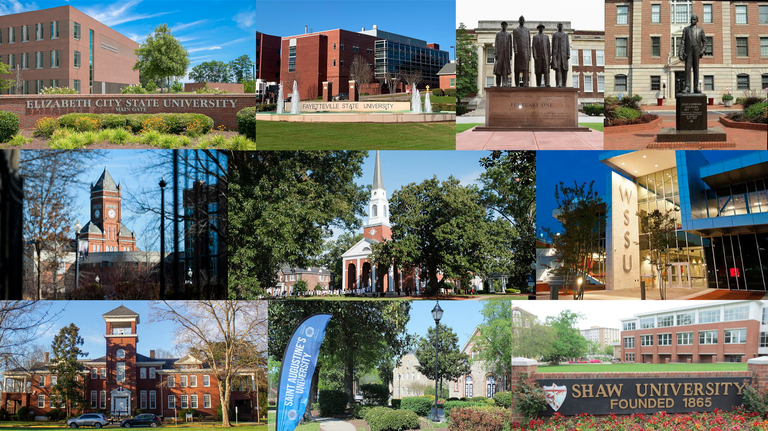
North Carolina lawmakers’ latest budget allocates hundreds of millions of dollars for the state’s five public historically Black colleges and universities. Those are historic levels of funding, administrators say, but the money is just the first step toward keeping HBCUs afloat and equitable as they generate some of the state’s most notable alumni. What else can HBCUs do to provide opportunities for students?
Expand All
Nearly a decade ago, Elizabeth City State University — an economic engine for northeastern North Carolina — was crumbling. That led some state lawmakers to decide it wasn’t worth investing in anymore.
Following through with that plan and closing the historically Black university could have devastated the region and dried up a stream of thousands of college-educated students hitting the job market each year. In the end, lawmakers ultimately decided to continue funding ECSU and keep a close eye on its finances going forward.
And in the latest budget, they doubled down.
North Carolina’s Republican-led General Assembly poured hundreds of millions of dollars into ECSU and other public HBCUs in the state. ECSU received about $140 million and Fayetteville State got more than $164 million in the most recent budget — historic amounts for those campuses.
That funding, administrators say, is just the first step toward keeping HBCUs like Elizabeth City afloat and putting them and their white counterparts on an even playing field.
HBCUs have long struggled to get the attention of the state legislature, despite the critical role they play in both the lives of the state’s young people and the regions — often some of the poorest in the state — they serve.
Decades of funding disparities have left many HBCUs in North Carolina unstable, making it more difficult for those schools to provide an equal education for minority students and to elevate rural areas.
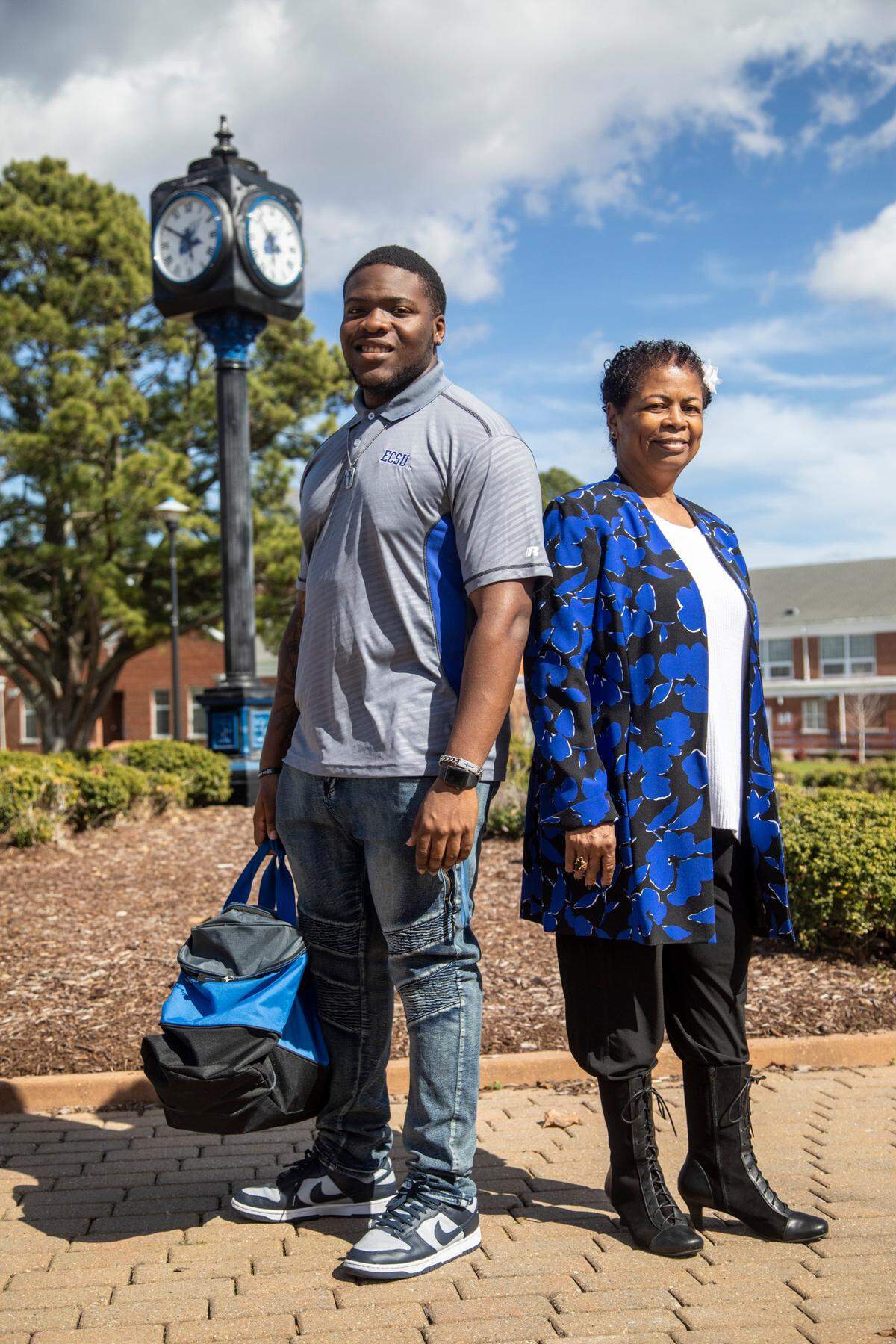
“It plays a big part in helping our city survive,” Elizabeth City mayor and ECSU alumna Bettie Parker said, noting how the university creates jobs and educates students from poor, rural counties.
The recent state budget is part of a wave of investment in HBCUs at the federal level and in the private sector. Attention on HBCUs has grown out of the Black Lives Matter movement and during election season.
Some lawmakers say the move is a political ploy for Republicans to get Black votes on the campaign trail and to gain more seats to take a supermajority in the state legislature.
But, there’s no harm if HBCUs benefit from that along the way, as long as they aren’t held up as a political prop and legislators keep the funds coming, according to Sen. Kirk deViere, a Democrat from Fayetteville.
“As long as we can sustain the investment,” deViere said.
Comparing NC’s HBCUs to their white counterparts
Some of the country’s oldest HBCUs, which were created to educate Black students when there were no other options for them, were founded in North Carolina.
Across the nation, HBCUs have long been underfunded compared to their white counterparts. That’s also true in North Carolina, where state money allocated to white institutions has continued to climb, while funding for HBCUs has stayed more stagnant, a News & Observer analysis found.
Though funding per student at HBCUs has overall increased since 2000 — at times exceeding the money lawmakers’ have doled out to white institutions — the disparity in funding between those schools has grown by nearly 500% over the past two decades.
“It’s a constant battle, and they will not give the kind of equity in funding even with this money in the budget,” said Sen. Gladys Robinson, a Democrat from Greensboro and former UNC System Board of Governors member.
“Our HBCUs are so far behind, even in terms of looking at the campuses and looking at programs that are funded or not funded,” she said.
That funding gap and the heavy reliance on state money have made it difficult for HBCUs to forecast and manage capital projects.
It’s made the road bumpier for HBCUs such as Fayetteville State University compared to other UNC System schools such as UNC-Chapel Hill, said Darrell Allison, chancellor of FSU. But the money from the past legislative session helps move more of the rocks out of the road moving forward.
Lawmakers earmarked $152 million for FSU campus construction projects in the budget last year, that includes $44 million authorized for a new college of education building, dorms and a parking deck.
FSU received about $39 million for repairs and renovations, compared to $21.4 million the university received for that in total over the past two decades.
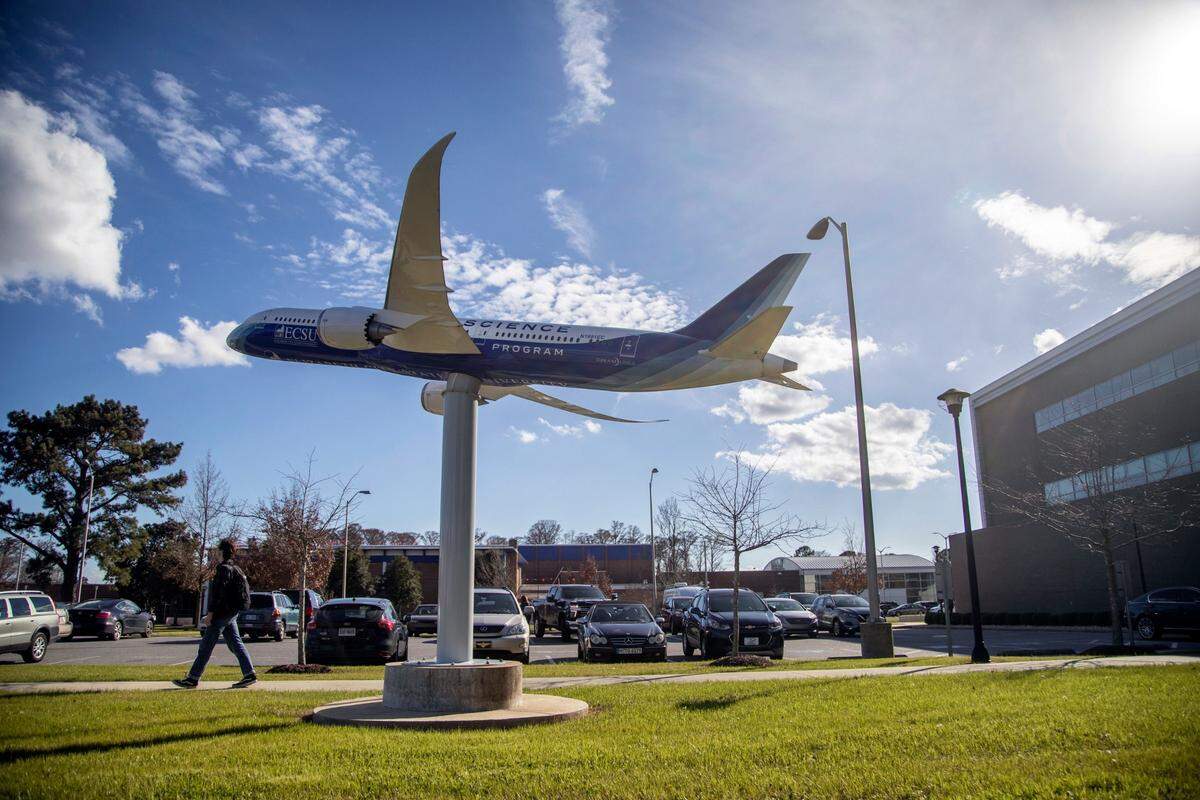
ECSU received about $56 million for repairs and renovations in the recent budget, compared to $22.5 million overall over the past two decades. Lawmakers also authorized $34 million for ECSU to build a new facility to house the school’s marquee aviation program.
Fayetteville State seeks stability
The state’s public HBCUs still have more needs to be addressed to recruit students and faculty. That’s evident on the campus of Fayetteville State, which, since its founding in 1867, has had “topsy-turvy” funding, Allison said.
“Some years you get zero, sometimes you get maybe two million, one million,” he said.
Allison worked to change that while on the UNC System Board of Governors, which set a $2 million funding floor for renovation and repairs at UNC schools in 2019.
Bigger schools might be able to blow that $2 million by throwing a “good old party,” Allison said, but it makes a big difference for a school like FSU. Being able to rely on that money has brought some stabilization for smaller schools so they don’t have to hold their breath wondering if they’ll be able to finish renovating residence halls or classrooms.
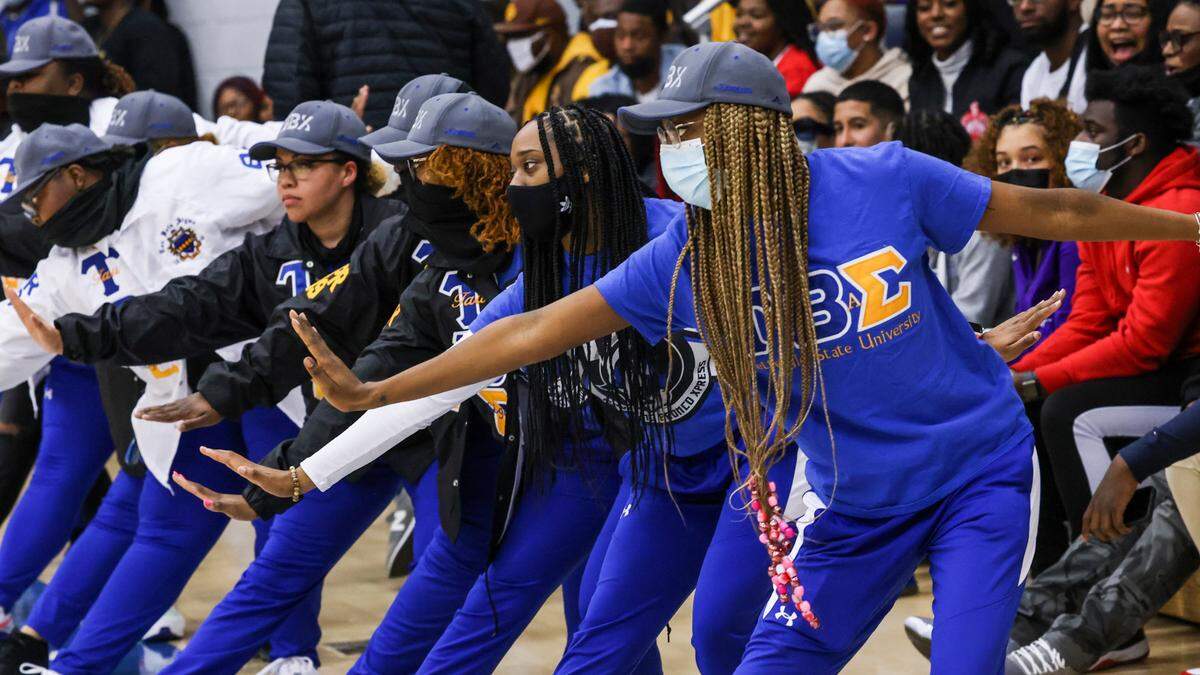
In recent years, two residence halls on the FSU campus have been shuttered. Another — called New Residence Hall, though it was built some 40 years ago — desperately needs updating. The campus police department could use more space. The building that house’s FSU’s college of education is “scary, structurally,” said Jon Parsons, associate vice chancellor for facilities.
“If we want to elevate education, that college on this campus,” Parsons said, “we can’t make this one work anymore — this building.”
This year, Allison helped FSU secure funding by honing his “elevator speech” to the legislature.
As North Carolina’s second-oldest public university, FSU was founded by seven men and $167 between them when there was no other option for Black students. Now, in addition to serving young Black men and women, it partners with the city to provide a low-cost quality education for military families and adults over 24, who make up nearly 50% of the student body.
By doing that, the university wants to make the Sandhills region an area where people want to live, work and raise their families.
“It’s an anchor on Murchison Road, which, that is a corridor of redevelopment,” Fayetteville Democrat deViere said. “It’s an economic engine not just with students, but with faculty, with business.”

Elizabeth City State, ‘an economic engine’
More than 200 miles away in northeastern North Carolina, ECSU plays an equally important role in its region.
As a rural student who endured segregation, Parker, the Elizabeth City mayor, saw the university as a life-preserver in the 1960s. Now as an elected official, she sees ECSU as an asset that sustains the local economy.
“You depend on each other,” Parker said. “It’s a symbiotic relationship. … We need that, this town and the university.”
The university draws thousands to town for its annual homecoming events, operates a COVID-19 vaccine clinic for the community and hosts out-of-town business meetings and Christmas concerts. And it provides a four-year education for students who can’t afford to leave town.
“Elizabeth City State not only educated me,” Parker said, “it gave me the confidence that I could accomplish whatever I stepped out to do.”
The retired teacher and Pasquotank County native became the first female mayor of Elizabeth City and previously served as the first Black female county commissioner.
ECSU has an economic impact of more than $231 million in northeastern North Carolina, according to the university. The university generates hundreds of jobs on and off-campus. And an ECSU degree can increase a graduate’s lifetime earnings by more than $1 million, a 2017 United Negro College Fund study found.
Smaller, minority-serving UNC System institutions like Elizabeth City State are “key and critical parts of keeping all of North Carolina alive,” said former UNC System board chairman Harry Smith.
“It’s critical to fund them and support them and understand the values they bring. I mean, all these schools are economic engines,” he said.
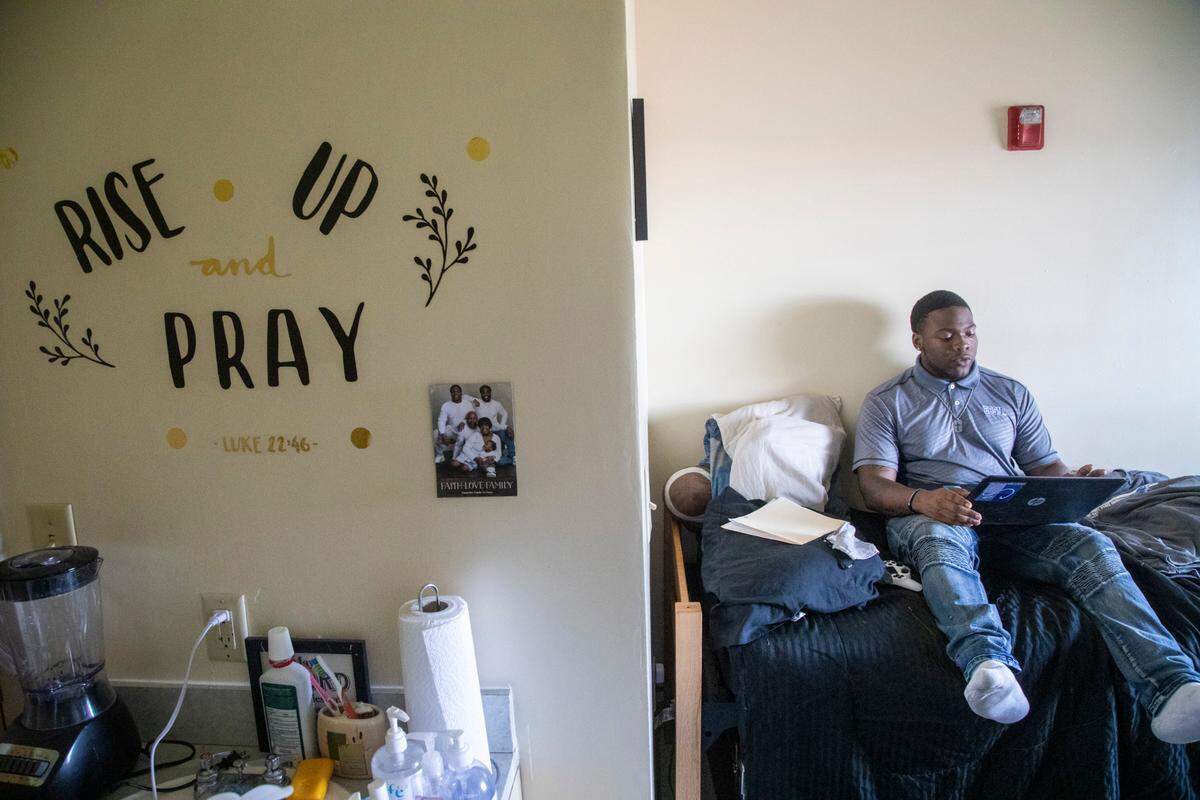
Studying to be an educator, aviation scientist, news anchor
ECSU is the No. 1 HBCU in the country and 12th overall for improving students’ economic outcomes and social mobility, according to a recent study by the national think tank Third Way.
The university was recognized as being a catalyst for low-income students to succeed post-graduation with a quick return on investment.
“We’re in the business of transforming lives,” ECSU Chancellor Karrie Dixon said, noting that the school serves some of the most economically distressed counties in North Carolina.
Many first-generation students come to ECSU saying no one else in their family has graduated from college and they feel that if they make it, they’ll bring their family along, Dixon said.
Twin sisters attending ECSU chose the school in part to avoid the pile of student debt that has burdened their older sibling who attends a larger HBCU at home in Pennsylvania.
An adult learner from Durham wanted to stay in North Carolina and study aviation science. ECSU was the perfect, and most affordable, place to do that.
An aspiring news anchor from Williamston chose ECSU because her mother attended school there, and it’s close to home.
A freshman who hopes to open her own flight school to educate and inspire more Black women to become pilots opted for ECSU because it educates and elevates people who look like her.
A football player from Virginia drives home to work on weekends to help provide for his family and will earn a graduate degree in education with hopes of becoming a teacher and high school football coach.
If ECSU wasn’t still here, those students wouldn’t have had the same opportunities.
“It worked out for the best,” ECSU linebacker Juanya’ Majette said.
NC Promise and reviving ECSU
Earning a college degree, at $500 or $1,000 a semester, gives students an opportunity to explore careers that move them from being low-income to middle-class. ECSU and FSU are both part of the NC Promise program, which allows schools to set tuition at that low price thanks to a subsidy from the state legislature.
“To see a student from a very rural, poor county, come here, get an education, and then go work at NASA, you know, like, nowhere in the world are you going to find stories like that,” ECSU Vice Chancellor Alyn Goodson said.
“If we are not here, where do they go?”
The school needs quality buildings to attract students. Facilities are tied to a schools’ quality of instruction, faculty recruitment and ability to enroll and retain students. After legislative leaders toured ECSU’s campus, they knew they had to help revive the institution.
“They’ve been shortchanged, for 100 years. There’s no question about that,” state Senate leader Phil Berger, a Republican from Eden, said. “In terms of the facilities, they just do not measure up to any of the other campuses in the system.”
Most of the new money will be spent on tearing down old buildings and building new ones, like a set of dilapidated dorms that have sat empty for five years because they aren’t safe enough to house students.
The legislature steered $84 million toward new ECSU construction projects, including the flight school, Berger’s office said.
ECSU offers the only four-year collegiate aviation education program in North Carolina, but it’s outgrown the makeshift space it’s been occupying in a STEM building. The school plans to build new facilities to properly manage flight simulators, an air traffic control center and a drone facility.
That funding, in addition to other funds for a residence hall, dining hall and a sky bridge at a dangerous intersection will allow the school to move away from “Band-Aid fixes,” and move toward “permanent fixes.”
“There’s no reason why these students shouldn’t have the same type of amenities and resources that other UNC campuses have,” Dixon said. “They deserve it.”

Investing in HBCUs ‘has to be constant’
So far, the legislature’s bet on Elizabeth City is worth it. But they’ll have to keep investing in it and other public HBCUs to close the funding gap with their white counterparts, lawmakers said.
“It doesn’t have to be dramatic, it has to be constant,” deViere said.
That takes advocacy, he said.
But it also requires action.
At the end of the day, state leaders can wax eloquent on the floor, Fayetteville Chancellor Allison said, but it’s the money that follows that matters.
“Our motto is Res Non Verba. Deeds, not words.”
This story was originally published March 9, 2022 at 6:00 AM.