See how many months North Carolina students are academically behind in reading and math
READ MORE
The post-pandemic lesson plan
Two years after the pandemic disrupted education globally, a new state report shows that some North Carolina students are more than a year behind due to learning losses. State leaders say this can be reversed, but it’s not going to happen overnight. How will N.C. use billions of dollars in unspent federal COVID-19 aid available to address these problems?
Expand All
NC students fell behind during the pandemic. How quickly can they regain lost ground?
NC has billions in unspent federal COVID aid for schools. How can it best help students?
See how many months North Carolina students are academically behind in reading and math
NC students need months to catch up from pandemic learning loss. Read the state’s report.
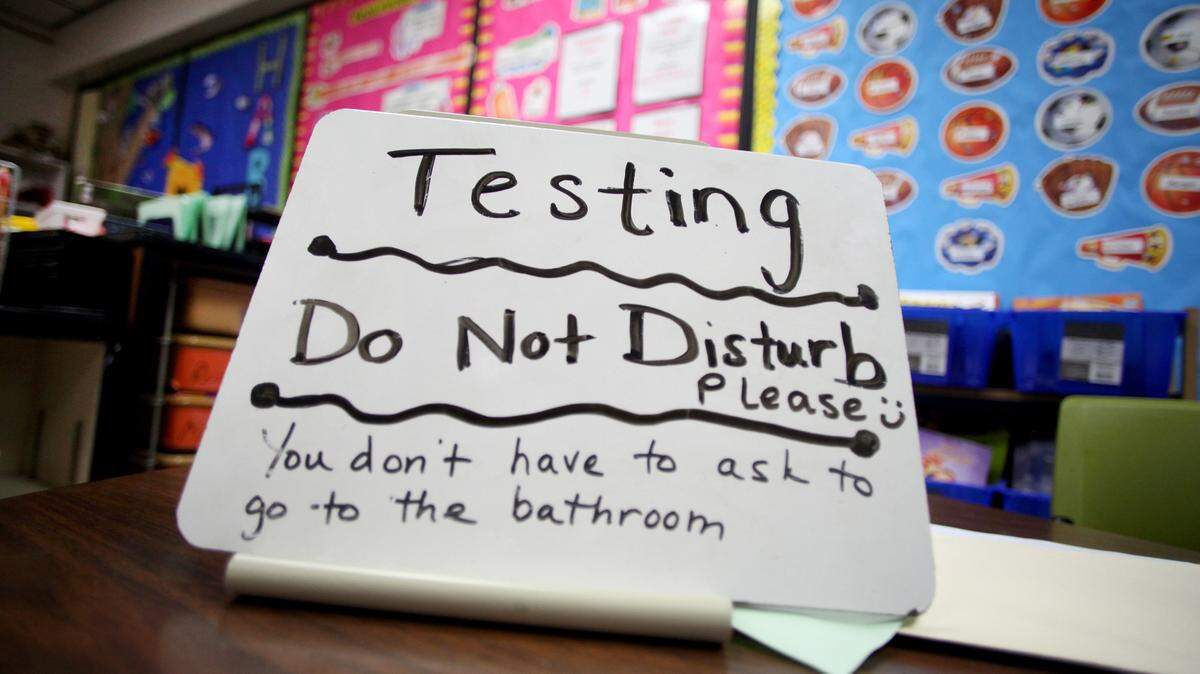
Report: Some NC students are more than a year behind due to pandemic learning loss
A new state report shows how many months North Carolina students need to make up to recover from pandemic learning loss.
The N.C. Department of Public Instruction’s Office of Learning Recovery and Acceleration compared how students were predicted to do on state exams in the 2020-21 school year with how they actually performed. The results were converted into the equivalent of how many months of additional instructional time are needed to help students catch up to where they should be performing.
The gaps in some areas, such as middle school math, are so wide that students are more than a year behind academically.
“The COVID-19 pandemic substantially disrupted education in North Carolina,” according to the report. “Most students experienced growth equivalent to that generally associated with just a fraction of a typical school year.
“In some cases, given the severity and diversity of pandemic-induced challenges, students may now need interventions with effects equivalent to the expected effects of more additional school time than that which passed between school closure in March 2020 and the end of the 2020-2021 school year.”
The report is based on a nine-month school year and not a 12-month calendar year.
Here’s a look at what the report found:
Reading/English Language Arts
▪ Fourth-grade students need an additional seven months of interventions to get caught up.
▪ Fifth-grade students need an additional 3.75 months, or three months and three weeks, of school time.
▪ Sixth-grade students need an additional 5.25 months, or five months and one week, to recover.
▪ Seventh-grade students need an additional 7.75 months, or seven months and three weeks, of school time.
▪ Eighth-grade students need an additional six months of school time to recover.
Math
▪ Fifth-grade students need an additional 7.25 months, or seven months and one week, to recover.
▪ Sixth-grade students need an additional 10 months, or one school year and one month, of interventions.
▪ Seventh-grade students need an additional 11.50 months, or one school year and two months and two weeks, to recover.
▪ Eighth-grade students need an additional 14.75 months, or one school year and five months and three weeks, to recover.
▪ Math 1 students need an additional 15.25 months, or one school year and six months and one week, to recover.
▪ Math 3 students need an additional 7.25 months, or seven months and one week, of school time.