Lee Roberts, former McCrory budget director & financier, named UNC-Chapel Hill chancellor
The next leader of UNC-Chapel Hill will be a nonacademic whose only experience leading a university came over the past seven months, but who quickly won the support of the state’s most powerful Republican lawmakers.
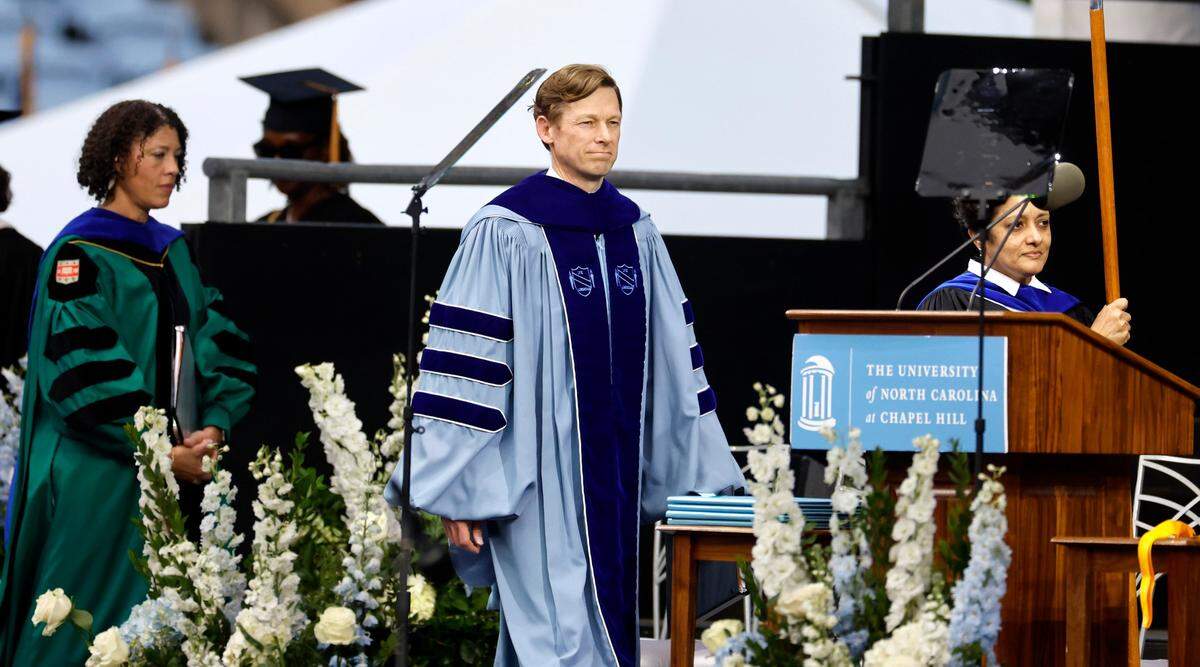
Lee Roberts will be the 13th chancellor of the UNC System’s flagship campus. Nationally known and recognized, the research university has a reputation for academic and athletic excellence and, increasingly in recent years, for on-campus drama. As chancellor, Roberts will lead the campus of more than 30,000 students and nearly 14,000 faculty and staff.
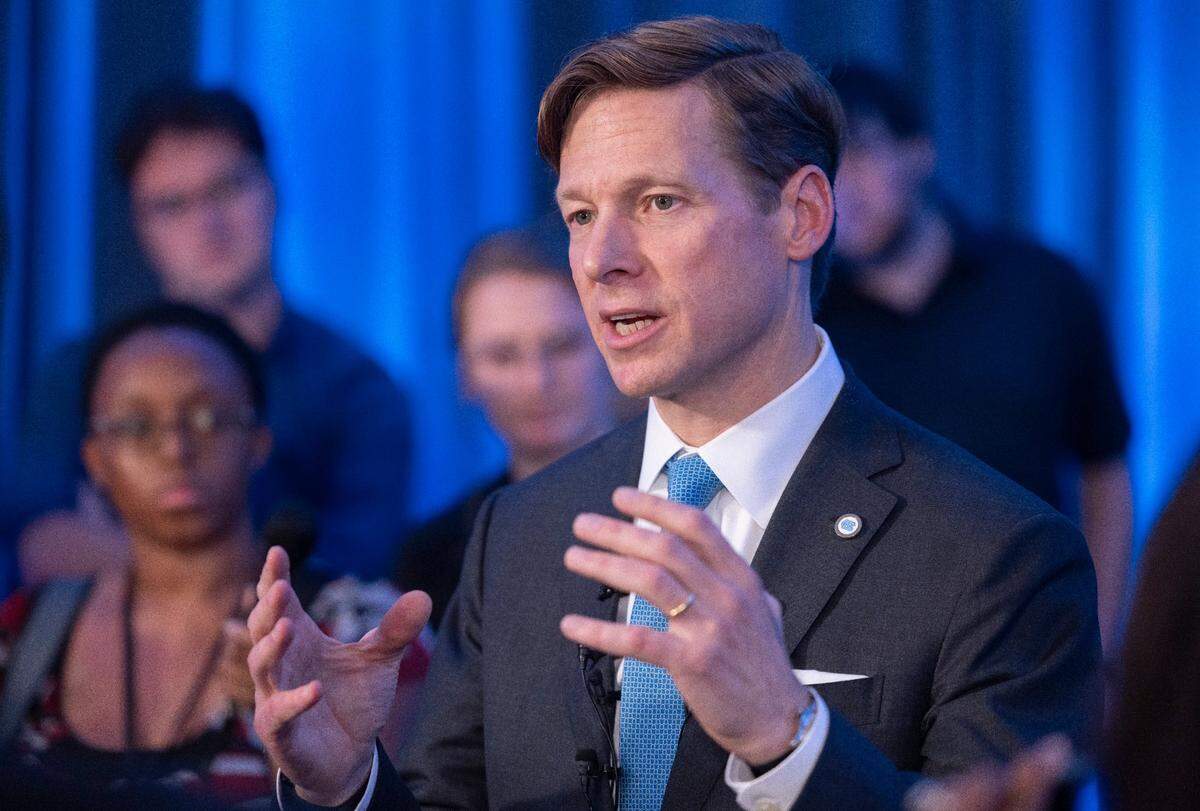
Roberts, a former state budget director under Republican Gov. Pat McCrory, has served as interim chancellor since Kevin Guskiewicz left the job in January to become president of Michigan State University.
The UNC System Board of Governors on Friday morning approved UNC System President Peter Hans’ selection of Roberts in a virtual meeting. Roberts resigned from the legislature-appointed Board of Governors to take the job as UNC-Chapel Hill interim chancellor in January.
Except for his 16-month stint as budget director nearly a decade ago, Roberts has spent most of his career as a private investment manager. Appointing a campus leader without a Ph.D or a career in higher education has become somewhat more common in recent years, but is a first at UNC-Chapel Hill in modern history.
Hans, in his remarks during Friday’s meeting, said this moment at the university demands “fresh eyes” that can make difficult decisions using a range of experiences.
“Every era is unique in its challenges and the possibilities it presents, and as a result, every chancellor search is different,” Hans said, adding: “We have found the right leader for this moment in Carolina’s history because the questions facing public higher education are wide ranging, enormously complex and likely to become magnified in the years ahead.”
In his first public remarks following Friday’s announcement, Roberts said he thinks there “is no higher calling” than supporting the university’s mission.
“To me, this university stands, above all else, for the ideal of public service, for helping the people of this state and all those who are touched by this place to achieve their greatest potential,” Roberts said. “As chancellor, I promise to be guided by that principle as we work together to carry North Carolina into the future.”
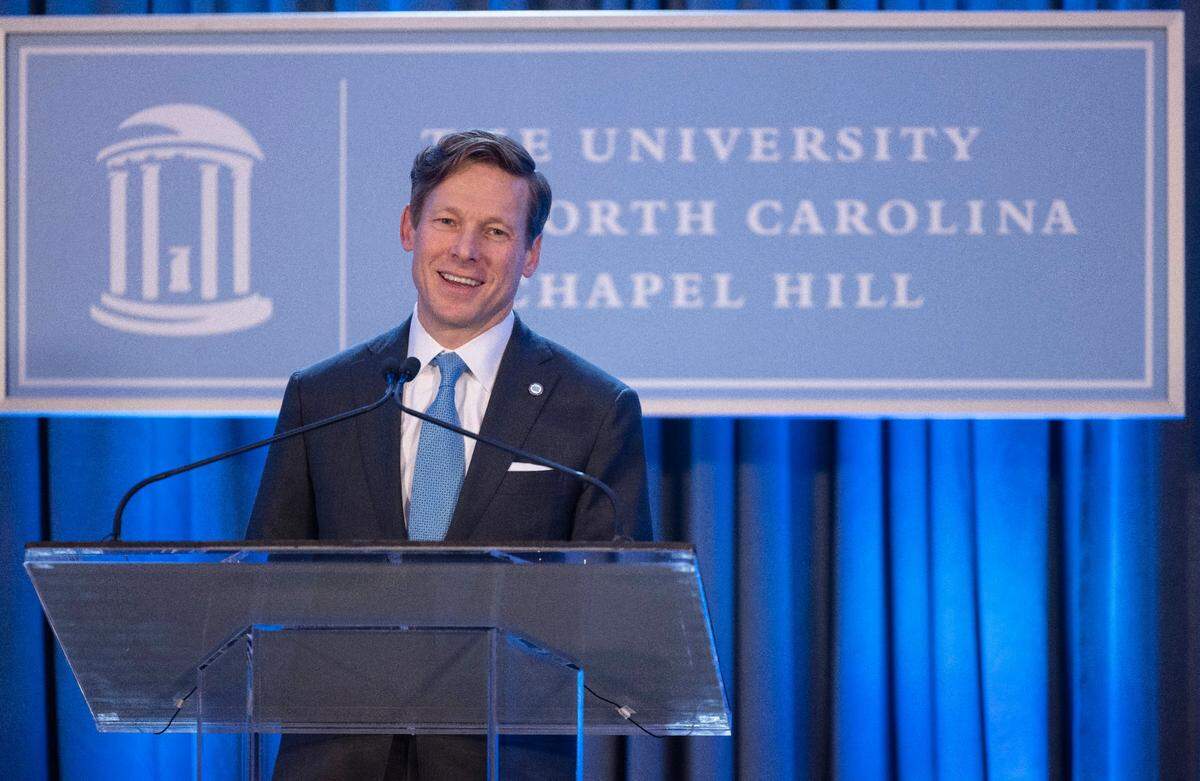
Roberts, who holds a law degree from Georgetown University, starts his appointment on Aug. 12, one week before the new academic year begins. He will make an annual base salary of $600,000, according to an appointment letter provided to The News & Observer by UNC System spokesperson Andy Wallace.
Prior political experience and support
Being the UNC chancellor is a high-profile job in the UNC System and across the nation. It is also a position that commonly draws criticism from faculty, students and state residents, including state legislators.
“Leadership in Chapel Hill is not for the faint of heart,” Hans said during his announcement.
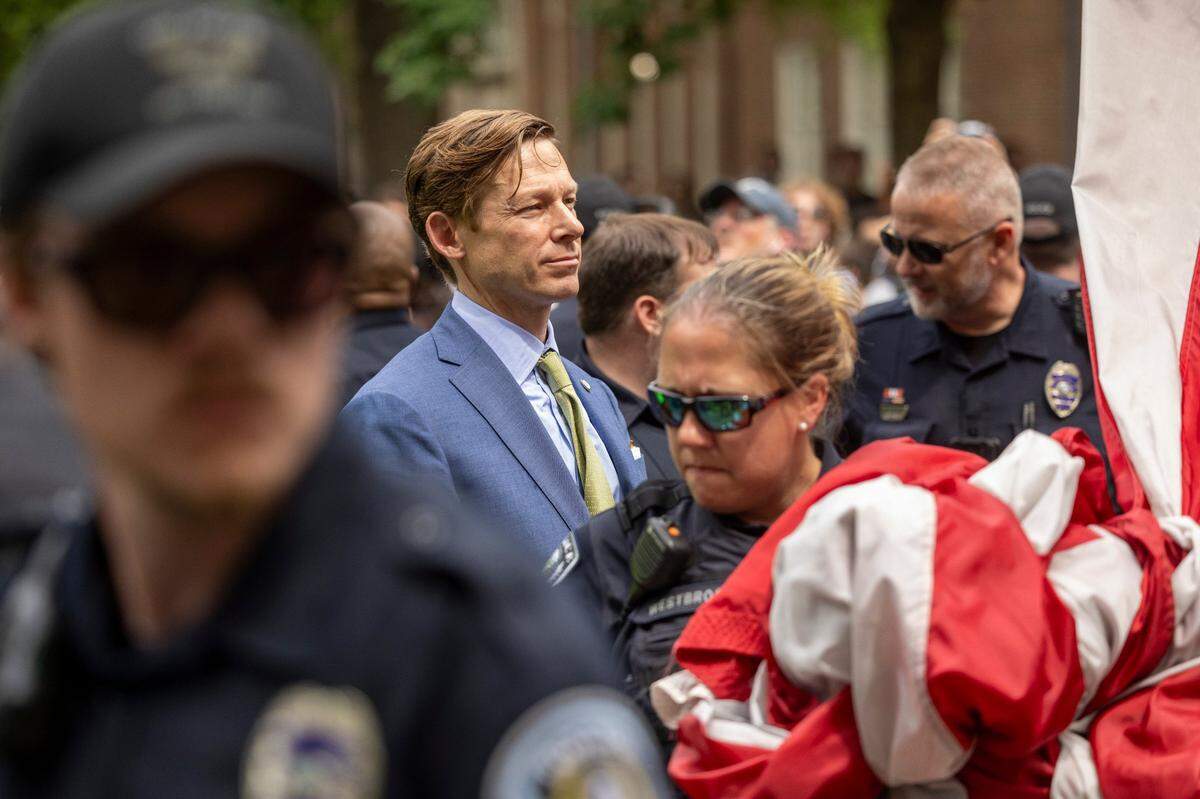
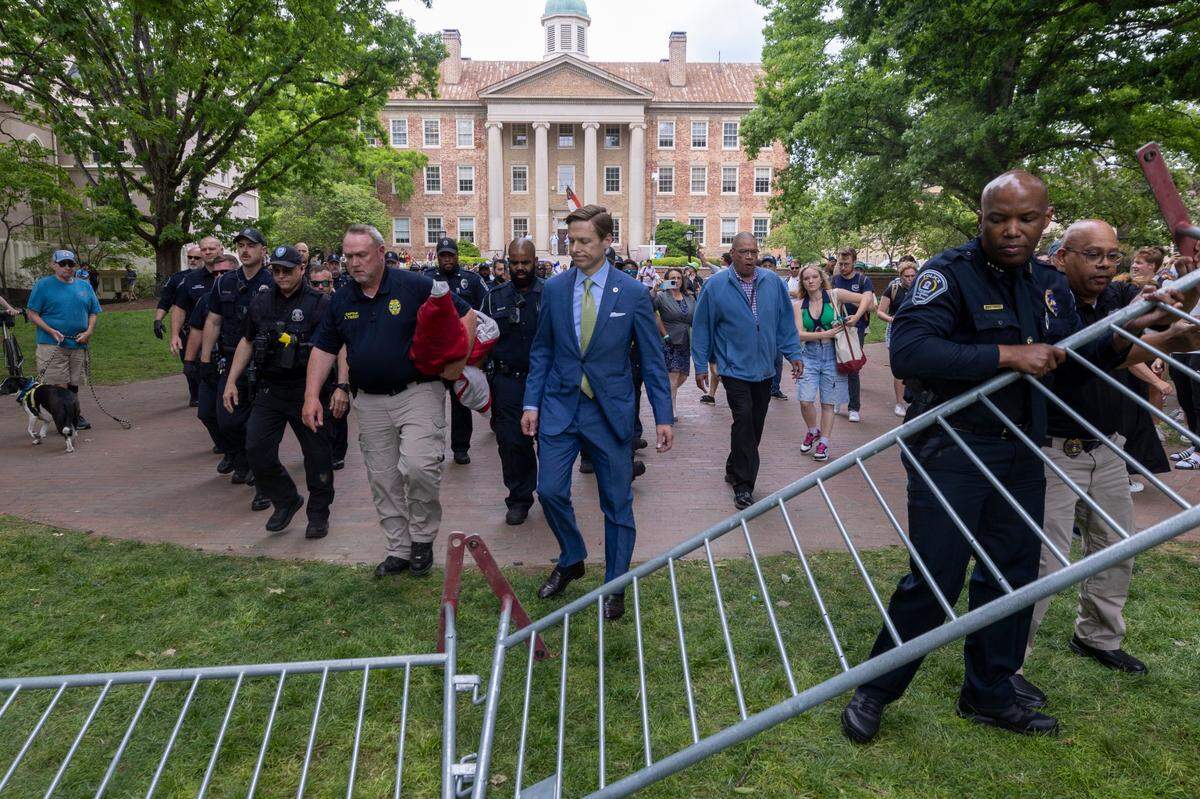
Roberts, who is an unaffiliated voter, takes the job knowing House Speaker Tim Moore and Senate leader Phil Berger, both Republicans, support him. Both publicly praised his handling of pro-Palestinian protests on campus in late April, particularly after he led police to restore the American flag to a campus flagpole when protesters tore it down.
Roberts’ remarks to reporters after that moment went viral on social media, with numerous elected officials — from state legislators to U.S. Sen. Thom Tillis — and others sharing the video clip and stating their support for him.
Berger after the protests said that Roberts “did exactly what needed to be done” and that he was “as proud as I can be of him,” adding that there was “no question” he should be made chancellor permanently.
Moore also voiced his support for Roberts at the time, saying he showed “incredible leadership,” “a lot of backbone,” “patriotism” and a commitment to “doing the right thing,” during the protests. Moore said he had conveyed to Hans his preference for Roberts to become chancellor.
That public support from the General Assembly’s top leaders contrasts with their statements about Guskiewicz. In 2021, as rumors circulated among faculty that lawmakers might try to oust the now-former chancellor, both Berger — who had previously described the university under Guskiewicz’s leadership as “rudderless” — and Moore stopped short of explicitly expressing confidence in Guskiewicz when pressed by reporters.
It also contrasts with faculty’s assessment of Roberts’ actions. Nearly 900 faculty and staff signed a letter denouncing Roberts’ and other administrators’ actions during the protests, while more than 5,000 people signed an online petition expressing their lack of confidence in Roberts following the events.
Beth Moracco, the university’s Faculty Council chair, told The N&O on Thursday that the next chancellor will need to rebuild trust with faculty and others after his actions during the protests. Many faculty are also concerned that the university’s shared governance structures have been disregarded in recent years, with decisions normally left to faculty — such as those related to curricula — in some cases being directed by administrators and board members.
“I think anyone stepping into this role is going to have to authentically engage with faculty, staff, students and other stakeholders,” Moracco said.
Moracco, who has met regularly with Roberts over his months as interim, said she has found him accessible and eager to learn while the interim leader.
“He is very willing to listen to people who don’t agree with him or who have a different position on an issue,” she said. “So that is encouraging.”
Did lawmakers’ comments influence the search?
State lawmakers do not hold authority over a chancellor search, but they — using the speaker and Senate leader’s recommendations — appoint some members of the campus-level Board of Trustees and all members of the Board of Governors. Both boards have official roles in the process, including narrowing the field of applicants to a list of finalists and approving Hans’ selection, respectively.
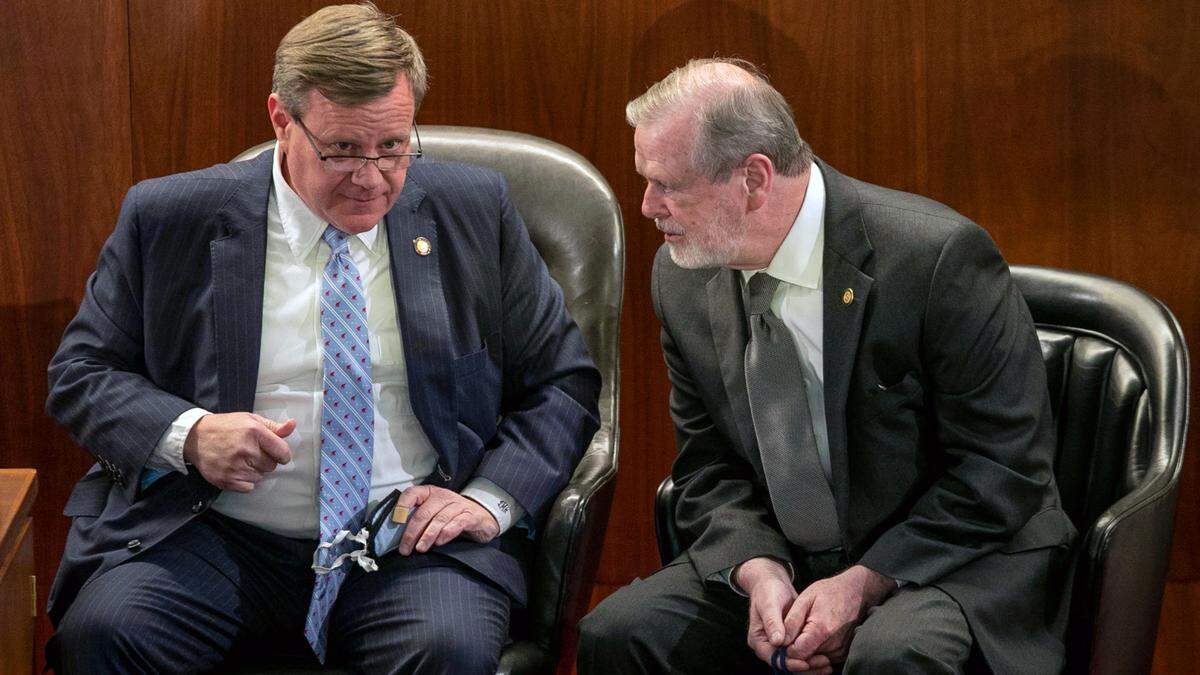
Sue Estroff, a professor in the School of Medicine and an elected member of the university’s Faculty Executive Committee, told The N&O on Wednesday that she believed Moore and Berger’s comments supporting Roberts meant “that was it” for the search and Roberts would be given the chancellorship.
She wondered — and asked the university’s provost multiple times, she said — how the search would continue to attract candidates, given that some of the state’s most powerful players had voiced their opinion.
She also compared the search process to a theater performance with a see-through curtain.
“All of us in the audience can see right through it, but the performance goes on,” she said.

Asked by The N&O on Friday whether he believed lawmakers’ support improved his chances of securing the job, Roberts said, “I don’t know if it gave me a leg up in the search or not. I assume everybody in the search process had their own set of strengths and different attributes.”
Roberts said his experience working with state leaders could be an asset as chancellor.
“To the extent that I’ve been in the state for a long time and have relationships from my time as budget director and otherwise, hopefully that is helpful to Carolina and what we’re trying to do here,” he said.
Cristy Page, the executive dean of the UNC School of Medicine and the chair of the search committee, told reporters last week after closed-door candidate interviews that she did not think Roberts’ time as interim chancellor, nor Moore or Berger’s comments, had impacted the applicant pool.
A UNC System news release said nearly 60 candidates applied for the position during the national search. Hans said the pool included academics, award-winning researchers and “national figures.”
“I feel really good that there has been a lot of outreach to people who are internal and external to North Carolina,” Page said after candidate interviews. “And that doesn’t seem to have dissuaded people from their interest and commitment to pursuing our great university.”
Since Republicans took control of the General Assembly in 2010, some groups, including the national American Association of University Professors, have accused the Board of Governors and the broader university system of being unduly influenced by conservative political connections.
Upon being named interim chancellor, Roberts told The News & Observer that he planned to do the job “in a nonpartisan way.”
“I think to be effective in this role, you need to be able to work with Republicans and Democrats and independents and everybody else,” he said. “And I think that’s what I’ve done in my past roles.”
On the athletic fields, Roberts now cheers on the Tar Heels — a stark switch for the Duke University graduate, given the universities’ fierce rivalry in athletics.
Roberts credits Duke with bringing him to North Carolina when he was 17, having grown up in Washington, D.C., as the son of journalists Steven Roberts and the late Cokie Roberts, a “founding mother” of NPR. His maternal grandparents were Democratic members of Congress, each representing Louisiana for decades.
“I guess I’m proof that even Blue Devils can eventually see the light,” he told The N&O in January.
Spring protests divide campus opinions
Roberts will inherit the university’s top job at a time of increased scrutiny on higher education across the country, particularly for chancellors and presidents.
“As all of you know quite well, chancellors don’t get to make easy calls,” Hans said Friday. “Their role is to weigh trade-offs, accept intensive scrutiny and to find a way to earn trust and respect, while rarely giving any constituency all it wants.”
While top Republicans are supportive of Roberts, opinions of him on campus vary, with some students and faculty vocally opposed to him and others more supportive — a dichotomy that came clearly into focus during the protests this spring.
Unrest over the Israel-Hamas war sparked protests at universities across the country. At UNC, 36 people were charged with trespassing after they refused to comply with orders to disband their four-day “Gaza solidarity encampment.” Six people, including three UNC students, were arrested and charged with other offenses, including resist, delay and obstruct and assault on a law enforcement officer.
Roberts’ viral moment restoring the flag came on the same day as the arrests, and was accompanied by police pepper-spraying protesters in attempts to have them disperse from the flagpole. In images and videos of Roberts and police marching onto the Polk Place quad, police could be seen hitting a protester in a wheelchair with a metal barrier on their way to the pole and pulling another demonstrator by the hair once they arrived.
Michael Palm, a communication professor and the president of the campus AAUP chapter, said Wednesday he believes Roberts’ actions this spring should have disqualified him from becoming chancellor.
“No one I’ve spoken to about the process expected it to be transparent or inclusive, and it was neither. Everyone I know at UNC assumed all along that Roberts would get the job, and nothing at UNC during the past decade would suggest otherwise,” Palm told The N&O by email. “After presiding over police attacking students on campus last spring, Roberts has no business holding any position at UNC, let alone serving as Chancellor.”
Still, like top lawmakers, some on campus expressed support for Roberts after the protests. A separate letter written to “support the action of UNC leadership in response to protesters’ violation of law” gained more than 1,600 signatures this spring. That total represented groups beyond current students, faculty or staff, which made up a smaller portion of signatures compared to the letter denouncing Roberts’ actions.
Roberts on Friday committed to listening to a wide range of thoughts and opinions from the campus community, trying to hear “all points of view.”
“There’s always going to be a range of opinions here. We’re starting our 230 academic year, and I’m pretty confident that over the course of those 230 years, there’s always been disagreement about the direction of the university and the right course of action,” he said. “The role of the chancellor is to listen to as many views as possible, and then make the best decisions he or she can in the best interest of the university.”
Other key moments as interim
While the protests perhaps represented a watershed moment in campus perceptions of Roberts, it is not the only controversial moment he led or endured as interim. And he will undoubtedly deal with more in the coming weeks and months.
The majority of the university’s Board of Trustees this spring emphasized their opposition to diversity, equity and inclusion, or DEI, even voting in May to cut funding for the programs and divert the dollars to campus police. The controversial move was later deemed void, with Hans saying the board did not have the authority to amend Roberts’ proposed budget, which did not change DEI funding.
The trustees’ months-long debate over DEI brought to light a memo, sent by Hans to Roberts and trustee Chair John Preyer on Roberts’ first day as interim, that emphasized the trustees are meant to advise the chancellor — not enact their own agendas or policies.
DEI will likely continue to be a hot-button in Roberts’ early weeks as chancellor.
By Sept. 1, he is tasked with deciding the fate of the university’s diversity and inclusion office after the Board of Governors repealed its previous policy on the issue and thrust universities’ diversity-related programming under a microscope. If the office is not eliminated, at a minimum it is likely to undergo significant changes.
Roberts on Friday did not provide many updates on the decisions he plans to make regarding DEI, but said Project Uplift — a summer program that brings underrepresented high school students to campus — will remain and potentially even expand.
Roberts will also lead the end of the university’s century-old, student-run honor court system this month, a decision that student leaders have denounced but leaders have said will be a best practice in student conduct affairs. He will also likely face additional campus protests over the ongoing war in Gaza this fall.
The chancellor search
Friday’s announcement marked the conclusion of a less than five-month search to find the university’s next leader.
Wallace, the UNC System spokesperson, said Friday that the search took 179 days, beginning with the search committee being announced in early February — close to the 190-day average for chancellor searches across the system in recent years. But while the committee was announced in February, it did not begin meeting until mid-March.
Chancellor searches in the UNC System are confidential, with candidates’ identities kept private under policy. Roberts had not publicly stated whether he was interested in applying for the permanent role, deflecting the question when asked by media throughout his semester as interim.
But many on campus openly speculated that he would be considered for the job, particularly given the support from Moore and Berger and because the search wrapped up months ahead of schedule.
Originally expected to conclude near the end of the year, the search sped up considerably in recent days, with Roberts being named just over a week after an undisclosed number of candidates completed interviews with the search committee and four days after the campus Board of Trustees submitted finalists to Hans.
The accelerated timeline meant students and other campus community members were given fewer chances to weigh-in on the search than the committee originally announced, leaving some students to feel that their voices went unheard during the process.
This story was originally published August 9, 2024 at 10:23 AM.