Private school voucher expansion is looming in NC. Why Wake schools say that’s bad
.jpg "Wake County school board members discuss state legislation that would expand funding for private school vouchers during their meeting on Sept. 17, 2024 in Cary, N.C.")
Wake County school leaders charge that North Carolina’s historic expansion of private school voucher funding will leave public schools underfunded.
State lawmakers have passed a bill that provides an additional $463 million for private school vouchers but less than half of the $200 million requested for public school enrollment growth. During Tuesday’s review of House Bill 10, most Wake school board members said the legislation should be rejected.
Democratic Gov. Roy Cooper is expected to veto the bill. But Republicans have a large enough legislative majority to override Cooper to pass the bill into law.
“Not only is it bad for us here in Wake County, It’s bad statewide,” said school board chair Chris Heagarty. “It’s bad because so many of our small school districts don’t even have private school options yet the public schools which are there to serve in those communities are underfunded.”
But school board member Cheryl Caulfield said they should consider the perspectives of families who need an Opportunity Scholarship to attend a private school.
“The whole idea of the Opportunity Scholarship for me, from what I understand and from what I hear from families, is that they may not be getting what they need from our public schools,” said Caulfield, one of two Republicans on the officially non-partisan board.
Impact on school district enrollment
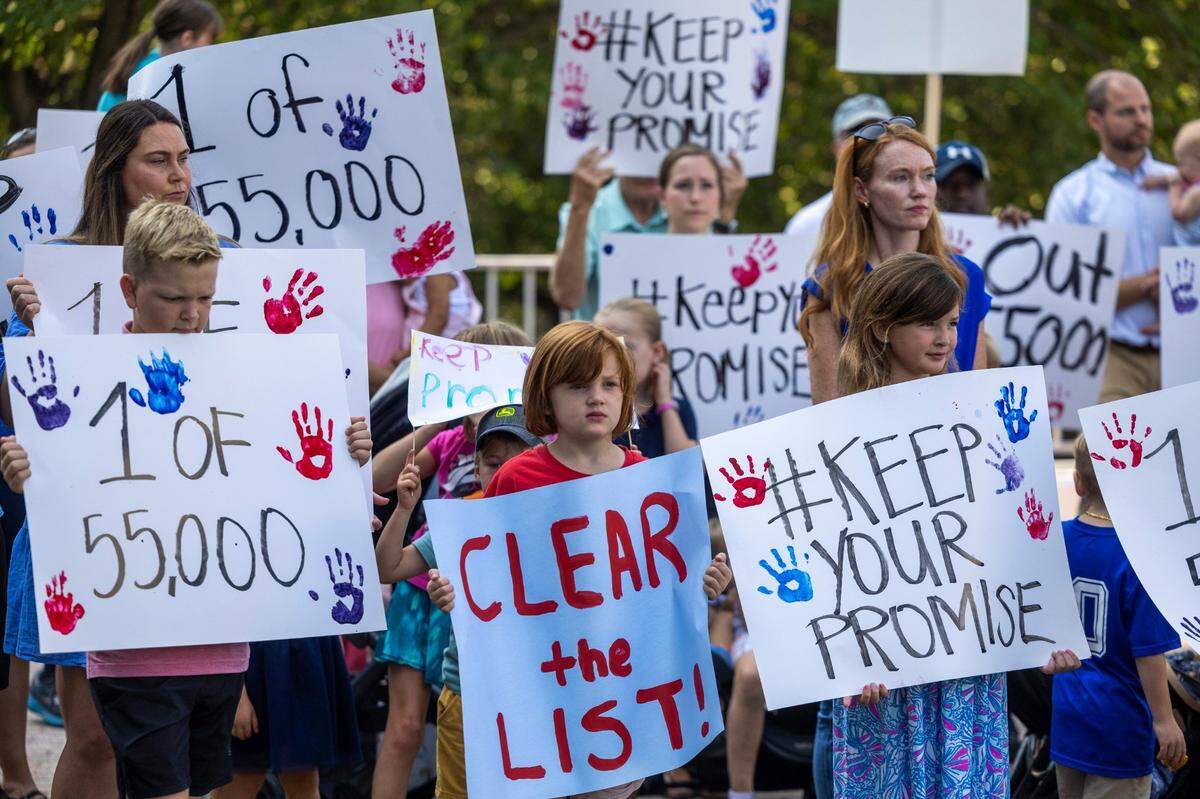
The legislation clears the 55,000-student backlog of families waiting for an Opportunity Scholarship. Voucher demand soared this year after state lawmakers opened the program to all families — regardless of their income or if they were already attending a private school.
Depending on their income, families would get between $3,360 and $7,468 per child to cover private-school costs.
It’s unclear how many of those students on the wait list are from Wake County, according to Marcella Rorie, Wake’s senior director of long range planning. Rorie said it’s also unclear how many of the families will leave the school district to enroll in a private school or were already attending private schools.
Wake will try to incorporate the voucher expansion into its long-range student enrollment projections.
There were 22,413 students enrolled in private schools in Wake County last school year. The district has 160,000 students.
“While we still need time to finally digest the impact of HB10, I can assure you that we will be impacted,” said Glenn Carrozza, Wake’s assistant superintendent for school choice, planning and assignment. “They say iron sharpens iron.
“We welcome competition. We just ask that we have a level playing field when we do so.”
Enrollment growth not fully funded
Republican lawmakers have promoted how the bill would also provide $95 million to fund enrollment growth in public schools this year. But the state Department of Public Instruction asked lawmakers to provide $200 million.
In addition, the legislation eliminates $60 million from the Education Enrollment Reserve for the community college system and public schools.
State lawmakers changed the way public schools are funded. Instead of funding schools based on an enrollment projection for this school year, it’s based on how many students attended the last school year.
This year’s enrollment growth is supposed to be funded out of a contingency reserve.
David Neter, Wake’s chief business officer, said they’ll need DPI’s interpretation of the legislation and how they’ll cope with having less money than they requested for enrollment growth.
’Welfare to the rich and wealthy’
The bill would increase annual funding for private school vouchers to $800 million by the 2031-32 fiscal year.
Multiple school board members noted that Tuesday was Constitution Day. Board members accused state lawmakers of not fulfilling their duty to the state constitution to provide public school students with enough resources to receive a sound, basic education.
“We’re seeing this body of folks who have a high disregard for public education,” said board member Tyler Swanson. “It’s laughable that’s what they choose to do.”
Legislators are robbing the education of public school students to “provide welfare to the rich and wealthy,” Swanson said.
Private schools lack the accountability required of public schools, according to school board member Lynn Edmonds.
“We are obligated to be very accountable to the voters, to the citizens, to the students,” Edmonds said. “We’re obligated to actually teach them something. That is all in statute for us to comply with, and that’s where your public dollars should be going – to public schools.”
‘A right to find alternatives’
Caulfield, the board member, said she was upset by the negative comments her colleagues were making about the Opportunity Scholarship program.
“Those people, those parents, they are taxpayers,” Caulfield said. “It is their money. They have a right to find alternatives if we can’t give it to them.”
Board member Sam Hershey said he was confused by Caulfield’s position.
“I do not understand how someone can sit at a public school board and be OK with this amount of private vouchers which were passed to specifically give money to people with higher incomes,” Hershey said. “That’s what this is. This is not about helping people with low incomes.”
This story was originally published September 18, 2024 at 9:36 AM.