NC legislature sends bill with vouchers, ICE to Cooper. Here’s why they’re doing it now
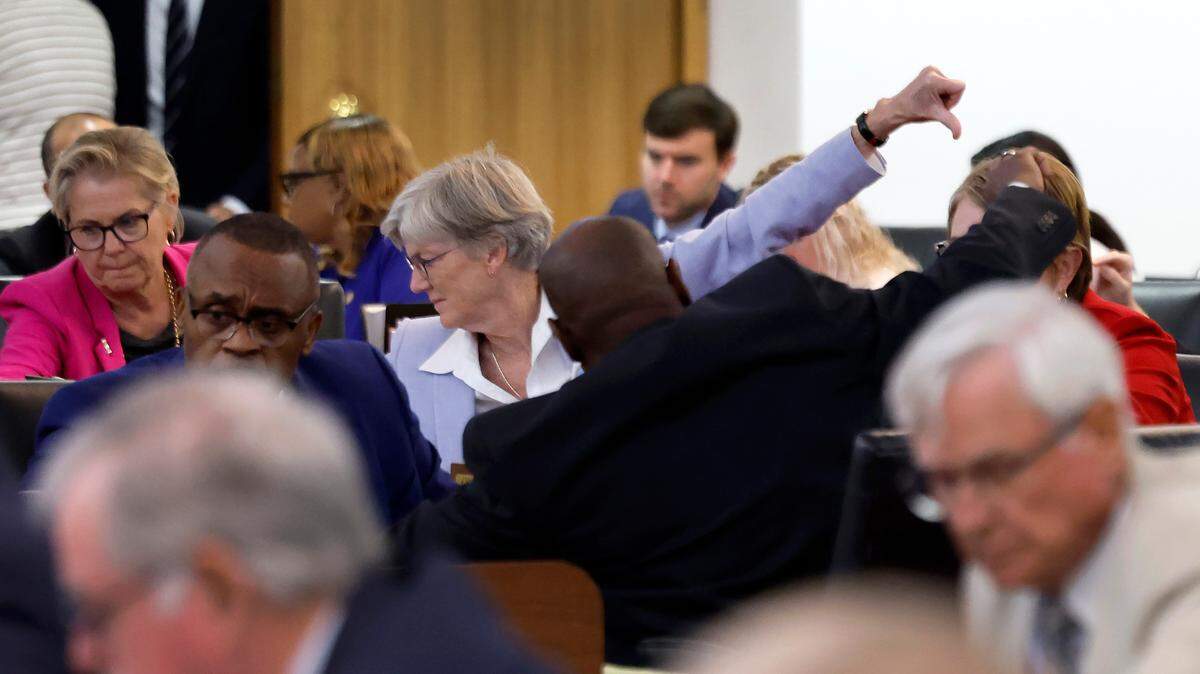
The North Carolina General Assembly, which is totally controlled by Republicans, passed a bill with two key priorities they shared during the 2024 legislative session: private school vouchers and requiring sheriffs to cooperate with U.S. Immigration and Customs Enforcement.
The bill now goes to Democratic Gov. Roy Cooper, who has 10 days to sign it, veto it or let it become law without his signature.
Here’s what you should know:
Why it’s a ‘mini budget’
House Bill 10, which was originally a bill only about sheriffs cooperating with ICE, was gutted and turned into a “mini budget” compromise bill between Republicans. If that sounds familiar, it is because mini budget bills were the method Republicans, who then had a majority but not a supermajority, used to pass legislation outside of the full budget bill in 2019.
There was no new comprehensive state budget in 2019. Cooper vetoed the bill sent to him, and the House successfully overrode his veto on Sept. 11, 2019, exactly five years ago, but the Senate never held an override vote.
Now that Republicans have the numbers to override vetoes when all of their caucus is present, there are fewer compromises with Democrats. Override votes were also held this week during the General Assembly’s brief return. They mostly adjourned in late June, while top leaders continued to talk about passing some sort of a budget adjustment bill this year. The mini budget bill was the result.
Months-long budget standoffs and stalemates have become the norm in the state legislature, but lately it has been between the Republican-controlled chambers rather than with Cooper and Democratic lawmakers.
Why teacher raises weren’t part of the deal, but vouchers were
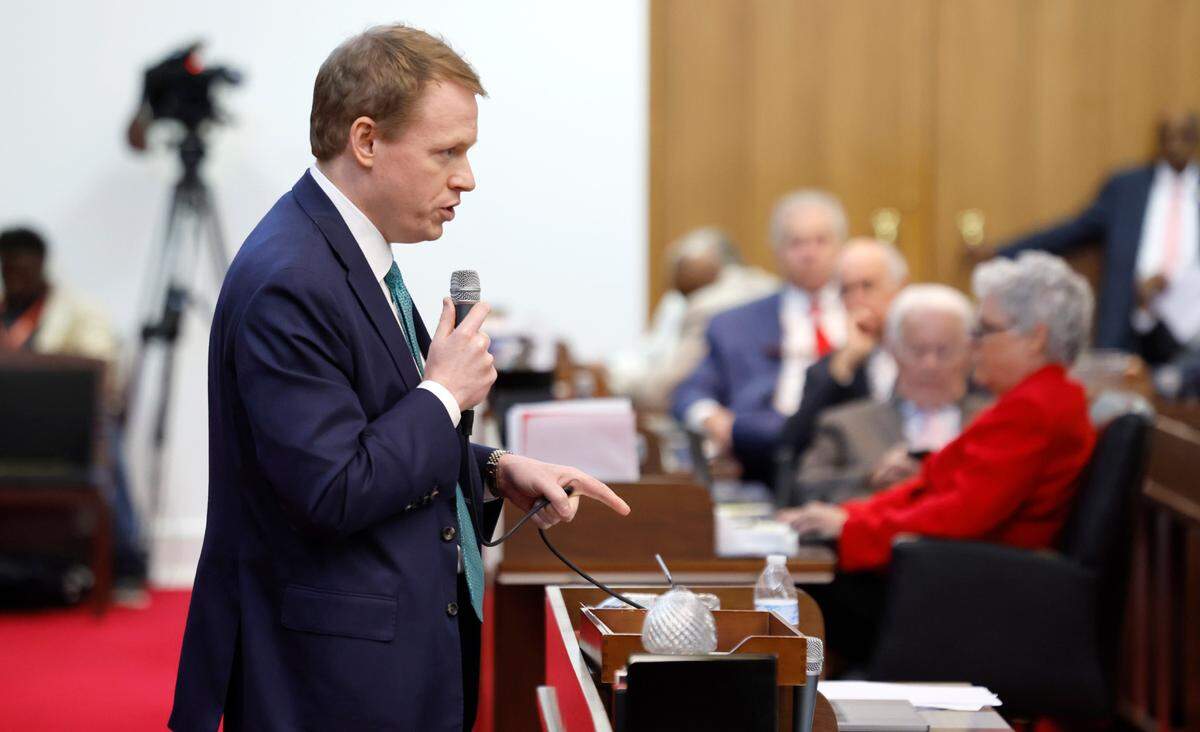
Democrats’ criticism of the bill included the spending on private school vouchers, but no teacher raises higher than what some teachers received in July, which was just a small percentage depending on the teacher’s experience. The bill does include funding for K-12 enrollment growth and community college growth.
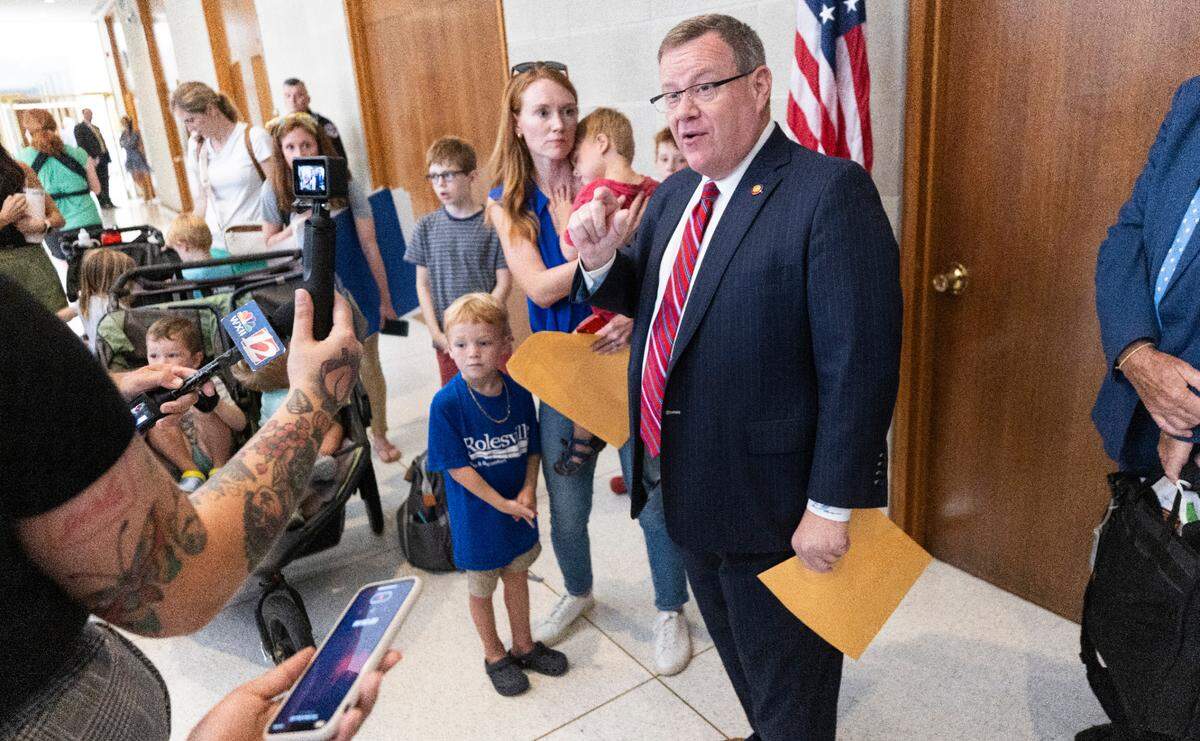
Senate leader Phil Berger told reporters Monday that the agreement was to include things that were supported by the Republican majorities of both the House and Senate.
House Speaker Tim Moore said previously that he wanted teacher raises to be coupled with the voucher funding. But the deal’s public education funding was for K-12 enrollment growth only, not raises.
If it becomes law, the bill would provide an additional $463 million in voucher funding to clear the 55,000-student backlog of families waiting for an Opportunity Scholarship now that the income limits have been removed. Depending on their income, families would get between $3,360 and $7,468 per child to cover private-school costs.
The measure passed the Senate on Monday, 27-17.
House Rules Chair Destin Hall, who is expected to be the next House speaker, said he would have liked raises to be included, too. He said that while both chambers already passed the Opportunity Scholarship Program funding to clear the waitlist, there are “a number of folks, including myself, who would like to see some more teacher raises.”
Hall told reporters after the Rules Committee meeting on Wednesday, ahead of the House session, that the raises already allocated in the last budget “can tide us over until next spring and summer,” then lawmakers will come back “and work on that issue.”
Why ICE is part of this now
The provisions of the bill requiring sheriffs to cooperate with ICE are measures Republicans have been trying to pass for years, in response to sheriffs in largely Democratic counties vowing to cut back or end cooperation with the federal agency, particularly in the 2018 election.
State law already requires sheriffs to try to determine the legal status of people they arrest if they’re charged with a felony or for impaired driving, and notify ICE if they can’t ascertain legal status.
But there’s no provision in the law requiring sheriffs to comply with immigration detainers, which are requests from ICE to hold individuals who have been arrested and are believed to be in the country illegally, for up to 48 hours, to give ICE agents time to take custody of them.
Republicans say the bill is necessary because of the small number of sheriffs who don’t cooperate with ICE, unlike the vast majority of sheriffs who do.
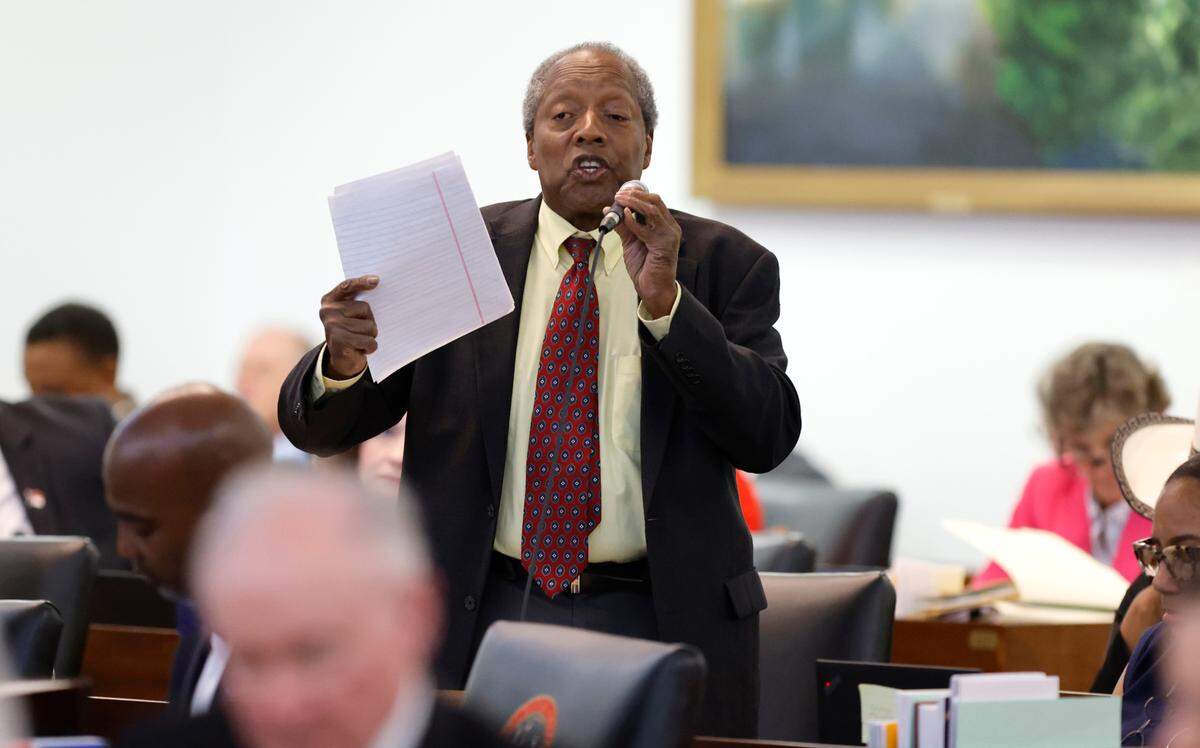
Opponents of the bill who spoke against it at the General Assembly this week said the bill would put a “target” on immigrant communities, and raised concerns about the constitutionality of ICE’s detainer requests.
Jasmina Nogo, an immigration staff attorney at the N.C. Justice Center, said during a committee meeting that the bill was a “radical departure from the current state of immigration enforcement in North Carolina,” and said requiring cooperation with ICE “will fracture the trust that law enforcement agencies across the state have earned from immigrant families, immigrant survivors of crimes, and immigrant workers.”
During floor debate, Democratic Rep. Maria Cervania of Cary said requiring cooperation with ICE could lead to racial profiling or discrimination, and urged lawmakers not to “entertain or give life” to legislation that she said would “weaken the social fabric of our state.”
Speaker Moore calls bill a ‘good step’
HB 10 also includes money for broadband high speed internet expansion and funding for the Medicaid rebase, which is increased Medicaid costs.
The bill passed the House 67-43, mostly along party lines. Three Democrats joined Republicans in voting for the bill: Reps. Carla Cunningham of Charlotte, Shelly Willingham of Rocky Mount, and Michael Wray of Gaston.
After the vote, Moore told reporters that after months of stalemate between the chambers, he was glad Republicans were able to pass a bill on their top priorities like vouchers and ICE cooperation, even if neither side got everything it wanted in the deal.
“While I would certainly like to see us do even more, I think it is a good step right here at this juncture, to make sure that we don’t have any lapses or glitches right now, between now and when we’ll be back in November,” Moore said.
He added later that Republicans are still figuring out if they’ll have enough of their members present during a brief session in October, or after the election in November, to take up overrides of vetoed bills.
What happens next
Democrats and left-leaning public education groups have shared their opposition to the bill, including Cooper.
“You said yes to give $463 million to give private schools for the wealthy instead of saying yes to investing in the great public schools in your very own counties and homes,” said Selina Lopez, youth program director for Hispanic Liaison in Chatham County, who spoke at a rally Wednesday outside the Legislative Building organized by Every Child NC.

The group says lawmakers should fully fund the Leandro plan, which is a multibillion-dollar plan meant to help provide every public school student with a sound, basic education.
After the Senate voted on Monday, Cooper shared news coverage of the bill on social media, adding that “taxpayer dollars shouldn’t go to private school vouchers for the wealthiest North Carolinians.”
Cooper also criticized the bill in a statement on Wednesday to The News & Observer.
“Instead of finally giving public school teachers the raises they deserve or tackling the child care crisis, Republicans are draining hundreds of millions of taxpayer dollars from public schools to give it to private school vouchers for the wealthiest people,” Cooper said.
“Rural public schools will be hit the hardest in funding losses while urban private schools will get the most taxpayer money in this voucher scheme. I urge every North Carolinian to tell their legislators to vote against this harmful expansion of private school vouchers. Our students, families and communities deserve better,” he said.
Rachel Lee Brady, a Wake County parent who supported funding the voucher backlog, told The N&O in a statement that the Opportunity Scholarship Program “opens doors for students across our state to have the education that best meets their individual needs.”
“As we face record inflation, the Opportunity Scholarship provides us with needed relief at home by giving us access to our own tax dollars. Parents across the state have organized in support of school choice, and we are thankful that legislative leaders listened and kept their promise to us. We urge Governor Cooper to reaffirm his commitment to education by signing this bill,” Brady said.
NC Reality Check is an N&O series holding those in power accountable and shining a light on public issues that affect the Triangle or North Carolina. Have a suggestion for a future story? Email realitycheck@newsobserver.com
This story was originally published September 11, 2024 at 3:53 PM.
.jpg)