5 years after the pandemic, when will NC students recover? The answer isn’t easy
Five years ago, the bottom fell out for millions of students like Carter Wall, when everything they knew about school changed.
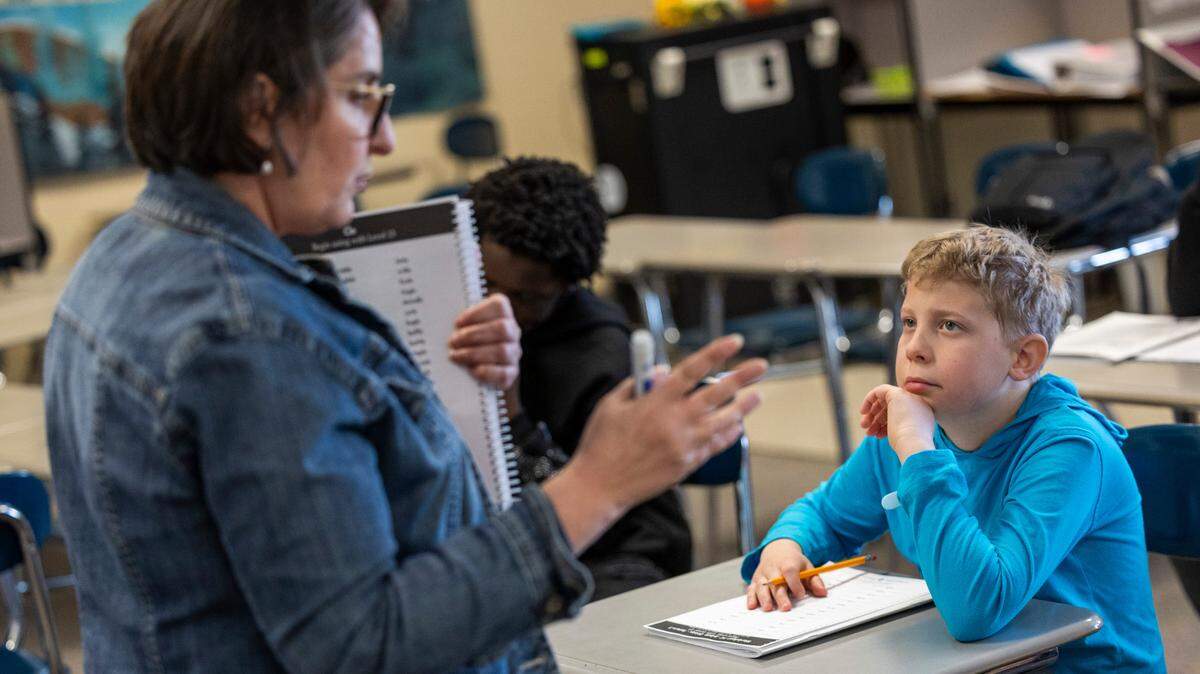
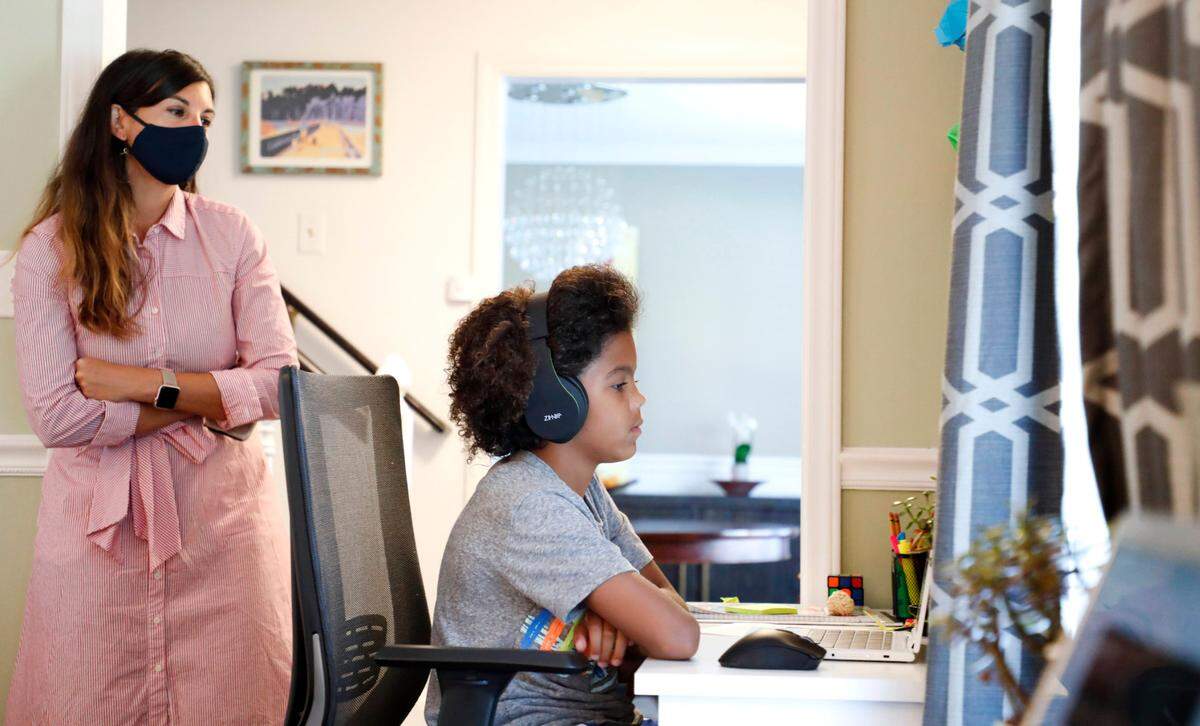
Carter, who has a learning disability, made the switch to online classes, and later in-person classes while wearing a face mask at Penny Road Elementary School in Cary. Now a sixth-grade student at Reedy Creek Middle School in Cary, the 12-year-old is still trying to recover from the learning losses experienced during the pandemic.
“We’ve always known Carter is going to have to work hard to be at grade level,” Erin Wall, Carter’s mother, said in an interview with The News & Observer. “Then COVID hit and set him back. It’s made it that much harder.”
Carter’s situation is far from unique. Students across North Carolina and the nation are on average still performing below where they were before the pandemic.
NC reading scores below 2019 levels
Results from the 2024 National Assessment of Educational Progress, or NAEP, showed North Carolina’s reading scores and eighth-grade math scores are still below 2019 levels.
North Carolina ranked 26th among states in terms of recovery in math and 43rd in reading between 2019 and 2024, according to the Education Recovery Scorecard. The scorecard is a project of the Center for Education Policy Research at Harvard University and The Educational Opportunity Project at Stanford University.
The scorecard found that average student achievement in North Carolina remains almost half of a grade level below 2019 levels in math and three-quarters of a grade level below 2019 levels in reading.
Schools didn’t spend enough of their federal COVID dollars on intensive tutoring and summer learning programs or on extending the school year, according to Tom Kane, a Harvard professor and one of the leaders of the scorecard project.
Schools were only required to spend 20% of their federal COVID aid on academic recovery. North Carolina received $5.6 billion in federal COVID pandemic aid for schools. The majority of the state’s COVID money was spent on bonuses to keep and recruit school employees. Money was also used to purchase computers that students could use while learning from home.
“Very few districts ever had a plan on paper that was going to be sufficient to help students catch up, and we’re seeing the result of it,” Kane said in an interview.
The federal COVID relief aid may be gone, but Kane said schools in North Carolina and nationally are going to have to pick up the pace to help students get whole.
“We can’t give up because giving up would mean forcing children to pay the price for the pandemic,” Kane said.
A 2022 N.C. Supreme Court ruling in the long-running Leandro school funding lawsuit could lead to more money for public schools. The Supreme Court’s GOP majority has not yet issued a ruling on whether it will overturn the former Democratic majority’s 2022 ruling allowing the money transfer.
Students with disabilities lost services
The school shutdown that started in March 2020 came as Carter Wall was finishing first grade. It was the worst time possible, according to Erin Wall, because Carter was still learning needed foundational skills.
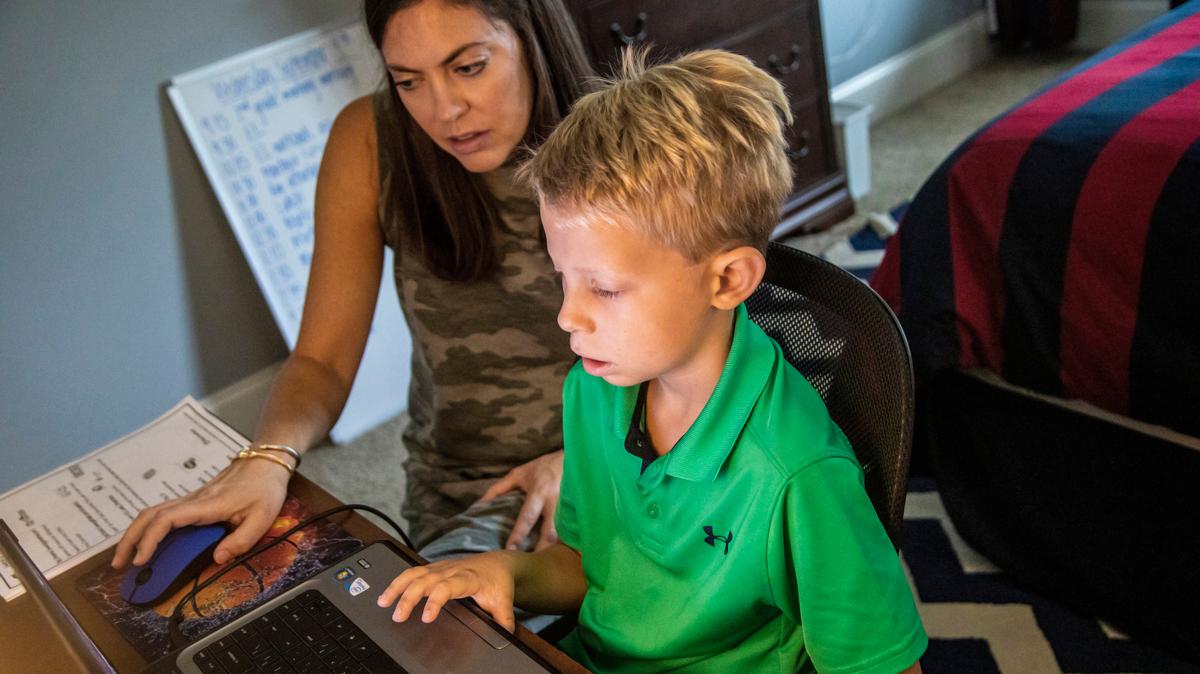
“Once COVID hit and we realized it wasn’t just going to be a little two-week break, we found Carter a private tutor and she’s still with us to this day,” Wall said. “If it weren’t for her, there would be no telling where Carter would be right now. She’s really saved him and saved us.”
But while the tutor helped with Carter’s academics, he wasn’t getting the school-based occupational therapy to help with his fine motor skills. The family paid out of their own pocket for a private speech therapist and a private occupational therapist.
“We were fortunate enough to have the resources to provide the private therapy and tutoring,” Wall said. “But not everybody could do that.”
The News & Observer interviewed the Wall family during the pandemic and revisited them for this story.
In 2022, Wall testified at a U.S. Senate committee hearing on the challenges that parents of students with disabilities faced due to the pandemic.
“The fallout from the pandemic resulted in setbacks for our children academically, socially and emotionally,” Wall told lawmakers. “There isn’t a quick fix, but I certainly hope that we can come together to create some solutions to help us move forward. Students, teachers and parents are crying for help.“
Students return to schools with teacher shortages
North Carolina students spent the end of the 2019-20 school year and most or all of the 2020-21 school year in remote learning. Students fully returned to daily in-person learning for the 2021-22 school year with face masks required in many schools.
Wall said the return to in-person classes was rough because Penny Road Elementary was dealing with major staff shortages. Teacher turnover in North Carolina is higher than it was before the pandemic.
But Wall says things got better the last two years at Penny Road. She said Reedy Creek has made accommodations to help Carter adjust to middle school this school year.
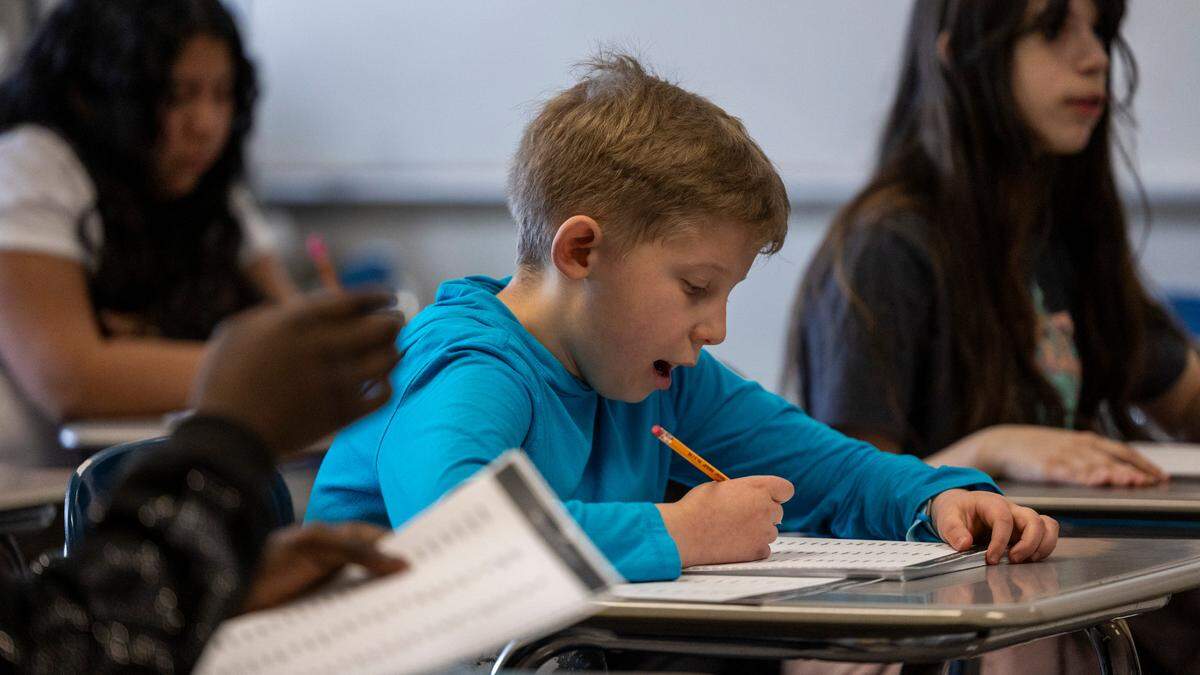
Now the family is taking Carter’s schooling one year at a time.
“I can’t believe it’s been five years ago,” Wall said. “In some ways it feels like it was just yesterday. In other ways it feels like it’s been ages ago.”
Learning at home in pandemic bubble
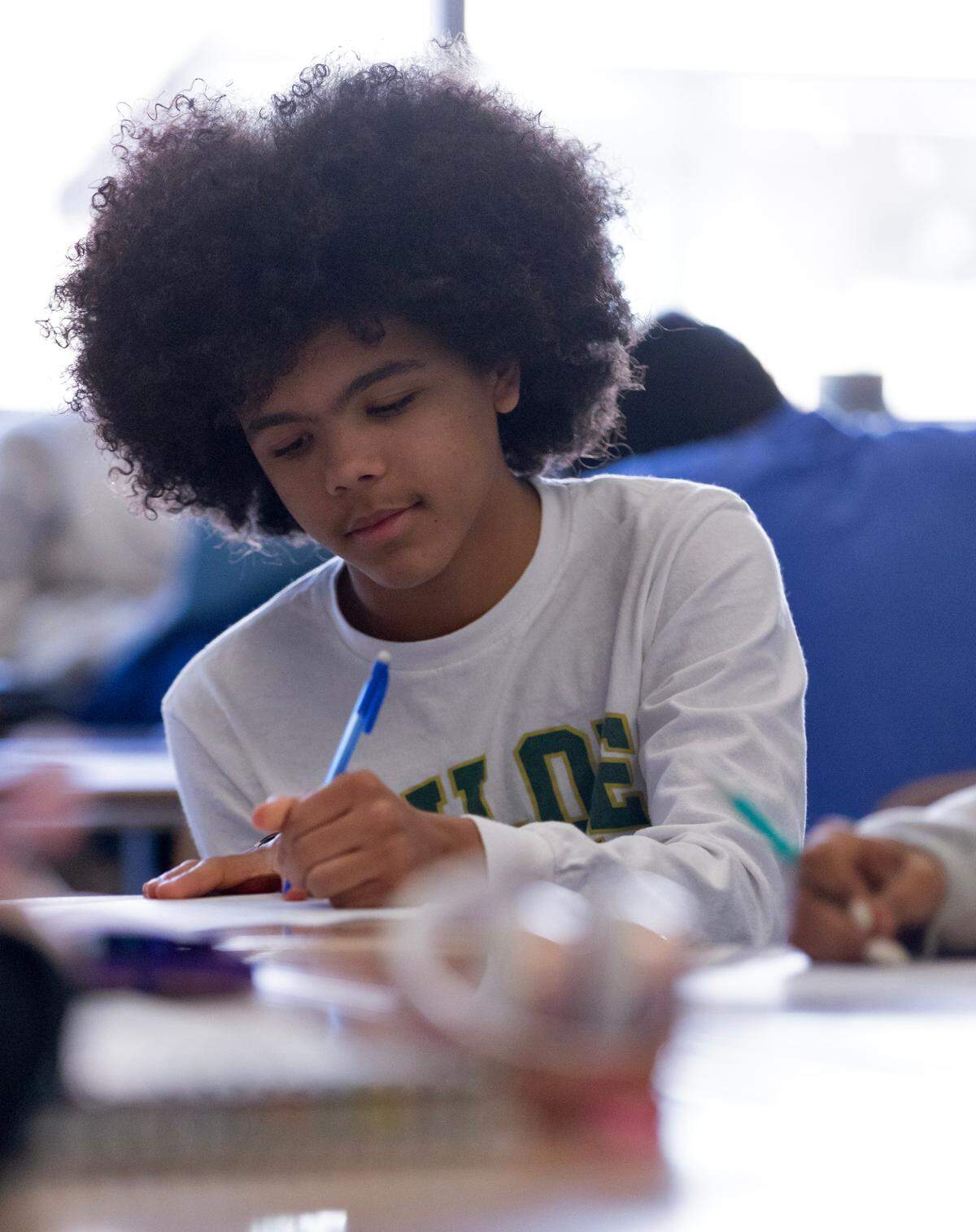
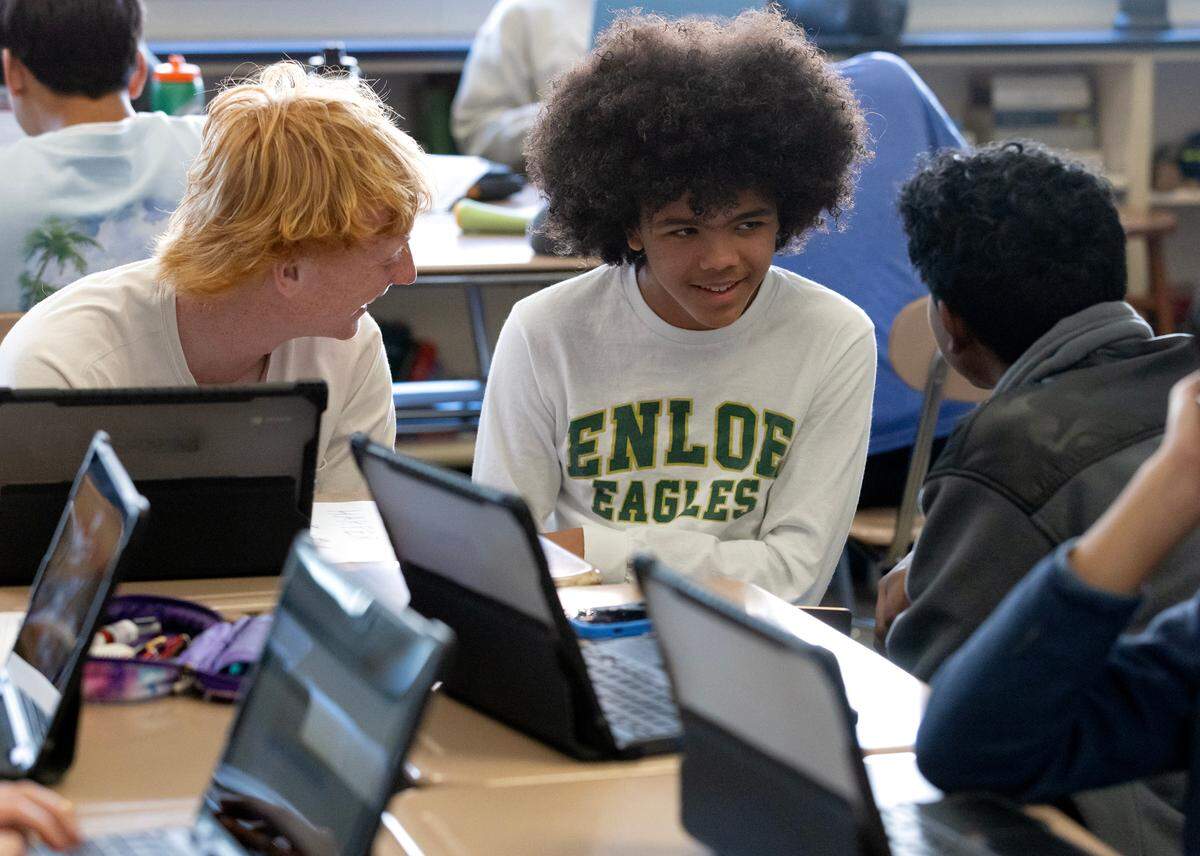
The past five years have been easier for high-achieving students like Harper Grimmett, 16, a sophomore at Enloe High School in Raleigh.
Harper was 11 years old and beginning middle school virtually in August 2020 at Ligon Middle School in Raleigh. Harper was learning at home initially with his younger brother, Sky.
Harper said it wasn’t too difficult to make the transition to virtual learning. He said he has fond memories of those days. The schoolwork was a lot easier, he said.
“I think I was feeling pretty lazy by the end of it, just doing absolutely nothing, and that was kind of hard to get out of,” Harper said in an interview. “But I feel like now it just felt like a break.”
The two boys and their parents, who also spoke to The N&O in 2020, stayed in their bubble in their Raleigh home until the COVID situation improved.
“I think that was definitely a big moment for me to realize just how much of their life, percentage-wise, was spent at our house with no family besides us,” their mother, Juliette Grimmett, said in an interview.
Juliette Grimmett said it wasn’t a problem keeping her sons focused on doing their schoolwork.
“They’re not the kids that we have to say, ‘Did you do your homework there?’” Grimmett said. “They just kind of do it and keep it going.”
Five years later, Harper and Sky, who attends Ligon Middle, are doing well academically. Harper is a member of the National Honor Society and is taking six Advanced Placement courses this semester.
“My husband and I always feel really grateful that for whatever sort of instinctually is in Harper and Sky, they were really just self-motivated,” Juliette Grimmett said.
NC schools on the right ‘trajectory’
There are signs of recovery within the achievement data, according to Michael Maher, chief accountability officer at the state Department of Public Instruction. Maher said the trend line is moving up as schools apply what they’ve learned over the past five years.
“Are we where we want it to be?” Maher said in an interview. “I would say no, certainly not. Are we better off today than we were a year ago? Yes.”
The latest report analyzing post-pandemic trends on state exams showed positive shifts in reading in grades three and five, math in grades three through six, English II and Math I.
Maher pointed as well to the state’s NAEP results not regressing. None of the 2024 NAEP math and reading scores were statistically significantly different from the 2022 scores.
“It’s that kind of last mile that is the hardest part to recapture,” Maher said. “So yes, we’re improving. Like I said, the trajectory is right.”
But state test data also shows negative trends in subjects such as reading in grades four, seven and eight. The trends are also a concern in math for grades seven and eight.
The fourth-grade reading results were the most concerning, Maher said. Those students were in kindergarten when the pandemic struck in 2020 and received mostly virtual classes well into first grade.
When will North Carolina fully recover?
People need to realize there won’t be a simple answer as to when North Carolina has recovered, according to Maher. He said recovery involves multiple factors that will require tough solutions.
“We’re never going to plant a flag and say, ‘North Carolina is recovered,’ because I don’t know what that means,” Maher said. “There are too many factors. Are we recovered in math? Are we recovered in reading? Are we recovered in science? Are we recovered in engagement, as measured by chronic absenteeism?”
But Johnston County has fully recovered and is above 2019 levels in reading and math, according to the Education Recovery Scorecard. Some districts, like Wake County, are now scoring above their 2019 averages in math.
“One of the things that we’re probably most proud of is that we’ve been able to return to pre-pandemic level performance and actually go beyond and so that says a lot in terms of what we’re doing as a district,” Wake County Superintendent Robert Taylor said in an interview. “We recognize that people across communities continue to be impacted and struggle from conditions caused by the pandemic.”
But the Education Recovery Scorecard found that districts such as Gaston County, Charlotte-Mecklenburg and Harnett County remain nearly a full grade below their 2019 mean achievement levels in math.
Overall, the scorecard found 82% of North Carolina students are in districts whose average math achievement remained below their own 2019 levels. In reading, 97% percent of North Carolina students are in districts where average achievement is below 2019 levels.
“It’s not inevitable that students will be negatively affected,” Kane said. “We know what are the kinds of interventions that will help students catch up. We just haven’t done enough of them.”
NC Reality Check is an N&O series holding those in power accountable and shining a light on public issues that affect the Triangle or North Carolina. Have a suggestion for a future story? Email realitycheck@newsobserver.com
This story was originally published May 14, 2025 at 5:00 AM.