NC schools sign anti-discrimination letter but question Trump order to end DEI
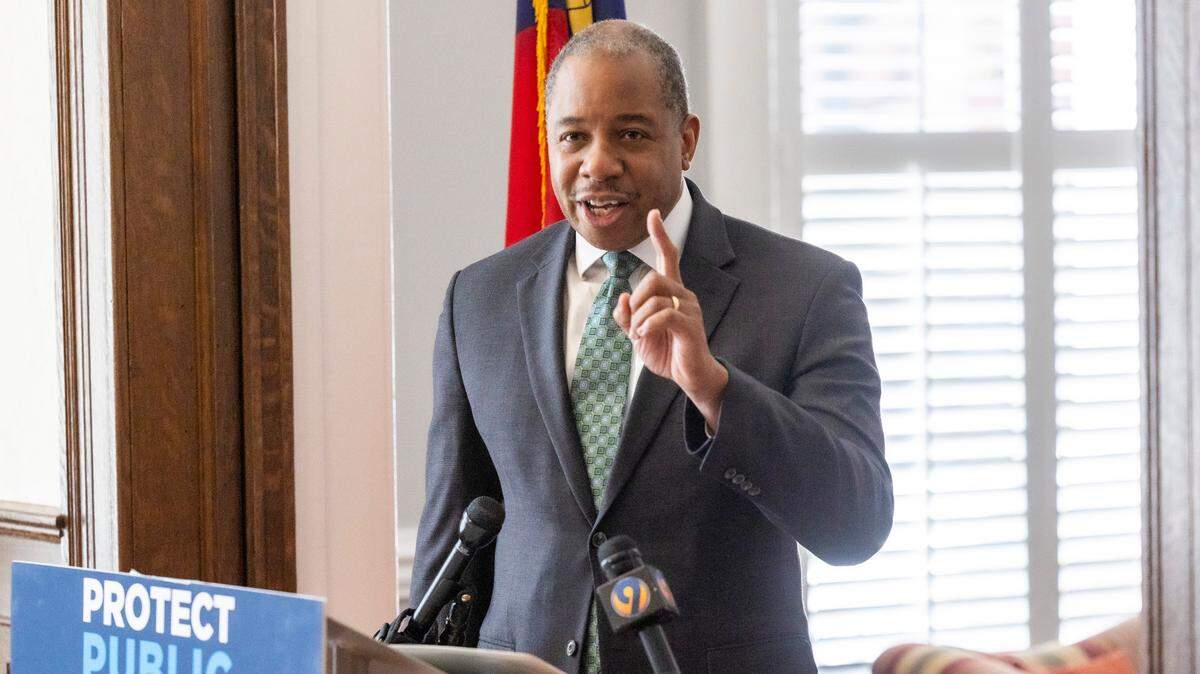
North Carolina is questioning the Trump administration’s authority to require schools to promise they’re not using DEI programs in order to continue to receive federal funding.
The U.S. Department of Education has given U.S. school districts and states until Thursday, April 24, to sign a form certifying they’re not using “illegal DEI practices.” The Trump administration considers diversity, equity and inclusion programs to violate Title VI of the Civil Rights Act, which prohibits race-based discrimination in federally funded programs.
All 115 North Carolina school districts and the state Department of Public Instruction signed the certification letter based only on what’s legally required in Title VI, according to State Superintendent Mo Green. The Democrat said the Republican-led Education Department doesn’t have the legal authority to add new requirements such as prohibiting the use of DEI.
“Your request for certification makes broad statements about ‘diversity, equity, and inclusion’ without defining what specific practices might violate Title VI or other laws,” Green said in a letter Tuesday to the Education Department. “This ambiguity raises concerns about providing the requested certification without important clarifications.
“Since the U.S. Department of Education does not have the legal authority to change assurances and impose new requirements on recipients without adhering to rulemaking procedures (see 20 USC § 1232) or make unilateral changes to Title VI or its applicable case law, it is logical to conclude that the signed certifications can only be enforceable to the extent of the Department’s lawful authority and the law as it exists at the time the assurances are given.”
Showdown over keeping DEI?
The state’s response could pave the way for a showdown with the Trump administration. The state receives $1.1 billion a year in federal education funding.
The Department of Education did not respond to an email Wednesday from The News & Observer requesting comment on North Carolina’s response. But the Trump administration has made clear it believes it can withhold funding to schools that use DEI.
“Federal financial assistance is a privilege, not a right,” Acting Assistant Secretary for Civil Rights Craig Trainor said in an April 3 news release announcing the certification letter. “When state education commissioners accept federal funds, they agree to abide by federal antidiscrimination requirements.
“Unfortunately, we have seen too many schools flout or outright violate these obligations, including by using DEI programs to discriminate against one group of Americans to favor another based on identity characteristics in clear violation of Title VI.”
The Department of Education has already cut off tens of millions of dollars in federal teaching grants to North Carolina schools because of allegations the money was being used to promote DEI.
State lawmakers targeting DEI in schools
North Carolina public schools are also facing state pressure over DEI.
The state Senate approved legislation banning DEI programs in public schools and put in place new rules for how teachers can discuss racism and sexism in classrooms, The N&O previously reported.
The state House is considering a bill that would eliminate DEI programs in state and local governments, including public schools. The N&O previously reported.
Feds set deadline for ending DEI in schools
On Feb. 14, the Education Department sent a letter warning K-12 schools and universities to end their diversity programs in two weeks or risk loss of federal funding The Trump administration is applying a 2023 U.S. Supreme Court decision against race-conscious admissions policies at UNC-Chapel Hill and Harvard University to cover all aspects of education from preschools to universities.
The Education Department has created an “End DEI” portal where the public can file complaints for the agency to investigate.
The Education Department followed up the Feb. 14 letter with another one on April 3 reminding states and schools that receipt of federal funding is contingent upon following Title VI. The new letter included a request to certify they’re not violating federal anti-discrimination laws.
.Green said the letter was “redundant” because schools already had to certify they’re following federal civil rights laws.
“Any violation of Title VI — including the use of Diversity, Equity, & Inclusion (‘DEI’) programs to advantage one’s race over another — is impermissible,” according to the April 3 letter. “The use of certain DEI practices can violate federal law. The continued use of illegal DEI practices may subject the individual or entity using such practices to serious consequences.”
The serious consequences listed in the letter include loss of federal funding.
The Education Department initially gave a 10-day deadline for signing the letter. But the deadline was extended to April 24. The Education Department asked states to collect the responses from individual school districts.
Some states refuse to sign anti-DEI letter
As of April 23, 19 states and Puerto Rico said they intend sign the letter and 16 states said they would not, according to Education Week. The other states were still reviewing their response or haven’t publicly said how they’ll respond, according to Education Week.
Washington is among the states that have refused to sign the letter, saying DEI has “helped bring greater opportunities to more students.”
“We will not sign additional certifications that lack authority, lack clarity, or are an assault on the autonomy of states and local school districts by misapplying a higher education admissions case. It would be irresponsible to do so,” Chris Reykdal, state superintendent of Washington schools, said in a news release.
Some school districts around the country have joined a federal lawsuit filed by the National Education Association against the Trump administration’s threat to cut off funding over DEI programs
NC clarifies why it’s signing certification letter
DPI and North Carolina school districts signed the Department of Education’s certification letter with a “clarification” that “the assurances are limited to the Department’s current legal authority.”
“To the best of their knowledge, the North Carolina Department of Public Instruction and all local education agencies in North Carolina assure the U.S. Department of Education that they comply with Title VI,” Green, the state superintendent, wrote. “This assurance by NCDPI on behalf of itself and all local education agencies in North Carolina is limited to those legal obligations authorized by law.”
Green said the state remains committed to ensuring that public schools provide environments free from discrimination based on race, color or national origin.
“We will continue working to ensure fairness, remove barriers to opportunity, and make decisions based on merit and need,” Green told the Department of Education. “Public education is about opening doors, not closing them.
“Every decision we strive to make, whether about discipline, curriculum, hiring, or resource allocation, is grounded in fairness, providing access to equal opportunity, and is made in the best interests of all public school students.”
Wake County keeping Office of Equity Affairs
Wake County is among the North Carolina school districts that signed the certification letter using the guidance from DPI. Wake County got $178 million, or 8% of its operating budget this year, from federal funds.
As a cost-saving measure, Wake County isn’t filling its vacant position of assistant superintendent for equity affairs. But the district is keeping its Office of Equity Affairs.
Last week, the Office of Equity Affairs gave the Wake County school board a presentation about some of the equity programs it’s doing across the district. The work drew praise from school board members.
“It’s not about any kind of divisive concept,” said school board chair Chris Heagarty. “It’s about getting kids in school, getting kids motivated and on a path for academic success.”
Projects mentioned by Equity Affairs include:
▪ Wilburn Elementary in Raleigh is providing free access to laundry services to students who need clean clothes. Some students were missing school due to laundry insecurity about not having clean clothes to wear.
▪ Knightdale High School students created an after-school place for students to get tutoring and to decompress while they wait for a school bus or a ride home.
▪ Rolesville High School students stocked the girls bathrooms with free menstrual products. It’s now expanded to include Rolesville Middle School.
▪ Enloe High’s front office staff learned some common Spanish words to help them communicate with people who come to the Raleigh school.
▪ Broughton High School in Raleigh created a clothing closet for students to get free professional attire to wear.
▪ Apex High School increased student diversity in upper-level courses.
“If you talk about the good work that these programs do, it would be really hard for anybody to argue against them, or argue they shouldn’t be funded and they shouldn’t be supported,” Heagarty said.
Charlotte Observer reporter Rebecca Noel contributed.
In the Spotlight designates ongoing topics of high interest that are driven by The News & Observer’s focus on accountability reporting.
This story was originally published April 23, 2025 at 12:25 PM.