Federal court allows former NC student to sue over racial discrimination claims
AI-generated summary reviewed by our newsroom.
- Federal court reinstated lawsuit alleging racial harassment at Enloe High School.
- Appeals court recognized Title VI protections for student-on-student harassment.
- Enloe officials denied Title VI breach amid claims of bias in election process.
A former Enloe High School student who says she was racially discriminated against when she ran for Student Council nine years ago has won her right to have her day in court.
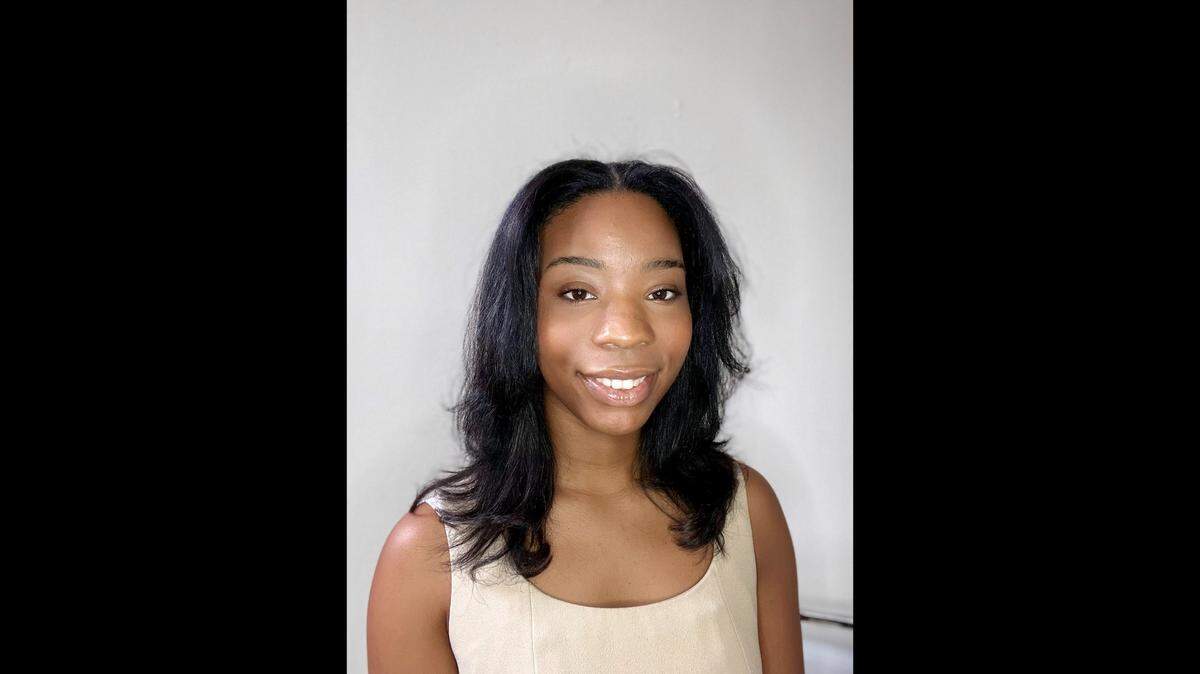
Davina Ricketts alleges in a federal lawsuit that she was racially harassed when she ran for student government in 2016, including being compared to a cockroach in the student newspaper. Her lawsuit originally was dismissed by a federal court, but a federal appeals court reinstated the civil rights lawsuit earlier this year.
“This was a series of events that were very significant and had a profound impact on Davina and on her mother,” Coleman Cowan, one of Rickett’s Raleigh attorneys, said in an interview Friday with The News & Observer. “This was important enough that Davina and her mother want to make sure it doesn’t happen to anyone else.”
Ricketts, now 25, is accusing Enloe and the Wake County school system of violating Title VI of the Civil Rights Act, which prohibits race-based discrimination in federally funded programs.
The Wake County school system did not return a request for comment from The N&O. But Wake has denied in court filings and oral arguments that it violated Ricketts’ civil rights.
Campaign materials ‘deface, ripped and thrown’
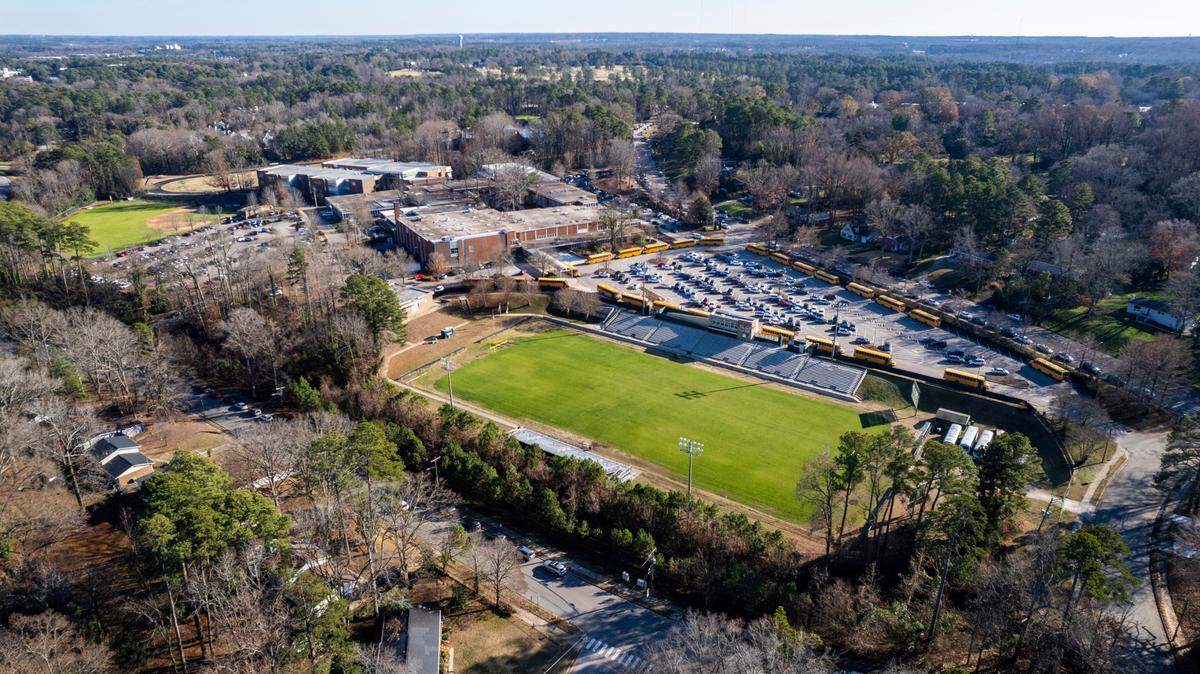
Enloe is a magnet high school located on Clarendon Crescent near New Bern Avenue in Raleigh. Enloe draws students from East Raleigh and Southeast Raleigh and magnet students from across the county.
Ricketts was a 16-year-old sophomore when she ran in 2016 for junior class vice president in hopes of increasing diversity in student government.
More than 100 students filed to run for student council in the March 4, 2016, election. Ricketts was one of four Black sophomores who filed.
None of the four Black sophomore candidates were included in polls and posts on Twitter, now called X, that the lawsuit says were created by student council members to promote the election.
“Additionally, and simultaneously, campaign materials including posters and promotional bookbag-tags that belonged to Ricketts and the three other Black sophomore students were defaced, ripped, and thrown throughout the Enloe building,” the lawsuit says. “No white students had any of their campaign materials defaced, ripped, or thrown.”
Due to what Wake in court documents called a “technical issue” with the voting website, the election was postponed and rescheduled to March 7. But the names of the four Black sophomores were not listed on the March 7 junior class election ballot.
“If you have four African-American students that are not on a ballot, that points to race,” Davina’s mother, LaChantal Warthaw-Ricketts, told ABC11, The N&Os newsgathering partner, in a 2016 interview. “That’s not a technical glitch.”
The parents of the Black students complained to Enloe, which told them nine students had been mistakenly left off the new ballot. The parents asked for the election to be held as soon as possible with corrected ballots. But the school rescheduled the election to March 24 and made candidates reapply.
“We can question whether this was the best way to go, whether there were consequences to other students about the way this was handled,” Stephen Rawson, Wake’s attorney told a federal appellate panel during oral arguments in September. “But the question fundamentally for this liability standard is whether it was clearly unreasonable.”
Candidate eligibility incorrectly questioned
According to the lawsuit, the decision to reschedule the election to March 24 and reopen the candidate filing process triggered a racially motivated backlash against the four Black sophomores.
“Many disgruntled students, along with some of their parents, ‘immediately’ started cyberbullying Ricketts by labeling her as one of the ‘angry Black girls’ and blaming Ricketts for ‘wrongly overreacting to a ‘technical glitch’ and calling it discrimination,’” the lawsuit charges. “Enloe students would whisper about Ricketts and the three other Black sophomores in class, and others posted hostilities to their personal Twitter accounts. Allegations were also spread that Black students could not run for student council because their GPAs were too low.”
Ricketts was the only one of the four Black sophomore candidates to reapply for the March 24 election.
Ricketts said more of her campaign material was destroyed again while the material for the white candidates remained intact.
Ricketts also faced a challenge from Enloe, which sent her a letter telling her she was ineligible to run because she had missed too many days of school. Enloe dropped the objection after the family showed her absences were excused.
School officials and their attorneys have said the letter was sent in “error.” But during the appellate arguments, Judge Pamela Harris suggested the letter could demonstrate that Ricketts faced a hostile environment
“When I was in high school, if I complained and the principal made up a false accusation about me, mailed it to my parents and said the one thing I really want to do is be on this ballot, I can’t be on the ballot for a made-up reason, I would really hesitate before I brought another complaint to the principal,” Harris said.
Black student compared to cockroach?
During the election campaign, the school newspaper released an April Fools’ edition that Ricketts said was targeted at her and filled with “prejudiced” and “racist” articles.
One of the parody articles is an interview with a cockroach called Dee D. Roach, who was described as a student at Enloe.
“We’re drastically underrepresented in student government!” Roach says in the article. “That’s why today, I am announcing my candidacy for next year’s Student Council Executive Committee. I’m getting a head start because it takes awhile for me to make backpack tags.”
Despite the similarities to Ricketts’ campaign, Rawson, Wake’s attorney, told the judges the article wasn’t clearly about her. Rawson said the article was making fun of students complaining about Enloe having so many cockroaches.
“This is political satire,” Rawson said. “It may be tasteless. But there is nothing here that says it’s about Davina.”
Ricketts also mentioned other parts of the newspaper, including an article about Scott Lyons, who was Enloe’s principal in 2016. Lyons appears in a photo wearing gold chains for a parody article that talks about him releasing a rap album.
“The first act of the album looks into DaLyon’s past, as he coped with surviving in Southeast Raleigh as a white man,’” the article says. “He raps about the ill-treatment he received when trying to give out his earlier mixtapes at the nearby Cook Out.”
Southeast Raleigh is a predominantly Black community where Ricketts lived while attending Enloe.
A parody op-ed piece mocks the 2016 controversy about the lack of diversity among Oscar acting nominees. The piece is titled “Oscars falsely accused of discrimination” with the additional wording that the Black Entertainment Network awards “are the real culprits of exclusion.”
Appeals court rules in favor of Ricketts
Ricketts did not win the election for junior council vice president. She would go on to graduate from Enloe in 2018.
In 2021, Ricketts acted as her own attorney when she filed a federal lawsuit. In 2022, the federal trial judge granted Wake County’s motion to dismiss the case. But Ricketts appealed.
In January, the 4th Circuit U.S. Court of Appeals reinstated the lawsuit and sent it back it the trial judge.
“Such incidents collectively — excluding Ricketts from polls and posts, destroying her campaign materials, labeling her an ‘angry Black girl,’ and mocking her campaign by way of a cockroach reference — rise above simple acts of teasing and name-calling among school children and sufficiently allege severe, pervasive, and objectively offensive harassment at this stage,” Judge Roger Gregory wrote in the appellate opinion
It’s the first time the 4th Circuit has recognized that student-on-student harassment is a valid claim under Title VI of the Civil Rights Act, according to Cowan, Ricketts’ attorney. Cowan said they’ll attempt to prove to a jury that it was student-on-student racial harassment that school leaders knew about and failed to stop.
“It’s been a very long road for Davina — a long road behind her and a long road ahead of her,” Cowan said. “This is a very contested case that involves some important issues for the local school system and schools in general because this kind of issue happens more and more.”
This story was originally published July 14, 2025 at 5:30 AM.