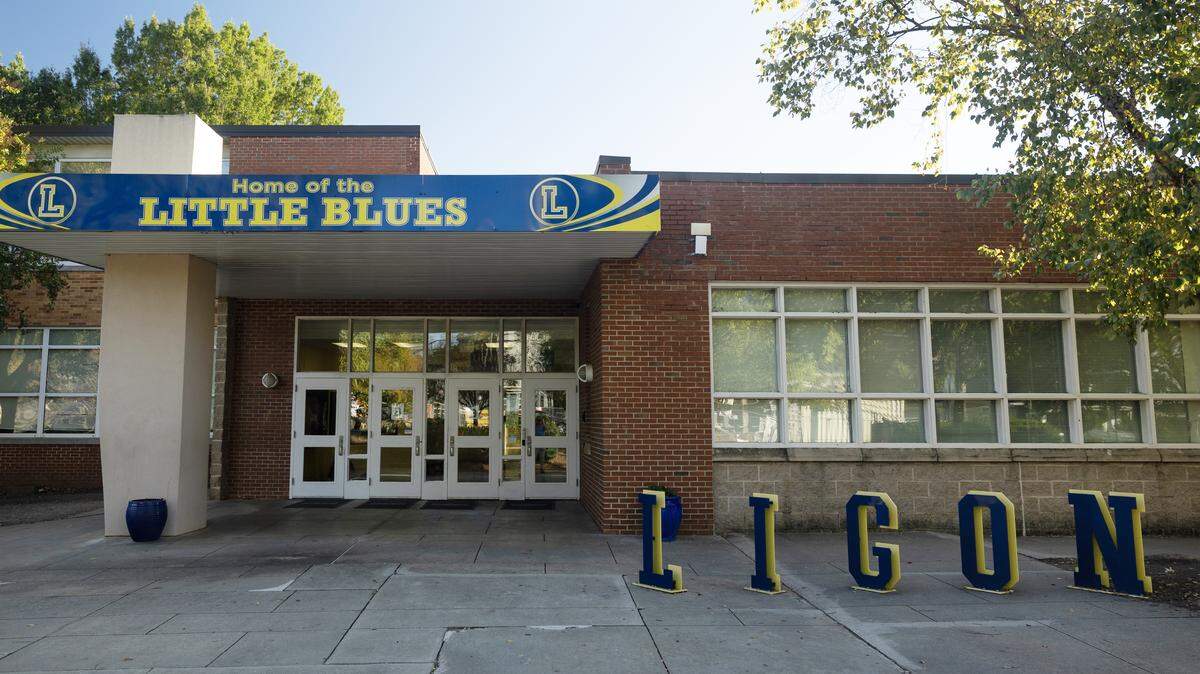
Ligon used to be Raleigh’s all-Black high school. Should building be preserved?
AI-generated summary reviewed by our newsroom.
- Board members demand transparency after staff presented a teardown option.
- Alumni and preservationists push to study and preserve Ligon’s historic main building.
- Superintendent and board seek more community input as a $141M renovation nears.
Wake County school board members are continuing to publicly voice their frustration over the district’s handling of renovations at Raleigh’s historic Ligon Middle School.
Some school board members complained this week about the lack of information they’ve gotten on Ligon’s renovations, including not being told ahead of time that tearing down the 72-year-old building is an option. It’s the second time in two weeks that board members, who generally keep their disagreements with staff private, have complained at board meetings.
“It’s disrespectful to the people that I serve that I don’t know where we are within this project so that I can report to them in a transparent and truthful manner,” said school board member Toshiba Rice, whose district includes Ligon. “I’ve made those pleas.
“I hate to have to make these pleas, but I do have to make it at this point because I feel like I’m not being seen and heard because my constituents aren’t being seen and heard because they’re coming to me for information I don’t have.”
Superintendent Robert Taylor acknowledged the concerns during Tuesday’s facilities committee meeting. Taylor and other administrators said no renovation decisions have been made yet as they get more community input.
“I know they (school board members) understand and respect the legacy of Ligon and what that means to this community, and that’s what the board has to consider when they make any decision about the school,” Taylor said. “I know the public wants to also give their feedback about it as well.”
Black alumni lobby to save historic building
The school is named after John W. Ligon, a respected educator, minister and important leader in Raleigh’s Black history.
Ligon High School opened in 1953 off Lenoir Street as Raleigh’s Black high school during Jim Crow segregation. In 1971, Ligon was converted to a junior high school as part of an effort to integrate the Raleigh City Schools.
Ligon is scheduled to get a $141 million renovation that begins in 2027.
Members of the J.W. Ligon High School Alumni Association have been raising concerns after hearing about a proposal to tear down the historic main building and relocate the students to a new building that will be built down the hill.
“We’re asking for support to try to preserve history that is continuing to be erased in the Black community,” alumna Carol Gartrell said at last week’s school board meeting.
Daniel Coleman, an alumnus, urged the school board to allow groups such as the Raleigh Historic Development Commission and Preservation Raleigh to study the site.
“Their work could help guide a thoughtful vision for Ligon’s future, one that honors the community sacrifice in the ‘70s and the school’s symbolic role as a beacon on the hill,” Coleman said at last week’s board meeting. “Let us keep Ligon standing tall as a visible reminder of faith, hope and love for generations to come and not a new source of division.”
Why was only one plan presented?
School board chair Chris Heagarty, who complained about staff at last week’s board meeting, reiterated his complaints at this week’s facilities meeting.
Heagarty said staff previously reassured the board that there were no plans to tear down the building. Heagarty said staff can’t turn around and now say that it’s still early when the only schematic that an architect presented at a recent community meeting had the teardown.
“It’s very frustrating knowing that this is out there,” Heagarty said. “I just can’t believe in my heart of hearts that people did not know that people would object to a complete teardown and relocation of the school building on another site when there’s been so much public expression about preservation of the school.”
Bringing only a plan that doesn’t include preservation leads to questions for board members about what they’re being told, Heagarty said.
School administrators have said the schematic came out of meetings with some school alumni.
“Ultimately, any kind of information like that, I would have preferred that it come to the board first,” said Taylor, the superintendent.
Should Wake present multiple options?
Several board members said they’d like to see multiple options presented for renovation plans.
”This is a very unique situation,” said board member Sam Hershey, who chairs the facilities committee. “This is a school with a lot of history. There’s a lot of emotion on it.”
Rice, the school board member, said her Southeast Raleigh constituents deserve to have a beautiful building they can be proud of.
“I want Southeast Raleigh to have a school that they can see in their neighborhood that looks like it does in other parts of Wake County,” Rice said.