
Former UNC Chancellor Thorp returns to NC to discuss his autism, and maybe football
.JPG "Then UNC Chancellor Holden Thorp addressed a faculty meeting in 2012. He resigned as chancellor the next year.")
As a chemistry professor, Holden Thorp owned one of the most thrilling rises in academia the Triangle has witnessed: winning a $500,000 research grant at age 27; heading up the Morehead Planetarium at 37; becoming chancellor of UNC-Chapel Hill itself at only 43 — his first-ever job running a university.
But his time as chancellor took him on just as dizzying a ride in the opposite direction, leading him to resign after just five years while athletic scandals piled higher, tarnishing North Carolina’s flagship school.
This week, more than a decade after his departure, Thorp returns to UNC for a Wednesday seminar on a topic that is both deeply personal and strewn with political landmines: his own autism.
The former chancellor announced his diagnosis last year in the journal Science, which he edits, revealing a condition he had kept mostly hidden for seven years.
And though Wednesday’s talk will not be Thorp’s first time back at his alma mater, it represents a high-profile discussion from a seasoned scientist while autism and its causes fuel nonstop news and controversy. Thorp shares his story and observations while U.S. Health and Human Services Secretary Robert Kennedy Jr. pushes unproven links between vaccines and autism and, more recently, between Tylenol and autism.
“I came to the conclusion it would help more people than it would hurt to start talking about this,” Thorp said in an interview last week. “For people in power who have a big platform to say misguided, misinformed and frankly sloppy things about autism ... it’s disrespectful.”

Thorp’s autism diagnosis reveals insights
In his UNC talk, Thorp plans to blend insights on new research with stories from his personal experience, highlighting both the wide variety of neurodivergent people and the value autistic thinkers contribute to science.
Thorp’s own diagnosis came well into his 50s, and hearing it helped explain behaviors that dated back to his childhood in Fayetteville.
At 17, he won a regional Rubik’s Cube competition while studying guitar at the Berklee College of Music in Boston, finishing the puzzle in just over a minute. He spent the $500 prize money on jazz records, and the next year, while a freshman at UNC, entered a North Carolina contest and dusted the competition with a 39-second time.
“I say the colors over and over in my head,” he told The Charlotte Observer in 1982.
Teachers called him “hard to read,” though he hardly had trouble in the classroom, finishing his doctorate at Cal Tech by the time he turned 24. As a professor, students would sometimes describe him as “wooden” in their evaluations, Thorp explained in his Science essay.
“One of the things people don’t realize is essentially everyone has some degree of autistic traits,” he told The N&O. “I was probably a kid who people saw as different, but was nowhere near needing a diagnosis.”
As a young chancellor, Thorp brought a resume that included 130 published research papers and 19 technological inventions that had patents either issued or pending, and on top of that he played keyboards for a jazz band called Equinox. He brought a freshness to the job through both his youth and relative inexperience, and Chapel Hill expected him to leave deep footprints.
“He also has a deadpan wit and an easy way with people,” The N&O raved in 2008, the year he became chancellor. “On Thursday, he charmed a cheering audience of faculty, staff and students with stories about how his dad used to sing him to sleep with ‘Hark the Sound,’ the Tar Heel alma mater. He quoted James Taylor lyrics and mused about the sweet swish of a basketball through the hoop.”
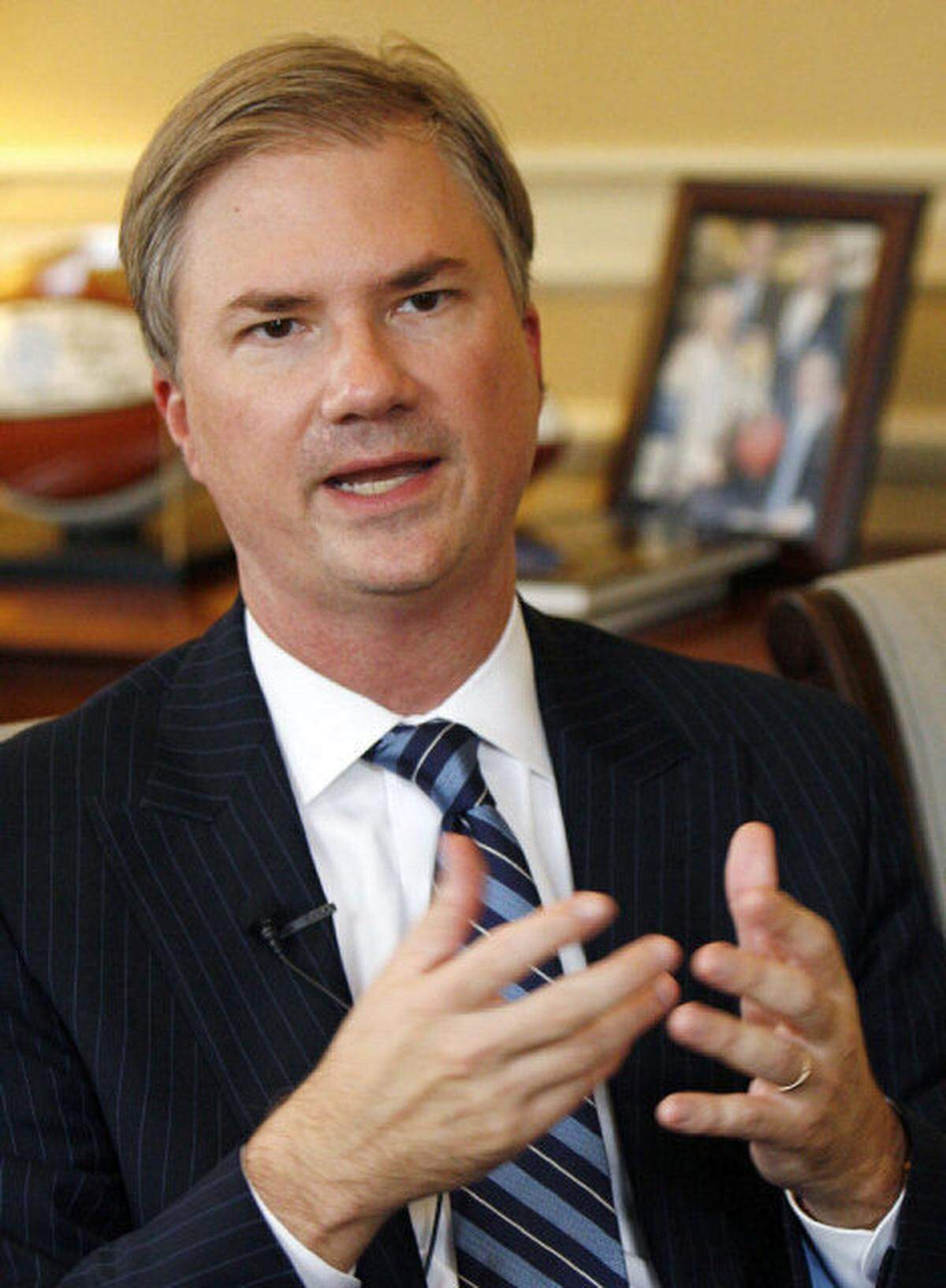
Thorp’s tenure as UNC chancellor
But privately, Thorp said, he struggled.
He could easily manage conversations with colleagues about academic work, but social situations made him uncomfortable. His then-undiagnosed autism made it difficult to know how to end conversations or pick up on nonverbal nuances.
“I ran into the bathroom a lot of times,” he said. “Multiple times a day.... UNC paid for a lot of consultants to try and improve my delivery, all of which were unsuccessful.”
Enrollment surged during Thorp’s tenure, and money for research grants flooded in. But revelations about UNC’s athletic programs — no-show classes for athletes, improper benefits, academic fraud — dominated the Thorp years.
Thorp’s “easy way with people” took little effort in the beginning.
“When the signals got noisier,” he told The N&O, “it got a lot more difficult and taxing.”
He stepped down in 2013 without being asked to do so. Both UNC board members and faculty asked him to stay. Some called him a sacrificial lamb for the abuses of a few. Others described his leaving as the responsibility of the man at the top, regardless of whether he was personally involved.
With the distance of a decade, Thorp said college athletics are more complicated than ever. Asked how he would respond to criticism of UNC football Coach Bill Belichick’s $50 million contract and 2-4 record, Thorp said only Chancellor Lee Roberts and Athletic Director Bubba Cunningham have access to all the information.
“They have my support in whatever they decide,” Thorp said in an email. “But here’s a fun anecdote for you. When I was going through everything, people told me that (former Chancellor) Bill Aycock would have handled things better. So (my wife) Patti went out to Carolina Meadows and asked him what I should do, and he said, ‘I don’t know. If I knew I’d tell him!’ My answer is the same now!”
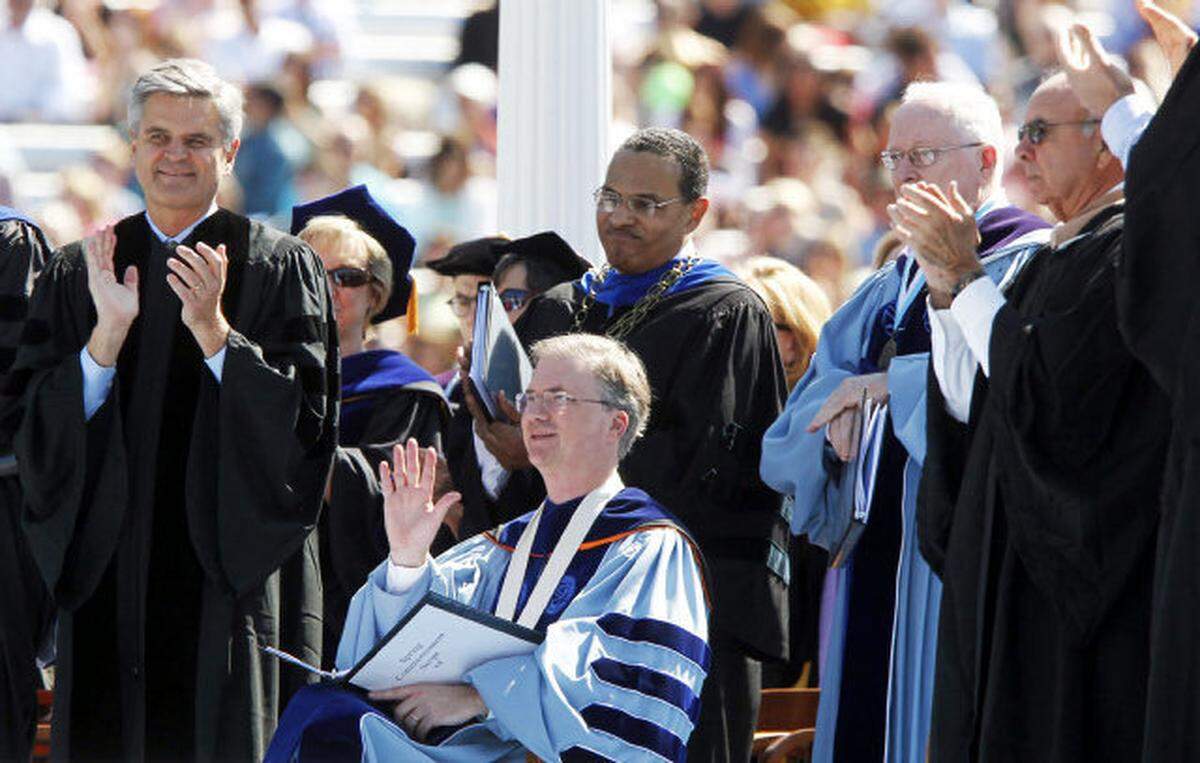
Thorp considers how to use his voice
At Washington University in St. Louis, where he took the job as provost after his time at UNC, Thorp would learn that his lifelong fixations and social difficulty had a name.
Like many academic leaders, Thorp had a psychologist interview the staff that reported to him directly, just to get their impressions.
“I was thriving in that position,” he told The N&O. “She came back and said, ‘A bunch of people are talking about a lot of your social challenges and some of them are wondering if you have Asperger’s,” a term formerly used to describe high-functioning autism.
“What do you think?” he asked.
“If I tell you,” she replied, “that’s your diagnosis.”
He sat on the news for seven years.
Not everybody would want Thorp, described as “high-functioning,” to become a highly visible spokesperson for fear he might overshadow people who need higher levels of care. But others might consider his voice destigmatizing.
Now teaching at George Washington University, Thorp decided his voice can help more than hurt. Coming to autism late in life, he belongs to no particular camp, and by speaking publicly, he aims to educate through both science and first-hand experience.
“People who are dealing with this information are in very vulnerable positions in many ways,” he said. “We should be so careful in the way we talk about this.”
How to see Holden Thorp lecture
Holden Thorp speaks at the 2025 Burnett Seminar Wednesday, Oct. 29, from 1 p.m. to 3:30 p.m. at the Rizzo Center. See registration information here or https://alumni.unc.edu/events/22nd-annual-burnett-seminar-for-academic-achievement.
This story was originally published October 24, 2025 at 5:00 AM.