Enrollment drops in NC’s traditional public schools. How much, why it matters.
AI-generated summary reviewed by our newsroom.
- Enrollment fell in 105 of 115 districts; traditional public schools lost 24,110 students.
- Charter and lab schools gained 4,654 students since fall, drawing families away.
- Declining birth rates and rising school choice linked to enrollment declines.
Enrollment fell in nearly every North Carolina school district this year — including in Wake County and Charlotte-Mecklenburg — continuing a trend of fewer students attending traditional public schools.
Newly released data from the state Department of Public Instruction shows that 105 of the state’s 115 school districts reported enrollment drops this fall compared to last school year. But while fewer students are attending traditional public schools, charter schools continued to see growth.
It’s an ongoing trend that has major ramifications for public schools since they get funding based on how many students they have.
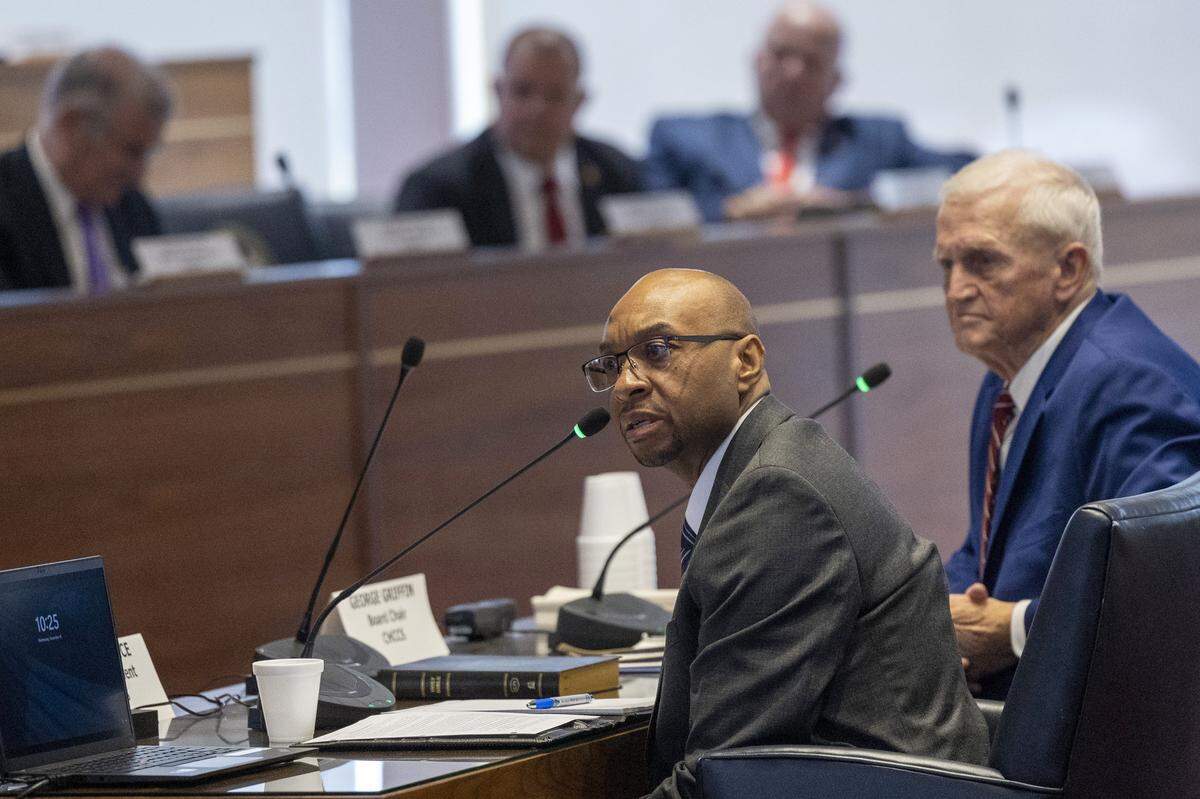
“Our biggest challenge I think we face now is certainly issues tied to declining student enrollment,” Chapel Hill-Carrboro City Schools Superintendent Rodney Trice told a state legislative committee on Wednesday. “That’s one of the primary ways that school districts across North Carolina receive funding to educate their kids.”
The reasons for the decline have been attributed to factors such as declining birth rates, increasing school choice options and dissatisfaction with traditional public schools.
Enrollment down for traditional public schools
DPI released a report this month that determined what level schools will be funded at next school year based on this year’s enrollment. It’s calculated by taking a school’s highest membership total for each grade from the first two months of the school year.
Based on that figure, the state’s public schools saw an overall drop of 19,456 students to 1.51 million.
But when looking at just the state’s 115 school districts, enrollment dropped 24,110 students, or 1.8%. In contrast, charter schools and laboratory schools operated by universities saw a 4,654 student gain, a 3% increase.
The trend is even more pronounced since 2019 before the COVID pandemic upended educational patterns.
Since 2019, enrollment has fallen by 76,175 students, or 5.4%, in traditional public schools. It’s risen by 50,614 students, or 46.6%, in charter schools and lab schools. Over that time span, 102 of the 115 school districts have seen their enrollment decrease.
Statewide figures for this school year aren’t in yet for homeschools and private schools, but both have seen gains since the pandemic.
The state has seen a sharp spike in the number of students receiving private school vouchers since the Opportunity Scholarship program was opened to families of all income levels. While most of the 103,400 voucher recipients were likely attending private schools before this fall, the program encouraged some families to leave public schools this year.
“People want more choices,” Bob Luebke, director of the John Locke Foundation’s Center for Effective Education, said in an interview. “I think that was heard loud and clear during the pandemic. Parents wanted more control over what their kids were learning, how they were learning it, where they were learning it.”
Wake, CMS see decreases
Wake County and Charlotte-Mecklenburg are North Carolina’s two largest school districts.
Wake County planners had projected the school district would grow to reach 162,420 students this school year. Instead, DPI reported Wake’s attendance has dropped 811 students this school year to 160,510 students.
A school district spokesperson said they only learned of the state’s total this week and are reviewing the data. No explanation was given for why the district is nearly 2,000 students below projections.
DPI has Charlotte-Mecklenburg Schools at 139,476 students this fall. It would be the lowest total for the district since 2012.
CMS did not immediately respond to a request for comment.
Drop due to declining birth rates?
A reason often cited by school districts and public school supporters for having fewer students is declining birth rates.
“Birth rates are going down, and so this is a natural trend,” Heather Koons, a spokesperson for Public Schools First NC, said in an interview. “We have ups and downs in terms of school enrollment that align with population increases and decreases.”
But Koons said any declines in enrollment don’t offset how state lawmakers are ”starving our public school system” by not providing enough money to keep up with inflation.
Koons pointed to a new report released this week by the Education Law Center that ranked North Carolina last in the nation in school funding efforts and 50th out of 50 states and the District of Columbia in funding level.
“When you’re not putting effort into something, our legislators should be embarrassed by that,” Koons said. “It says, specifically in the Constitution, that they’re responsible for funding a free public education, and they are not doing that. We, being our legislators, are the worst in the nation.”
Parents leaving due to school dissatisfaction?
During Wednesday’s state legislative committee meeting, Chapel Hill-Carrboro Superintendent Rodney Trice cited declining birth rates as the primary reason for declining elementary school attendance.
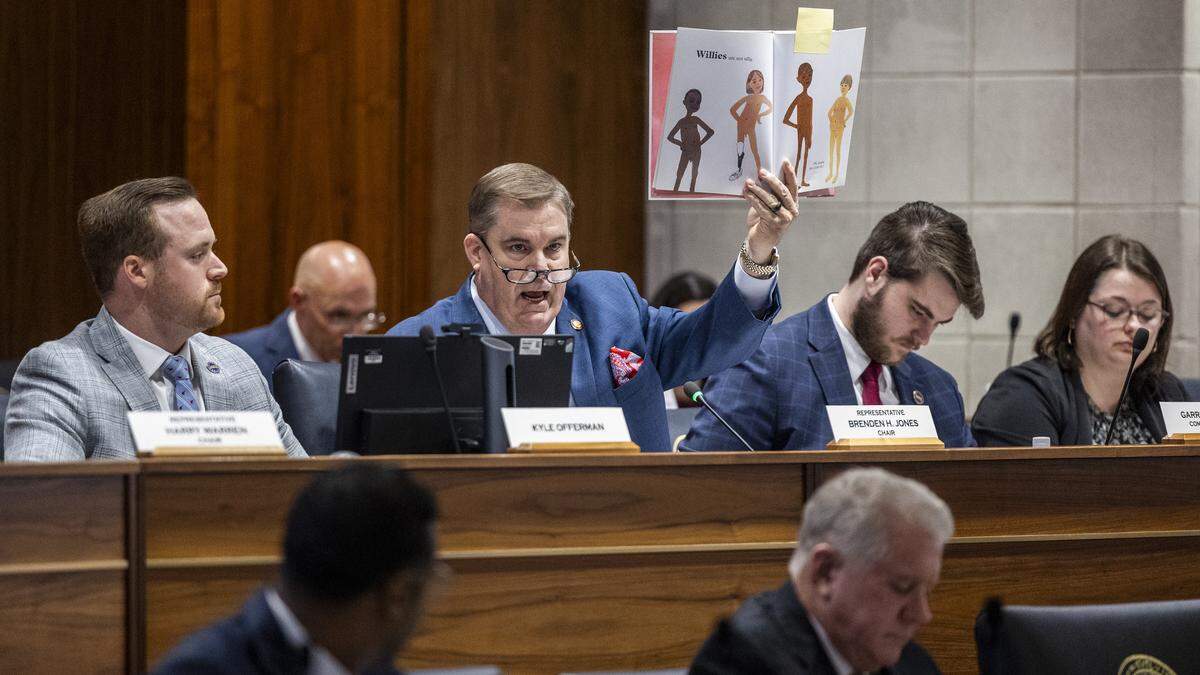
Trice was testifying before lawmakers about the district ‘s response to the Parents’ Bill of Rights law, which requires parental notification of student pronoun changes and bars LGBTQ+ topics from being part of the K-4 curriculum.
Some Republican lawmakers attributed the district’s enrollment drop to what they called efforts to indoctrinate students. They pointed to Chapel Hill’s website, which linked to third-party sites that promoted books such as “Santa’s Husband.”
“I actually have a niece that lives in your district who’s texting me listening to this meeting and you know, she has two small children,” Rep. Charles Miller, a Brunswick County Republican, told Trice. “She just sent me a text that says there’s no way I can put them in this system. We’re going to have to find an alternative.”
Trice told lawmakers he wouldn’t attribute declining enrollment to any of the complaints raised at the hearing.
But Luebke of the Locke Foundation said parental dissatisfaction is real, pointing to surveys such as a Gallup poll released in September that found a record-low 35% of Americans are satisfied with the quality of K-12 education.
“A lot of times it’s hard for schools to navigate those (cultural issues) and keep everybody happy,” Luebke said. “When they’re not, people protest and people leave. Right now it’s one of times when dissatisfaction is real.”