Wake approves plan to rebuild Ligon Middle School. Why some people are not happy
AI-generated summary reviewed by our newsroom.
- Board unanimously approves $121M plan to build on the ball fields.
- Alumni seek hilltop preservation; board directed a legacy tribute.
- District prioritized budget, timeline and minimal disruption over full preservation.
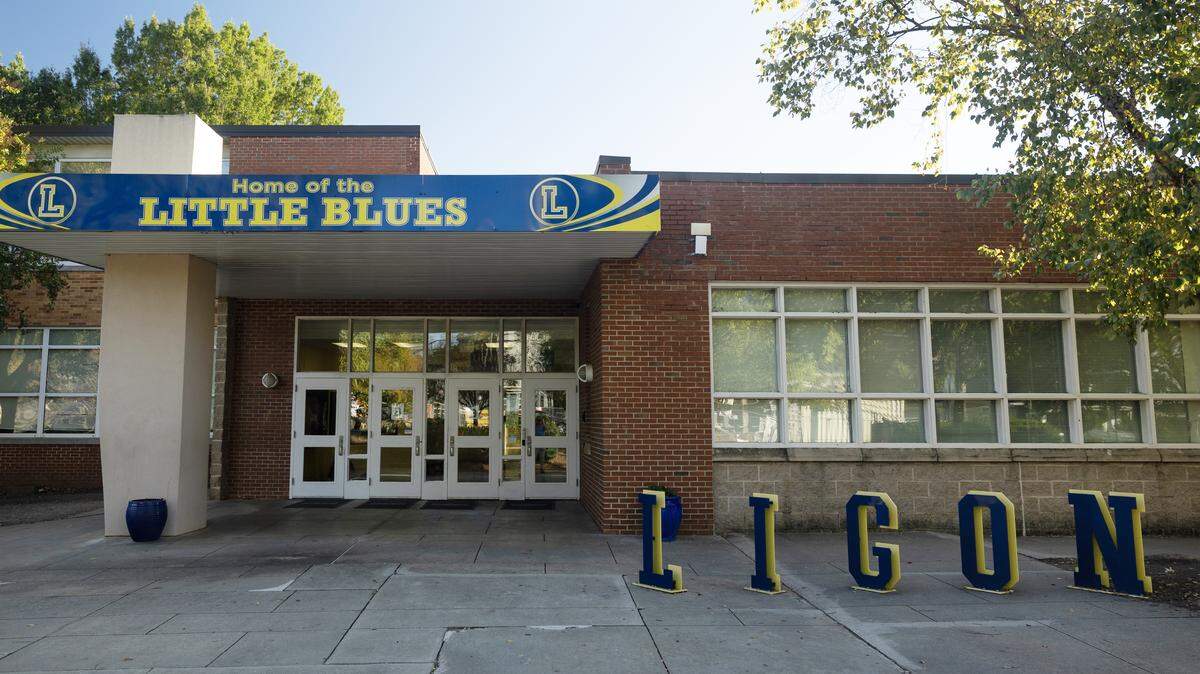
Ligon Middle School’s historic building will be demolished, but Wake County school leaders say they will try to preserve its legacy as a former segregated Black high school.
The Wake County school board unanimously approved Tuesday a $121 million plan backed by Ligon’s families and staff to build a new school on the site of the current ball fields in Raleigh. Alumni from when Ligon was a Black high school want to either renovate the historic building or rebuild on the site of the 73-year-old structure to keep it on the hill at the top of the property.
As a compromise, the board also directed staff on Tuesday to include in the design plans some sort of legacy tribute to the former high school on the top of the hill. Superintendent Robert Taylor said a Ligon Legacy Committee will be formed to help preserve Ligon’s history, including making recommendations for the legacy tribute.
“I can tell you as a student of history and a student of segregated schools, I know the importance,” Taylor said. “I think this is a unique opportunity we have to reflect that legacy that many communities may not do to that degree But this is one that I think stands out in an enormous way, and as the chair said, we have to get it right,”
Before the legacy tribute was included, school board member Toshiba Rice said she couldn’t support the option that would no longer have Ligon at the top of the hill. Rice, whose district includes Ligon, will serve on the new Ligon Legacy Committee along with other elected officials from Southeast Raleigh.
“A new building does not have to mean a lost legacy,” Rice said after the board vote. “I will continue to advocate that the legacy of J.W. Ligon lives on, ensuring every student who walks through those doors understands who J.W. Ligon was and the powerful legacy of the alumni who helped shape our community.”
Funding for the work of Ligon will be included in a school construction bond referendum that the Wake County Board of Commissioners are expected to put on the November ballot.
Three options for Ligon
Ligon High School opened in 1953 off Lenoir Street as Raleigh’s Black high school during Jim Crow segregation. The school is named after John W. Ligon, a respected educator, minister and important leader in Raleigh’s Black history.
In 1971, Ligon was converted to a junior high school as part of an effort to integrate the Raleigh City Schools. It’s now a Wake County magnet school serving middle school students from across the district.
School administrators presented three options for renovating Ligon:
- In option 1, the main building would be renovated at a cost of $102 million. Students would relocate to a temporary mobile campus on the site of the ballfields. The project would take about four years.
- In option 2, the main building would be torn down and replaced by a new one built on its site at a cost of $147 million. Students would relocate to a temporary mobile campus on the site of the ballfields. The project would take about five years.
- In option 3, a new school is built on the site of the ballfields at a cost of $121 million. Students would stay in the main building during the renovations until it’s demolished to make way for new ballfields. The work would take about three years.
On Tuesday, Taylor recommended option 3, saying it’s within budget, will have the least disruptive impact on education and will take the shortest amount of time to complete.
“This option 3 we see from a budget perspective yields the best for the school district in terms of our use of taxpayers dollars,” Taylor said.
Alumni want Ligon to stay at the ‘top of the hill’
Members of the J.W. Ligon High School Alumni Association have spoken at multiple school board and community meetings to lobby for the preservation of the historic main building. They’ve called for Wake to use either option 1 or option 2 because both choices would keep a school building at the top of the hill.
Option 3 would have the main building located at the bottom of the hill near the Martin Luther King Jr. Blvd. side of the property.
Carmen Wimberley Cauthen attended Broughton High School and not Ligon. But Wimberley Cauthen told the school board on Tuesday that it can do for Ligon what it did for historic schools such as Broughton where the building was saved during renovations.
“We can make this work,” Wimberley Cauthen told the board. “Ligon should be no different.”
Keeping Ligon at the top of the hill will keep the school visible, according to Carol Gartrell, an alumna of the school.
“We want to make sure that we continue to make our presence felt because we are still working to keep Ligon at the top of the hill, not the bottom of the hill in the back of the school,” Carol Gartrell, an alumna of the school, said at the Nov. 4 board meeting. “History is valuable.”
PTA backs tearing down main building
Ligon’s PTA backed option 3, saying it’s the best option for the students because they’ll be able to stay in the main building during construction instead of being in mobile classrooms. That point was echoed by some speakers during Tuesday’s school board meeting.
“Preserving that building puts at jeopardy the academic programming,” Algernon Henry, a Ligon parent, told the board. “It puts at jeopardy a whole cohort of kids would be displaced.”
Kelly Wood, a member of the board of Ligon’s PTA, told the school board on Feb. 17 that the main building can’t meet the needs of future generations even with the proposed upgrades in option 1. Wood called option 2 a “misuse of public resources” because of its higher cost compared to the other options.
“We urge the Wake County Board of Education to reject the excessive costs of option two and educational compromises of option one and instead vote for option three,” Wood said. “This plan strikes the necessary balance between remembering, upholding, and honoring our past and building for our future, ensuring that Ligon Magnet School Middle School remains a pillar.”
Speakers have said Ligon’s history can be preserved in option 3 by incorporating it into the design of the new building and giving the students the best possible facility.
“Ligon High School is a beacon of light not only to the community but to the state, and we can preserve that legacy,” retired Wake principal Bobby Allen told the board on Tuesday. “But remember legacy is not brick and mortar. Legacy is what happens in the classroom.”
Why not more options?
One of the reasons given by supporters of option 3 is it would avoid spending $26 million to create a temporary mobile campus on Ligon’s property during the construction. School administrators said there weren’t options inside the Raleigh Beltline for relocating 1,000 students.
Taylor said they had explored alternatives such as temporarily relocating Ligon students to St. Augustine’s University. But Taylor said that option wasn’t feasible.
There would have been security issues asking middle school students to walk the length of St. Aug’s campus to change classes, according to Glenn Carrozza, assistant superintendent of school choice, planning and assignment.
Before the vote, board member Toshiba Rice urged the district to compromise like the alumni did in supporting option 2 even if it means demolishing the main building. She suggested going with option 2 and finding a way to make that more expensive budget option work.
“Ligons of the world have always had to compromise their choices,” Rice said. “Can we build a school on the top of the hill, manage the cost and narrow it down and give the community what they’re asking for?”
Coming up with the $26 million to pay for the mobile campus could require delaying work on other projects such as renovations at Cary High School, according to Mark Strickland, chief of facilities and operations.
School board vice chair Sam Hershey said he can’t support delaying work on other projects. Hershey also pointed back to how they’re going to ask voters to approve a school bond this fall.
“How do I say that we’re going to spend $26 extra million on something that will be there for three years and is going away?” said Hershey, who later came up with adding the legacy tribute to the design plans. “By the way, please pass this huge bond because I have 25 other schools.”
This story was originally published March 3, 2026 at 9:03 PM.