What does DEI repeal really mean at NC State? A Pride Center firing raises fears
AI-generated summary reviewed by our newsroom.
- NC State realigned four centers to focus programming on all students for compliance.
- Jae Edwards was fired shortly after a video of his remarks was published.
- Attendance rose 40% and center utilization rose 68% between fall 2024 and fall 2025.
For staff at NC State’s identity-based student centers, the past two years have meant learning a new language: what words you can say, what events you can advertise, which chapters of a book you’re allowed to assign for book club.
The university managed to keep its four centers — the Women’s Center, the Pride Center, Multicultural Student Affairs, and the African American Cultural Center — alive after the UNC System banned diversity initiatives in 2024.
But for the staff navigating how to support diverse students, the line between compliance and termination can be invisible — until it’s been crossed.
In the wake of UNC System policy changes that outlawed initiatives related to diversity, equity and inclusion in 2024, NC State ended its support for certain programs, including the Council on the Status of Women, the Black Students’ Board, and residential spaces dedicated to certain identity groups, like Black men or Native American students.
In comparison to other UNC campuses, though, NC State took a minimalist approach, reorganizing certain programs rather than throwing them out all together. The names of these centers date back to an earlier time in higher education, when identity-based initiatives were not only permitted, but often enthusiastically encouraged.
“These centers have to shift from identity-based advocacy to a framework where they’re really promoting individual success and viewpoint neutrality,” explained Emelyn dela Peña, president of the National Association of Diversity Officers in Higher Education. “Legally, the centers can’t belong to any one group.”
NC State, by all accounts, remains in compliance with system policy. But it’s this very compliance that sometimes puts staff who work in these surviving programs in a precarious and contradictory position.
See the recent firing of Jae Edwards, now-former assistant director of the Pride Center, who was abruptly dismissed from NC State for admitting on camera that he wants to “have events and programs” that “uplift and celebrate our students,” even if that requires being “a little more careful” and “finding ways around” certain policy restrictions.
A look at the school’s strategy reveals that not all identity-driven programming is off limits for North Carolina’s public universities, but that any attempt to support diverse groups of students is riddled with potential hazards.
Success for all students
NC State chose not to close identity-based centers, as many institutions did, but to realign them, moving them out of the now-dissolved Office for Institutional Equity and Diversity and into the Division of Academic and Student Affairs.
Now, instead of serving a particular group of students — like women, or Black people, or LGBTQ+ people — each center must be focused on the success of all students, regardless of whether they are in the identity group named in the title of the center.
That means that the Women’s Center must offer programming that is open to men. The Pride Center must offer services that straight students could make use of or enjoy, such as dietician drop-in hours. The Multicultural Student and African American Cultural centers must have non-race-related programming. Students can attend the Multicultural Center’s events for students with intellectual disabilities, or the African American Center’s sexual education discussions.
Leaders of these centers say the centers have always been open to all students, so the new alignment is not a problem.
“The best thing about [the centers] is that it’s about cultural exchange and learning about different people,” Edwards told The N&O. “They have always invited all people to their events, because they’re welcome to anybody.”
Now, that invitation ensures compliance with the school’s Equality Policy. And for Peña, such inclusivity is actually essential. Dismantling anti-Black racism must include the presence of white people, she reasons, just as dismantling sexism must include the presence of men.
NC State is now bound by “institutional neutrality” as a result of state law. That means “no employing subdivision or employment position within the University shall be organized ... to provide training or consulting services regarding: matters of contemporary political debate or social action...; any prescribed ‘view of social policy’ or ‘political controversies of the day,’” according to UNC System policy.
“Non-discrimination, institutional neutrality, free expression, and academic freedom are all mutually reinforcing concepts and values,” UNC System president Peter Hans said when the system first gutted DEI programs in 2024. “We are here to serve all, not just those who agree with us. When these principles are faithfully held, they allow diversity in all forms to thrive.”
Peña agrees.
“Neutrality is not neglect,” she said. “Institutional neutrality doesn’t mean that the university becomes indifferent to student success. ... It means that the university has to remain a neutral forum for all viewpoints, while actively providing the scaffolding, the tutoring, the mentorship, the community environment, space, and support that all ties into students from every background.”
At an NC State Board of Trustees meeting in February, vice chancellor and dean for student affairs Doneka Scott updated the trustees on the university’s compliance and provided data on students’ usage of the centers.
“When the student centers were realigned, there were a number of substantial changes across all four of the units, significantly altering the day-to-day work of their staff, in addition to the job descriptions for all the staff in those four centers, as well as the senior director and the associate director,” Scott said. “They were all updated in all positions to focus on student success.”
Through a public records request, The News & Observer obtained employee conduct guides for staff in Multicultural Student Affairs, last updated in March. The guides ask employees to “affirm and celebrate our students’ rich cultural identities and lived experiences” but prohibits the advancement of “political, ideological, or social agendas.”
If staff have questions about where the line is, “they must consult with the MSA Director before proceeding.” The policy also prohibits them from talking to members of the media before clearing it with the director — that is, if they’re aware they’re speaking with the media.
Scott reported to the trustees that student attendance of center programming increased by 40% between the fall 2024 and fall 2025 semesters. The Pride Center almost doubled its offerings, Scott said. Center utilization, which refers to how often students are hanging out and using resources in a center, increased by 68%. Student senator Judson Avery and Faculty Senate chair Walter Robinson both say they see the centers as vital pillars of support in the community — even if they are more restricted and cautious.
“We’re pleased that all students are welcome to participate in the centers’ programming,” wrote NC State spokesperson Lauren Barker.
But Edwards told The N&O that the reality is not always what it seems.
‘Language is censored at NC State’
Edwards, the Pride Center assistant director, was fired by the university in February after activist group Accuracy in Media surreptitiously recorded him and posted the interaction. In the video, Edwards says things like: “We’re still able to do the things that we want to do, have these events and programs. We have to be a little more careful.”
Accuracy in Media has posted videos, recorded at universities across North Carolina and in other states, that it says show evidence of DEI programs on campuses where such programming is restricted. The group describes itself as using “investigative journalism and citizen-led activism to expose government corruption, public policy failures, and radical activists.”
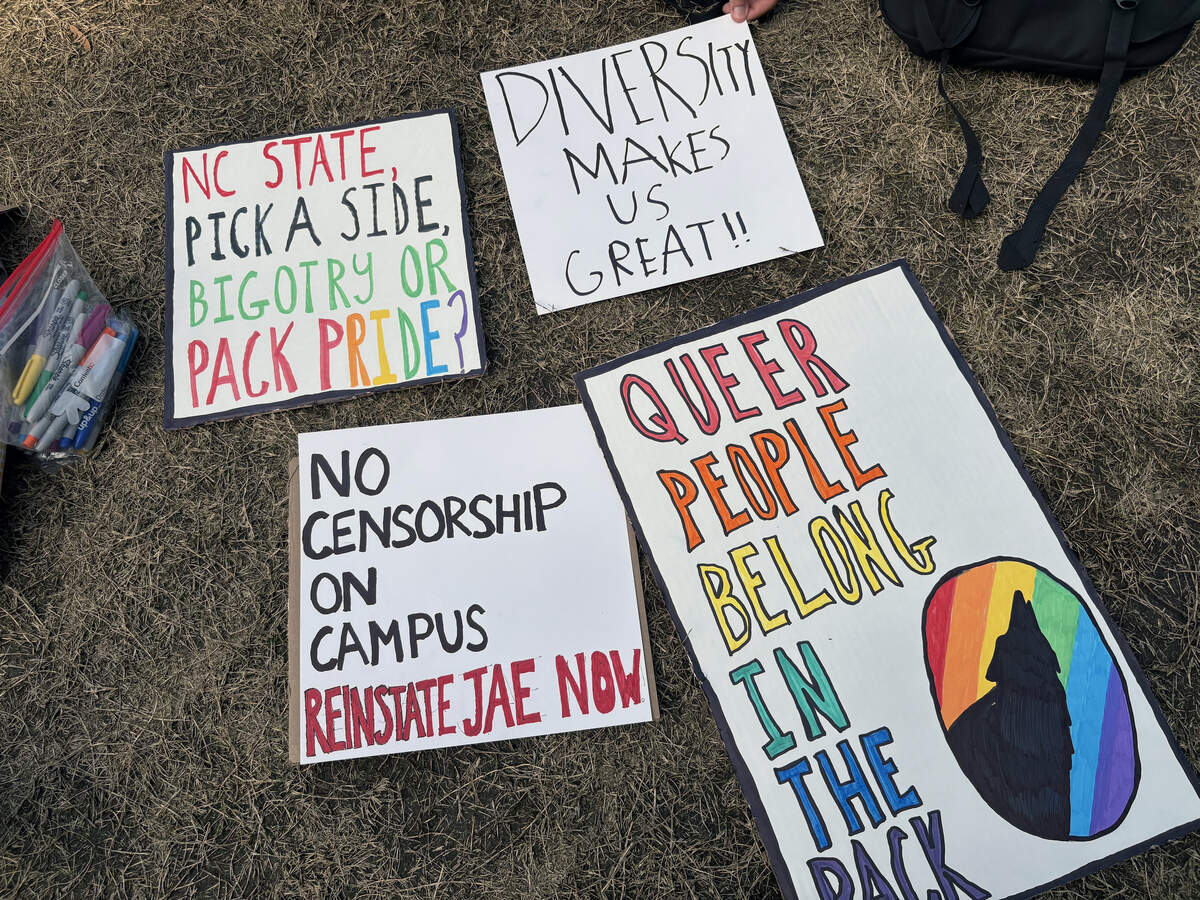
In the months since his firing, Edwards has talked about the impact of this incident on his life. Students and faculty have shown their support for him through rallies and resolutions calling for his reinstatement.
For Edwards, though, his firing is a symptom of a larger problem at NC State.
“Language is straight-up censored,” Edwards said. “No doubt, no ifs, ands or buts. The policies restricted what we can say. We couldn’t say the word ‘advocacy.’ We couldn’t say we advocate for students.”
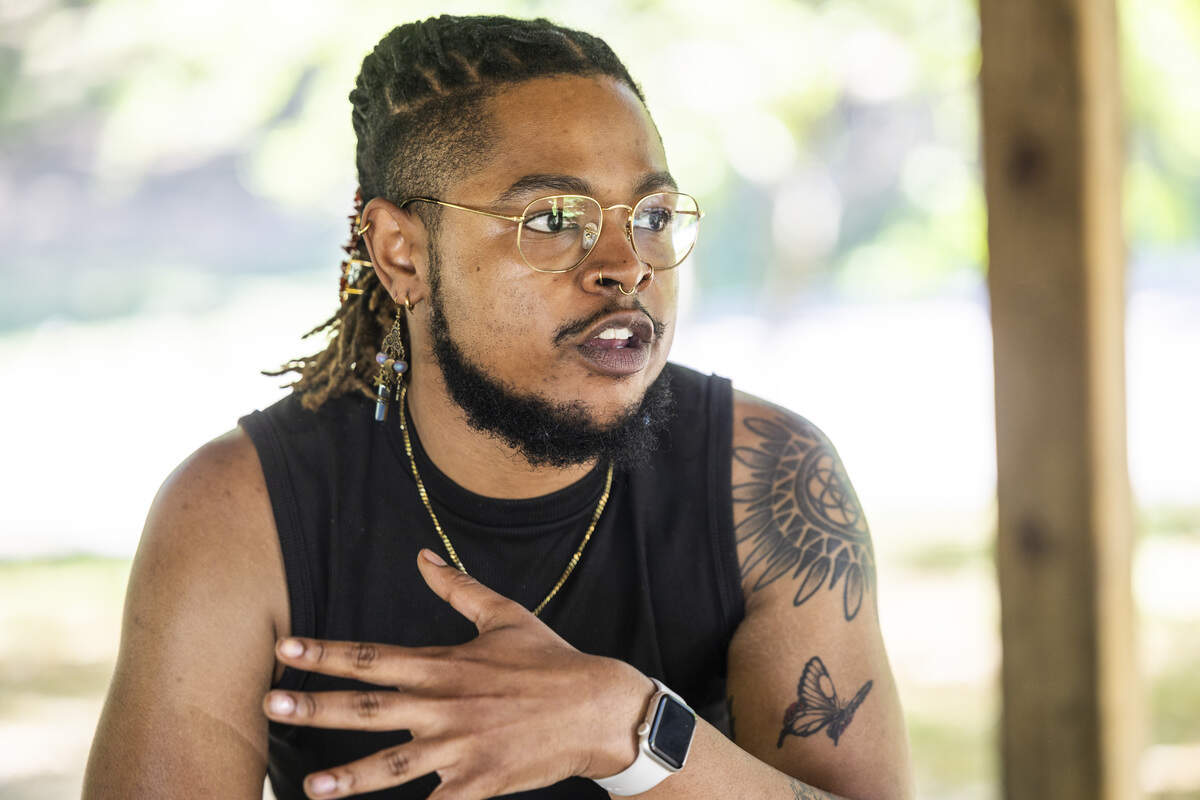
During his final year at NC State, Edwards helped lead a book club in which students read a book by Pauli Murray, an American civil rights activist raised in Durham.
“We weren’t allowed to read all the chapters or advertise all the chapters,” Edwards said. “We had to pick and choose the chapters that did not disparage any straight people. If Pauli Murray was talking about being marginalized or going through identity-based marginalization, we cannot read that part or talk about that part.”
Barker, the NC State spokesperson, said her office doesn’t have enough information to confirm or deny this.
Edwards says the repeal of DEI policies added substantially to his workload. The betrayal he feels comes primarily from having closely followed the regulations, he said, even when it came with additional work.
Edwards was planning NC State’s celebration of “lavender graduation,” a decades-old nationwide celebration of graduating LGBTQ+ students. After he had printed banners and programs, he said, NC State told him to throw it all away, and redo it under the name “lavender celebration.” The name of the event could not suggest that they were actually giving out degrees, Edwards said.
For Edwards, the name change from “graduation” to “celebration” isn’t simply switching consonants and vowels: It’s a signifier of something deeper.
“Changing the names is a slippery slope,” Edwards said. “First you change the name, then you change the goals, then you change the program, then you change the people.”
He felt stuck in a constant cycle of wondering whether he needs to be worried about the next event, the next proposal, the next student who needs help.
“I kind of compare it to being in a toxic relationship,” he said. “You stay in it to support the students, but you’re putting up with things you would normally not put up with.
“I’m putting in eight-page program planning forms. I’m having everything passed by university legal. We’re giving data and numbers to the UNC Board of Governors to prove that the centers are being used in the right way, that we’re not doing DEI work,” Edwards said.
But it wasn’t enough.
‘Scared to talk about the fact that they exist’
Edwards was fired, and his life has been turned upside down. NC State cited no reason for Edwards’ firing beyond the elimination of his position, which precluded the opportunity for a grievance procedure. He wasn’t formally off-boarded or given an exit interview, Edwards said.
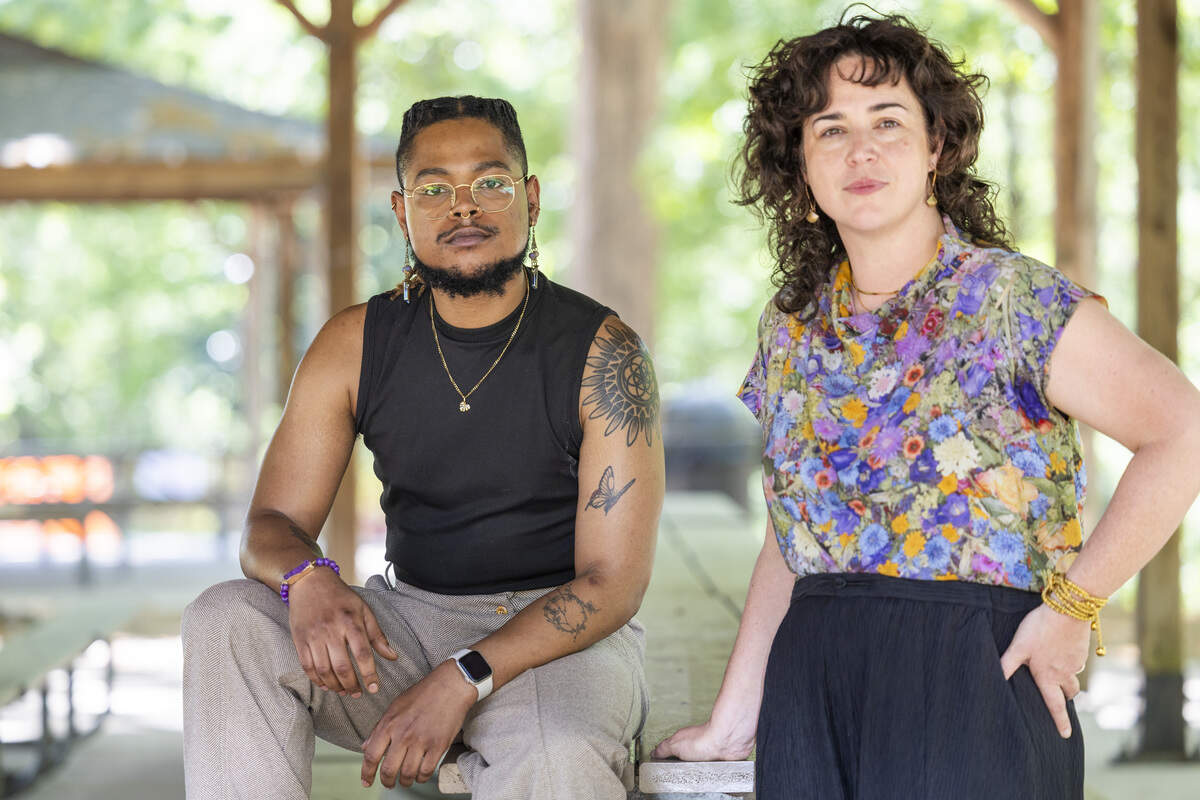
He has hired a lawyer, Melanie Stratton Lopez of Charlotte-based Van Kampen Law. She contends NC State violated Edwards’ First Amendment and due process rights.
“My office has reached out to NC State to try to have a conversation so Jae could be heard, and to date, they have ignored us,” Lopez said. “North Carolina has constitutional protections for public employees related to due process rights and their right to speech. We would allege that those rights weren’t respected.”
Students who once relied on Edwards for support feel the fear, too.
“[Queer people and organizations] are scared to even talk about the fact that they exist,” said Les Kramer, a 21-year-old student leader at NC State. “It goes beyond just an administrative thing. It becomes very personal. ... It just always feels like you have to look over your shoulder just to talk about the fact that you exist.”
Some students and faculty members feel that by firing Edwards, the administration condoned the actions of Accuracy in Media through what they see as a capitulation to the organization’s desired outcome.
“They’re really just opening the door to more harassment and censorship,” said Mickey Brigham, a 26-year-old graduate student in the College of Natural Resources.
The university’s Student Senate passed a resolution this spring calling for a transparent explanation of why Edwards was fired and procedural protections from “same-day or next-day” firings driven by external pressure. Members of the Faculty Senate passed their own resolution in support of the students’.
“Edwards was separated from his position less than 24 hours after the video’s publication, without any public indication that the university conducted a substantive investigation, interviewed Edwards, or requested the full, unedited footage from Accuracy in Media,” the resolution reads. “... Personnel decisions affecting the livelihoods of university employees must not be made at the direction of external organizations whose methods would not meet the ethical standards of NC State’s own academic programs or student publications.”
NC State declined to answer questions about Edwards and the resolutions and said that North Carolina privacy laws prevent the university from commenting on personnel matters.
Faculty and students step up
For Avery, the student senator in the College of Engineering, the problem goes beyond Edwards. He said he has seen student organizations that once had buy-in from the university left to wither, and other identity-based initiatives shut down entirely.
But in that environment, he sees an increasingly important role for student government, which is not bound by the same requirements for institutional neutrality as the university.
NC State says institutional neutrality applies to university-sponsored events, university-invited speakers, university contracts with third parties, university student centers, groups, resources, and statements, but not to student organizations, subjects taught as part of curriculum, or faculty statements about their research.
“We are not just accepting this is the way it's going to be, and that our students are just going to be feeling this kind of fear,” Avery said. “It's something that we're actually trying to work against. It's been difficult for a lot of students. I think a lot of students have been really disheartened by not hearing much from the university, just because the university is so bound by institutional neutrality. And so we're really trying to fill that gap.”
Faculty Senate chair Robinson said that NC State is mostly white, cisgender, and upper middle class, and enrolling there as someone who doesn’t fit into those categories takes courage. He believes the centers succeed in fostering that courage. But in the wake of Edwards’ firing, faculty leaders began to have conversations about the centers’ future.
“A lot of faculty felt the student centers are threatened, [or saw this as] a first step towards eliminating them,” Robinson said. “So far, that hasn’t happened, thankfully. But is it chilling their work? Because people who work in these centers feel the jobs are at risk. No one does their job best from a defensive crouch.”
This story was originally published April 29, 2026 at 5:00 AM.