Chapel Hill-Carrboro may now close just 1 school. A look at the criteria.
AI-generated summary reviewed by our newsroom.
- Deputy superintendent said he would recommend closing one school.
- Data shows Ephesus and Glenwood reaching about 100% capacity by 2036.
- Closing 1 school could save about $1.7 million a year plus $10-15 million in maintenance.
Update: The May 21 public hearing will be held at Smith Middle School.
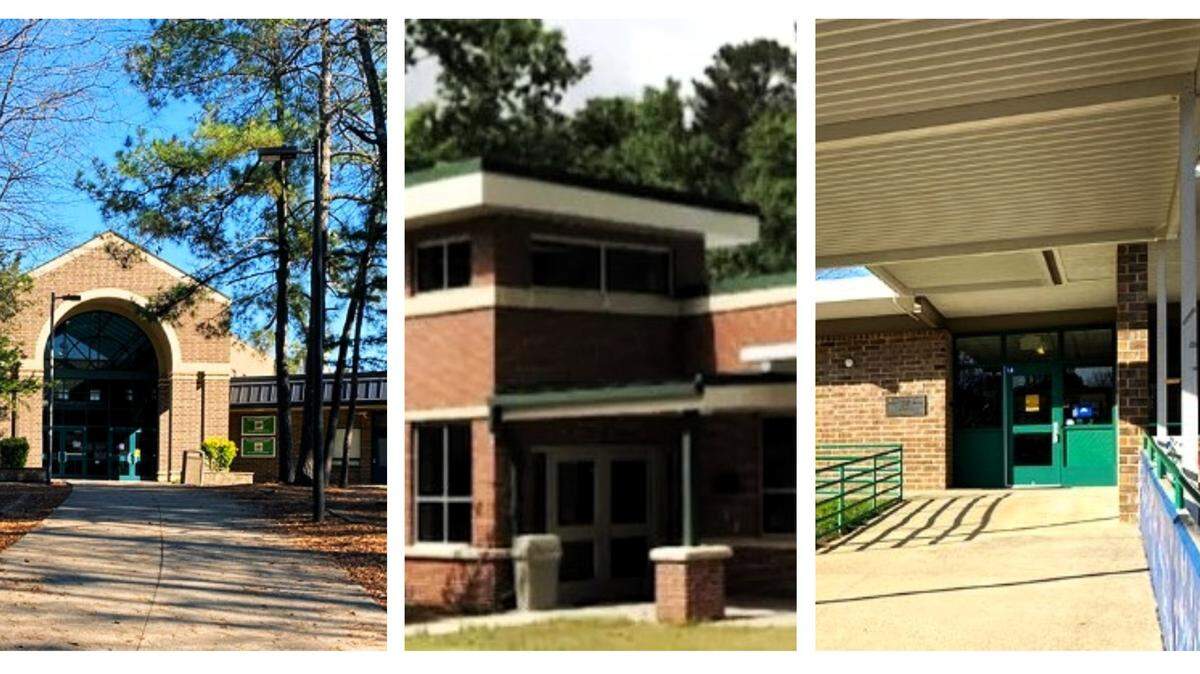
Families and staff at three Chapel Hill-Carrboro schools facing possible closure got some good news Thursday when district staff said the board might only have to close one school.
Since January, hundreds of people have filled CHCCS school board meetings to advocate for Ephesus, Glenwood and Seawell elementary schools as the board wrestled with closing two because of tight budgets and declining enrollment.
But recent enrollment data, which incorporates pending and future housing construction, painted a less dire picture. It shows Ephesus and Glenwood at about 100% of capacity by 2036, and Seawell lagging behind at roughly 81% capacity.
Al Ciarochi, deputy superintendent of operations, said he would recommend closing one school. After redistricting, that could put schools districtwide closer to 87% capacity, leaving the district with flexibility without overcorrecting, he said.
“I do not recommend that you try to pass the closure of two schools,” Ciarochi said. “There are districts that have to do that, when they cannot make a payroll for people, and they have to do it. I don’t believe that we’re in that position.”
The board has tentatively scheduled a public hearing for May 21, although some speakers Thursday pushed to move it to a larger venue or change the date. The board could make a decision June 4.
What about Glenwood Elementary?
Board Chair Riza Jenkins doesn’t want to create too much disruption in the community. After Ciarochi’s presentation, she said it can be minimized by limiting the number of students who move and the distance they have to travel to a new school.
Board member Rani Dasi agreed avoiding major disruption is key. She suggested looking more closely at Glenwood for closure, while preserving its popular world and Mandarin language magnet programs.
That would also limit transportation impacts, since few Glenwood students live in the neighborhood.
Moving both language programs to a new school might force that school’s students to move somewhere else, Ciarochi said. The other option is splitting up the programs and moving them and roughly 200 students in each program to different schools.
Estes Hills, Northside and Rashkis have the most capacity, he said, but there’s a caveat.
“When that time comes, there’s going to have to be a lot of work that’s done to preserve the culture of that school, but also to allow the school to embrace cultures of other schools that are kind of blending in with it,” Ciarochi said. “You want to try to preserve the best of both.”
The discussion about district programs “is going to be more important,” Board member George Griffin said.
“What’s our vision of where are we going in the next six to 12 months with our redistricting and our planning? Can we have some new programs? Can people start to offer some things into the discussion about what are we going to look like a year and a half from now when we redistrict ... our schools?” he asked.

Why is CHCCS closing schools?
The district needs to find several million dollars in savings to make up for fewer local and state dollars and rising costs. It also needs to ensure schools operate near capacity, because building costs are the same regardless of enrollment.
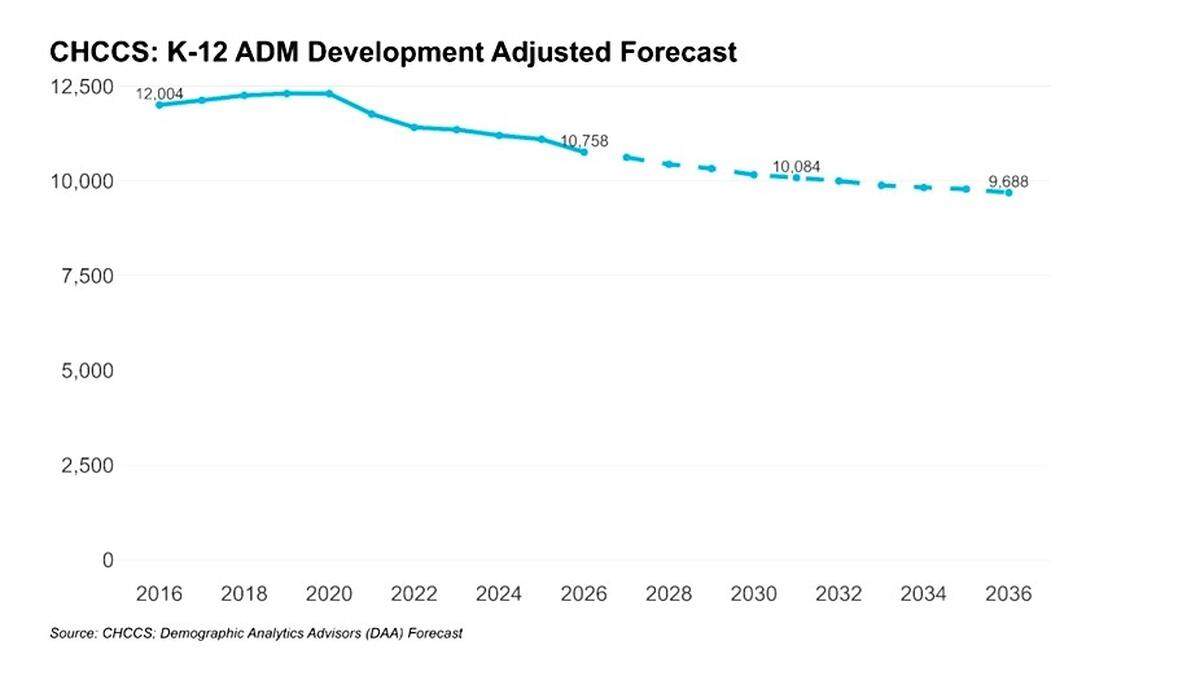
That’s the biggest problem, officials said. Enrollment is down 1,547 students since the 2020-21 school year, largely in elementary grades. The district now has just over 11,114 students and could lose another 277 next year.
CHCCS already expects a $2.43 million state budget cut next year, because funding is allocated per student. Orange County’s budget has proposed a $1.55 million increase — about $5 million less than the district wanted.
Every empty student seat costs the district $17,286.96 in local, state and federal money in 2025, according to N.C. Department of Public Instruction data.
Positions have already been cut, starting with over 100 in 2024 and 19 more in April. Next year’s budget cuts 25 teachers and teacher assistants from the elementary and high schools.
Closing one school could save the district $1.7 million a year, plus $10 million to $15 million in maintenance costs, Ciarochi has said.
Why is CHCCS enrollment falling?
It’s complicated, because some anticipated kindergarten students never enroll, while others leave the district with their families or seek other options in private, charter and home schools.
Nathan Dollar, with Carolina Demography, also noted declining birth rates and higher Chapel Hill and Carrboro housing costs. Chapel Hill’s Town Council has been pushing for more three- and four-bedroom condos and townhomes to attract families.
Data currently shows enrollment leveling off by 2035, leaving the district with roughly 9,500 students.
What did school closure criteria show?
Staff reviewed several reports and studies to come up with its findings. Here’s how the schools stacked up:
- Geographic conditions: Geographic and environmental factors, such as wetlands and flood zones. No significant issues.
- Anticipated enrollment changes: Data shows Ephesus could grow steadily through 2036. Glenwood could also see growth in 2030-31, but it’s limited. Seawell shows a significant decline before stabilizing in later years.
- Hardship for students: Ephesus and Seawell have more economically disadvantaged and Black and Hispanic students. Glenwood has more Asian and multiracial students, the district’s popular language and STEAM programs, and the fewest students with disabilities. Seawell also has more Asian students and multi-language learners.
- Near middle or high schools: Only Seawell is adjacent to both a middle and a high school, and older students often help younger students or participate in activities.
- Transportation costs: Glenwood has the highest number of students using transportation now, which could continue.
- Site and educational adequacy: The schools are roughly the same size, have about two-thirds of the rooms needed, and are generally well-equipped. Glenwood, built in 1952, is the oldest and has more appropriately sized rooms.
- Capital spending: All three schools completed $14 million to $16 million in projects last year, and Seawell had over $2 million in renovations following a 2024 fire. All three schools could need millions in future maintenance and repairs.
This story was originally published May 8, 2026 at 8:11 AM.