NC could see high school graduation rate drop due to immigration enforcement
AI-generated summary reviewed by our newsroom.
- North Carolina leaders warned ICE enforcement could reduce Hispanic student attendance.
- State Superintendent Mo Green said officials will wait for data before altering reports.
- Wake County reported a drop of 3,000 English Learner students this school year.
North Carolina education leaders are warning that the state’s high school graduation rate could drop this year amid the ongoing federal immigration enforcement actions.
North Carolina saw a record 87.7% high school graduation rate last school year. But on Wednesday, state leaders discussed the possibility that the numbers could drop this year due to fewer Hispanic students attending school.
“Many of us have heard from many of our counties that there has been some difficulty with some of our particularly Latino students that attend schools this year as a result of various other activities that have occurred,” said Alan Duncan, vice chair of the State Board of Education. “So there is some expectation, some fronts, that the graduation rate could be affected by that.”
State Superintendent Mo Green replied that they’ve had discussions about how to report the graduation rate if it drops. For now, he said they’re waiting to see what the data shows.
The state is expected to report the latest high school graduation rate this summer when state test results for this school year are released.
Attendance dropped during immigration actions
The Trump administration has increased federal immigration enforcement actions since taking office in January 2025. The nation has seen a drop in foreign-born migration since then.

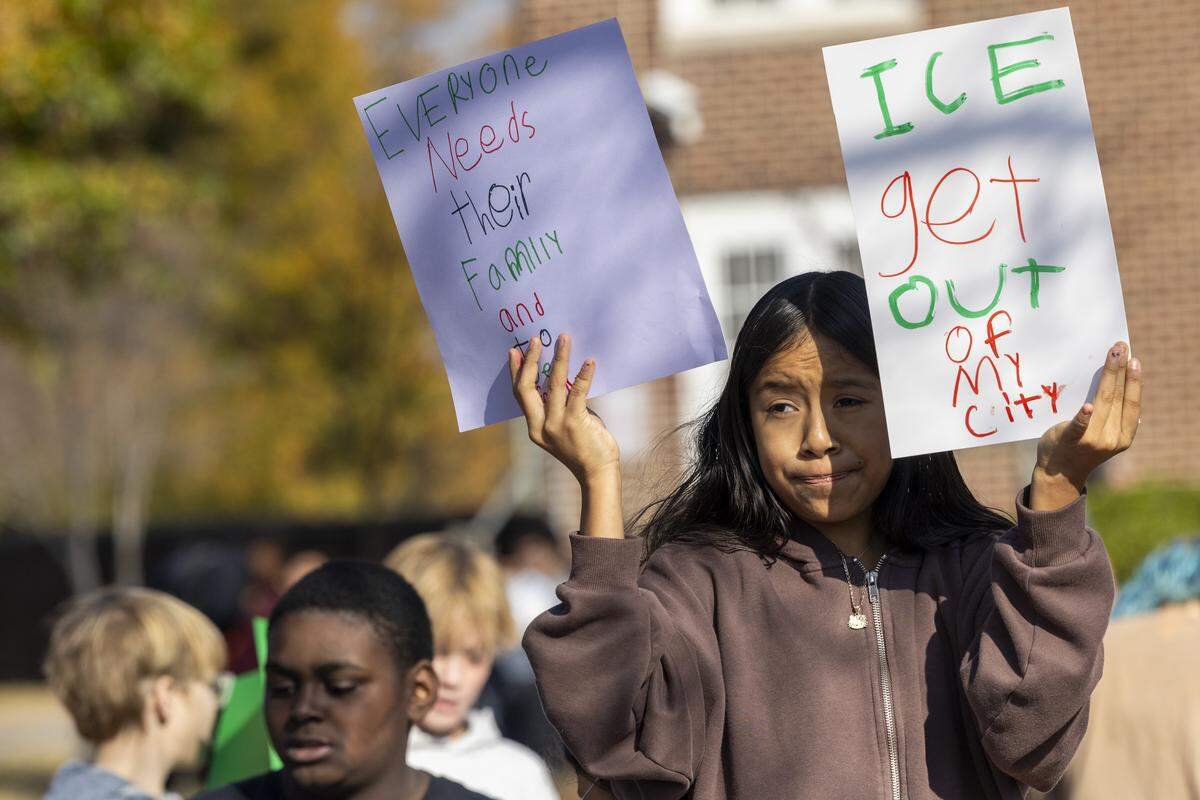
Attendance dropped sharply in several North Carolina school districts last fall when federal immigration agents began an operation in Charlotte that moved to the Triangle. At one point, Durham Public Schools saw attendance drop by 30% during the enforcement surge.
School districts tried to reassure families that schools would be a safe space for their students. The U.S. Supreme Court ruled in 1982 that public schools can’t deny admission to students based on their immigration status.
But the Wake County school system attributes part of its enrollment drop this school year to federal immigration policies.
This school year, Wake County’s English Language Learner population dropped by 3,000 students to 18,476 — the first significant decline in a decade. The statewide ELL headcount dropped by 15,513 students.
NC could put asterisk by graduation rate numbers
Earlier this year, Maryland reported a drop in that state’s graduation rate. The biggest drops were among multilingual students and Hispanic students.
On Wednesday, North Carolina education leaders discussed the state’s progress toward its goal of raising the graduation rate to 92% by 2030. In the short-term at least, the graduation rate could drop this year.
Green told the state board they’ve had talks within the state Department of Public Instruction and with local school superintendents about the graduation rate potentially dropping this year.
“We have decided at this moment to see what the results actually are before we go one way or the other,” Green said. “We’ve talked about things like putting an asterisk next to information if there’s a dramatic change. So there’s things that we’ve talked about. But until we actually see the data, we don’t want to make any move at this point.”