DEI now banned in NC public schools. Will it have a ‘chilling’ effect on teachers?
AI-generated summary reviewed by our newsroom.
- Senate Bill 227 became law after the House overrode Gov. Josh Stein’s veto.
- The law requires elimination of school DEI offices and bans training on listed concepts.
- Wake County and Durham say they are reviewing the law with their boards and legal counsel.
North Carolina public schools are raising concerns about how they’ll be affected by a new state law that bans diversity, equity and inclusion programming in K-12 public schools.
Senate Bill 227 became law after state House Republicans overrode Democratic Gov. Josh Stein’s veto on Wednesday, The News & Observer previously reported. The Senate voted to override the veto earlier. The new law declares DEI to be “promoting discriminatory practices or divisive concepts” — echoing efforts by the Trump administration to ban DEI in public and private spaces
The new law goes into effect immediately.
“We seek to provide each and every student what they need to be successful, and we strive to serve them in safe and affirming environments,” Democratic State Superintendent Mo Green and State Board of Education chair Eric Davis said in a joint statement Thursday. “With that context, Senate Bill 227, Eliminating ‘DEI’ in Public Education, raises concerns about what it could mean for those very qualities that make North Carolina’s public schools strong. “
The Wake County school system and Durham Public Schools issued statements Thursday saying they’re weighing what changes they’ll need to make to comply with the new law.
“We will carefully review and discuss this matter with our Board and legal counsel prior to making any decisions,” said Durham Superintendent Anthony Lewis.
Anti-DEI law bans ‘divisive concepts’
The new law bans the promotion of 12 “divisive concepts,” including the notions that a person’s race or sex makes them “inherently superior” to others, makes them “inherently racist, sexist, or oppressive,” determines their “moral character,” or makes them responsible “for actions committed in the past by other members of the same race or sex.”
The law would ban teaching the idea of “white privilege” — that white people have unfair advantages over others solely due to their race.
Schools are now required to eliminate DEI offices and are barred from providing training on the “divisive concepts.”
Senate Bill 227 was among four vetoes that the House overrode on Wednesday. Other veto overrides ban DEI in higher education, bar local and state governments from using funds to promote DEI, and require further law enforcement cooperation with federal immigration agents.
“By overriding four more of Gov. Stein’s vetoes today, we’re improving public safety and ending taxpayer-funded, divisive DEI policies for good,” House Speaker Destin Hall said in a statement. “Once again, the House has stood firm and ensured Governor Stein and his liberal agenda won’t get in the way of common sense legislation.”
Deanna Townsend-Smith, senior director of the Public School Forum of North Carolina’s Dudley Flood Center for Educational Equity & Opportunity, countered that the bills would result in “chilling truthful teaching and learning.”
“The combined effects of these bills is not just simply elimination of terminology,” Townsend-Smith said in a statement. “It is the narrowing of truth, professional judgment from highly trained and competent individuals, institutional capacity, and student belonging at a time when NC should be expanding each of these four areas; especially if we are to retain any ranking with the workforce traction we have seen.”
DEI offices and training banned
Example of practices that would now appear to be barred under the new law include:
- District-created Office of Equity Affairs in Durham and Wake counties.
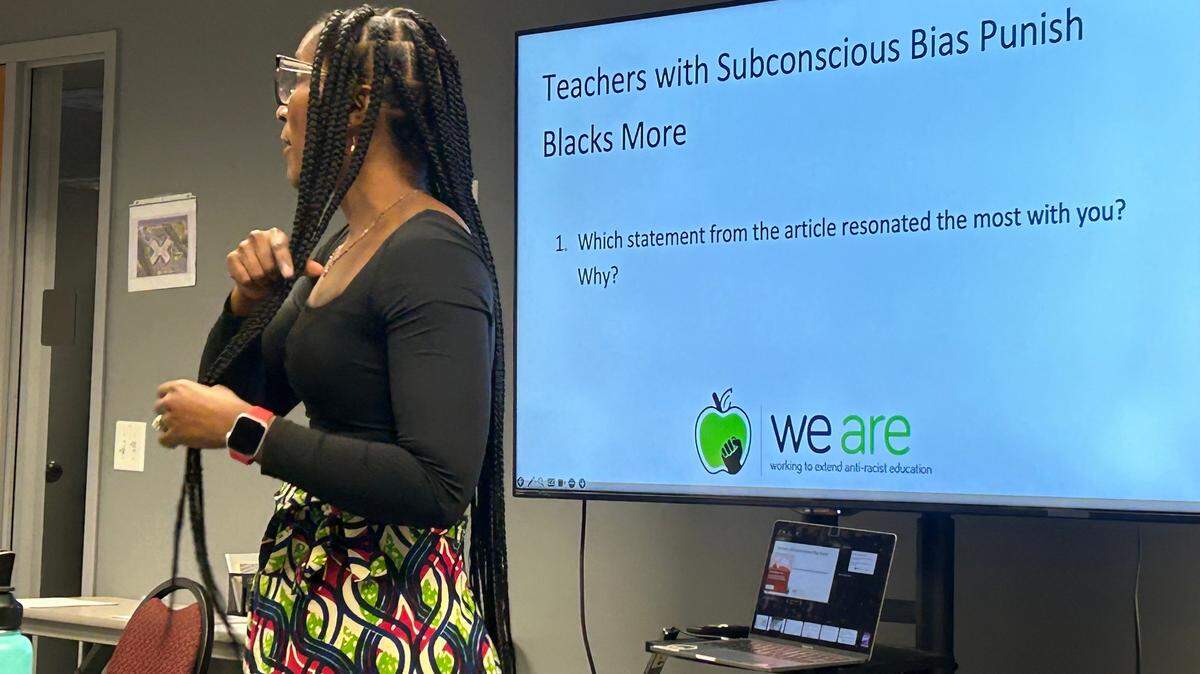
- Training the Wake County school board received on “implicit bias” and “white discomfort.”
- Training that Charlotte-Mecklenburg school leaders received on anti-racism from Ibram Kendi.
- Training hosted by the Wake County school system where teachers heard presentations such as “whiteness in ed spaces.”
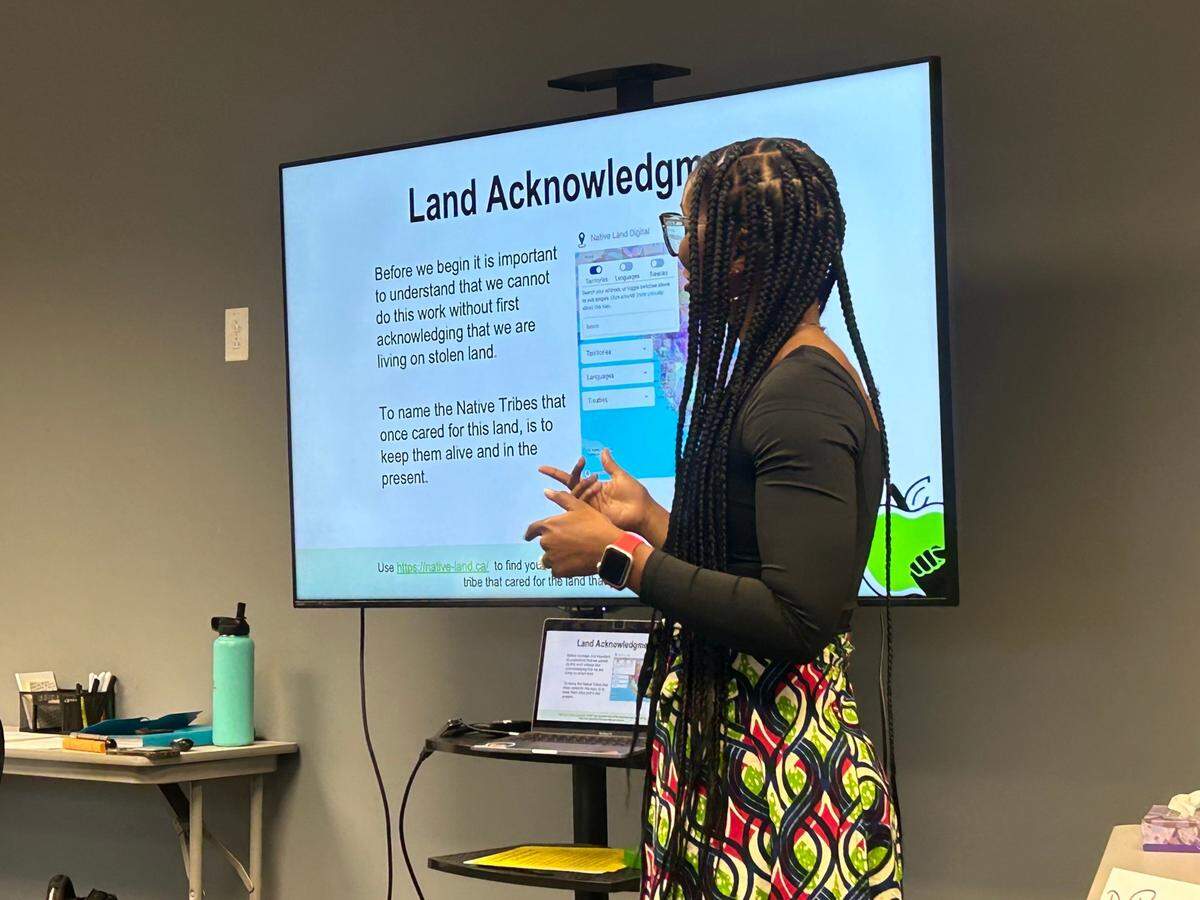
The Wake County school system said in a statement Thursday that it’s reviewing the legislation in consultation with its legal counsel and the state Department of Public Instruction.
“As we complete our review of the legislation and receive additional implementation guidance, we will work through any required changes and provide updates to employees, families, and the community as appropriate,” Wake said in its statement.
How will anti-DEI law affect teachers?
What’s less clear is the effect the new law could have on how teachers discuss controversial topics. For instance, the law prohibits teaching that “the United States was created by members of a particular race or sex for the purpose of oppressing members of another race or sex.”
Teachers are prohibited from providing instruction that “any individual, solely by virtue of his or her race or sex, should feel discomfort, guilt, anguish, or any other form of psychological distress.”
The law specifically says it won’t limit the impartial discussion of controversial aspects of history or the impartial discussion of the historical oppression of a particular group of people. But Democratic lawmakers had questioned how the legislation would impact things such as teaching about slavery.
“We believe the law leaves educators with genuine questions about how to apply it, since, for example, it restricts instruction on certain concepts while expressly and appropriately preserving the teaching of difficult history, including the historical oppression of people based on characteristics such as race, ethnicity and religion,” Green and Davis said in their statement.
The North Carolina Association of Educators accused state lawmakers of choosing politics over students. Tamika Walker Kelly, the president of NCAE, said the new law sends the message that some students don’t belong here.
“Our public schools are not political battlegrounds,” Walker Kelly said in a statement. “They are community institutions built to serve every family. When the legislature moves to erase the values that make schools inclusive, they aren’t protecting students — they’re harming them.”
This story was originally published June 25, 2026 at 4:39 PM.