
NC superintendent looks to provide guidance to schools on new DEI ban
AI-generated summary reviewed by our newsroom.
- Mo Green said DPI is likely to issue guidance on implementing the DEI ban.
- Senate Bill 227 requires North Carolina schools to eliminate DEI offices and training.
- School districts must certify compliance by Sept. 1 and report statewide by Jan. 15.
The state education agency hopes to issue guidance to school districts on how to implement the new state law banning diversity, equity and inclusion policies across North Carolina schools.
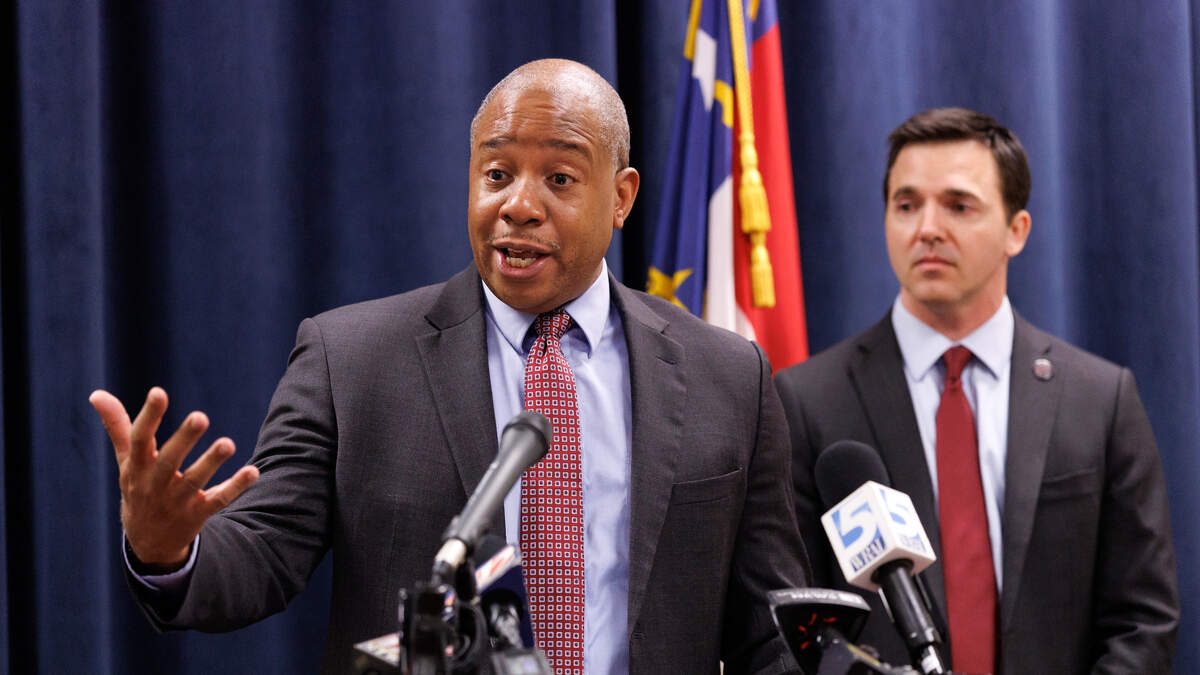
“We are grappling with the law and are likely to try to put out some guidance to public school unit leaders as we try to figure out how to be sure that this law is appropriately implemented,” state schools Superintendent Mo Green said Thursday at a meeting of the State Board of Education.
Senate Bill 227 requires schools across North Carolina to eliminate DEI offices and any staff training on 12 “divisive concepts” listed in the law. It bans teachings of the idea of “white privilege,” says DEI promotes discriminatory practices and eliminates teachings of those “divisive concepts,” ranging from how a person’s sex or race makes them inherently “superior,” “racist,” “sexist” or “oppressive,” The News & Observer previously reported.
The bill became law after state House Republicans overrode Democratic Gov. Josh Stein’s veto on June 24.
It’s been unclear how the DEI law may impact teachers, especially on historical topics such as slavery. For example, the law prohibits teaching that “the United States was created by members of a particular race or sex for the purpose of oppressing members of another race or sex.”
The law says it won’t restrict impartial discussion of controversial historical topics or the impartial discussion of the historical oppression of a particular group.
Green previously raised concerns about what this ban could mean, and the Wake County school system and Durham Public Schools issued statements as well, saying they’re still deliberating what changes will be made.
The North Carolina Association of Educators also accused state lawmakers of choosing politics over students.
“I think there are going to be genuine questions about how educators are to apply the law,” Green said at Thursday’s meeting, “because in one portion of the law it does specifically restrict instruction on certain concepts but in another part of the law it also expressly and appropriately preserves the teaching of certain concepts, including difficult history including historical oppression of people based on characteristics such as race and ethnicity and religion.”
School districts must annually certify to the state Department of Public Instruction by Sept. 1 that they are complying with the law and submit a statewide report to the General Assembly by Jan. 15.