
Rare fossil of ‘sword dragon’ found on UK shoreline is a new species. See it
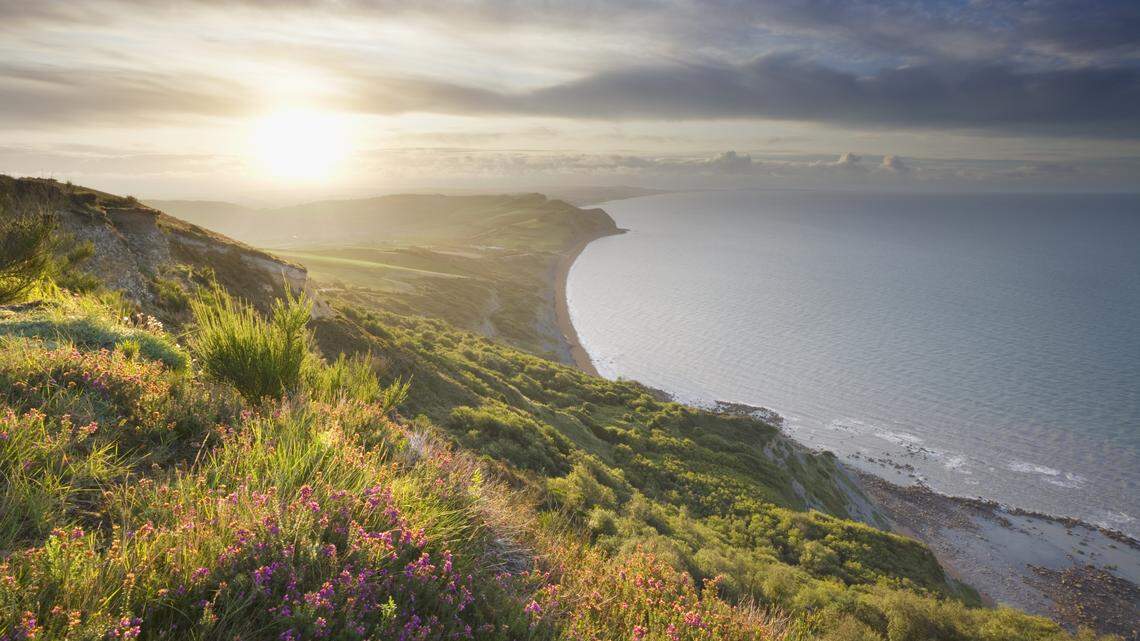
The shoreline between Charmouth and Seatown in Dorset, United Kingdom, has come to be known as the “Jurassic Coast” of England.
Geological formations have revealed prehistoric creatures stuck in the stone as the ocean slowly erodes the coast.
In 2001, a fossil collector named Chris Moore was scouring the rocks of the Golden Cap area of Dorset when he noticed ancient bones on the surface. It was “nearly complete” fossilized remains of an ichthyosaur, a rare find in the United Kingdom.
Now, new research has found that not only are the fossils exceptionally well preserved, but they belong to a species new to science, according to a study published Oct. 9 in the peer-reviewed journal Papers in Palaeontology.
After the fossil was discovered, it was acquired by the Royal Ontario Museum in Canada, according to an Oct. 10 news release from the University of Manchester.

There a team of international researchers would study the fossils, led by an ichthyosaur expert and research fellow Dean Lomax from the University of Manchester, according to the release.
“I remember seeing the skeleton for the first time in 2016,” Lomax said. “Back then, I knew it was unusual, but I did not expect it to play such a pivotal role in helping to fill a gap in our understanding of a complex faunal turnover during the Pliensbachian.”
Ichthyosaurs were a group of aquatic reptiles that resembled porpoises, and while distantly related to lizards and snakes, they are not from the same family as dinosaurs.
The new species is considered “mid-sized” at about 9.8 feet long, or about the size of a dolphin, according to the study.
The fossils include an “almost complete skeleton” with a “three-dimensionally preserved skull” complete with jaws and teeth, researchers said. The set also includes the pectoral girdle, or shoulder area, the front fins, the pelvic girdle, or hips, and parts of both back fins.
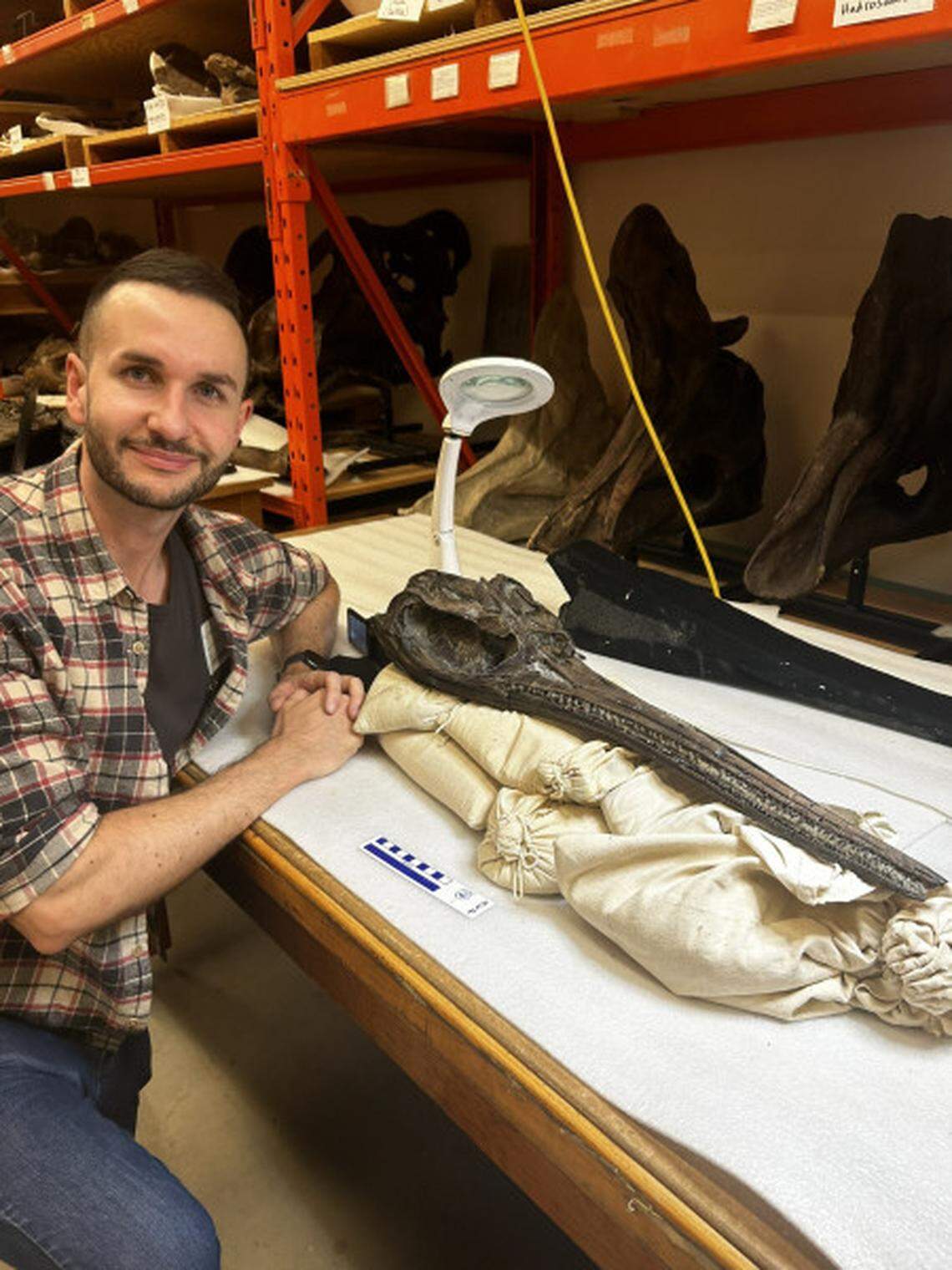
The ichthyosaur is both a new species and genus, or group of species that share similar physical traits and evolutionary relationships.
The genus was named Xiphodracon, meaning “sword-like dragon” and referencing “the long, narrow and sword-like snout,” and the fact that ichthyosaurs have colloquially been known as “sea dragons” for two centuries, according to the study.
The species name, goldencapensis, references the coastline where it was found, combining to be the Golden Cap sword dragon, or the “Sword Dragon of Dorset.”
“The limb bones and teeth are malformed in such a way that points to serious injury or disease while the animal was still alive, and the skull appears to have been bitten by a large predator — likely another much larger species of ichthyosaur — giving us a cause of death for this individual. Life in the Mesozoic oceans was a dangerous prospect,” study author Erin Maxwell, from the State Museum of Natural History Stuttgart, said in the release.
The new species also has a bony lacrimal, or a structure around the nostril, that has never been seen in an ichthyosaur before, validating its place as a new species.
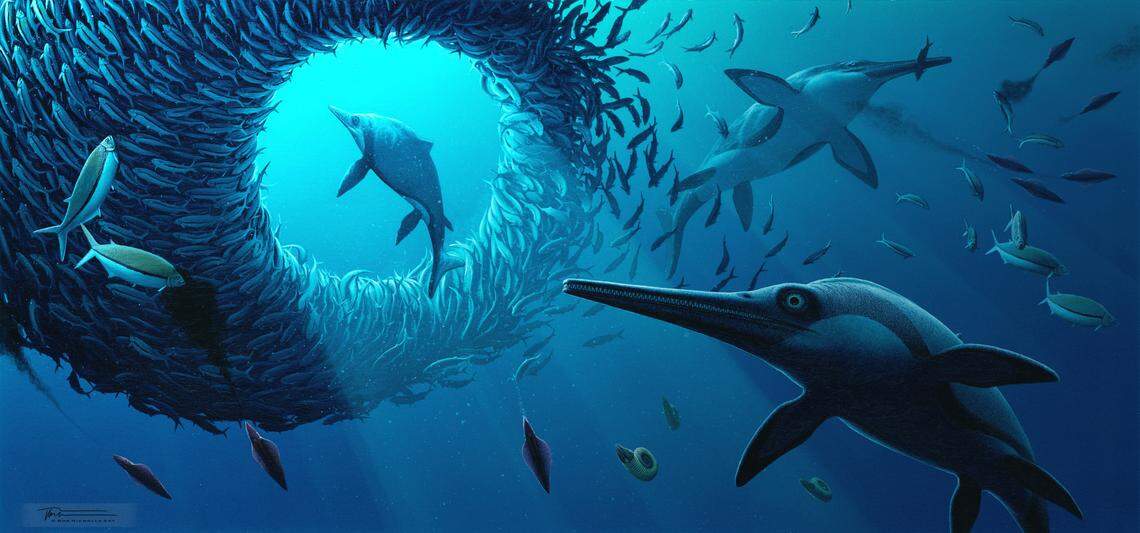
The fossil is additionally rare because of when the animal lived, researchers said.
The ichthyosaur dates to between 193 and 184 million years old, making it one of the “incredibly rare” specimens dating to the Pliensbachian era, according to the release.
“Thousands of complete or nearly complete ichthyosaur skeletons are known from strata before and after the Pliensbachian. The two faunas are quite distinct, with no species in common, even though the overall ecology is similar,” study author Judy Massare, from State University of New York, said in the release. “Clearly, a major change in species diversity occurred sometime in the Pliensbachian. Xiphodracon helps to determine when the change occurred, but we still don’t know why.”
Dorset is on the southern coast of England, along the English Channel.
The research team includes Lomax, Massare and Maxwell.
This story was originally published October 10, 2025 at 12:09 PM with the headline "Rare fossil of ‘sword dragon’ found on UK shoreline is a new species. See it."
