
Tillis blames White House as he leads opposition to judicial nominee from NC
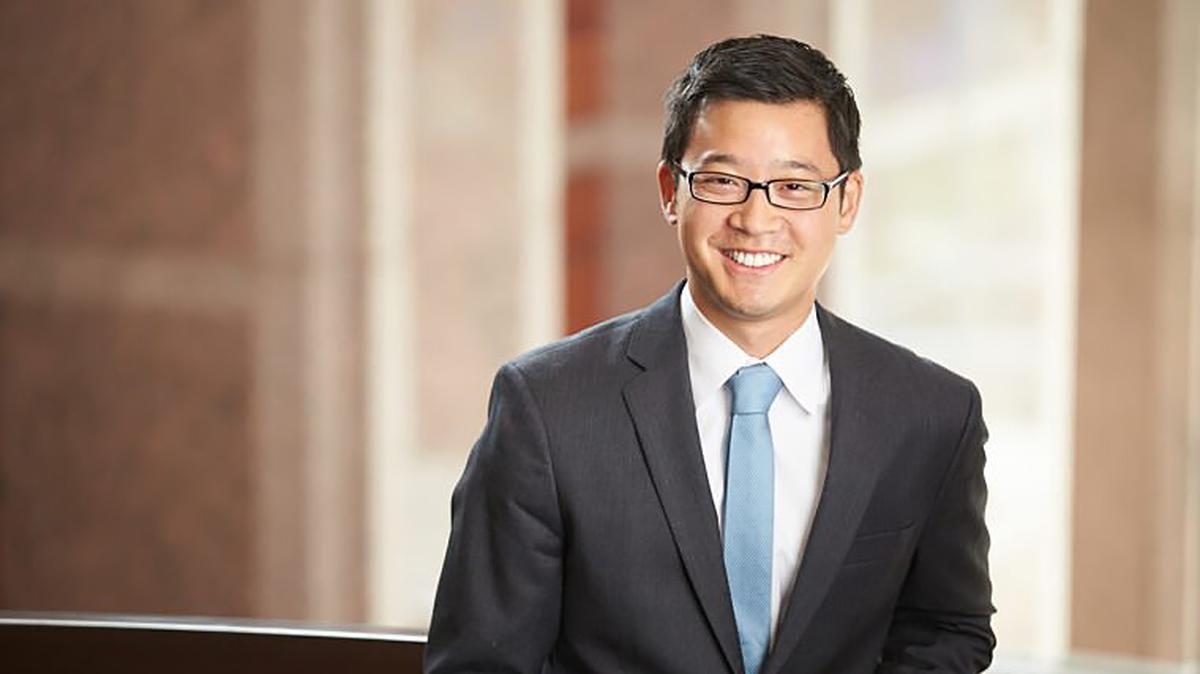
North Carolina Solicitor General Ryan Park sat through a contentious hearing Wednesday morning as Republicans vowed to block President Joe Biden’s nomination of Park for the federal 4th Circuit Court of Appeals.
Sen. Thom Tillis led the charge, telling his colleagues that the White House became aware in mid-April that Tillis had enough votes on the Senate floor to block Park’s nomination from going forward, but instead of working with Tillis and Sen. Ted Budd to find a consensus nominee, the White House moved forward with Park anyways.
“I am ashamed to be in this position,” Tillis said. “I am ashamed of the White House for putting Mr. Park in this position.”
Judiciary Committee Chairman Sen. Dick Durbin, a Democrat from Illinois, introduced Park to the committee. He told its members that Park, in his current role representing the state in court as solicitor general, has presented more than 30 appeals, including 10 before the U.S. Court of Appeals and two before the U.S. Supreme Court.
His resume includes working in the Office of the Legal Adviser at the U.S. Department of State and having served as a law clerk to Justices Ruth Bader Ginsburg and David Souter, as well as 2nd Circuit Court of Appeals Judge Robert Katzmann and Judge Jed Rakoff of the U.S. District Court for the Southern District of New York.
“Those are clerkships for which students would die to get those clerkships,” said Carl Tobias, the Williams Chair in Law at the University of Richmond.
Tobias, who watched the hearing Wednesday, said he believes Park is well-qualified for the position and worries that if other nominees watched what happened to Park they won’t put themselves through the nomination process.
Park sat before the committee Wednesday morning with his mother, wife and young children in the audience. Many judicial and law enforcement officials also traveled to Washington for the hearing.
They sat in the hearing room as Republicans criticized him for his record and accused him of being a liberal activist.
Frustration with White House over nomination
But Tillis focused on the White House and his frustration with the nomination process.
Tillis told the committee that, prior to Park’s nomination, he and Sen. Ted Budd worked with a bipartisan group from North Carolina to select four potential nominees, including a 13-year judge who is a Democrat. They presented the list to the White House, and Tillis said not only did the White House dismiss all of the nominees for the 4th Circuit Court of Appeals, but also for a vacant district court position.
Then, Tillis said, the White House returned with four of its own potential nominees that included Park and Budd’s opponent for his U.S. Senate seat, former North Carolina Supreme Court Chief Justice Cheri Beasley. Tillis said he would argue that Beasley is “arguably partisan.”
“So I questioned the sincerity of the White House, of the process,” Tillis said.
Tillis was also frustrated that after emailing the White House on April 17 to inform officials he had the votes to block Park’s nomination from going forward, they instead made his nomination official on July 3.
Park says he’s taken bipartisan steps
Tillis then received permission to take the unusual step of playing a video in the committee showing Park and demonstrating why Tillis had concerns.
The video opens with Park speaking into a microphone and saying, “As a progressive lawyer who wanted to make a difference, I thought that was a really unique place, to be working for a new attorney general.”
The video then attacks Attorney General Josh Stein on positions he took on immigration and abortion, and shows Park saying, “my perspective on those kinds of high-level cases are always, 2.5 million-plus people voted for my boss to be attorney general, to make those kinds of decisions, and I even feel privileged to be able to advise him.”
Durbin allowed Park to respond to the video.
“I think that if you look at those clips, in context, at least the clips of me speaking, you’ll see that when I was describing myself as a progressive, I wasn’t describing, I wasn’t using the term in the partisan or political sense,” Park said. “In fact, later on that same panel, in the first clip, I said explicitly, that I think politics through lawsuits is illegitimate. That’s what I said.”
He added that he’s unique among state solicitor generals in that he’s never led a partisan, multistate lawsuit or partisan amicus brief with Democratic attorneys general on one side and Republican attorneys general on the other.
“Every single effort that I’ve led, in that context, has been bipartisan,” Park said.
Park also said he’s never declined to represent a state official or agency because of their party.
“I have always been happy and enthusiastic to defend the statutes that have been passed by the Republican-controlled General Assembly in my state and to effectuate policies made by Republican statewide officials,” Park said.
North Carolina has a Democratic governor and attorney general, but the state’s lieutenant governor and both legislative chambers are majority-Republican.
But neither Sens. Josh Hawley nor John Neely Kennedy let up on Park.
Both brought up several lawsuits that Park was involved with.
“You’re an activist, aren’t you?” Kennedy asked.
They ticked through lawsuits related to voting rights, school vouchers, abortion and closing churches during the pandemic.
“I know you’re smart and I know you think you’re more virtuous than other people, but that’s a dangerous trait when you’re a federal judge,” Kennedy said. “I just don’t think you’re mature enough to be a federal judge. I don’t think you’ll follow the law. I think you’ll try to bend the law to what you think is right, and that undermines our federal judiciary.”
Park was allowed to defend himself from Kennedy and Hawley’s attacks, and he said both misrepresented either what happened in certain cases or his involvement in others.
“I’ll just share with you that I have not, thus far, heard any substantive criticism of you or your record in these proceedings, and I think you’ve been handling yourself very well,” said Sen. Jon Ossoff, a Democrat from Georgia.
Durbin vowed to Park that he had his support. He also said some of what Park faced Wednesday was tied to internal drama within the committee that stretched back to the Obama administration. He said at that time, the then-chairman would allow senators of a state to reject a White House nomination by not returning a literal blue slip of paper. And if both senators rejected the nomination, it wouldn’t move forward.
He said because of that, several of former President Barack Obama’s nominations were blocked.
Durbin said when former President Donald Trump took office, Republicans did not honor the tradition, and filled previously blocked positions with candidates they wanted. Durbin said he is now following the same standards Republicans set during the Trump administration.
Tillis hit back and said he supports returning to the traditional process of nominating judicial officials, and reminded Durbin that he joined a bipartisan effort to keep alive the Senate’s ability to filibuster, which is used to prolong debate.
“If somebody wants to join me in the moral high ground on being bipartisan and consistent: welcome.” Tillis said.
Tillis added that he has tried “to strike an image of being bipartisan” and reminded his colleagues that his work in the Senate, reaching across the aisle, has led to his own state party censuring him.
Tobias, the law professor, called the hearing “brutal.” He said Hawley and Kennedy acted within their character during the hearing, but Tillis took him by surprise.
Tobias said any complaint Tillis has about how the nomination process currently works lies within Tillis’ own party.
This story was originally published July 31, 2024 at 4:11 PM with the headline "Tillis blames White House as he leads opposition to judicial nominee from NC."
