NC transgender athlete ban affects private schools and universities. But is it legal?
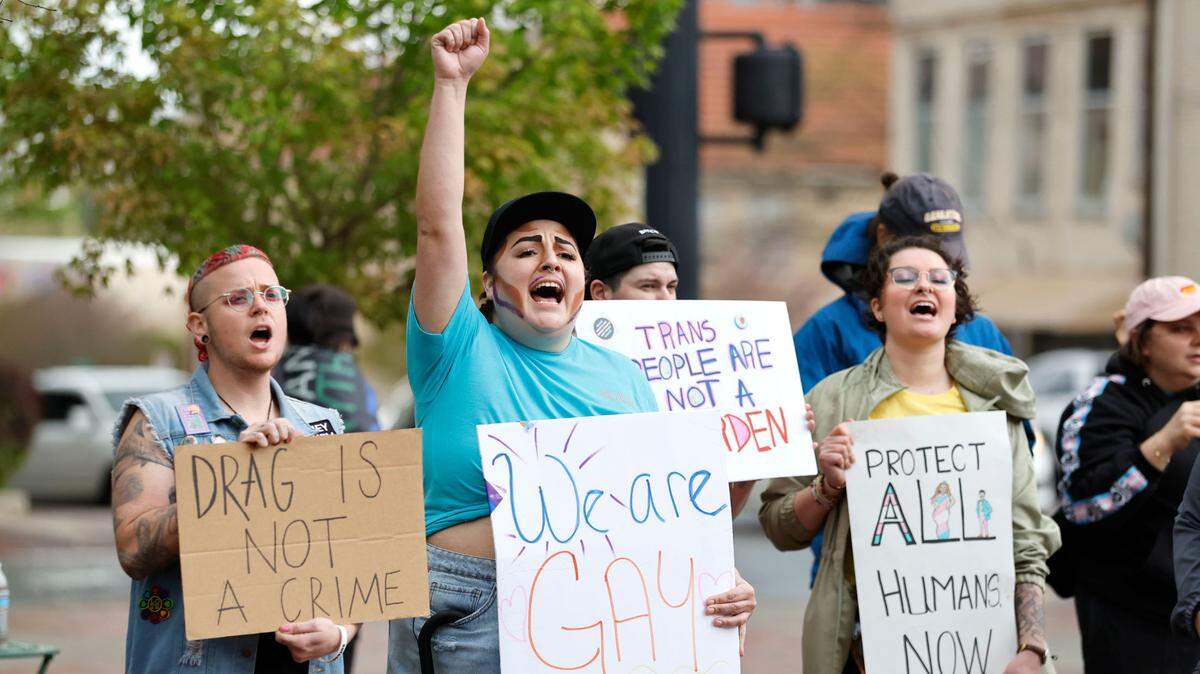
A transgender athlete ban may be coming to North Carolina, and as many as 840 private schools and 35 private universities around the state could be affected.
After a failed attempt in 2022, the state legislature sent House Bill 574, also named the Fairness in Women’s Sports Act, to the governor on Thursday — but not without questions from lawmakers and members of the public.
One question — how a transgender athlete ban could be legally enacted at private schools and universities — has come up a few times along the bill’s pathway through the legislature. As the bill gears up for its likely veto from Democratic Gov. Roy Cooper, athletic programs across the state prepare for potential guideline changes.
The Republican-backed bill, filed in early April, designates sports teams by “the biological sex of the team participants,” barring “students of the male sex” from women’s sports. Many middle and high school athletics teams, as well as those at colleges and universities, are subject to the ban.
The bill also mentions that any “private church school,” “school of religious charter” or “qualified nonpublic school” that is part of an organization that “administers interscholastic athletic activities” must comply with the act. At the college level, the ban applies to “institutions of higher education,” which includes “a private college or university located in North Carolina.”
Almost all states that implemented transgender athlete bans have included varying levels of restrictions on participation at private institutions, but the legality of the bill’s enforcement remains somewhat murky.
Legality of NC transgender athlete ban
There’s been a “massive uptick” in transgender-related legislation across the country, said Marie-Amélie George, a Wake Forest University law professor. It’s now become a wedge issue that can be exploited by politicians, she said.
“As trans individuals have become more visible and public and have demanded their rights, we’re seeing a backlash,” George said.
This backlash includes bills like HB 574, which could push the limits of what the state is capable of enforcing.
The state can and does regulate private K-12 schools, George said.
Many private high schools participate in the North Carolina High School Athletic Association, the state’s athletic governing organization, for state championships. So, if a private school wanted to keep that membership, it would need to conform to the law, George said.
“It is telling them that for the privilege of participating in these athletic competitions,” George said. “they have to have the same standards as other schools.”
However, provisions that included enforcement at North Carolina’s private universities came as a “surprise” to George, as she said the state government typically has much less capacity to regulate private colleges.
The clauses on private schools muddle the legality of the bill, but there are a plethora of other likely factors at play that could trigger a lawsuit, UNC sports law professor Barbara Osborne said.
Private and public universities comply with Title IX, a federal law prohibiting sex-based discrimination, which creates a big legal issue for the law, Osborne said. If a transgender college athlete wanted to participate in the National Collegiate Athletic Association but couldn’t because of state law, they could file a Title IX violation, she said.
Both George and Osborne anticipate a lawsuit to be filed if the bill passes, but the success of the plaintiffs is up in the air.
“There’s so much change and uncertainty in the area of LGBTQ rights recently, in terms of both the victories and the defeats,” George said.
Several transgender athlete bans have already been subject to lawsuits in West Virginia, Utah, Montana, Arizona and Indiana.
Transgender athlete ban enforcement in high schools
When it comes to enforcing HB 574 in high schools, that responsibility would fall largely in the hands of the NCHSAA. Its spokesperson, Brandon Moree, told The News & Observer in an email that the association is ready to follow “the letter of the law.”
Current guidelines for transgender student-athletes involve the submission of a formal request to participate with a team different than their birth gender, he said. That request then needs to be reviewed and approved by the NCHSAA gender identity committee. HB 574 would change that policy, which the association would comply with, Moree said.
“The NCHSAA aims to support all student athletes and would prefer there be as few barriers to participation in education-based athletics as possible,” Moree said in an email.
Since the creation of the NCHSAA’s gender waiver request policy during the 2019-2020 school year, the organization has received 18 requests, Moree said. Sixteen were approved through committee, he said, and 14 of those were made by biological females requesting to participate in male sports.
Between the 2019-2020 and 2021-2022 school years, the requests that NCHSAA received, on average, was less than a percent of the total student-athlete population, he said.
For North Carolina private schools, some measures are already in place to prevent transgender athletes from participating in sports with the gender they identify with.
The North Carolina Independent Schools Athletics Association oversees more than 90 private schools, providing a separate outlet for athletic competition outside of the NCHSAA.
Under the NCISAA’s general handbook, student-athletes are only allowed to play on teams that “coincide with the gender indicated on their official birth certificate.”
There are two exceptions to the NCISAA’s student-athlete gender policy: cisgender girls can play on boys’ football and baseball teams.
Private NC colleges and the athlete ban
On the potential enactment of the law in private universities, Hope Williams, North Carolina Independent Colleges and Universities president, said in a statement to The News & Observer that “fairness in athletics is important to everyone.”
“One of the challenges for college athletics is working with federal and state governments, with national regulators of athletics – such as the NCAA, and with individual conference and institutional requirements,” Williams said. “Those processes can become complicated so we appreciate having been able to work with the bill sponsors, committee members and staff on several aspects of the bill.”
NCICU represents many private colleges in North Carolina, including Duke University and Wake Forest University.
During the bill’s hearing in the Senate rules committee last week, state Sen. Julie Mayfield, a Buncombe County Democrat, had some questions for Republican Sen. Vickie Sawyer, who presented the bill, specifically on implementation in private universities.
“How enforceable is this?” Mayfield asked. “If a college participates in the NCAA, and the NCAA has its own policies, as I think they do on this issue for different kinds of sports, what we’re saying is that this trumps our colleges’ and universities’ participation in NCAA sports over the NCAA policy.”
In response, the Mecklenburg County senator gave a list of states that already have implemented their own transgender athlete ban, including Alabama, Florida and South Carolina.
Mayfield asked if other states have put bans for private colleges in place.
“If Chapel Hill women’s basketball wants to play Duke University women’s basketball, it wouldn’t be fair if Chapel Hill wasn’t allowed to recruit men to play on their team but Duke would be,” Sawyer said in reply.
There are currently 22 states that have put legislation in place that limits the participation of transgender athletes in sports, according to the National Conference of State Legislatures. The earliest transgender athlete bans passed in 2020 in states like Idaho and Indiana.
Many transgender athlete bans apply to both K-12 schools and higher education, but according to an NCSL research report, Tennessee is the only state that explicitly expanded its law to include private schools in 2023. However, most states have clauses that bar private school participation if a nonpublic school plays a public school or is part of a state athletic association.
NCAA’s role
The NCAA announced an update to its transgender student-athlete participation policy in which the organization would use a “sport-by-sport approach” consistent with the International Olympic Committee. This meant that transgender athletes would undergo testosterone-level testing that would meet the required sport-specific standard.
Conflict over transgender-related bills isn’t new to the NCAA’s relationship with North Carolina. The organization had previously boycotted the state by withholding championship events, in response to a law requiring people to use public bathrooms that match the sex on their birth certificate, which was later repealed.
In early April, President Joe Biden’s administration released a proposed rule change to Title IX to prohibit blanket bans against transgender student-athletes. The change has yet to be adopted.
After passing through the Senate and House, the bill will likely be vetoed by Cooper, teeing up the decision to the Republicans’ legislative supermajority on whether to override the veto.
This story was originally published June 23, 2023 at 2:00 PM.