NC bill requiring ICE cooperation, funding school vouchers becomes law over Cooper’s veto
State lawmakers passed a sprawling budget bill into law over Gov. Roy Cooper’s veto, enacting two longstanding GOP priorities: a measure requiring sheriffs to cooperate with immigration authorities, and hundreds of millions of dollars in funding for private school vouchers.
Republicans defeated the outgoing Democratic governor’s veto — the latest in more than two dozen they’ve overridden since gaining a legislative supermajority last year — in one of the last sessions left before lawmakers adjourn in December. When they return to Raleigh in January, Republicans are expected to maintain a supermajority in the Senate, but lose it by one seat in the House.
The House took up the measure Tuesday, a busy day when House Republicans also held leadership elections to choose a new caucus leader who will serve as speaker next year, and prepared to unveil another major bill that would take away and change the powers of the incoming governor, attorney general, and state superintendent of public instruction — all offices that Democrats won earlier this month.
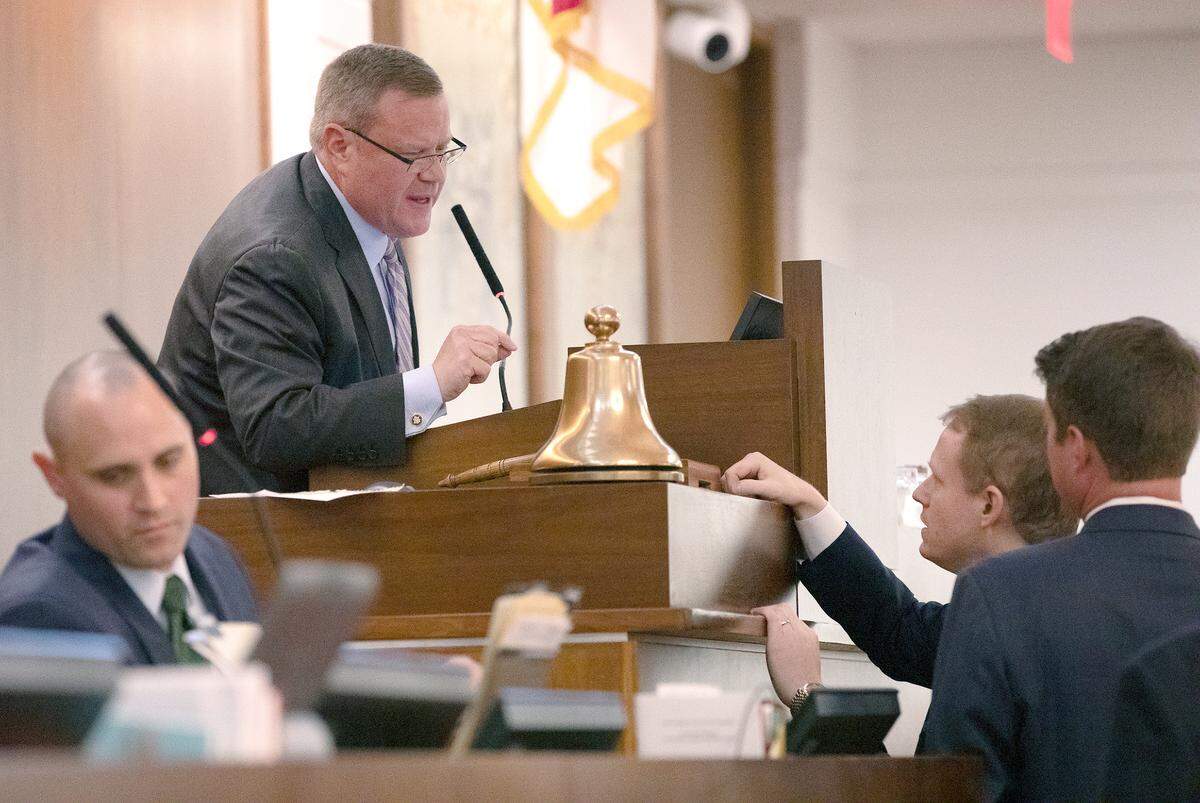
After around 40 minutes of debate, Republicans made a motion to end debate and proceed to a vote. The House voted 72-44 to override Cooper’s veto of House Bill 10, the “mini-budget” Republicans agreed on in September after months of budget talks.
The Senate overrode Cooper’s veto Wednesday afternoon, voting 30-19 to enact the bill over the governor’s objections and require Democratic sheriffs who have resisted cooperation with U.S. Immigration and Customs Enforcement to cooperate with the federal agency, and provide nearly a half-billion dollars for vouchers.
ICE and the Trump administration
Republicans have been trying to pass ICE cooperation legislation since 2019, after newly elected sheriffs in Democratic counties like Wake and Mecklenburg vowed the year prior, during the first Trump administration, to cut back or end cooperation with the agency that enforces immigration law and conducts deportations.
After previous standalone bills were vetoed by Cooper in 2019 and 2022, Republicans tried to pass the bill for a third time once they regained a supermajority last year. The bill ultimately got stuck in negotiations between both chambers this summer.
In September, Republicans said they had agreed to pass the crux of the bill, which requires sheriffs to comply with immigration detainers — requests from ICE regarding individuals who have been arrested and are believed to be in the country illegally. The detainers ask sheriffs to hold the suspects for up to 48 hours to give ICE agents time to take custody of them.
The ICE-cooperation provisions were combined with several other legislative priorities including voucher funding, and sent to Cooper’s desk.
Final approval of the immigration enforcement bill comes as former President Donald Trump readies his second administration and prepares to implement his campaign promise to “carry out the largest deportation operation in history.”
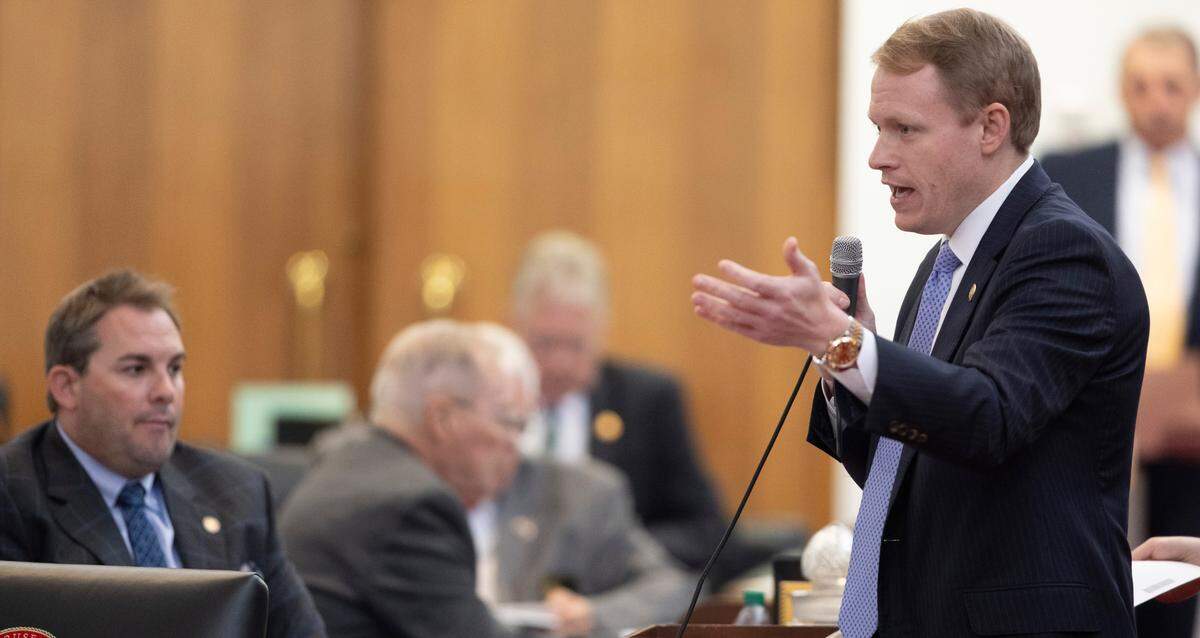
Rep. Destin Hall, a Caldwell County Republican who was chosen by his GOP colleagues to serve as House speaker next year, pointed to Trump’s election win as to why the ICE bill is needed.
“It’s clear where the people, not only North Carolina, stand on that issue, but the people of the United States,” Hall said Tuesday. “They believe in enforcing immigration law.”
Private school vouchers
The legislation would also provide $463 million to clear the Opportunity Scholarship backlog, as well as provide funding for those families to continue to attend a private school next year.
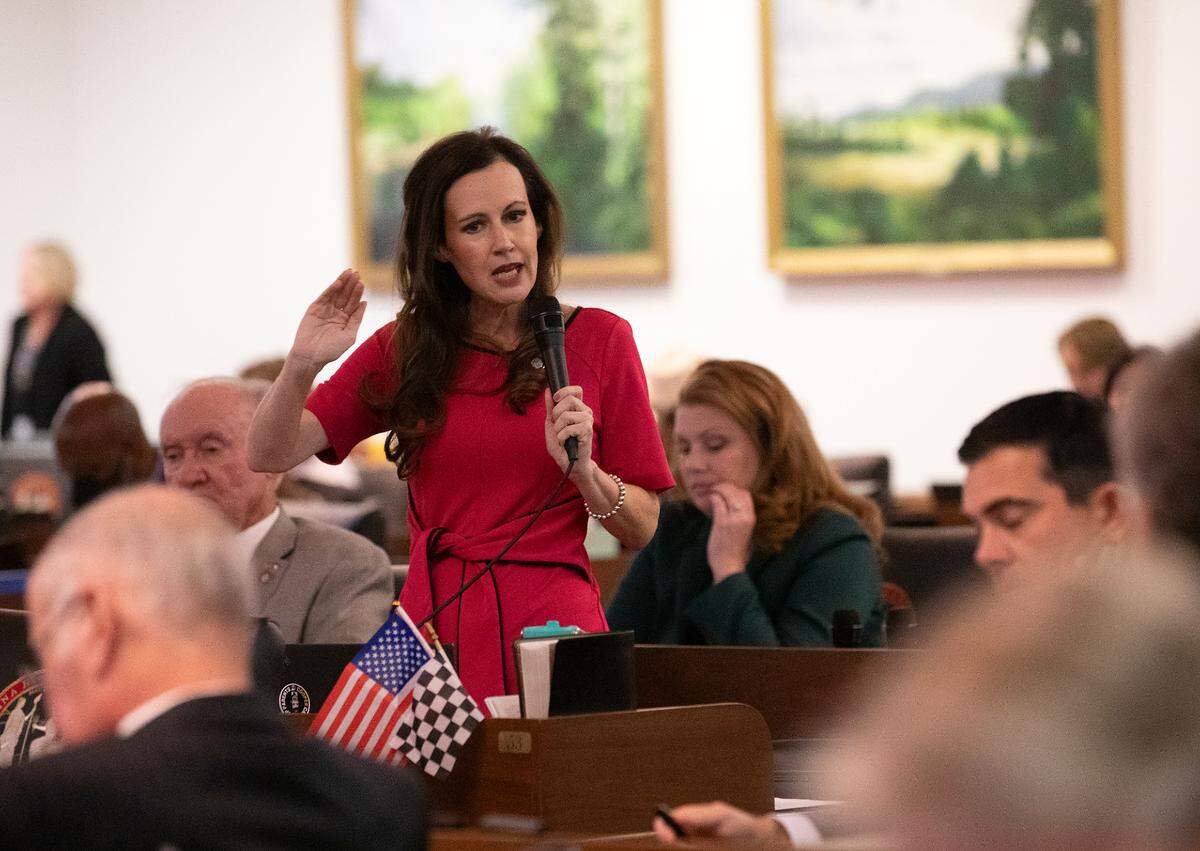
“There are many children who are trapped in public schools that are failing them, and they have been for generations and generations and generations,” said Rep. Tricia Cotham, a Mecklenburg County Republican. “They deserve an opportunity of something else.”
Last year, state lawmakers overhauled the Opportunity Scholarship program so that any family could apply regardless of how much money they made. The program initially started a decade ago serving only low-income students.
Nearly 72,000 families applied this year to receive a new Opportunity Scholarship under the revised eligibility rules. The demand was so high that more than 50,000 students were put on a waiting list pending more state funding.
Families who are on the wait list had to be attending a private school on Oct. 1 to be eligible to get a voucher this school year. Depending on the family’s income, they’ll get a voucher of between $3,360 and $7,468 per child.
There are currently 32,459 students receiving an Opportunity Scholarship this school year. The number would rise after the veto is overridden.
More than 70% of the families on the waiting list would not have been eligible for a voucher when there were income limits. This group includes a family of four making more than $115,440 a year.

Who will the vouchers help?
During the debate, Democrats had focused on how wealthy families who were already at private schools would get a voucher now. In addition, Cooper said GOP lawmakers should use the new voucher money for Hurricane relief instead.
“We should prioritize spending our taxpayer money on recovery from Helene and the $53 billion that’s estimated to be costing us to recover from this horrible storm,” said Rep. Julie von Haefen, a Wake County Democrat. “Instead, we are spending it on private school vouchers for wealthy families that can already afford to send their kids to these schools and already likely are.”
In contrast, Republicans focused on the middle-class families on the waiting list. The demand was so high this year that the state had run out of money to fund new applicants who would have qualified last year.
“It is shameful for our governor to try and set up a fight between hurricane victim relief and children,” Cotham said. “They are not the same.”
Rep. Carla Cunningham, a Mecklenburg County Democrat, broke party ranks on Tuesday to vote for the override. Cunningham said the bill provides “essential investments in areas like education, public health, community support and public safety” such as cooperation with ICE, Medicaid rebates and more funding for community colleges.
“To reject the bill outright would mean forfeiting critical funding for these initiatives, which I cannot do in good conscience,” Cunningham said. “For me, it’s a matter of not throwing the baby out with the bathwater.
“While I remain critical of the Opportunity Scholarship Program, I must prioritize the broader benefits that this legislation will provide for our communities.”
This story was originally published November 19, 2024 at 3:07 PM.