Laws on immigration, masking and more take effect Dec. 1 in NC. Here’s what they do.
The first of December marks more than just the countdown to Christmas — it’s also the day a wave of new laws take effect in North Carolina.
Passed by the GOP-led legislature, these laws bring changes ranging from new requirements for sheriffs to cooperate with federal immigration agents and restrictions on the use of masks for health and safety reasons to changes in juvenile justice laws. Here’s a closer look at the laws that went into effect Sunday:
Masks, protests and campaign finance
House Bill 237: “Various Criminal and Election Law Changes.”
This GOP-drafted bill was highly controversial when debated in June, drawing criticism from Democratic lawmakers, some state residents who protested at the General Assembly, and civil rights organizations, including the American Civil Liberties Union.
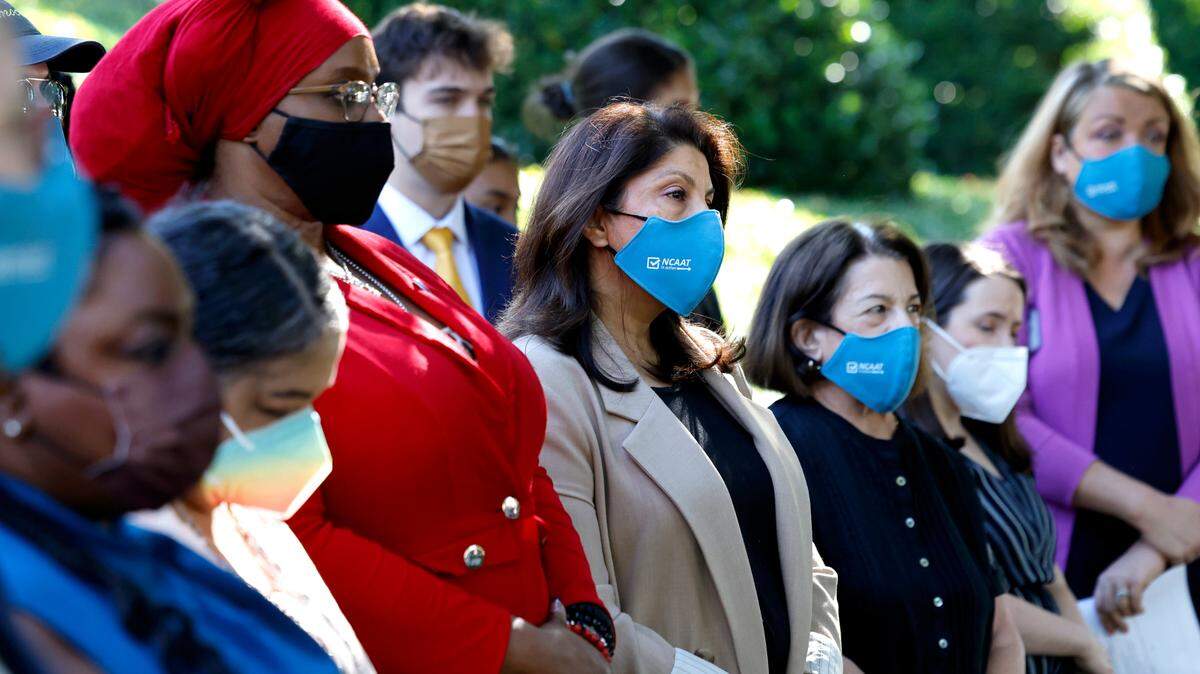
The bill revises a state law provision allowing people to wear masks in public for health and safety reasons, limiting it to “medical or surgical grade” masks and only for “preventing the spread of contagious disease.” It also permits law enforcement and property owners or occupants to require individuals to remove their masks. Previously, law enforcement could only require mask removal during traffic stops or when there was “reasonable suspicion or probable cause” in a criminal investigation.
The bill increases penalties for obstructing roads during protests or blocking emergency vehicle access. It also introduces campaign finance changes that significantly alter laws governing political committees and corporate campaign contributions.
Most sections of the bill are already in effect, except for the provisions on emergency vehicles and road obstruction, which took effect Dec. 1.
Gov. Roy Cooper vetoed the bill, arguing it created “a gaping loophole for secret, unlimited campaign money in the middle of an election year” and “removes protections and threatens criminal charges for people who want to protect their health by wearing a mask.” The veto was overridden by the GOP supermajority.
Republicans have defended the campaign finance provisions, saying they level the playing field for party funding. They also argued the mask provisions were necessary to prevent individuals from using masks to conceal their identities during protests or while committing crimes.
Immigration detainers and private school vouchers
House Bill 10: “Require ICE Cooperation & Budget Adjustments.”
Another highly controversial bill, House Bill 10 combines new cooperation requirements for sheriffs with federal immigration authorities and allocates hundreds of millions of dollars in funding for private school vouchers.
The bill, which initially focused solely on immigration, requires sheriffs to comply with immigration detainers from U.S. Immigration and Customs Enforcement (ICE) for individuals who have been arrested and are believed to be in the country illegally. These detainers request that sheriffs hold suspects for up to 48 hours, allowing ICE agents time to take custody of them.
State law already mandates that sheriffs attempt to determine the legal status of individuals arrested for certain offenses and notify ICE if they are unable to verify the individual’s status.
After failed budget negotiations, other provisions were added to HB 10 as part of a “mini-budget” compromise bill. These include nearly $463 million in funding to clear the waitlist for private school vouchers, known as Opportunity Scholarships. The legislature expanded the voucher program to all families, regardless of income, creating a waitlist of about 55,000 families.
In a news conference announcing his veto in late September, Cooper said, “I am not against private schools and parents choosing that option,” but added, “I am against taking taxpayer dollars out of public schools and giving private school vouchers to the wealthiest North Carolinians, and that is exactly what House Bill 10 does.”
Republicans argue that the voucher expansion provides more families with a choice in their children’s education. The legislature overrode the veto.
The components of HB10 that require sheriffs to cooperate with ICE went into effect Dec. 1. Most other sections were already in effect.
Juvenile justice changes
House Bill 834: “Juvenile Justice Modifications.”
This bill requires that 16- and 17-year-olds who commit certain felonies be tried first as adults in the state’s superior courts. Currently, these teenagers are initially tried in juvenile court after a petition is filed, and are only transferred to superior court after probable cause is established or they are indicted.
Cooper vetoed the bill, stating, “Most violent crimes, even when committed by teenagers, should be handled in adult court. However, there are cases where sentences would be more effective and appropriate to the severity of the crime for teenagers if they were handled in juvenile court, making communities safer. This bill makes this important option highly unlikely and begins to erode our bipartisan ‘Raise the Age’ law we agreed to four years ago.” The legislature overrode the veto.
The “Raise the Age” law, passed in 2017, shifted 16- and 17-year-olds accused of misdemeanors and low-level felonies from the adult system to the juvenile justice system.
Lawmakers in favor of the bill have argued that it is a procedural change designed to allow the juvenile justice system to function more efficiently.
Most of the bill took effect Sunday except for some sections including one on forensic evaluation reports.
Tolls and billboards
House Bill 198: “DOT Legislative Changes.”
This law makes several changes to transportation regulations, including a requirement that vehicle identification numbers (VINs) or other vehicle identifying information appear on toll bills.
Processing fees for unpaid tolls are increased from $6 to $9. Additionally, the annual cap on late fees per bill is raised from $48 to $72. The law also allows billboard companies to cut down more trees along state highways — up to 500 feet before a sign, compared to the previous limit of 350 feet — and removes protections for redbud trees.
Cooper vetoed this bill saying “protecting North Carolina’s beauty should be a top priority, but this legislation allows tree cutting and destruction of native plants around billboards.” The veto was overridden.
Several provisions of the bill, including those related to VINs, toll fees and tree removal, have already taken effect. Other sections, including one repealing regulations for unmanned aircraft systems, such as drones, took effect Dec. 1.
Pipelines and hog farms
House Bill 600: “Regulatory Reform Act of 2023.”
This law reduces water quality requirements for the MVP Southgate pipeline project and includes provisions that could limit how the N.C. Department of Environmental Quality reviews hog farm permits. House Bill 600 spans 46 pages, with all sections of the bill taking effect in December unless otherwise specified.
Cooper vetoed the bill, saying it “will result in dirtier water, discriminatory permitting and threats to North Carolina’s environment. It also undoes a significant policy to promote fairness in state contracting for historically underutilized businesses as it blocks efforts to encourage diverse suppliers for state purchases, rules that would save taxpayer dollars and help businesses grow.”
The legislature overrode the veto. GOP sponsors of the bill described it as “a common sense” measure, arguing that it will reduce regulatory burdens.
Building code changes
Senate Bill 166: “2024 Building Code Regulatory Reform.”
This bill includes various changes to building codes, such as modifying insulation requirements and prohibiting the state from mandating that electric water heaters be elevated. Additionally, the bill reorganizes the NC Building Code Council, reducing its size from 17 to 13 members, with appointments split between the governor, House speaker and Senate president pro tempore. It also alters council membership requirements, removing the need for two members to be licensed architects and general contractors.
Cooper vetoed this bill, saying, “By limiting options for energy efficiency and electric vehicles, this legislation prevents North Carolina’s building code from adopting innovations in construction and mobility that save consumers money. This bill also removes subject matter experts from the building code council, including architects, active fire service, a coastal expert, local government officials, and public at large membership, and limits the knowledge and practical experience of the body tasked with ensuring all buildings are safely designed.”
That veto was overridden.
The bill includes various effective dates. Effective in December is a provision that establishes time limits for applications submitted to the state’s Department of Environmental Quality for water distribution systems that seek to construct or alter public water systems.
Court Documents
Senate Bill 445: “Recording of Court Filed Documents.”
SB 445 includes provisions exempting court-filed documents from certain formatting requirements for paper documents submitted to the register of deeds. It also modifies the appeals process for small claims, changing the start of the appeal period to when a judgment is “rendered” instead of when it is “entered.”
Cooper vetoed this saying it “creates legal ambiguity regarding when eviction orders become effective and may harm low-income individuals by making it harder for them to appeal as indigent in small claims court.”
Other laws taking effect
Here’s a look at other laws — which were not vetoed — that have sections already in effect and others that kicked in Dec. 1:
House Bill 900: “Certain Cooperative Innovative High School Partners/Regulate Tobacco Products” allowed Wake County to replace St. Augustine’s University as the higher education partner for its two leadership academies, the Wake Young Men’s Leadership Academy and Wake Young Women’s Leadership Academy. It also includes various provisions aimed at curbing youth access to products containing tobacco, nicotine and other related substances.
House Bill 250: “Public Safety/Other Changes” makes changes to death investigations under the oversight of the Office of the Chief Medical Examiner and adds Tianeptine to the state’s controlled substance list.
It also allows people with no more than one prior driving while impaired (DWI) conviction within the preceding seven years to get a limited driving privilege. To get back their driving privileges, they would need an ignition interlock device — which requires a person to breathe into the equipment — placed on their car.
House Bill 971: “Human Trafficking Changes” makes various changes to trafficking laws including increasing the penalty for a first offense of soliciting another for prostitution.
House Bill 495: “Revise Money Laundering/ Retail Crime” criminalizes money laundering in North Carolina and revises laws related to theft from retail establishments.
House Bill 199: “DMV Proposed Legislative Changes” makes various changes to motor vehicle laws and requires the Division of Motor Vehicles (DMV) to make a plan for issuing a digital version of a driver’s license. That doesn’t take effect until July 1, 2025.
Senate Bill 355: “North Carolina Farm Act of 2024” includes changes to various agricultural laws, addressing topics such as shellfish leasing, agronomic soil testing and horse boarding.
House Bill 591:”Modernize Sex Crimes” establishes offenses related to sexual extortion and updates offenses related to sexual exploitation of minors.
House Bill 593: “Various General Local Laws” changes laws related to the election of sanitary district boards.
Senate Bill 607: “Regulatory Reform Act of 2024.” includes changes to laws on a variety of topics, such as fisheries harvest reporting, permitting requirements, and the sale and resale of event tickets.