
Judge with ties to NC lawmakers won’t handle defamation case involving casinos
A judge who previously served as a top state legislative aide will not decide a defamation case tied to a failed state legislative effort to bring casinos to three rural North Carolina counties.
That’s what a Wake County Superior Court judge determined Wednesday, denying a request from defendants in the case.
Attorneys for the defendants sought to have special Superior Court Judge Clayton Somers assigned, claiming the case was complicated and Somers had special expertise.
But that would have put the case in the hands of a judge with close ties to the lawmakers involved in the casino legislation. Somers was chief of staff to House Speaker Tim Moore from 2015 to 2017. Moore later recommended him for the judicial position, one of 10 inserted into the 2023 state budget that — atypically — require appointment by lawmakers and not the governor.
The defendants include Rockingham County Commissioner Kevin Berger, the son of state Senate leader Phil Berger, who had unsuccessfully pushed for the casino legislation to be included in the 2023 state budget. Moore was House speaker during that push, which failed after he couldn’t get enough votes in his chamber. Moore stepped down from the post last year and won election to Congress in November.
Judge Paul Ridgeway ruled that the case did not need to be assigned to a special judge. While he said Somers would have handled the case fairly, he was concerned about communications a defense attorney had with the judge about the case without notifying the plaintiffs.
“The best course of action is to not designate this case as exceptional,” Ridgeway said.
Craig Travis filed the defamation suit in June after losing a seat on the Rockingham County Board of Commissioners by three votes. He contends that Kevin Berger and two other county commissioners, the county’s GOP chairwoman and three political organizations spread false statements that cost him the election.
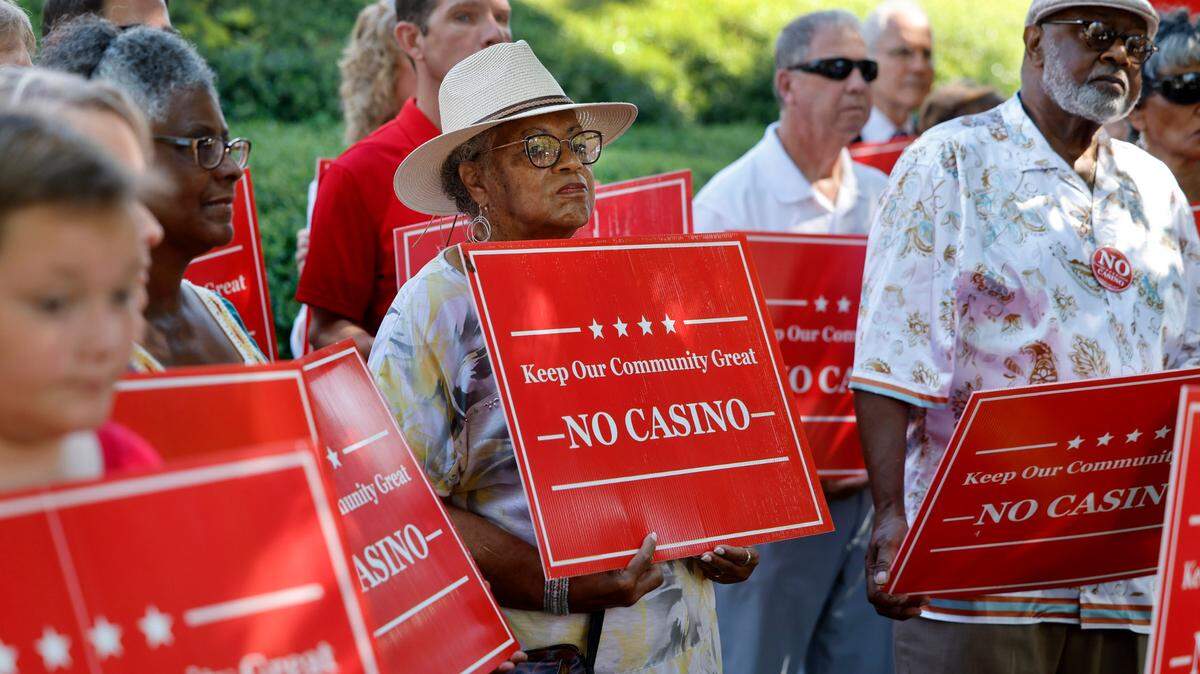
Travis, a former commissioner, sought to return to the commission after news of the casino effort in Rockingham County became public. The Cordish Companies of Baltimore had been quietly working with county officials to land a casino in Stokesdale that would have been built near a camp for children with chronic illnesses and disabilities.
The casino plan drew substantial opposition when it surfaced. Travis opposed the plan.
Travis appeared to have won a seat on the commission by finishing third and seven votes ahead of Kevin Berger in last year’s Republican primary. But after provisional and absentee ballots were counted, Berger won by three votes.
Attorneys for Berger and the other defendants said Somers should handle it as an “exceptional” case, a designation for complex cases. Ellis Boyle, an attorney for two of the political organizations, told Ridgeway that Travis’ attorneys have sought information from dozens of officials.
The case has the potential to shine more light on how the plans for casino approval and development unfolded in Rockingham and the other two designated counties, Nash and Anson, as well as the state legislature.
Somers handled a related lawsuit filed by the camp opposing the county commission’s decision to change the zoning on the adjacent property so that a casino could be built there. Somers dismissed that lawsuit.
Alicia Jurney, an attorney for Travis, said at the hearing that the legal issues at the heart of the case are taught in the first year of law school and did not need a special judge.
“We think it’s important for litigants to have confidence in the judicial system and for all plaintiffs and defendants to be treated the same under the law,” she said afterward.
Boyle said his clients accept the decision, and would next be seeking a dismissal.