NC GOP lawmakers move fast on bill to end DEI in public schools. What’s next.
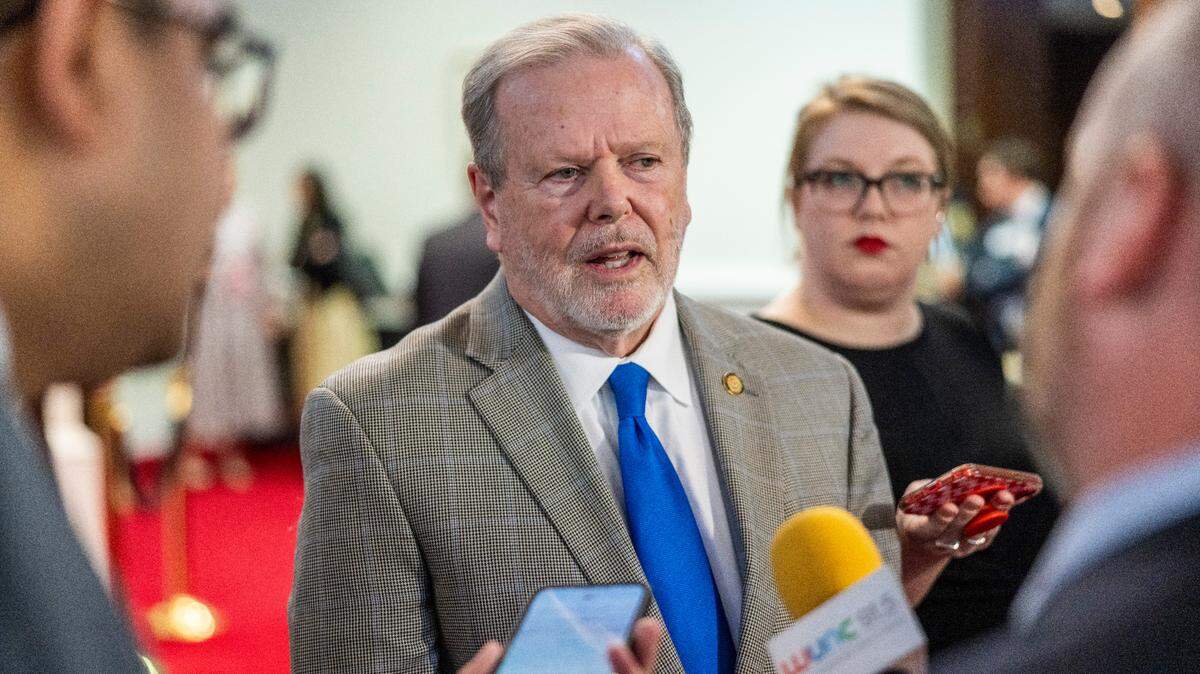
North Carolina Republican lawmakers are rapidly moving ahead with a plan to ban diversity, equity and inclusion programs in public schools and set new rules on how teachers can discuss racism and sexism.
The N.C. Senate Education Committee on Wednesday backed Senate leader Phil Berger’s “Eliminating ‘DEI’ in Public Education” bill. Senate Bill 227 would prohibit teaching “divisive concepts” and require school districts and charter schools to dismantle their DEI offices.
The bill cleared the Senate Rules Committee on Thursday and could be voted on by the full Senate next week.
“It’s not a ban on teaching history or discussing past injustices,” said Sen. Michael Lee, a New Hanover County Republican and one of the bill’s primary sponsors. “In fact, the bill has some explicit provisions regarding that. It’s not a restriction on free speech.”
Lee said there’s nothing wrong with diversity, equity and inclusion. But he said programs under the moniker of DEI have strayed away from “laudable goals” such as promoting diverse perspectives to instead force ideological conformity.
“I think we can all agree those are laudable goals, but that’s not what has been going on in practice,” Lee said. “Unfortunately, a lot of these policies haven’t really opened doors for people to compete fairly, but have forced artificial outcomes at the expense of fairness and competency.”
But Democratic lawmakers argued the bill goes too far with its blanket elimination of DEI programs.
“The problem with using a lot of anecdotal evidence is you also have evidence of vice versa, the DEI and the diversity, equity and inclusion programs that have actually done good.,” said Sen. Caleb Theodros, a Mecklenburg County Democrat.
Part of national anti-DEI push
The legislation moves forward against the backdrop of President Donald Trump signing executive orders removing DEI offices and programs from federal agencies and federally funded programs.
The state’s public schools have already lost tens of millions in dollars in federal teacher training grants after the U.S. Department of Education accused the recipients of promoting “divisive ideologies.”
The Department of Education gave public schools and universities a Feb. 28 deadline to eliminate their DEI programs or risk loss of federal funding.
Berger cited Trump’s executive orders in the legislation he filed on Monday. Berger rarely files bills but is facing a Republican primary challenge next year from Rockingham County Sheriff Sam Page.
Since January 2021, 44 states have introduced bills or taken other steps that would restrict teaching critical race theory or limit how teachers can discuss racism and sexism, according to an Education Week analysis. Eighteen states are imposing these bans and restrictions either through legislation or other avenues.
This week, Education Week released a new report showing the majority of North Carolina teachers surveyed in its State of Teaching survey thought increasing DEI in schools could improve their morale.
White privilege, systemic racism would be out
The legislation would ban the teaching of what it calls “divisive concepts,” which include the following:
- One race or sex is inherently superior to another race or sex.
- An individual, solely by virtue of his or her race or sex, is inherently racist, sexist, or oppressive.
An individual, solely by virtue of his or her race or sex, bears responsibility for actions committed in the past by other members of the same race or sex.
Particular character traits, values, moral or ethical codes, privileges, or beliefs should be ascribed to a race or sex or to an individual because of the individual’s race or sex.
A meritocracy is inherently racist or sexist.
The United States was created by members of a particular race or sex for the purpose of oppressing members of another race or sex.
The legislation would target concepts such as white privilege and systemic racism that hold that white people have unfair advantages due to their race that come at the expense of people of color.
Lee said some school districts have paid $625 an hour per person for DEI trainings.
“When there’s a training, for example, and the training says whites will allow and support racial justice and progress to the extent that there is something positive in it for them,” Lee said,“I just don’t think that’s appropriate.”
Can Republicans override a veto?
The bill was backed in a divided voice vote in the committee.
“Diversity, equity and inclusion in the political sense has been seen as sort of a Black thing when in reality there are many folks, especially in our state, that depend even on some of these programs that may not realize it,” said Theodros, the lawmaker. “It is these folks in Appalachia or rural communities where there are programs and development programs predicated on their specific socioeconomic background.”
Some Democratic senators questioned how the bill doesn’t apply to private schools even if they accept money under the Opportunity Scholarship program. Lee said the bill only applies to government actors such as public schools.
Republicans have enough votes in the Senate to override a likely veto from Democratic Gov. Josh Stein. But the GOP is one vote short in the House of a supermajority that would allow it to override Stein.
House Republicans would need the vote of at least one Democrat unless they hold the override vote on a day when one or more Democrats is absent to get a three-fifths majority
Republicans faced a similar situation in 2021 when they passed a bill against teaching “divisive concepts” but couldn’t override the veto of Democratic Gov. Roy Cooper. Another bill passed in 2023 in the House but was not voted on in the Senate.
Is the bill unconstitutional?
Several college students and the ACLU of North Carolina spoke to lawmakers against the bill in a public comment period.
Liz Barber, policy director of the ACLU of North Carolina, said the bill is similar to a New Hampshire law that was struck down by a federal court because it was too vague.
“The New Hampshire Attorney General opined that the New Hampshire law would not prohibit teaching or training in implicit bias,” Barber told the committee. “The (federal) judge disagreed. I also would have to disagree. It appears that that would be prohibited under this law. I think that it’s unconstitutionally vague, and ask you all to vote no.”
But Joseph Backholm, government affairs adviser for the N.C. Values Coalition, told the committee that DEI programs don’t work.
“There’s good reason to believe that we will get closer to the goals of diversity, equity and inclusion by eliminating the programs currently labeled diversity, equity and inclusion, because in practice, we have institutionalized discrimination in the name of eliminating discrimination,” Backholm said.
This story was originally published March 5, 2025 at 2:17 PM.