NC Senate fast-tracks plan to eliminate 2030 target for power companies to cut emissions
Republican state Senate leader Phil Berger, facing a 2026 primary challenge for his seat from Rockingham County Sheriff Sam Page, has taken a more active role this year, filing five bills so far in the legislative session that started in January.
His latest bill would eliminate a 2030 target date for reducing greenhouse gas emissions from power companies.
The Energy Security and Affordability Act was filed Monday and moved quickly ahead, receiving a hearing Tuesday morning in the Agriculture, Energy, and Environment Committee. The bill won approval there and now heads to the Rules Committee before a Senate floor vote. If approved, it will go to the House.
“North Carolinians shouldn’t be saddled with the increased costs created by arbitrary benchmarks,” Berger said in a news release. “Instead, we should be focused on ensuring our energy sources will meet carbon reduction requirements while remaining reliable and affordable. That’s exactly what this bill does.”
Berger’s support makes passage likely in the Senate. And Republican House Speaker Destin Hall, while saying he had not read the bill in detail, suggested he’d be open to backing it. But Republicans are one seat short of a supermajority in the state House, meaning the bill does not necessarily have a clear route to passage into law, as it’s likely to face Democratic pushback.
The bill and how it would affect utilities
Sponsors of the bill say it gives electric utilities — such as Duke Energy — more flexibility in meeting goals for reducing emissions of carbon dioxide, while saving North Carolinians money in the long run.
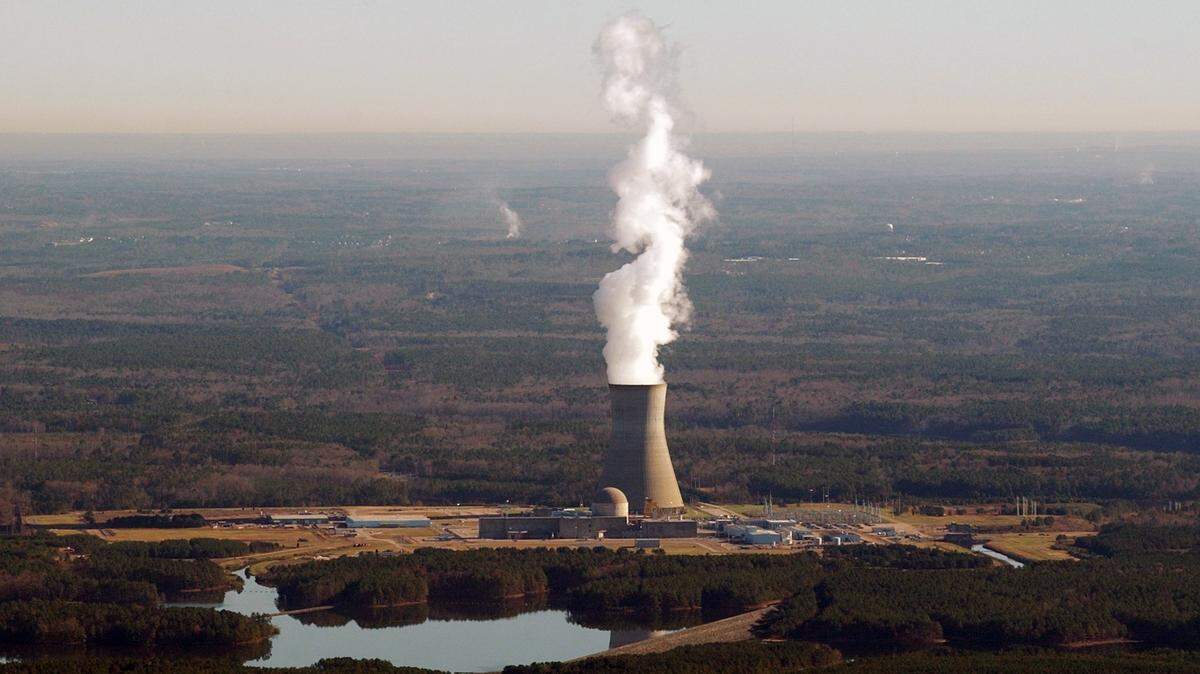
Carbon dioxide is a greenhouse gas that absorbs and radiates heat. According to the U.S. Department of Energy, human activities — including burning fossil fuels such as coal, oil, and natural gas — significantly impact the carbon cycle. Nuclear energy is a carbon-free source of electricity, as are renewables like wind and solar.
Critics — including Democrats who spoke against the bill on Tuesday and environmental groups — argue it could delay emissions reductions and increase costs by allowing utilities to charge for unfinished or canceled projects, short-cutting procedures of the N.C. Utilities Commission (which regulates the state’s utilities) to scrutinize utility companies.
Senate Bill 261 does two main things, according to a staff summary of the bill:
- Eliminates a 2030 emissions reduction target. The bill would remove the requirement for public utilities to cut carbon dioxide emissions by 70% from 2005 levels by 2030, though it would keep the long-term goal of carbon neutrality by 2050. The General Assembly enacted the original reduction plan in 2021, directing the Utilities Commission to oversee compliance. Republican Sen. Paul Newton, a lead sponsor, said Tuesday he asked the Public Staff of the Utilities Commission to model potential cost savings from eliminating the interim target. He said they told him it would save North Carolinians $13 billion. He added that if allowed to, public utilities would pick natural gas and nuclear energy ”because they’re (the) least cost.”
- Allows utilities to raise base rates for construction projects. The bill would permit electric utilities to increase base rates to recover construction costs for baseload power plants — such as nuclear plants — before a project is completed. The Utilities Commission would have to determine there would be an overall cost savings for customers over the life of the plant and the facility would be subject to an annual review. Utilities would also be able to recover losses on projects that end up canceled. Current law requires utility companies to recover construction costs — including for canceled projects — through rates in a general rate case overseen by the commission.
“If we’re asking Duke Energy to take on the risk of building a large nuclear plant, without this change in law, they have to wait until the nuclear plan is completed to find out if they’ll get full cost recovery,” Newton said.
“At that point, customers — North Carolinians — are paying an ever-increasing carrying cost on that plant. So by the time it goes into rates, a rate shock happens because it all drops at once,” said Newton, who is a former Duke executive.
Democrats raise concerns
Sen. Julie Mayfield, an Asheville Democrat, requested to see the cost-saving model staff created and was told it would be shared. She asked Newton about the changes he anticipates to the current carbon plan, such as cutting back on renewables or building a new nuclear plant. Newton said he was “completely agnostic” as to what that should look like “so far as it is the least cost for North Carolinians and maintains or improves the reliability of the grid.”
Mayfield said the state already “blew through the 2030 date and it stands, de facto, at 2035.”
“I certainly would not want us to get to the late 2040s and count on a couple of big nuclear plants to flip the switch and have North Carolina be in the same situation that rate payers in the state of Georgia were in,” she said. The Vogtle nuclear plant in Georgia cost about $35 billion to build.
Sen. Lisa Grafstein, a Wake County Democrat, said under the bill, “’what we’re really asking is for the ratepayers to kind of bear the risk of things, like development of projects that maybe don’t pan out down the road.” She asked why the risk was not placed on the utilities.
Will Scott, southeast climate and clean energy director for the Environmental Defense Fund, said in a statement that “at a time of rising energy costs, this bill is a bad deal for ratepayers.”
“Our recent analysis showed that North Carolina does not need any more baseload gas power plants, yet this bill fast-tracks those plants’ costs on to North Carolinians’ power bills,” Scott wrote. “Let’s stick to our goals to reduce harmful power plant pollution and minimize customer exposure to volatile gas prices.”
The Environmental Defense Fund also wrote that similar “construction work in progress” provisions in South Carolina led to ratepayers being on the hook for $9 billion in construction costs for a nuclear facility that was never completed due to higher-than-predicted costs.
House leadership comments on the bill
Asked about the bill by The News & Observer, House Speaker Destin Hall told reporters Tuesday he was a primary sponsor of House Bill 951, which enacted the reduction plan.
He said that bill required companies like Duke Energy to use the least costly, most reliable power sources. But “what you’ve seen since that time is the public utilities commission essentially for all intents and purposes push many of those goals or deadlines back anyway,” he said.
Because technological and clean energy advancements, including for natural gas and nuclear energy, make the timelines for emissions reduction less of a concern, Hall said, “you’re going to see those goals, in large part met anyway.”
And while he said he had not studied the emissions bill in detail, he said, “anything that I can do to help lower power bills for folks in North Carolina, I’m interested in doing that. So if this bill does that, then yeah, it’s got a chance over here.”
This story was originally published March 11, 2025 at 4:08 PM.