NC Medicaid leader breaks down the impact of potential cuts by Congress
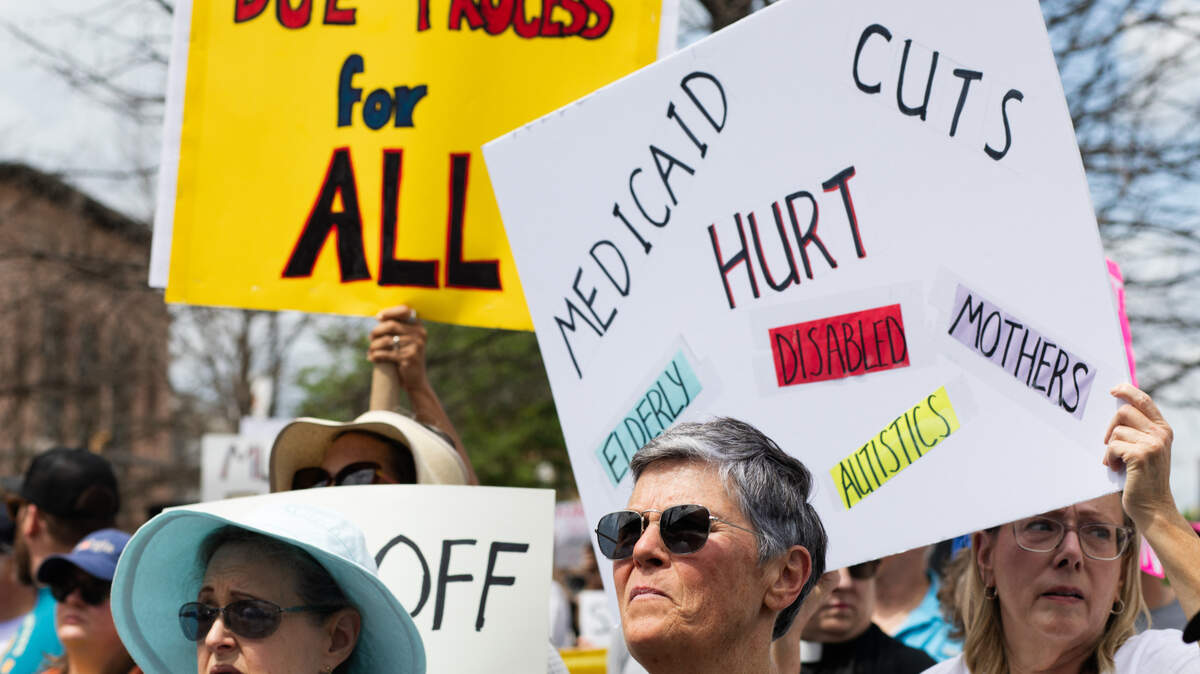
As congressional Republicans advance a tax-cutting and spending bill that seeks to fund President Donald Trump’s agenda, we now have a better idea of how proposed Medicaid changes could affect North Carolina.
Jay Ludlam, deputy secretary for NC Medicaid at the North Carolina Department of Health and Human Services, spoke with The News & Observer on Tuesday about the potential impacts.
Republicans in the U.S. House and Senate have been shaping a roughly $4.9 trillion spending package that includes extending tax cuts and tax breaks passed during Trump’s first term and adding new ones. To offset the cost, they’re making changes and cuts in several areas, including Medicaid.
The House Committee on Energy and Commerce, which oversees Medicaid, was tasked with identifying $880 billion in savings over the next decade. On Sunday night, the committee released its proposed Medicaid cuts.
The plan could still change. A committee was reviewing it during a meeting that started Tuesday.
Health-related provisions would account for about $715 billion in savings, according to the Congressional Budget Office. The proposed changes would reduce federal deficits by more than $880 billion and result in 8.6 million people losing health coverage, according to multiple reports citing the budget office.
The plan does not include some of the most controversial options floated earlier this year, such as reducing the federal match rate for adults covered under Medicaid expansion — a move that would have likely ended North Carolina’s expansion program, which launched in late 2023.
However, the proposal does include work requirements and more frequent eligibility checks for Medicaid enrollees.
This interview has been edited for clarity and brevity.
Q: To start, broadly, what do you think will be the effects of those federal cuts in terms of Medicaid here in North Carolina?
A: North Carolina Medicaid is a very strong program with good bipartisan support. We’ve worked hard over the years to expand access and introduce innovations to reduce future budget pressures. We’ve supported our providers and members as much as possible, and we’d like to continue that work.
The proposal in Congress is a $715 billion programmatic cut. Based on conversations I’ve had and some of the work we’ve seen, I worry that they’ll reach those savings by reducing access and placing more administrative burdens on working North Carolinians.
Q: On access and administrative burdens, what are the main provisions you think could lead to those impacts?
A: I think it’s mostly around the work requirements and redeterminations — the process of reevaluating people’s eligibility.
Right now, we verify eligibility once a year. That already puts pressure on county offices — some of which are behind. Under the proposal, we’d have to do it twice a year.
Then there’s the work requirement.
We know that about 92% of the people on Medicaid are working, or at school or caregiving or are too ill to work.
Note: According to KFF, the remaining 8% report being retired, unable to find work or not working for another reason.
And so I think the administrative burden is just going to be trying to make sure that they get their paperwork in on time, and we’ll have to do it frequently.
Consider a student who must prove they’re in school in August, when classes start late in the month. How do they document 80 hours for the rest of the month to meet administrative requirements?
That’s the kind of administrative pressure that honestly, I would much rather the individuals be focused on school or doing the work around the house to support their loved ones. That seems to be a good use of their time, rather than putting together all this paperwork.
Note: The plan released Sunday would require states to verify work requirements are met for a month before enrollment in Medicaid and for at least a month between redeterminations. People covered under Medicaid expansion would have to do eligibility redeterminations twice a year instead of once.
The new work rules would apply to able-bodied adults without dependents. Individuals could meet the monthly requirement with 80 hours of work, education, community service, or a mix. Exemptions include pregnant people, those under 19 or over 64, foster youth under 26, caregivers, and people with disabilities, according to a summary drafted by staff for the Energy and Commerce Committee and posted by the AP.
Q: Will county Department of Social Services offices — if this passes — be able to handle that additional administrative work at the current staffing and funding levels that they have right now?
A: North Carolina is one of only a small handful of states that runs eligibility through our county offices, and so each of those county offices will need support in order to do it.
We do not have infrastructure here in North Carolina that’s been built to bring in all of that documentation, store that documentation, create workflows for county workers to properly evaluate it, and then, if it’s appealed, be able to present their decision-making process.
So there’s a lot of investments the state’s going to have to make. I do think that with increased redetermination, the work requirements, I do think it will put a lot of pressure on an agency that’s already under pressure.
But I will say, when or if we get there, the department will do what we can to support those county partners.
Q: It’s been reported that congressional Republicans say these work requirements and some of these changes are aimed at making sure people who aren’t eligible are not enrolled. Do you think that’s a fair assessment?
A: I don’t know what kind of efficiencies we’re going to see. I think most of the people who are on Medicaid are qualified, and that 8% is where we don’t know. So that’s where the potential savings might be.
There have been other states, such as New Hampshire, that tried these, but then pulled them down because too many people lost coverage.
We’ll work closely with our General Assembly. We have a good partnership with them, and we’ll do what we can to inform them on what our county offices need in order to support the work that they’re going to do.
Q: Proposed provisions include prohibiting states from establishing new provider taxes or from increasing the rates of existing taxes. Could this lead to federal funding losses that impact North Carolina’s Medicaid expansion program, which relies heavily on federal dollars to exist?
Note: When the state expanded Medicaid in 2023, it implemented a mechanism allowing hospitals to receive higher federal reimbursements in return for paying the state’s share of costs through taxes.
The federal government covers 90% of Medicaid coverage costs for the expansion population, while the state covers 10%.
A: As drafted, I think the proposed freeze on provider taxes at the current rates would not affect funding for the North Carolina Medicaid expansion program in any way.
Q: Will the congressional plan affect the state’s medical debt relief plan? Also, what is the status of the medical debt relief plan?
Note: North Carolina’s medical debt relief plan further leveraged federal funds by offering higher reimbursements to participating hospitals, through the mechanism approved with Medicaid expansion.
A: I don’t see an impact on the medical debt program.
We’ve been working with hospitals over the last couple of months and weeks to confirm compliance with the policies — the medical debt policies required to be in effect on Jan. 1 of this year.
Based on our reviews, all 99 of the eligible acute care hospitals have updated their policies to be compliant with the requirements from Jan. 1, and we see our ability to continue that program going forward.
Q: Should the congressional proposals go forward, what’s the impact on North Carolina’s budget?
A: We have not modeled that yet, as there’s a little bit that might change. We’re in the process of modeling it.